
Middle East
UAE
"The country that made me reconsider what ambition looks like."
The UAE invites easy dismissal. The indoor ski slopes, the artificial islands, the gold-plated everything — it is simple to write the whole place off as a monument to excess. That reading is lazy. What the Emirates actually represent is a fifty-year experiment in building a country from almost nothing, conducted at a speed and scale that has no precedent. You do not have to admire every result to find the ambition genuinely fascinating. And buried beneath the spectacle is an older culture — Bedouin, maritime, mercantile — that still shapes how Emiratis think about hospitality, trade, and the desert.
Abu Dhabi is the quieter, more considered sibling. The Louvre Abu Dhabi, designed by Jean Nouvel with a dome that filters light into a rain of sun, is one of the great museum buildings of this century. The mangrove kayaking along Jubail Island feels almost subversive in its simplicity. And the Empty Quarter — the Rub’ al Khali — begins at the city’s southern edge, a sea of sand that stretches into Saudi Arabia and Oman, silent and immense and humbling in the way that only truly empty landscapes can be.
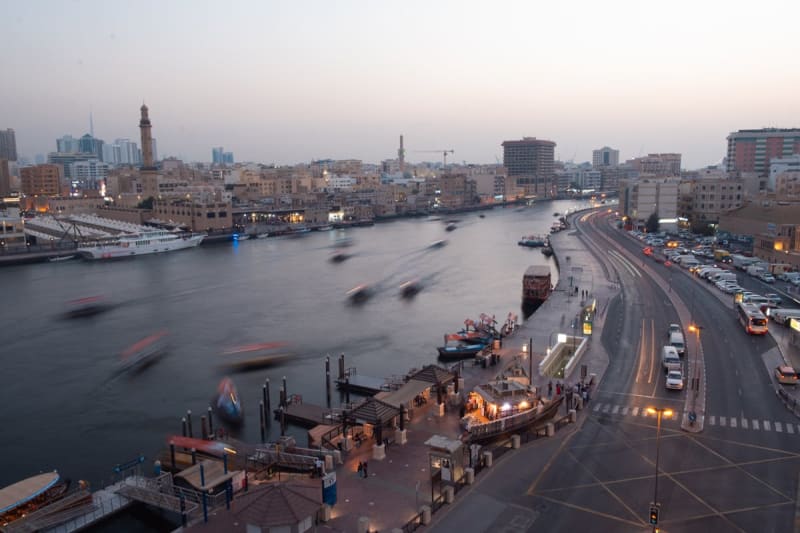
Dubai works best when you stop comparing it to cities it is not trying to be. The old Creek district, where abra boats cross between Deira and Bur Dubai, is a genuine trading port with a history that predates the oil boom. The food scene, fed by immigrant communities from every corner of South Asia and the Levant, is extraordinary and wildly underpriced. Sharjah, twenty minutes north, has a growing arts district that operates on a different frequency entirely.
When to go: November to March. Summer temperatures routinely exceed 45 degrees Celsius with suffocating humidity. The winter months are warm, dry, and pleasant — perfect for desert excursions and outdoor dining.
What most guides get wrong: They treat the UAE as a stopover or a shopping trip. Both waste the destination. Spend time in the desert. Visit the northern emirates — Ras Al Khaimah’s Jebel Jais mountains, Fujairah’s east coast beaches. Eat in the Indian and Pakistani restaurants of Karama and Satwa. The UAE rewards curiosity far more than it rewards a credit card.
Explore
Places in UAE

Abu Dhabi
The UAE capital, where the Sheikh Zayed Grand Mosque's white marble meets world-class museums and a more measured pace than its brash neighbor.

Ajman
The smallest emirate, a quiet coastal stretch where a restored fort, traditional dhow-building yards, and uncrowded beaches offer authentic Gulf life.

Al Ain
The Garden City of the Gulf, an oasis town where ancient falaj irrigation channels feed palm gardens at the foot of Jebel Hafeet.
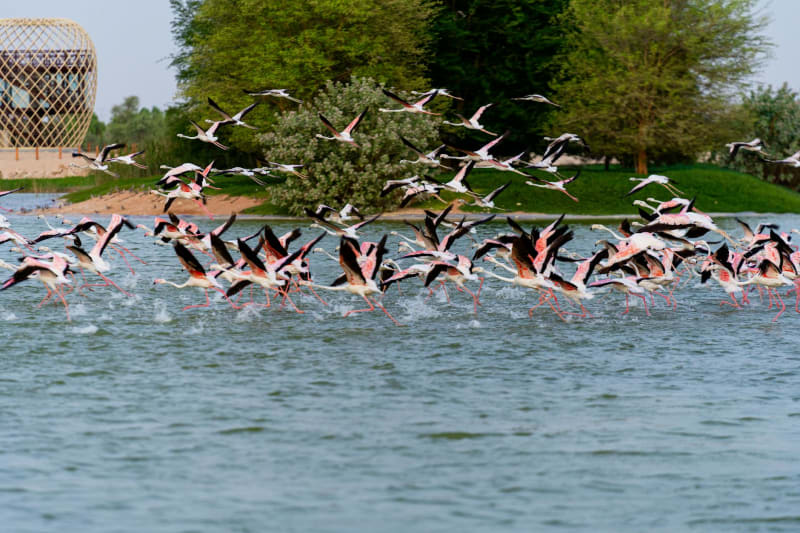
Al Wathba Wetland
A surprising flamingo sanctuary in the Abu Dhabi desert, pink flocks wading in brackish shallows.

Dubai
A futuristic city-state rising from desert sand, where the world's tallest building overlooks ancient souks and a coastline engineered from ambition.
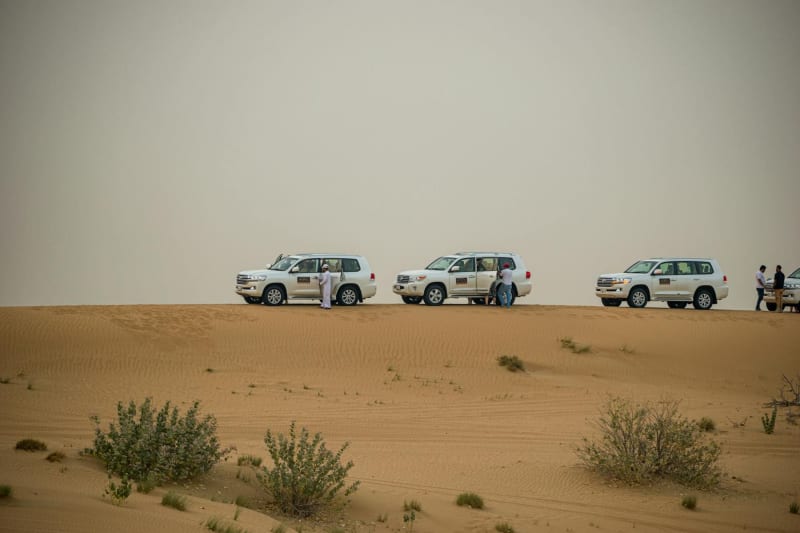
Dubai Desert Safari
Beyond the skyline, the red dunes of the Arabian Desert roll toward an infinite horizon at golden hour.

Fujairah
The UAE's only emirate on the Gulf of Oman, where rugged mountains meet diving-rich waters and centuries-old forts guard fertile wadis.

Hatta
A mountain enclave of Dubai set in the Hajar range, where turquoise dam waters, heritage villages, and hiking trails offer an escape from the coast.

Liwa Oasis
A crescent of date-palm settlements on the edge of the Empty Quarter, where the world's tallest sand dunes glow orange against blue sky.
Ras Al Khaimah
The UAE's adventure emirate, where the Hajar Mountains meet desert dunes and the world's longest zipline launches from a 1,680-meter peak.

Sharjah
The UAE's cultural capital, a UNESCO-recognized emirate where Islamic art museums and heritage districts preserve the Gulf's intellectual traditions.

Sir Bani Yas
A desert island transformed into a wildlife reserve, where Arabian oryx, giraffes, and cheetahs roam a former royal retreat off Abu Dhabi's coast.
Free download
Get the UAE Guide
A curated PDF itinerary with honest picks, real restaurants, and the details that matter — the kind you'd actually print and bring.
Download the guide