Tancanhuitz
"In the Huasteca the hills are so green they look wet even when it hasn't rained in days."
A small town folded into the green hills of the Huasteca Potosina, deep in Teenek and Nahua country. Coffee on the slopes, a weekly market that fills the narrow streets, rivers and waterfalls within reach, and a Day of the Dead tradition — Xantolo — that turns the whole place into something older and stranger than any calendar.

I came to Tancanhuitz because I got the timing wrong somewhere else. I had been circling the Huasteca Potosina chasing waterfalls with everyone else, and one afternoon, tired of parking lots, I turned up a side valley toward a town I only knew as a name on a sign. The road corkscrewed through coffee and banana and those impossibly green hills, and dropped me into a place with steep little streets, a market spilling out of a covered hall, and not a single other outsider that I could see. I parked badly, bought a coffee grown on a slope I could point to, and decided to stay.
A Town That Belongs to Its Market
Tancanhuitz organizes itself around its weekly market the way other towns organize around a church, and on market day the narrow streets simply fill — Teenek and Nahua families down from the surrounding hamlets, tarps and baskets, the smell of coriander and wet earth and roasting things. I am always suspicious of the word “authentic,” but there is a difference between a market that performs itself for visitors and one that is genuinely how a region feeds itself, and this was plainly the second kind. Women in embroidered blouses sold herbs I couldn’t name and quelites gathered that morning. Nobody was interested in me, which is the highest compliment a market can pay a stranger.

Xantolo, the Living Day of the Dead
I have seen Day of the Dead in a dozen places in Mexico, and most of it, if I’m honest, has been thinned out by photography. Xantolo in the Huasteca is different, and Tancanhuitz is one of its beating hearts. Here the dead are welcomed with arches of cempasúchil and stands of sugarcane, and the streets fill with dancers in carved wooden masks — the cuadrillas — who move through town for days in a rhythm that is joyful and menacing at once. A shopkeeper explained it to me the way you’d explain weather: the dead come back, you make them welcome, you dance so they know the way. She said it while restocking cigarettes, entirely matter-of-fact, and that was somehow the most convincing thing I heard all year.

Water in Every Direction
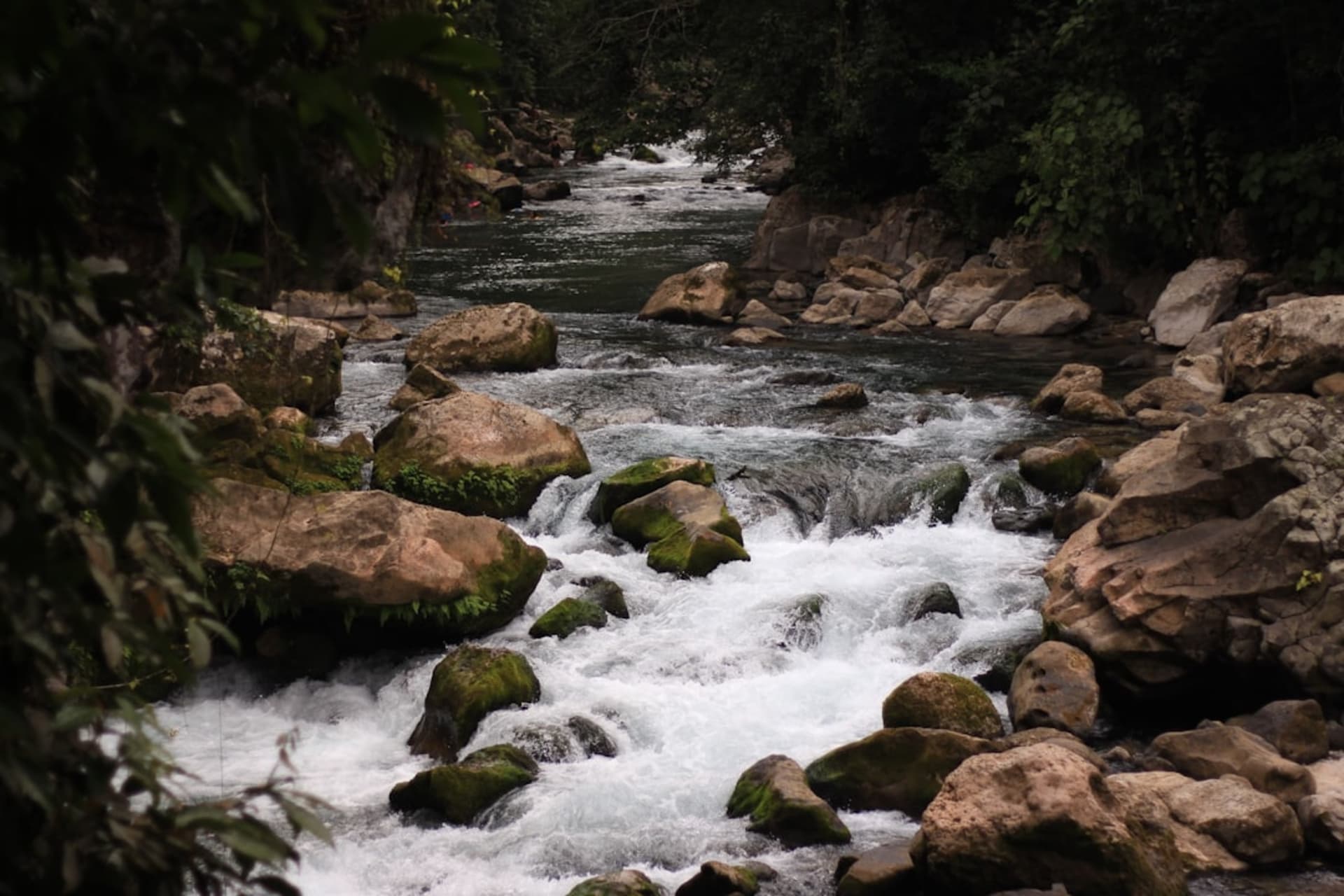
The great luxury of basing yourself in a town like this is that the famous Huasteca — the turquoise rivers, the waterfalls everyone drives hours to reach — is simply your neighborhood. A man at the coffee stand drew me a map on a napkin to a river pool his kids swim in, no name, no entrance fee, just a path down through the cane. I found it exactly where he said, water the color of bottle glass moving over pale stone, and I had it entirely to myself for an hour before a family arrived with a radio and a cooler and made it better. This is the Huasteca I keep coming back for: not the postcards, but the ordinary miracle of green hills leaking clean cold water everywhere you look.
Getting There
Tancanhuitz sits deep in the Huasteca Potosina, in the eastern lowland corner of San Luis Potosí. The nearest hub is Ciudad Valles, about an hour and a half northeast by highway, with bus connections onward; the state capital is a longer haul of four to five hours over the sierra. A car gives you the freedom the region rewards, but second-class buses do reach the town. Come outside of Xantolo and you’ll find a quiet, working market town; come at the end of October or start of November, book far ahead, and you’ll find something you won’t forget. Either way, slow down and let a local draw you a napkin map. It’ll be better than anything I can tell you.
Keep exploring
More of San Luis Potosí
Keep exploring
More from San Luis Potosí
 mexico
 Aquismón
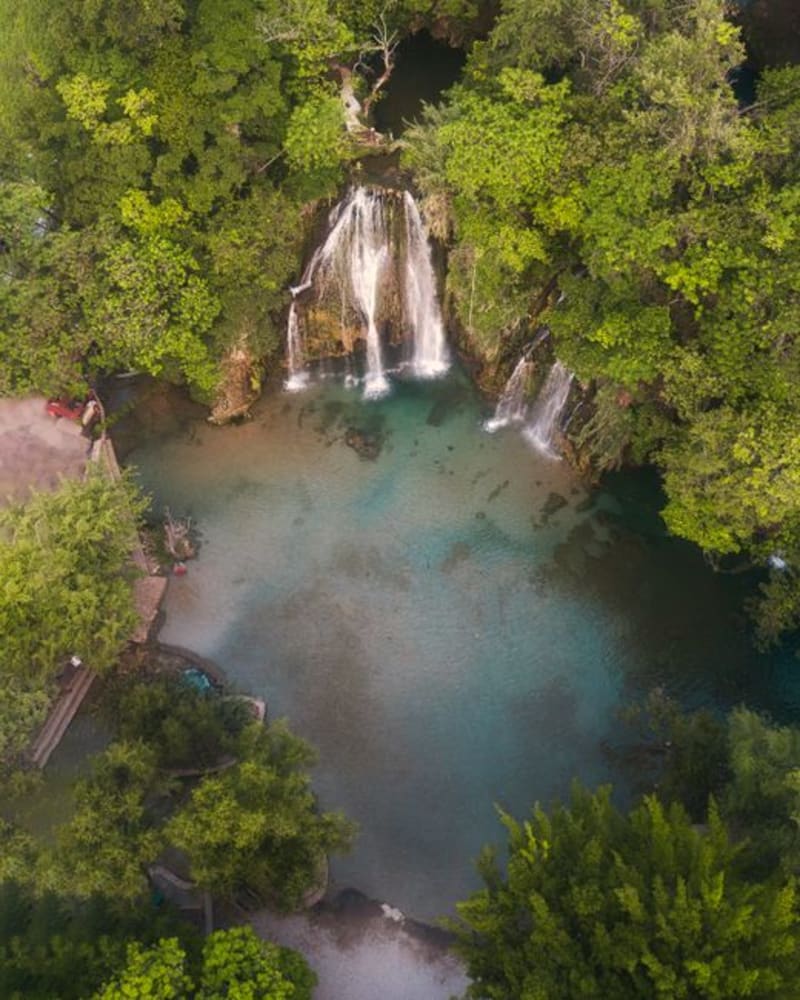
Aquismón is the low-key anchor of the Huasteca Potosina, a town of painted concrete and tamarind trees where the surrounding sierra drops without warning into one of the deepest pits on earth. The Sótano de las Golondrinas alone is worth the detour — but the town has its own rhythms worth staying for.
Explore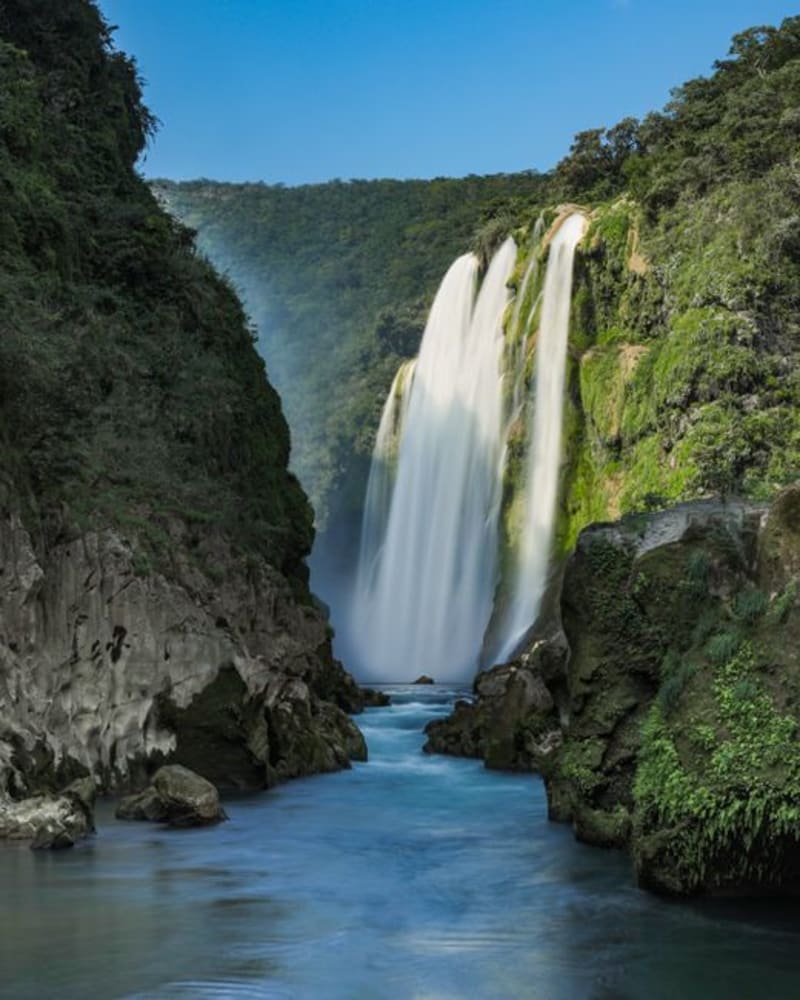 mexico
 Axtla de Terrazas
A Nahua market town tucked into the Huasteca river valley of San Luis Potosí, where the hills drop into cascades and the smell of zacahuil tamales drifts from nearly every porch on a Sunday morning.
Explore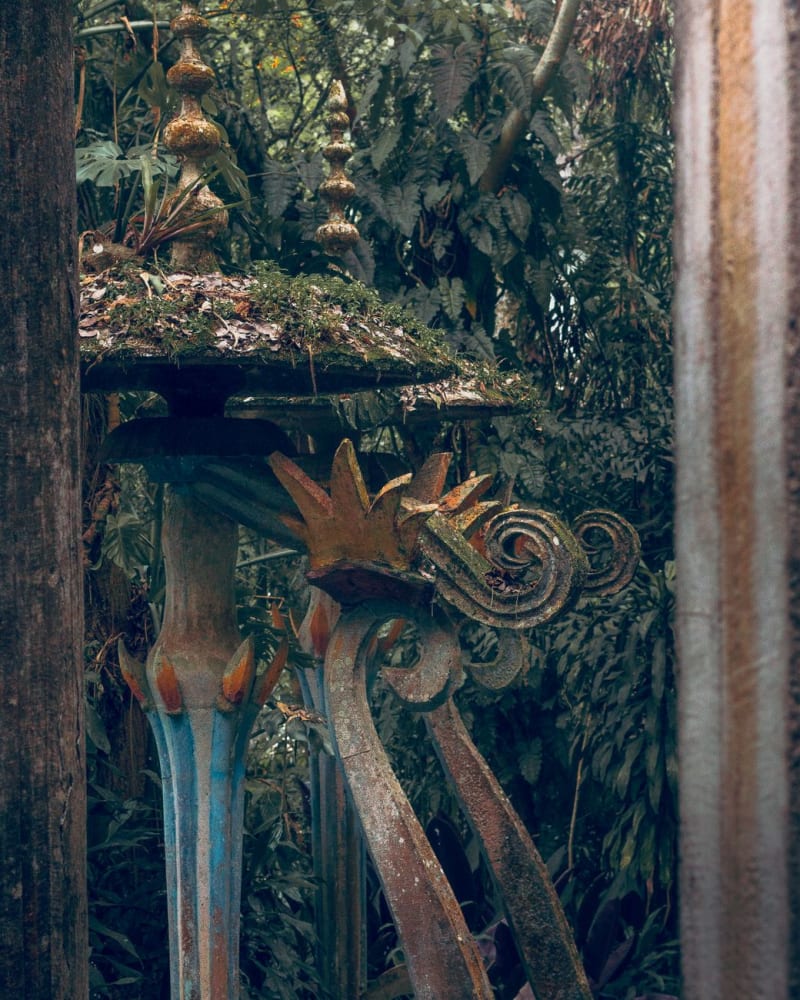 mexico
 Xilitla
A cloud forest town in the Sierra Gorda where British surrealist Edward James spent three decades building Las Pozas — a labyrinth of concrete towers, open staircases, and doorways that frame nothing but jungle. The structure defies easy categorization, and so does the town around it.
Explore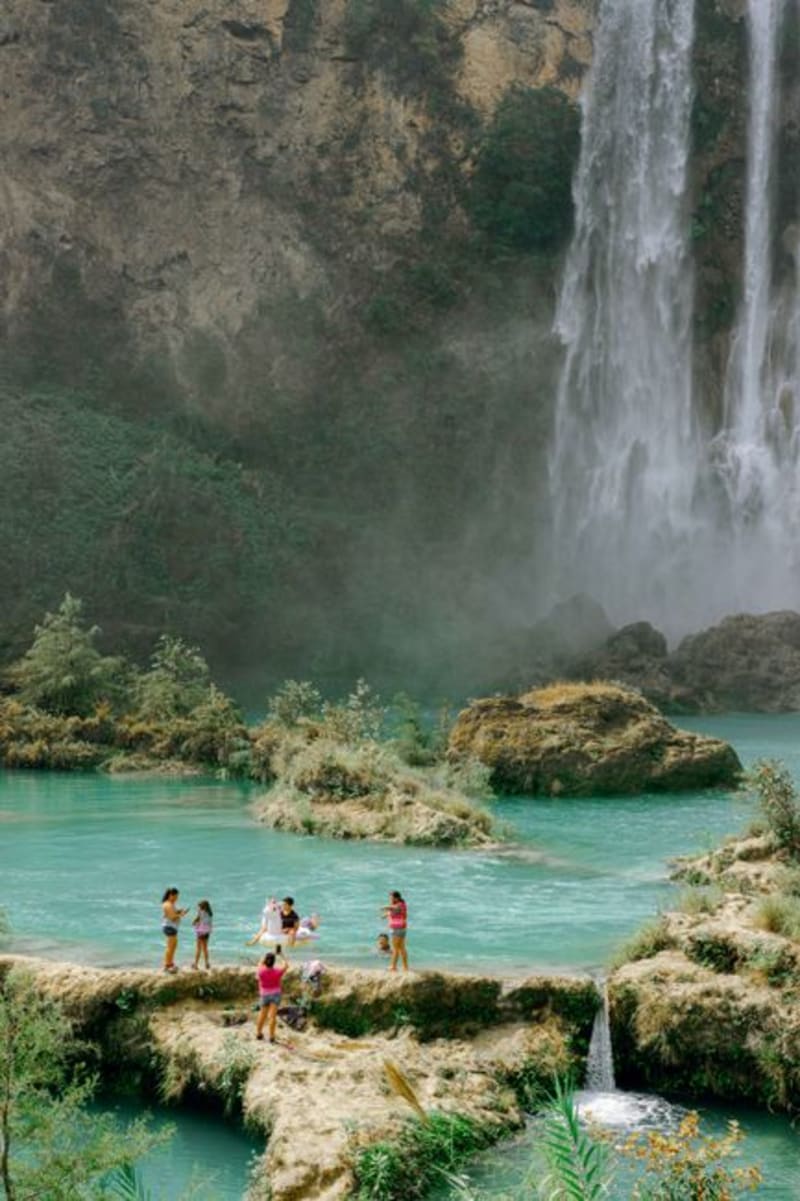 mexico
 Tamazunchale
Where the Sierra Madre Oriental drops suddenly into Huasteca jungle, Tamazunchale sits at the base of one of Mexico's most dramatic elevation transitions — river gorges, cloud forest, and a Nahua Sunday market that has operated the same way for generations.
Explore mexico
 Ciudad Valles
Ciudad Valles is not the destination — it is the architecture around one. The city itself is a flat, busy commercial hub in the lowland Huasteca, and that is fine, because within two hours in any direction lie some of the most extraordinary natural landscapes in Mexico: towering waterfalls, vertical cave shafts, jungle pozas, and Nahua villages that most visitors never locate on a map.
Explore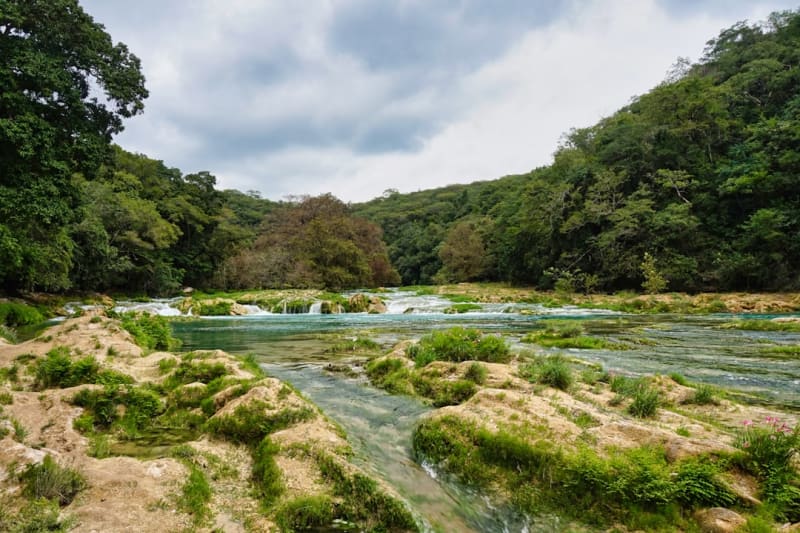 mexico
 Huasteca Potosina
A region of San Luis Potosí state where the rivers run turquoise through tropical limestone canyons, the Tamul waterfall drops 105 meters into a river you can reach by canoe, and the Huastec communities maintain a textile and ceremonial tradition distinct from any other indigenous culture in Mexico.
Explore