Europe
Dalmatia
"Every other sea coast I've known has been practicing for this one."
A coastline of karst limestone and transparent sea where Roman emperors built their retirement palaces and medieval cities grew inside walls that still stand, facing islands that multiply the further south you sail.

I drove into Split on a late September afternoon with the windows down and the Adriatic already visible through the pines, and I stopped at the first bar I found outside Diocletian’s Palace to drink a glass of plavac mali and work out what I was looking at. The answer, I eventually understood, was a Roman emperor’s retirement home that had been colonized by an entire medieval city — restaurants and apartments and jewelry shops built directly into the imperial walls, people hanging laundry between columns that were already two hundred years old when Charlemagne was born. That layering, that complete absence of reverence for historical tidiness, is the key to Dalmatia. It is not a museum. It has simply been continuously inhabited.
The coast between Split and Dubrovnik is best taken slowly, with a car and no fixed agenda. The Makarska Riviera draws crowds in July and August for obvious reasons — cliffs dropping into water the color of a swimming pool, pebble beaches that ring like glass underfoot — but it is the detours that stay with you. Pelješac, the long peninsula you cross on the bridge or reach by ferry, grows two of Croatia’s finest reds: Dingač and Postup, made from plavac mali grapes that grow nearly vertical on south-facing slopes above the sea. The town of Ston has the longest defensive walls in Europe after the Great Wall of China, and its oysters, grown in the channel below those walls, are eaten raw with a little lemon in restaurants that have been there since before anyone thought to describe them on the internet. Korčula’s old town sits on a narrow peninsula, compacted and perfectly preserved, with a bar at the tip where you can watch the sun go down over the islands without anyone trying to sell you a tour.
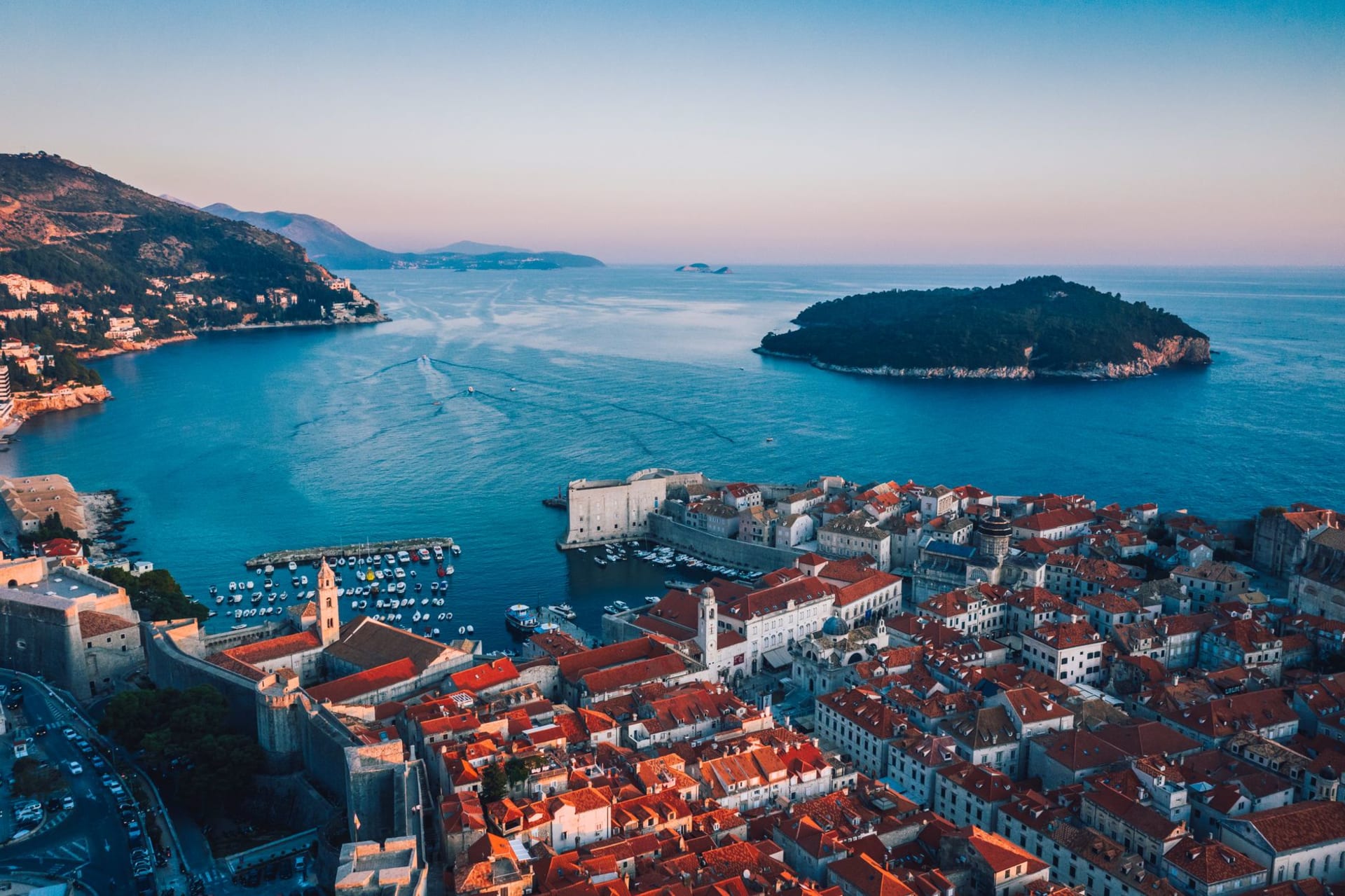
Dubrovnik remains the unavoidable argument. The walls, the Stradun, the orange rooftops above the harbour — it is one of the most formally beautiful cities I have ever stood in, and in summer it is genuinely overwhelmed by cruise passengers who arrive, photograph the view, and depart. The answer is not to skip it but to time it correctly, or to accept that the best version of Dubrovnik exists at six in the morning, when the light is low and the streets still belong to the pigeons and the bakeries opening their shutters.
When to go: May to mid-June or the whole of September into early October. The sea is warm enough to swim well into October, the restaurants operate without wait times, and the road between Split and Dubrovnik — which in August becomes a slow crawl of hire cars — opens up completely.
What most guides get wrong: They frame Dalmatia as a string of coastal stops between Split and Dubrovnik, reducible to a three-day itinerary. The islands require ferries and time and a willingness to slow down: Brač beyond its famous Zlatni Rat beach, Vis still feeling like it is keeping a secret, Lastovo so far out that it barely registers on most tourists’ maps. The interior — Sinj, Imotski, the Cetina canyon — is almost entirely ignored, and it is where Dalmatia’s older character survives intact, without any of the self-consciousness the coast has acquired from a decade of being told it is beautiful.
Explore
Places in Dalmatia
 dalmatia
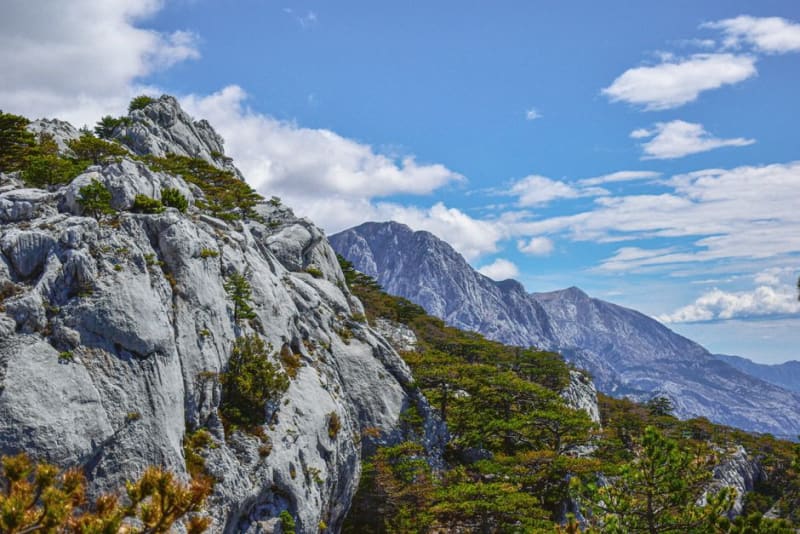
 Biokovo
A jagged coastal mountain range towering over Makarska, capped by a glass skywalk that hangs out over a thousand-meter drop to the Adriatic.
Explore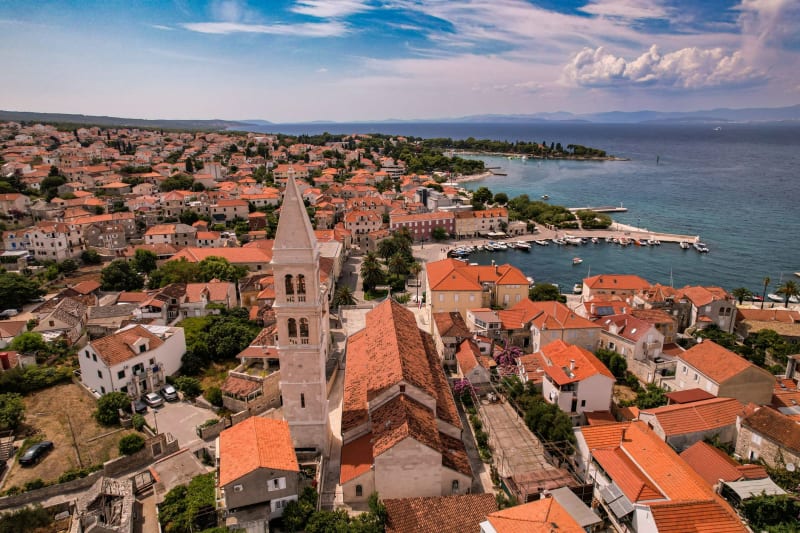 dalmatia
 Brač
An island of white limestone quarried for millennia, where Zlatni Rat's famous shingle point gets all the photographers but the olive groves and stone villages get the silence.
Explore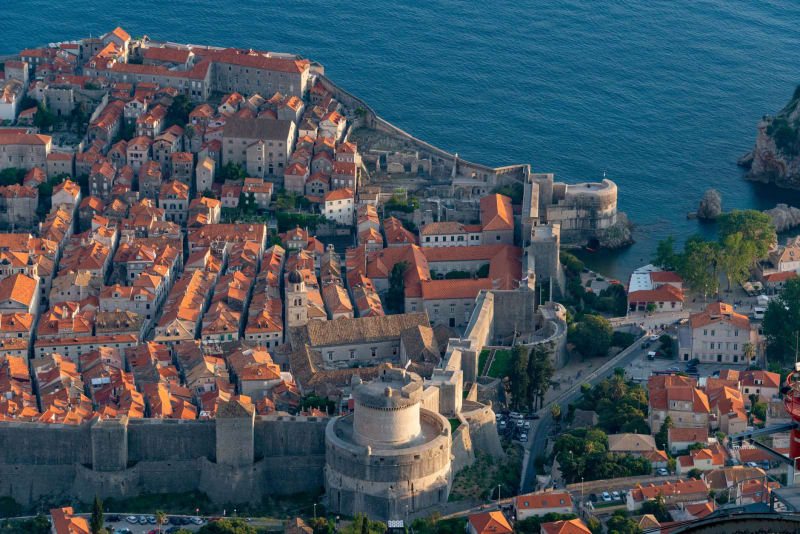 dalmatia
 Dubrovnik
Fortress walls enclosing one of the most formally perfect old cities on earth — best understood before 8am, when it still belongs to itself.
Explore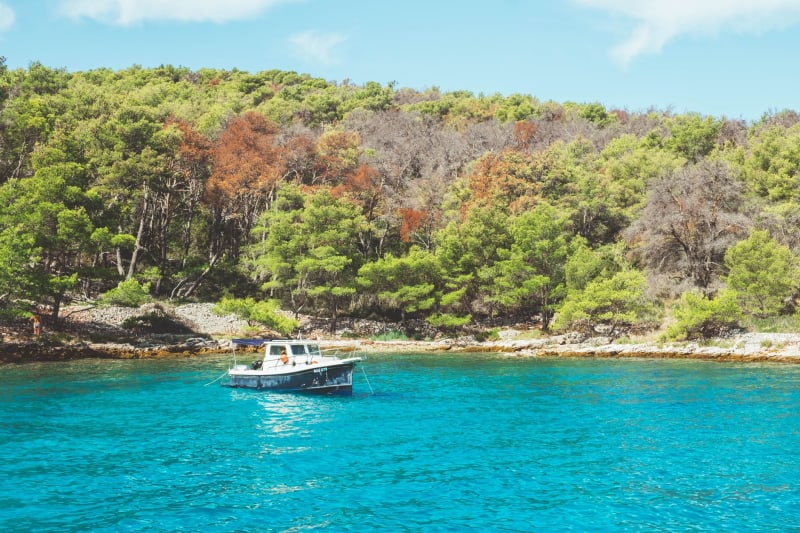 dalmatia
 Hvar
The Adriatic's most famous island has a party harbour and a Venetian centre — but it's the lavender plateau in the interior that explains why people keep coming back.
Explore dalmatia
 Korčula
A medieval walled town on its own peninsula with a fishbone street plan, a disputed claim on Marco Polo, and a bar at the tip where the sun sets over the Pelješac mountains perfectly.
Explore dalmatia
 Kornati Islands
A stark, uninhabited archipelago of more than a hundred limestone islets rising bare from the Adriatic, protected as one of Croatia's national parks.
Explore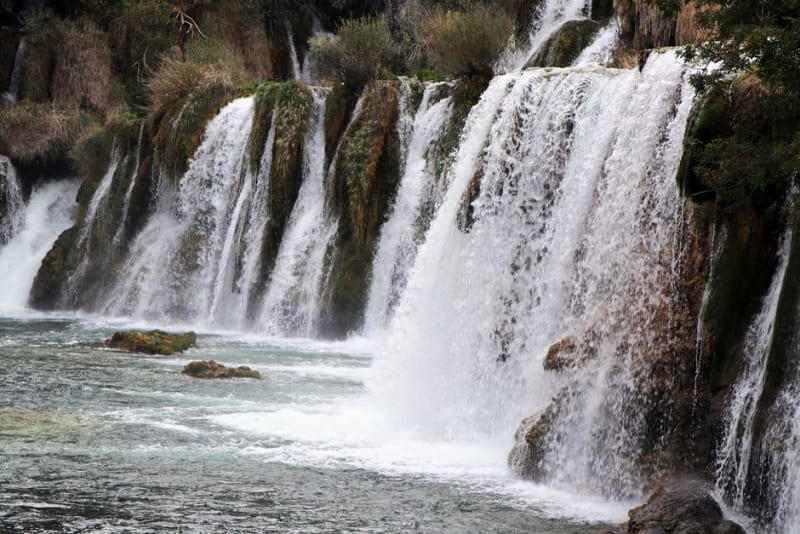 dalmatia
 Krka National Park
Travertine waterfalls cascading through a limestone canyon, an island monastery, and Roman ruins hiding in the pine woods above the Krka River.
Explore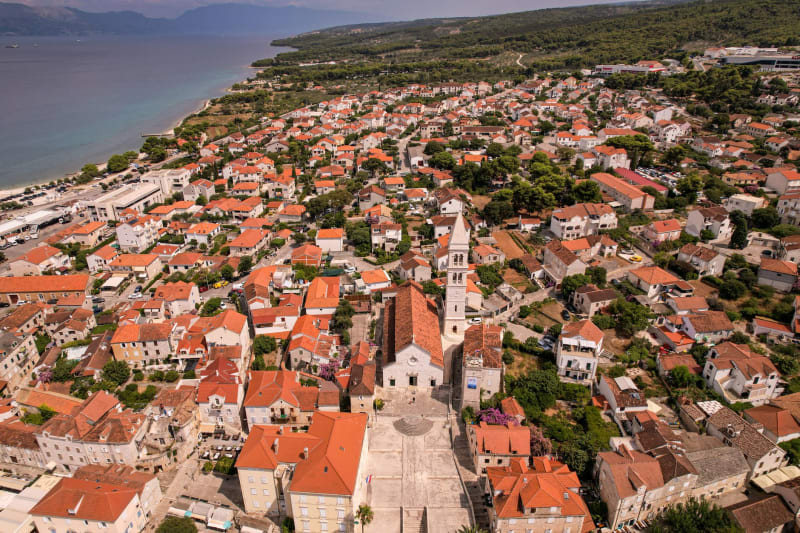 dalmatia
 Lastovo
The most remote inhabited island in Dalmatia — a former military closed zone with no mass tourism, lobster boats at dawn, and a night sky that makes the trip worthwhile even in the dark.
Explore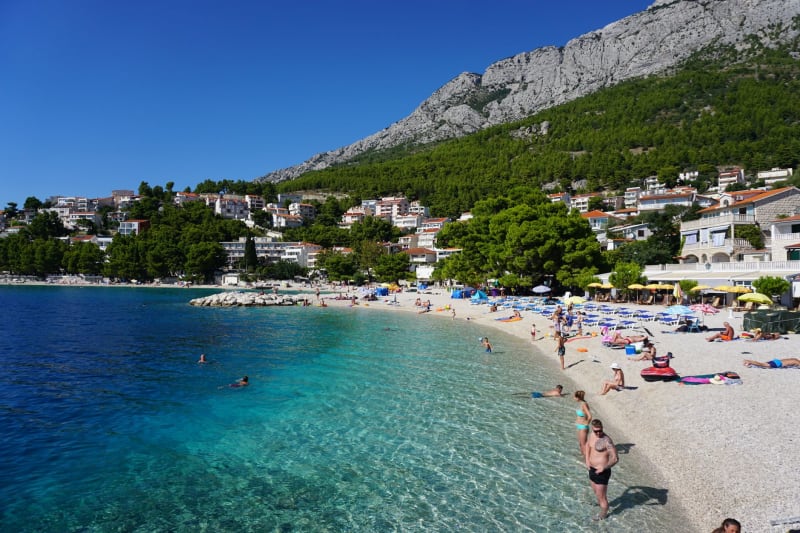 dalmatia
 Makarska
A Riviera town pinned between the Biokovo massif and the transparent sea — the mountain is close enough to climb before lunch and swim from the pebble beach all afternoon.
Explore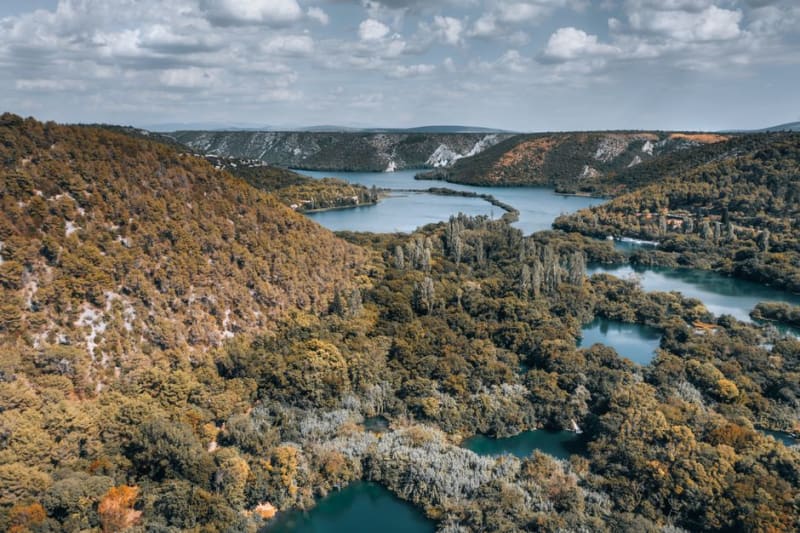 dalmatia
 Mljet
A green, sparsely populated island where a national park wraps around two saltwater lakes threaded together by a narrow channel.
Explore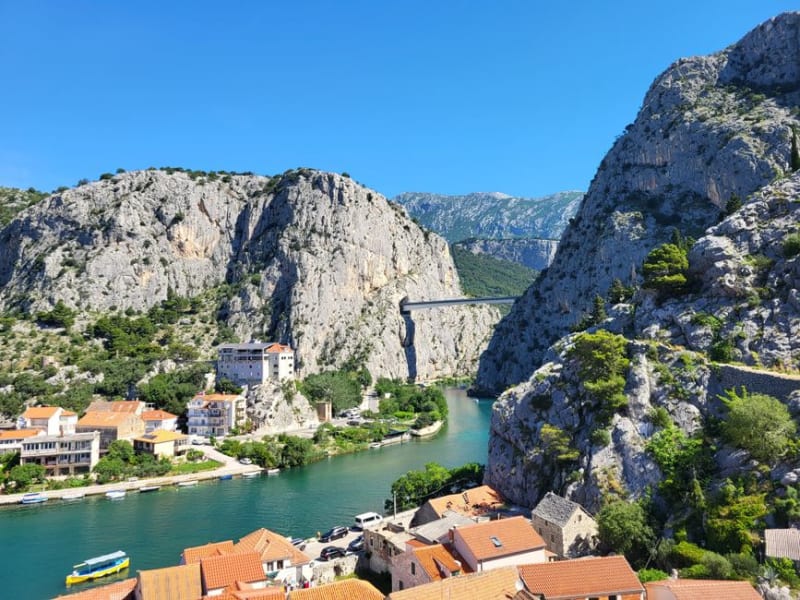 dalmatia
 Omis
A gorge-mouth town on the Cetina River, once a feared pirate stronghold, now a base for rafting between limestone cliffs and a quiet Adriatic beach.
Explore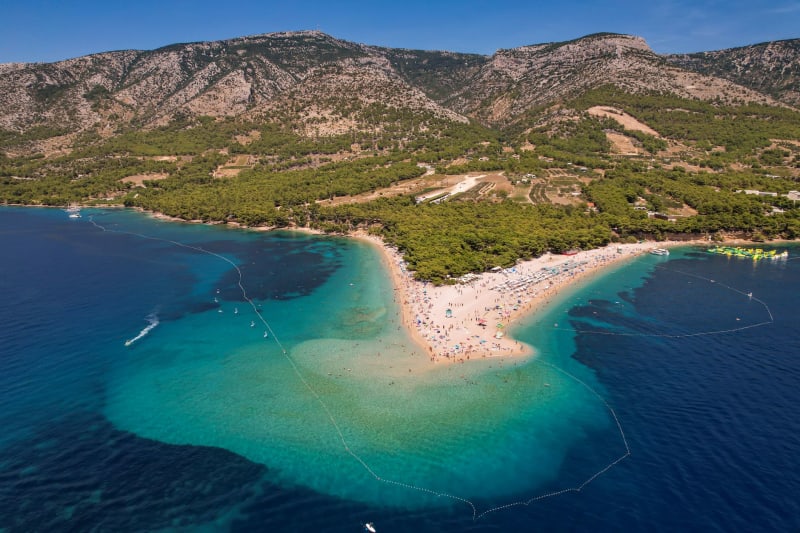 dalmatia
 Pelješac Peninsula
A seventy-kilometer arm of limestone and vineyard reaching into the Adriatic, growing Croatia's most serious red wines on slopes so steep they are worked almost entirely by hand.
Explore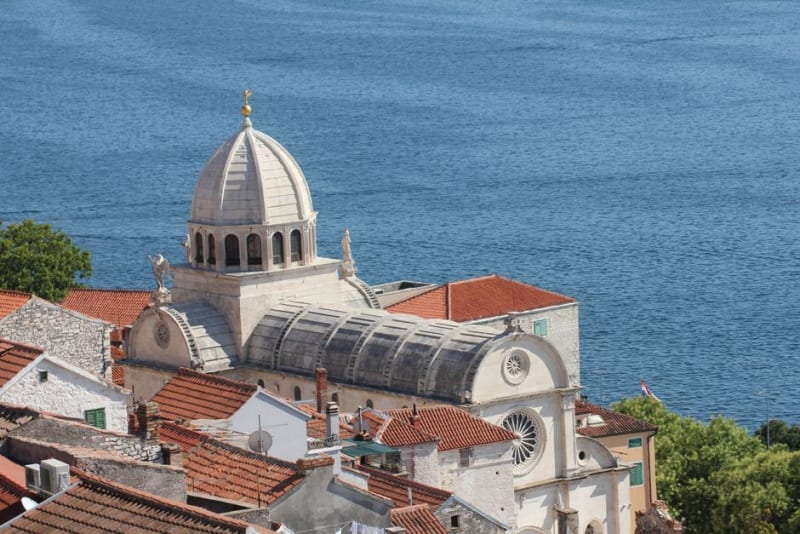 dalmatia
 Sibenik
A medieval stone city on a sheltered bay, built around a UNESCO cathedral raised entirely from carved stone without a drop of mortar or wood.
Explore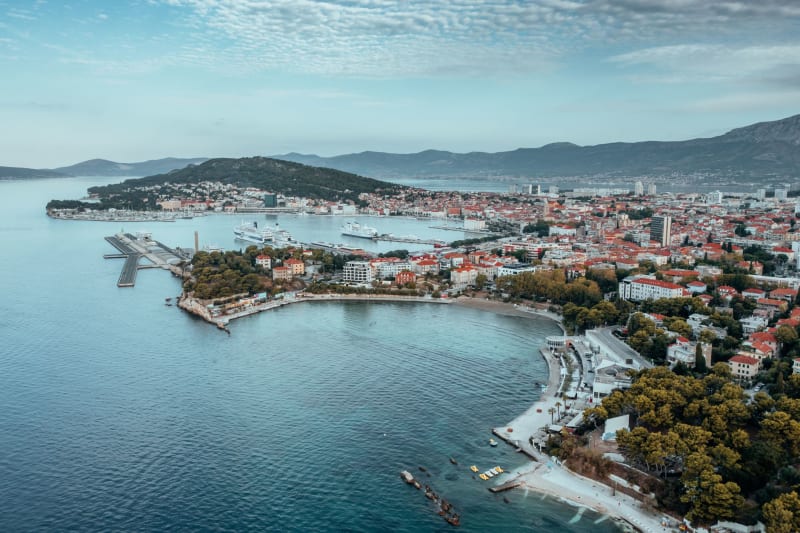 dalmatia
 Split
A Roman emperor's retirement palace colonized by an entire living city — cafés in the cellars, apartments in the colonnades, laundry strung between ancient columns.
Explore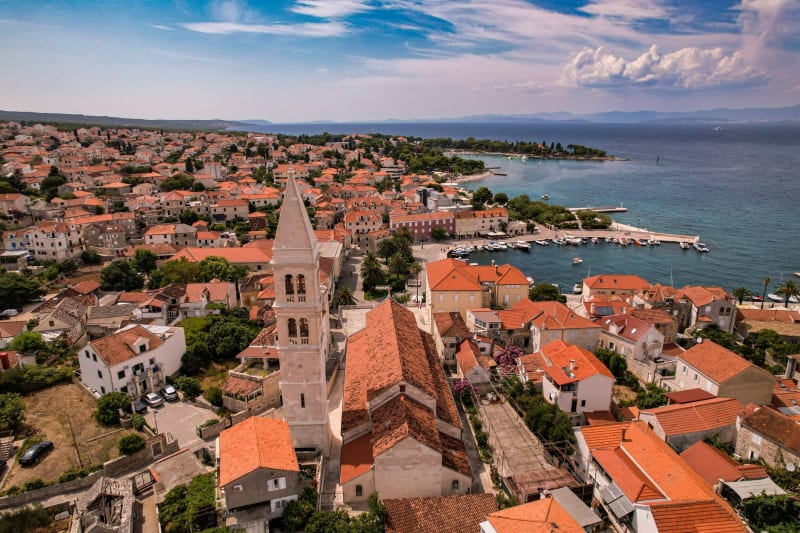 dalmatia
 Ston
A small salt-making town with Europe's longest surviving medieval walls and oysters grown in the channel below them — eaten raw with lemon and no further argument needed.
Explore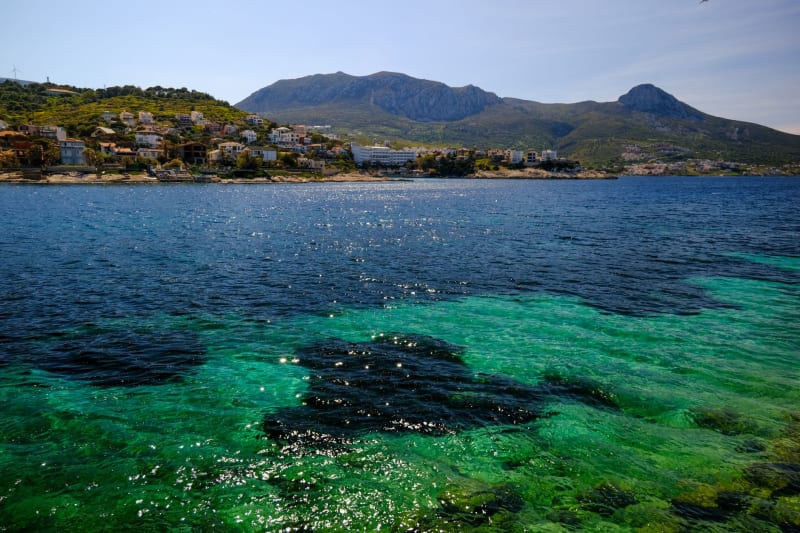 dalmatia
 Trogir
A tiny medieval town packed onto its own island between the mainland and Čiovo, all honey-coloured stone, Venetian lions, and a cathedral portal that stops you mid-step.
Explore