
A Roman emperor's retirement palace colonized by an entire living city — cafés in the cellars, apartments in the colonnades, laundry strung between ancient columns.

I arrived by ferry from the islands, standing on the deck as Split materialized from the low coastal haze — a dense tangle of terracotta rooftops and medieval towers rising directly from the bones of a Roman emperor’s retirement home. Diocletian finished building his palace on this stretch of Dalmatian coast in around 305 AD, intending it as the place he would spend his final years. He could not have imagined that sixteen centuries later people would be eating grilled fish in his cellars, hanging laundry between his columns, and sleeping in apartments carved into what were once his guard towers. That radical continuity — the Roman and the medieval and the very much present all stacked on top of each other without ceremony — is what makes Split unlike anywhere else I have ever stood.
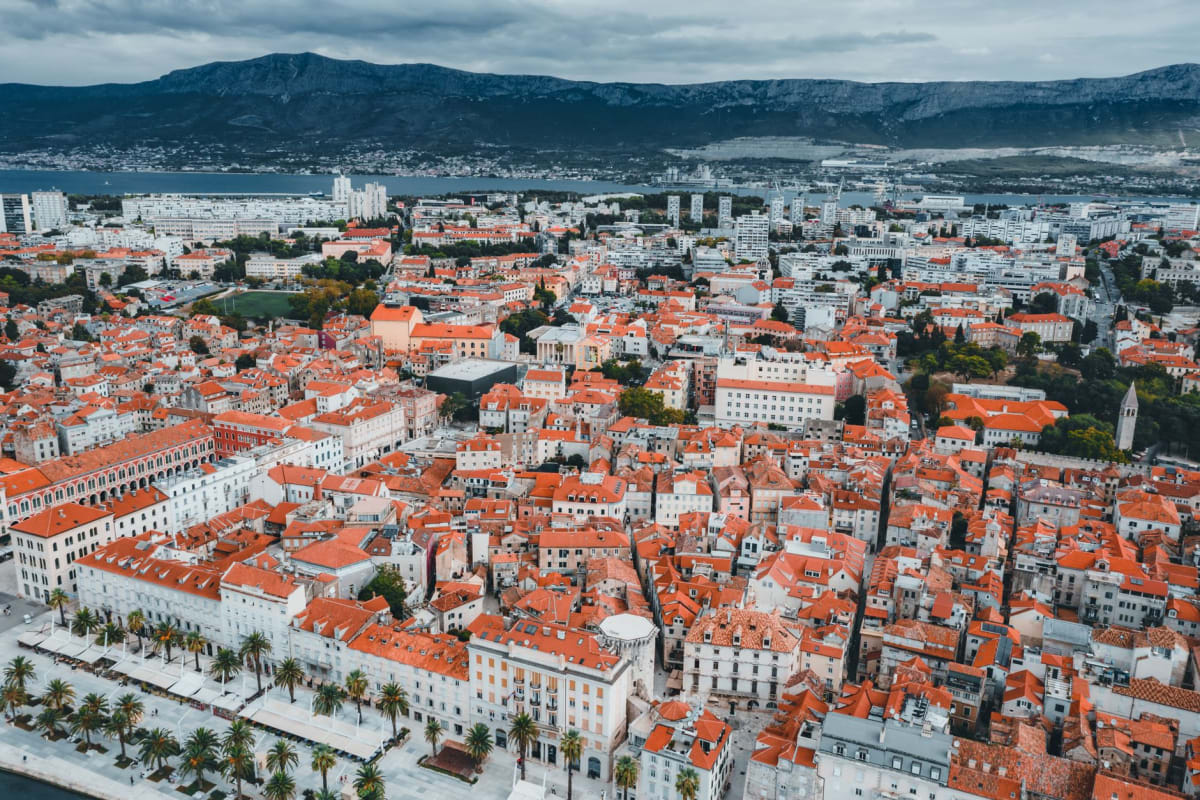
The Peristyle, the colonnaded ceremonial square at the heart of the palace complex, is where I always end up on the first evening. There is a café at one end where you can sit with a glass of pošip or plavac mali and watch the light fail over the columns, and for a few hours before the evening rush it holds an almost implausible quiet — a few teenagers on the steps, an old man reading a newspaper, pigeons working the edges. Then the restaurants begin to fill and the Riva, the broad seafront promenade just outside the southern palace wall, starts to pulse with the particular noise of Split’s evenings: families out for their korzo, teenage couples, fishermen bringing in the last of the day’s catch. The Riva is where the city shows its face without putting on a show for anyone.
The city beyond the palace walls rewards wandering without a map. The neighborhood of Veli Varoš climbs the hill behind the palace and is old Split as it existed before tourism made the waterfront self-conscious — narrow stairways between stone houses, fig trees growing out of walls, cats on doorsteps, the smell of woodsmoke and garlic drifting from open kitchen windows. The market at Pazar, just outside the eastern palace gate, happens every morning and sells the same things it has always sold: figs by the kilo, local olive oil in unlabeled bottles, bunches of dried lavender and sage, the small silvery fish that the island boats bring in overnight.

Eating in Split means ignoring most of the places on the Riva and searching a little further in. The best peka I have eaten in Dalmatia — the slow-cooked dish of lamb or veal under a bell-shaped lid buried in embers — came from a konoba so deep inside the palace walls it had no sign outside. You order the peka twenty-four hours ahead. You drink house wine from a ceramic jug. The staff moves at a pace that refuses to be rushed, and after a week on the Dalmatian coast that pace starts to feel like the right speed for everything.
When to go: September is the month I keep returning to — the sea is still warm enough for swimming off the Bačvice beach east of the centre, the crowds have thinned significantly, and the light on the palace stone in the early morning is the color of old honey. May and June are close seconds. Avoid August unless you want to experience Split at its loudest and most compressed.
Keep exploring
More from Dalmatia
 dalmatia
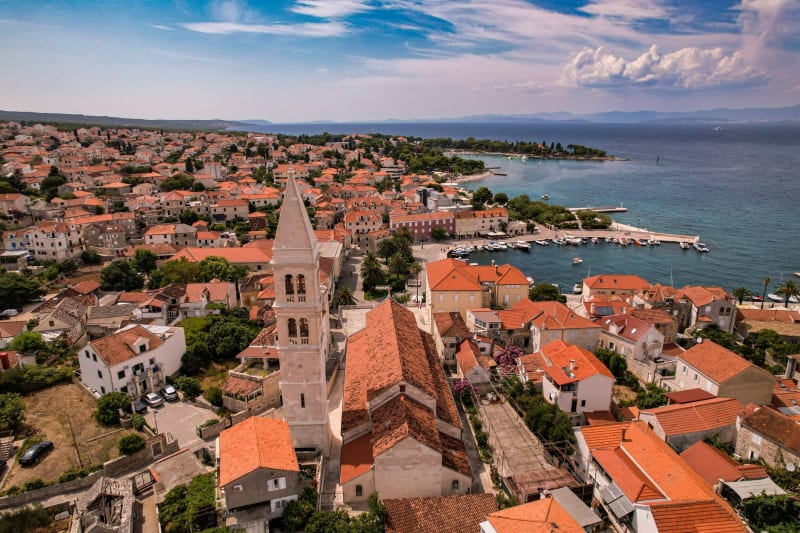
 Ston
A small salt-making town with Europe's longest surviving medieval walls and oysters grown in the channel below them — eaten raw with lemon and no further argument needed.
Explore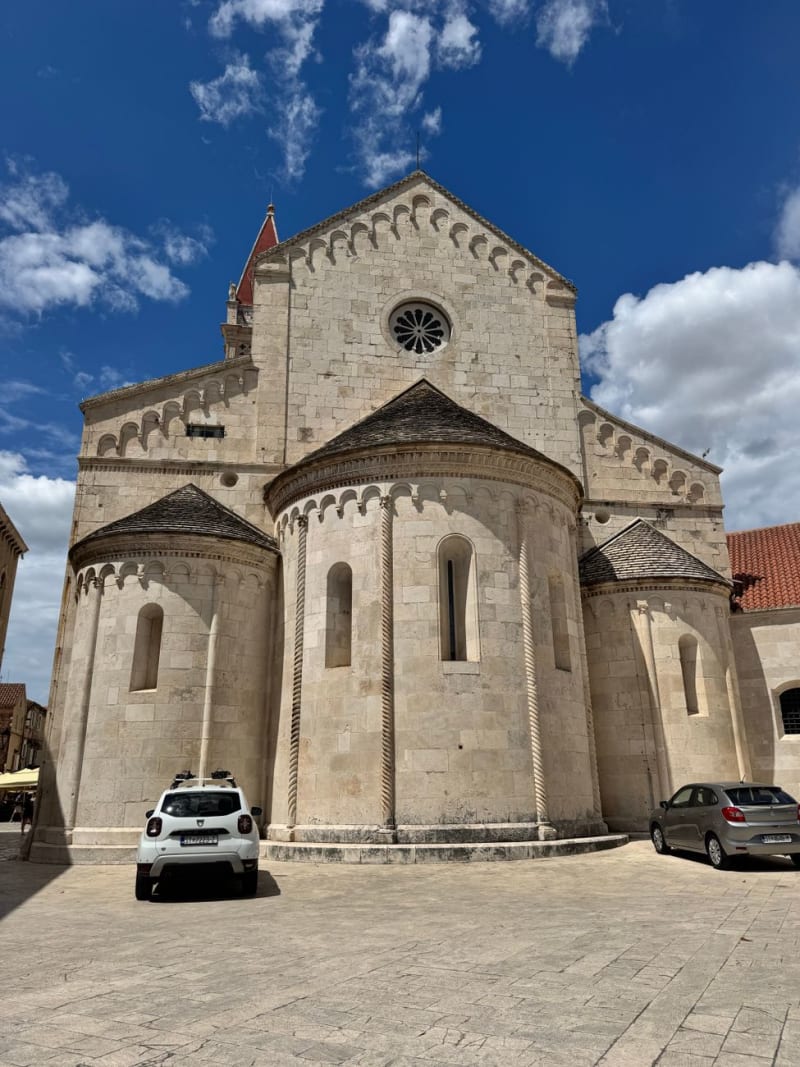 dalmatia
 Trogir
A tiny medieval town packed onto its own island between the mainland and Čiovo, all honey-coloured stone, Venetian lions, and a cathedral portal that stops you mid-step.
Explore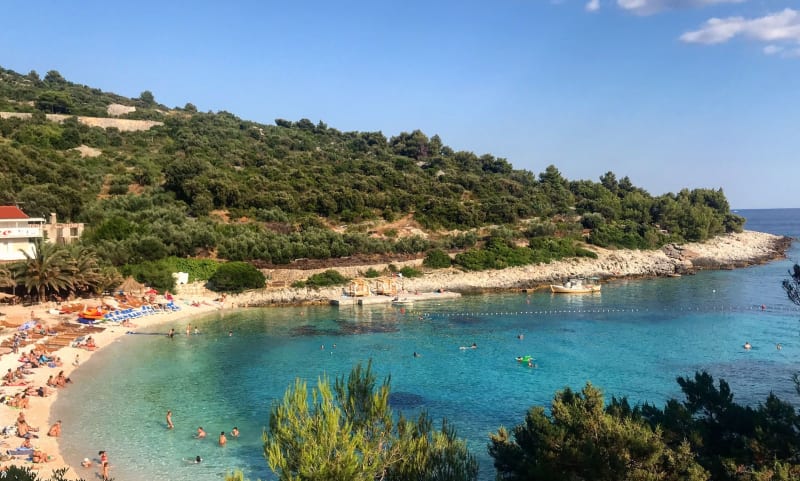 dalmatia
 Vis
The furthest inhabited island from the Dalmatian coast — a former Yugoslav naval base, still keeping its secrets, still serving the best food in the archipelago.
Explore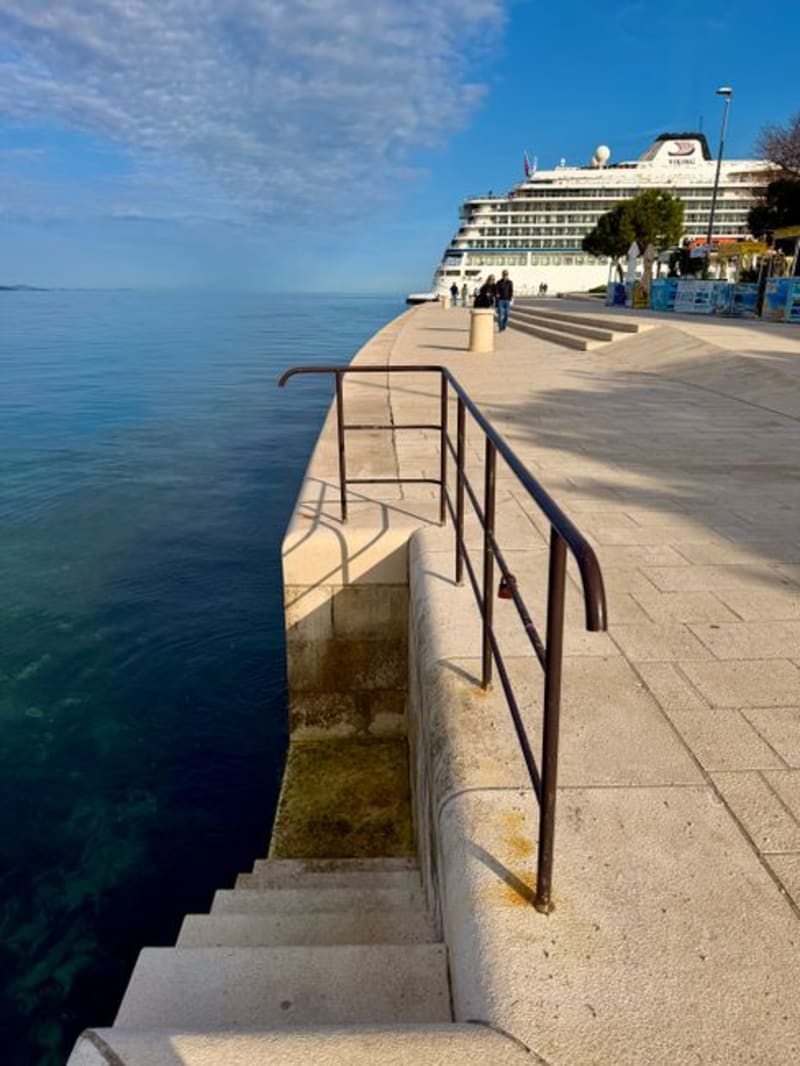 dalmatia
 Zadar
A peninsula city where Roman stones meet the sea's own music, and sunsets once impressed Hitchcock himself.
Explore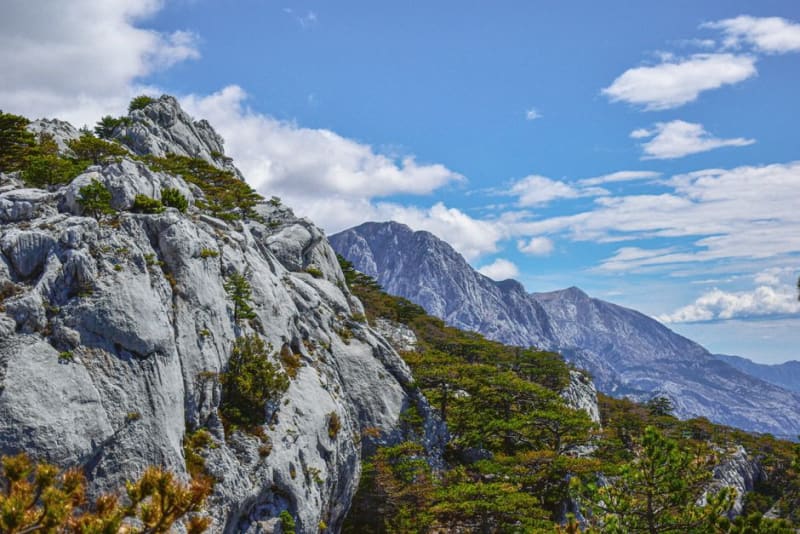 dalmatia
 Biokovo
A jagged coastal mountain range towering over Makarska, capped by a glass skywalk that hangs out over a thousand-meter drop to the Adriatic.
Explore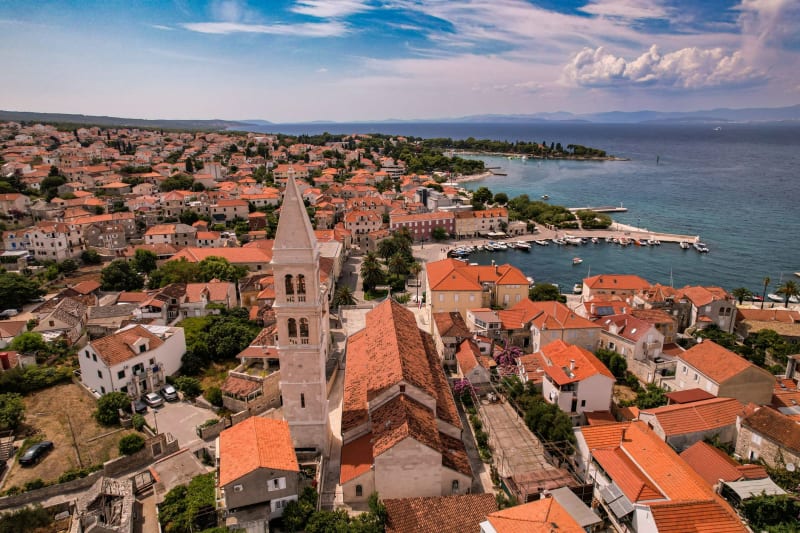 dalmatia
 Brač
An island of white limestone quarried for millennia, where Zlatni Rat's famous shingle point gets all the photographers but the olive groves and stone villages get the silence.
Explore