
A tiny medieval town packed onto its own island between the mainland and Čiovo, all honey-coloured stone, Venetian lions, and a cathedral portal that stops you mid-step.

We almost skipped Trogir. It sits barely twenty minutes from Split’s airport, so close that most people see it only as a name on a road sign on their way to somewhere with a bigger beach. That would have been a mistake. We drove in on a late afternoon, parked badly on the mainland side, and crossed the small bridge onto the island where the old town sits — and within a hundred metres I understood that this little place has been quietly perfect for about eight hundred years.
A town you can hold in your hand
Trogir’s old town is an island so small you can walk its perimeter in fifteen minutes, which is exactly what Lia and I did first, anti-clockwise along the seafront promenade. On one side, the water and the masts of the boats; on the other, a continuous wall of Venetian and Romanesque houses in that warm Dalmatian limestone that seems to store the day’s sun and give it back at dusk. The Venetians ran this coast for centuries and left their winged lion of St Mark carved over half the doorways, watching you go past with the same bored expression it wears all over the Adriatic.
Inside, the lanes are barely shoulder-width, and they open without warning onto small squares. The main one holds the Cathedral of St Lawrence, and its west portal — carved by a local master called Radovan in 1240 — is the kind of thing I usually walk past with a tourist’s glazed eyes. Not this one. It is a dense riot of stone: lions, apostles, the labours of the months, a pair of slightly alarmed-looking nudes representing Adam and Eve standing on the lions’ backs. I stood under it far longer than I expected to.

Climbing the tower, eating by the water
For a few euros you can climb the cathedral’s bell tower, and you should. The stairs get narrow and frankly a little vertiginous near the top, but they deliver you to a platform with the whole town laid out below — the grid of medieval roofs, the Kamerlengo fortress squatting at the island’s western tip, the channel of bright water separating Trogir from the island of Čiovo across the way. Lia, who claims not to like heights, stayed up there longer than I did.
We ate that night at a konoba on the Čiovo side, away from the busier waterfront restaurants, where the owner brought us grilled fish he said had been swimming that morning and refused to write a bill until we had finished a small carafe of his own white wine. It was the kind of slow, unhurried Dalmatian evening that I keep chasing along this coast.

Stay the night if you can. The day-trippers and the excursion boats from Split clear out by early evening, and the town that remains — lamplit, quiet, echoing slightly underfoot — is the better one. Come in May or September; in high summer the narrow lanes get tight, and Trogir is too small to absorb a crowd gracefully.
Keep exploring
More from Dalmatia
 dalmatia
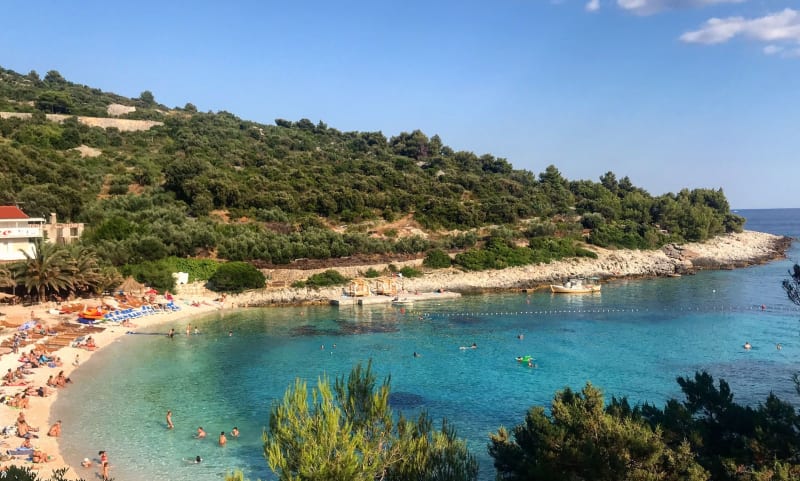
 Vis
The furthest inhabited island from the Dalmatian coast — a former Yugoslav naval base, still keeping its secrets, still serving the best food in the archipelago.
Explore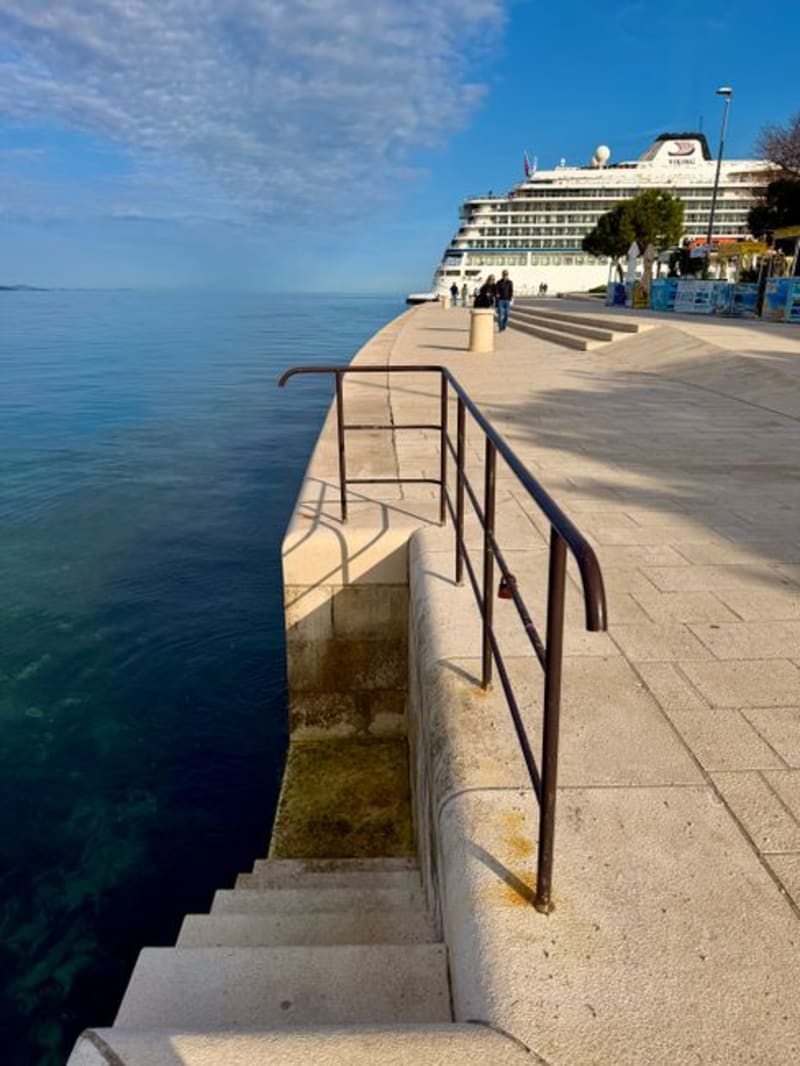 dalmatia
 Zadar
A peninsula city where Roman stones meet the sea's own music, and sunsets once impressed Hitchcock himself.
Explore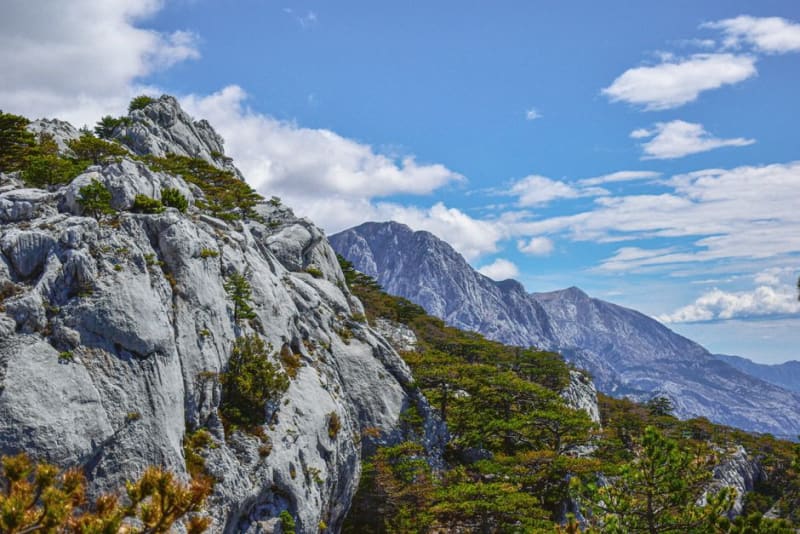 dalmatia
 Biokovo
A jagged coastal mountain range towering over Makarska, capped by a glass skywalk that hangs out over a thousand-meter drop to the Adriatic.
Explore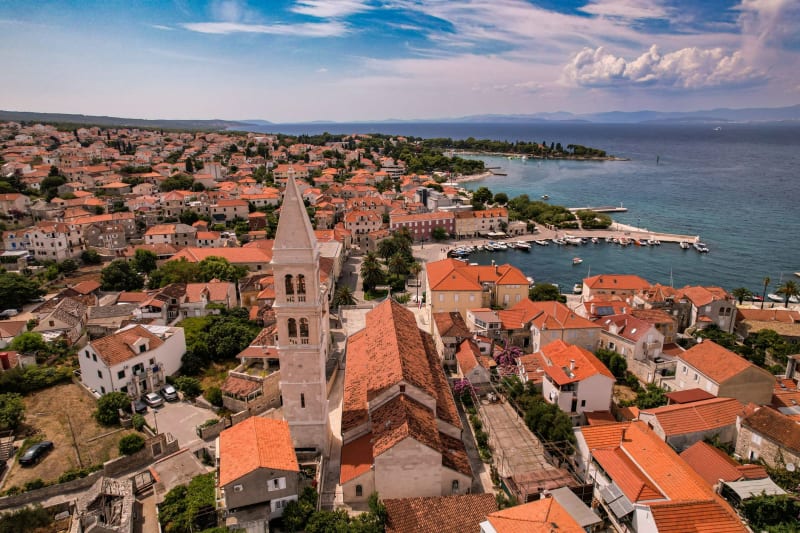 dalmatia
 Brač
An island of white limestone quarried for millennia, where Zlatni Rat's famous shingle point gets all the photographers but the olive groves and stone villages get the silence.
Explore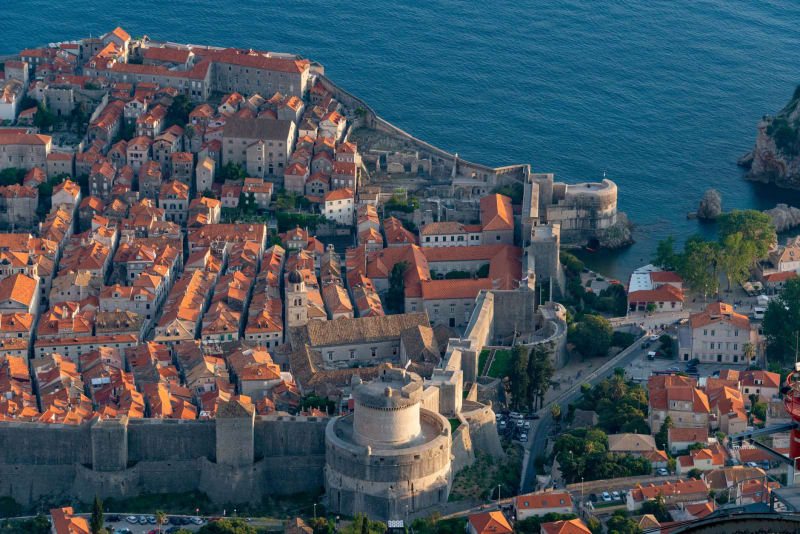 dalmatia
 Dubrovnik
Fortress walls enclosing one of the most formally perfect old cities on earth — best understood before 8am, when it still belongs to itself.
Explore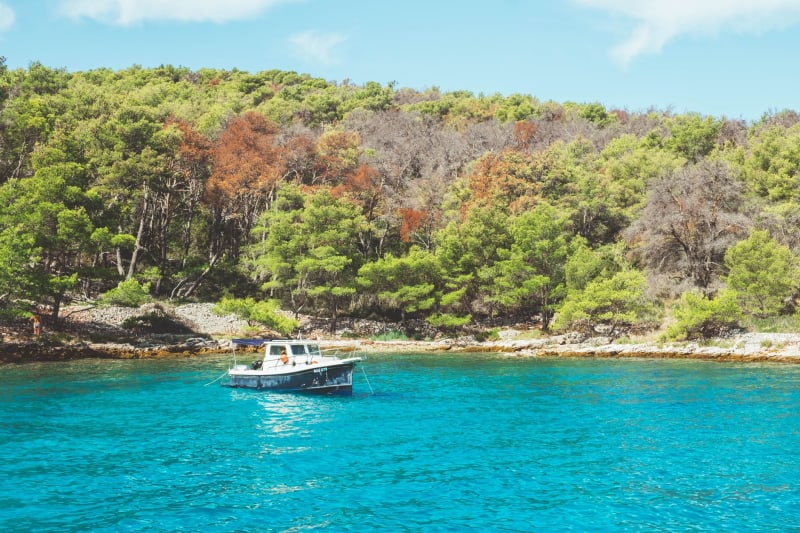 dalmatia
 Hvar
The Adriatic's most famous island has a party harbour and a Venetian centre — but it's the lavender plateau in the interior that explains why people keep coming back.
Explore