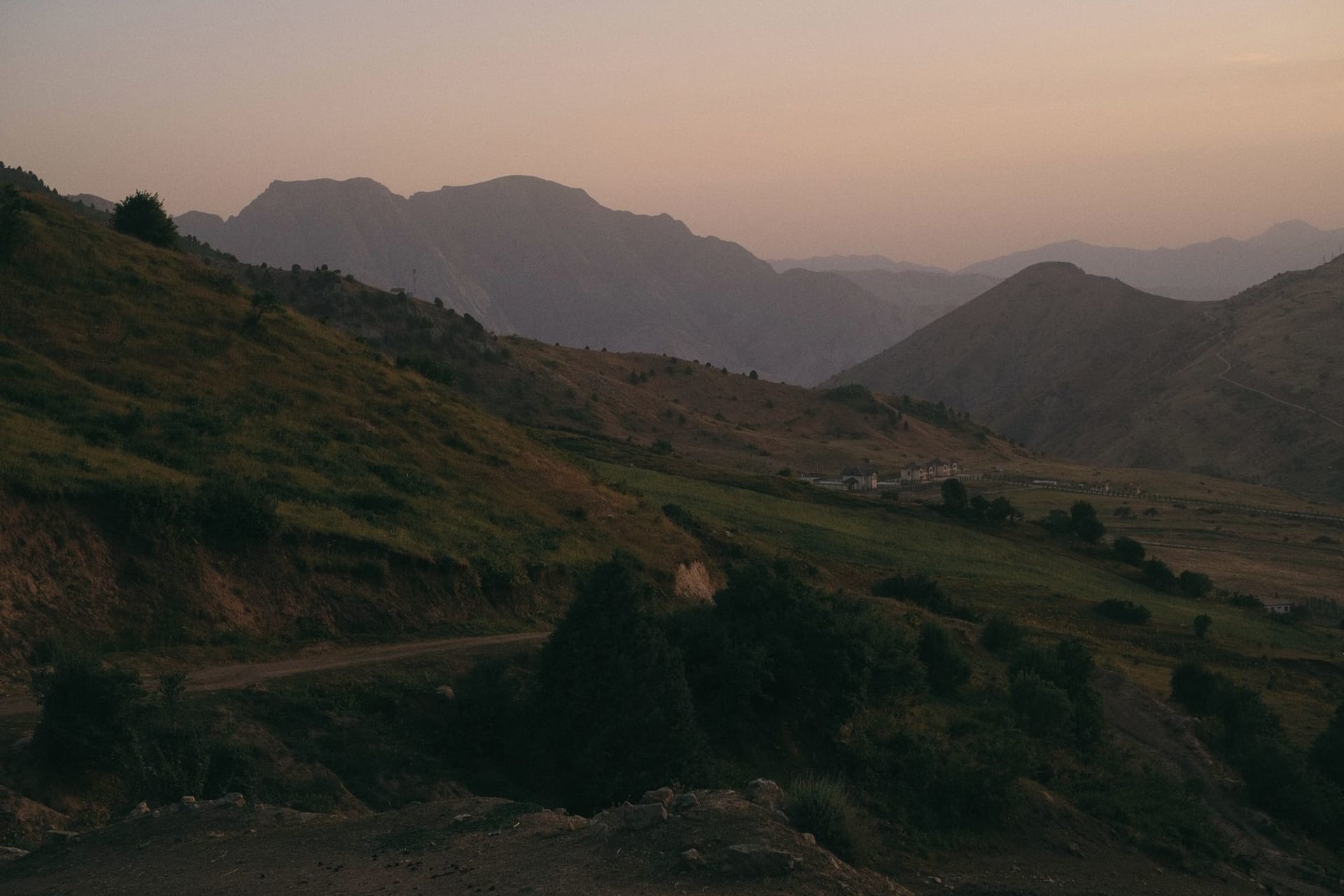
A compact alpine world of turquoise lakes, 5,000-meter peaks, and trails that reward the effort with some of the most photogenic terrain in Central Asia.

The Fan Mountains occupy a corner of Tajikistan between the Zeravshan Valley and the Pamir-Alay range, and they offer something that the larger Pamirs sometimes don’t: scale that a person can actually relate to. The peaks here top out around 5,500 meters rather than 7,000. The valleys are accessible without specialized mountaineering gear. The trail between Penjikent and Iskanderkul, threading through the Seven Lakes, can be walked in four days with a pack. None of this makes the Fans easy, exactly, but it makes them approachable in a way that rewards the moderately fit traveler who wants the mountains without an expedition.
The Seven Lakes
Haft Kul — Seven Lakes — is the most celebrated trek in the Fan Mountains and it earns its reputation. The route climbs through a series of lakes whose colors shift as you gain altitude: Nofin is dark green and surrounded by willows; Soya is quieter, set back from the trail; Marguzor, the largest, is wide and turquoise and ringed by apricot orchards at the lower end. The upper lakes — Khurdak, Hazorchashma — are smaller, more austere, surrounded by stone and the remnant snow patches that linger through summer.
I did the route southbound from Penjikent over three days, spending a night at Alaudin Lake and another at the base of the Mutnye Lakes. The trail is clear enough that a guide is optional rather than necessary, but the campsites benefit from local knowledge — a family near Alaudin allowed us to pitch our tent in their pasture and produced tea and bread at 6 a.m. unprompted.
Alaudin Lake
If I had to choose one place in the Fan Mountains, it would be Alaudin. The lake sits in a cirque of red and orange peaks that reflect in the water on still mornings in a way that feels designed to be photographed but actually predates photography by a geological age. The moraine around it is walkable for an hour or two, and from the ridge above you can see both Alaudin and the Kulikalon Lakes below — a view that requires some vocabulary adjustment.
The Trekking Infrastructure
The Fan Mountains have been attracting trekkers since the Soviet mountaineering clubs established routes here in the 1960s, and the infrastructure reflects that history. Tea houses and simple homestays exist at intervals. Donkeys can be hired for baggage. The topographic maps, though dating from the Soviet period, are accurate enough to navigate from. A few operators in Dushanbe and Penjikent run guided trips with equipment if you want to come without gear.
What I’d caution against is underestimating the terrain. The passes between lake basins gain altitude quickly, and the sun at elevation is unforgiving. Water from streams is generally clean but worth treating. Bears are not a real concern; the main wildlife encounter is likely to be a very large tortoiseshell cat that lives near the Alaudin tea house and has been photographed approximately nine thousand times.
Base Options
Penjikent is the most common gateway for the Seven Lakes approach. Samarkand, just across the Uzbek border, is close enough to make a combined trip natural. Iskanderkul sits at the other end of the main trekking route and can be used as an exit point, with onward transport to Dushanbe available from the main road.
When to go: June through September, with July and August offering the warmest temperatures and driest trails. June still has snowmelt adding to stream crossings and wildflower carpets on lower slopes. September is quieter, the light shifts to something golden, and the aspen leaves begin turning — the Fan Mountains in early autumn are one of Tajikistan’s best arguments for coming back.
Keep exploring
More from Tajikistan
 tajikistan
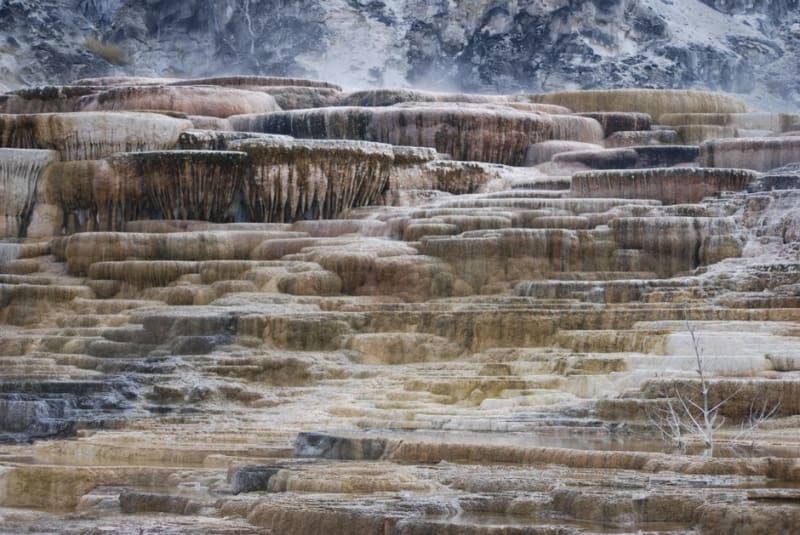
 Garm Chashma
Mineral-laden hot springs pouring down chalky travertine terraces in a narrow Pamir side valley, steaming even in a bitter wind.
Explore tajikistan
 Hisor Fortress
A rebuilt citadel on a bluff outside Dushanbe whose foundations reach back to pre-Islamic Central Asia, now framed by gardens and a bazaar.
Explore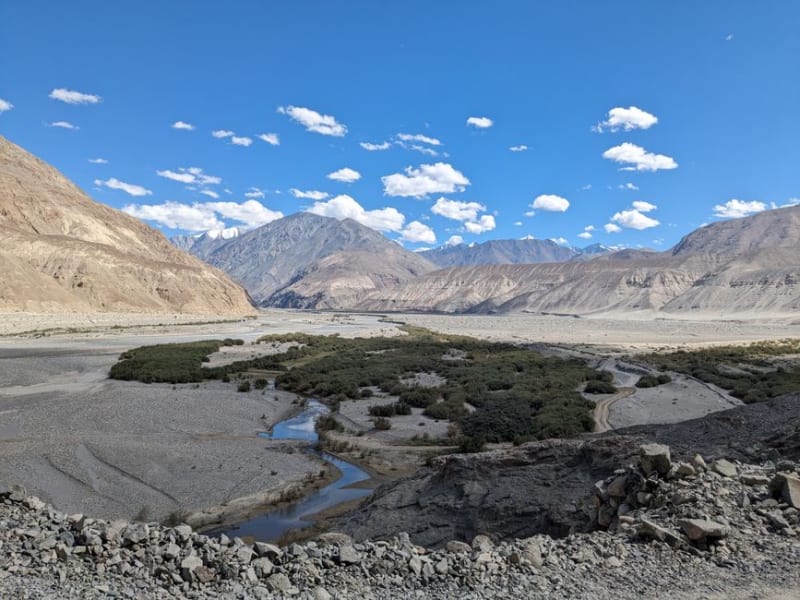 tajikistan
 Ishkashim
A quiet Wakhan border town whose weekly island market lets Tajik and Afghan traders sell to each other without either side needing a visa.
Explore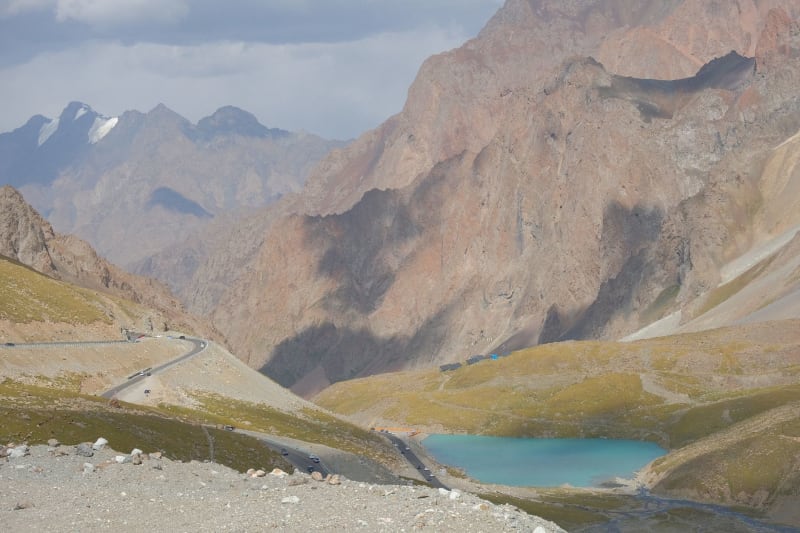 tajikistan
 Iskanderkul
A glacier-fed lake in the Fan Mountains with water so improbably blue it looks like someone made a decision about it.
Explore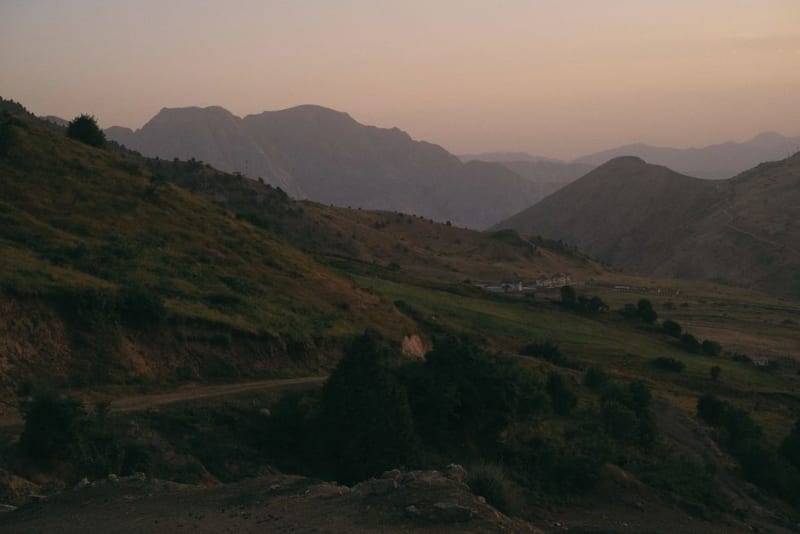 tajikistan
 Kalai-Khumb
A dusty riverside town on the Panj where the Pamir Highway stops pretending to be a normal road and starts climbing into the mountains.
Explore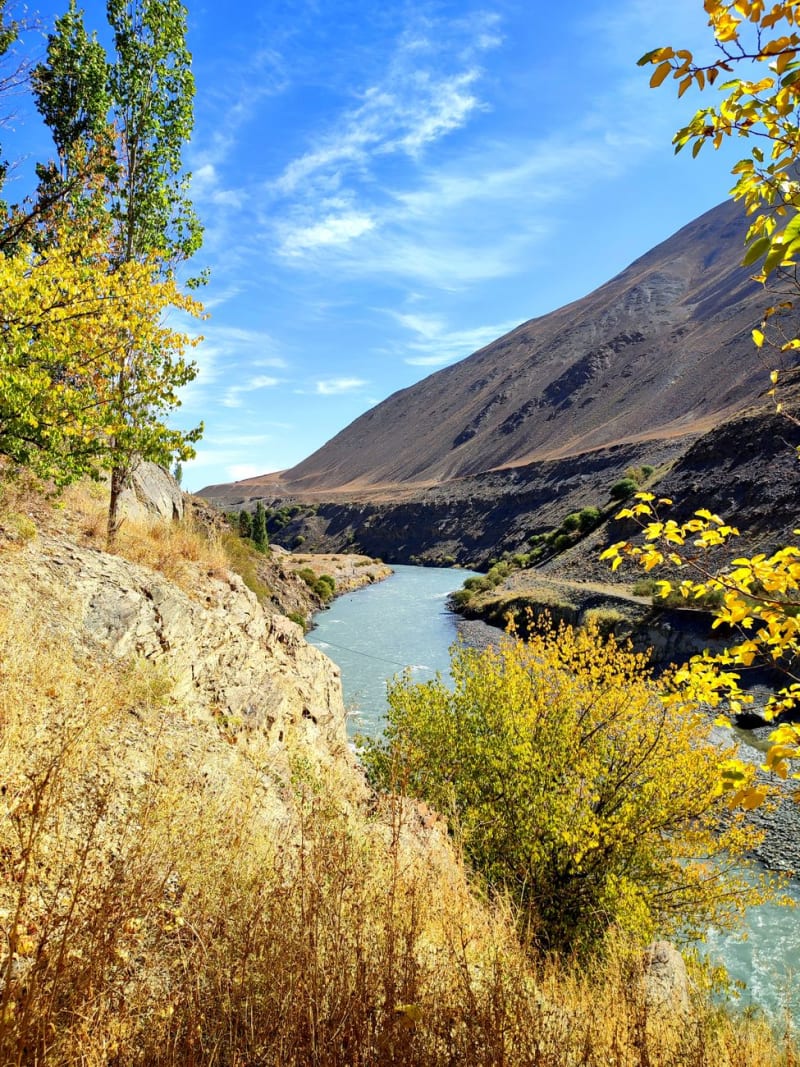 tajikistan
 Karakul Lake
A vast, fiercely blue salt lake sitting at nearly 4,000 metres inside an ancient meteorite crater on the high Pamir, where a single windblown village clings to the shore beneath the thinnest sky I have ever breathed.
Explore