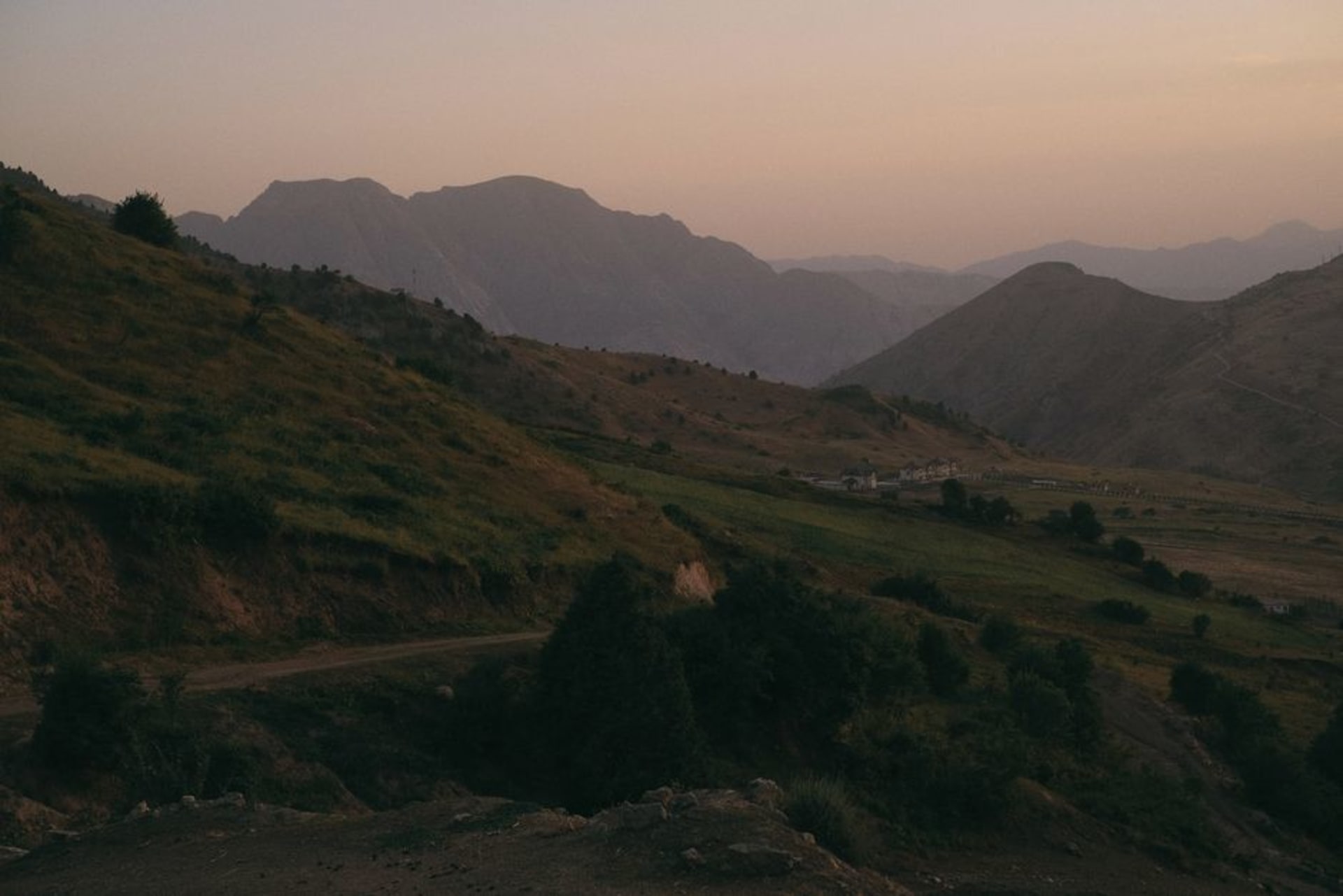
Kalai-Khumb
"This is the last place you can buy a decent coffee before the road forgets what asphalt is."
A dusty riverside town on the Panj where the Pamir Highway stops pretending to be a normal road and starts climbing into the mountains.

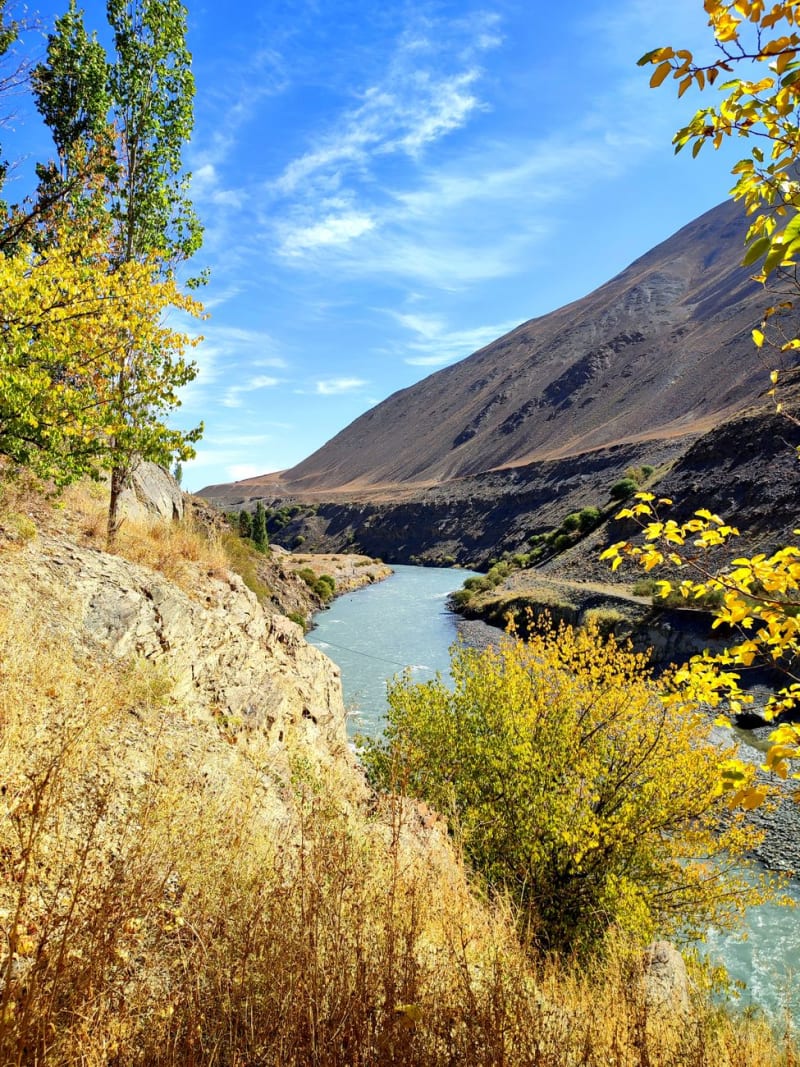
We rolled into Kalai-Khumb after a long day driving south from Dushanbe, and the first thing I noticed was the river — the Panj, wide and the color of milky tea, with Afghanistan sitting right there on the other bank, close enough that we could see goats moving on the hillside and, once, a man on a donkey watching our car pass with what looked like total indifference. That’s the thing about this stretch of Tajikistan that took me a while to get used to: a whole other country is just across the water the entire time, no fence, no visible border post, just a river doing the job.
Kalai-Khumb itself is not much to look at, and I mean that as a compliment. It’s a working town — a market street, some Soviet-era apartment blocks, kids playing cricket with a tennis ball on a patch of gravel — and it exists mainly because this is where the Pamir Highway stops being a normal mountain road and starts being the M41, the one that climbs toward Khorog and eventually the high plateau. Our driver Zafar told us, only half joking, that every vehicle gets checked here because from this point on there’s no coming back for spare parts.

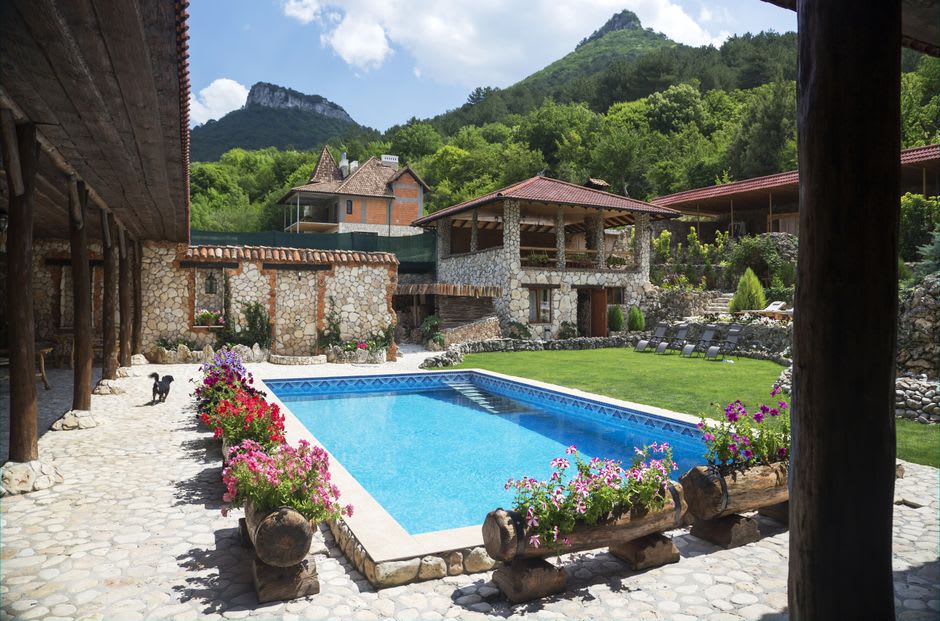
We spent the night at a small guesthouse with a courtyard full of apricot trees, and Lia and I ate dinner outside as the light went orange over the river gorge. The owner’s mother brought out a plate of dried mulberries and walnuts that she’d clearly grown herself, and refused any kind of payment for it, which is a small thing but the kind of small thing that stacks up into an impression of a place. There’s a checkpoint just outside town where you register your passport for the GBAO permit zone, a slightly bureaucratic reminder that you’re entering an autonomous region that used to be more restricted than it is now.
What I remember most, though, is the sound the town made in the early morning before we left — roosters, a truck engine turning over reluctantly, someone hammering metal somewhere. Ordinary noise, but it felt significant because I knew we were about to lose it. Past Kalai-Khumb the road narrows, the villages thin out, and the highway spends the next several hours carved directly into cliffs above the river. Kalai-Khumb is the hinge point, the last town that feels like a town before the Pamirs really begin.
When to go: Late spring through early autumn, when the road south from Dushanbe is clear of snow and the apricot trees in town are worth sitting under.
Keep exploring
More from Tajikistan
 tajikistan
 Karakul Lake
A vast, fiercely blue salt lake sitting at nearly 4,000 metres inside an ancient meteorite crater on the high Pamir, where a single windblown village clings to the shore beneath the thinnest sky I have ever breathed.
Explore tajikistan
 Khorog
The unlikely capital of Gorno-Badakhshan sits in a deep river gorge where two rivers meet, and where the Aga Khan's development projects have created something quietly extraordinary.
Explore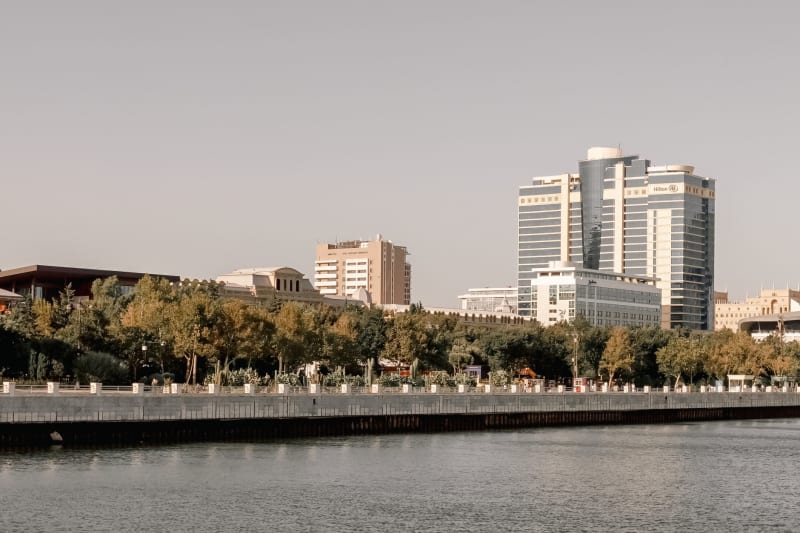 tajikistan
 Khujand
Tajikistan's second city sits in the fertile Fergana Valley where Silk Road merchants once stopped and where the bazaar still runs on the same logic.
Explore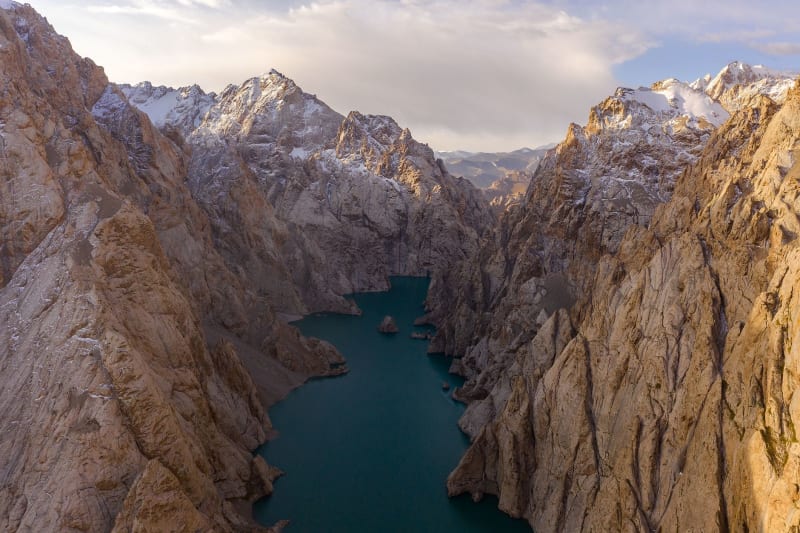 tajikistan
 Murghab
A Kyrgyz market town at 3,600 meters on the Pamir Plateau, where the sky is closer than anywhere I've been and the wind never quite stops.
Explore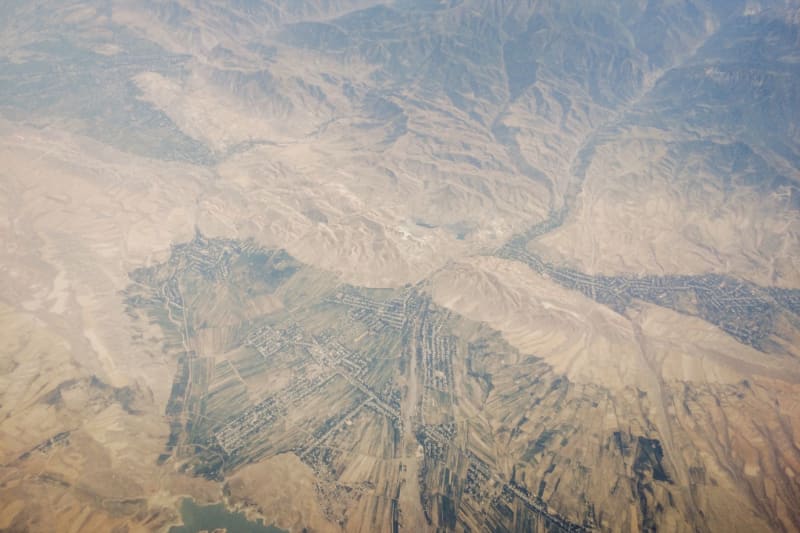 tajikistan
 Nurek
A Soviet-built dam town on the Vakhsh River where one of the world's tallest earthen dams holds back a reservoir that turns improbable shades of green.
Explore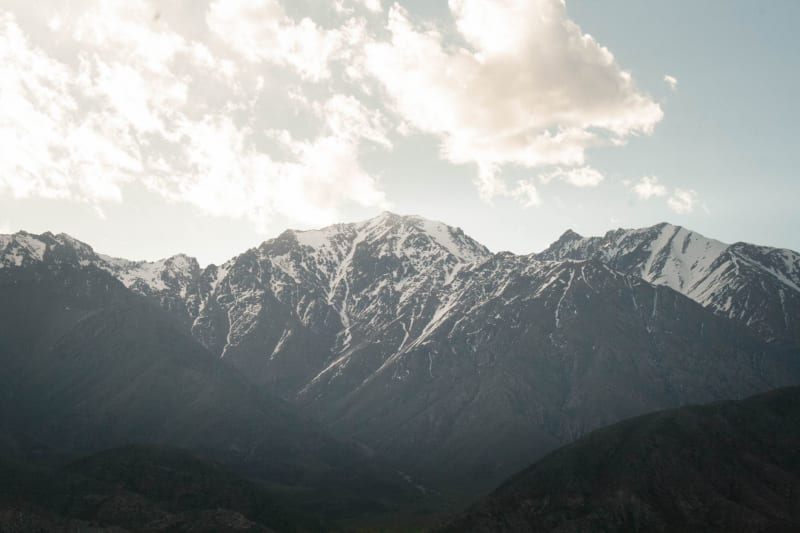 tajikistan
 Pamir Highway
The M41 is one of the world's highest roads — a 1,200-kilometer corridor of altitude, emptiness, and improbable hospitality.
Explore