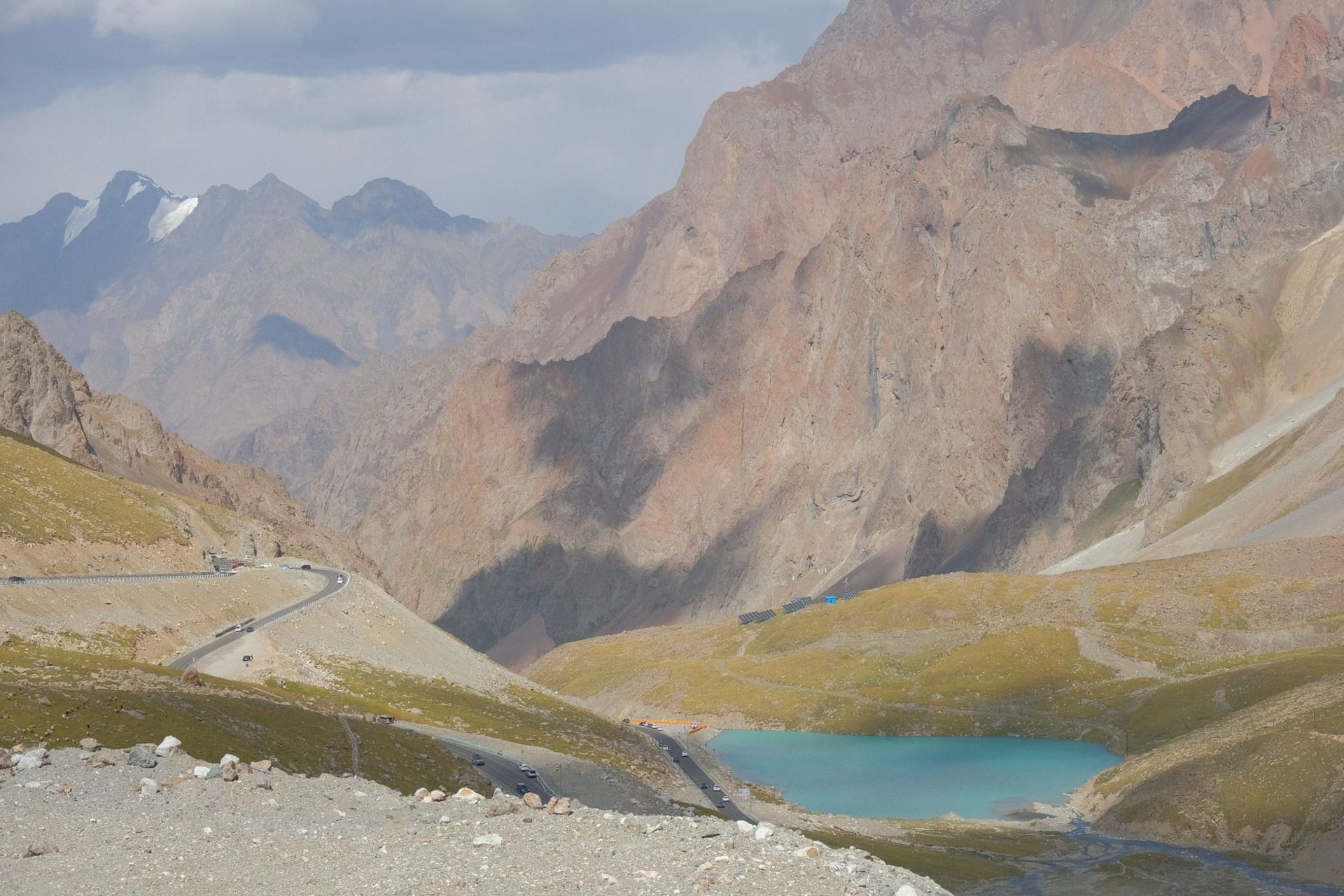
Iskanderkul
"I'd been told the color was extraordinary. It was more than that — it was argumentative."
A glacier-fed lake in the Fan Mountains with water so improbably blue it looks like someone made a decision about it.

Iskanderkul takes its name from Alexander the Great, which may or may not reflect an actual historical connection and almost certainly reflects the regional tendency to attach famous conquerors to notable landscapes. Whatever its etymology, the lake earns its reputation without the borrowed prestige. The water is the kind of blue that makes you question your color vocabulary — somewhere between turquoise and ultramarine, shifting with the light and the cloud cover in ways that mean you keep looking at it.
The Drive Up
The road from the Dushanbe-Khujand highway turns off at Ayni and climbs through a sequence of narrow gorges before the valley opens. Lia counted seven hairpins on one section where the drop on the outer edge was purely conceptual — there was no guardrail, just a suggestion of road and then a long way down. Our driver took them with the casual familiarity of someone who has long since stopped registering the exposure. I gripped the door handle and watched the limestone get closer.
The approach valley is dramatic enough that the lake, when it finally appears, still manages to surprise. You come around a bend and there it is, sitting at 2,195 meters with the Fan Mountains stacked behind it, and for a moment the scale defeats your processing.
Around the Lake
A rough trail circles the lake in four to six hours, depending on how often you stop to photograph the same water from marginally different angles. I stopped a lot. The northern shore is where the guesthouses cluster — simple operations with shared bathrooms and communal dinners that run to bread, soup, and whatever the family decided to cook — and from there the southeast shore is quieter and gives you the best angle on the peaks reflected in the water.
A short detour south leads to a waterfall that drops in stages through a slot canyon. In mid-summer it’s thunderous; by late September it quiets to something more meditative. We went in late July and the sound was physical.
The Fan Mountains Context
Iskanderkul sits at the edge of the Fan Mountains, which are a smaller, somewhat more accessible range than the Pamirs but still serious terrain. The Seven Lakes — Haft Kul — are a day’s hike away and worth combining into a longer stay if you have the time and legs. The trekking infrastructure here is basic but functional: guides can be hired in the village, and the main routes are marked well enough that the independently-minded can navigate without too much uncertainty.
Practical Notes
Most people come as a day trip from Dushanbe (four hours each way) or as a stop en route to Penjikent. Staying two nights gives you the lake to yourself in early morning, when the tour groups haven’t arrived and the light is doing something specific to the water that I am still not sure I can describe accurately. Bring layers — the altitude means evenings get cold even in summer.
When to go: June through September. July and August are warmest but busiest; June has snowmelt water in the streams and vivid wildflowers on the surrounding slopes. Late September offers golden light and near-empty trails but cold nights that require a proper sleeping bag.
Keep exploring
More from Tajikistan
 tajikistan
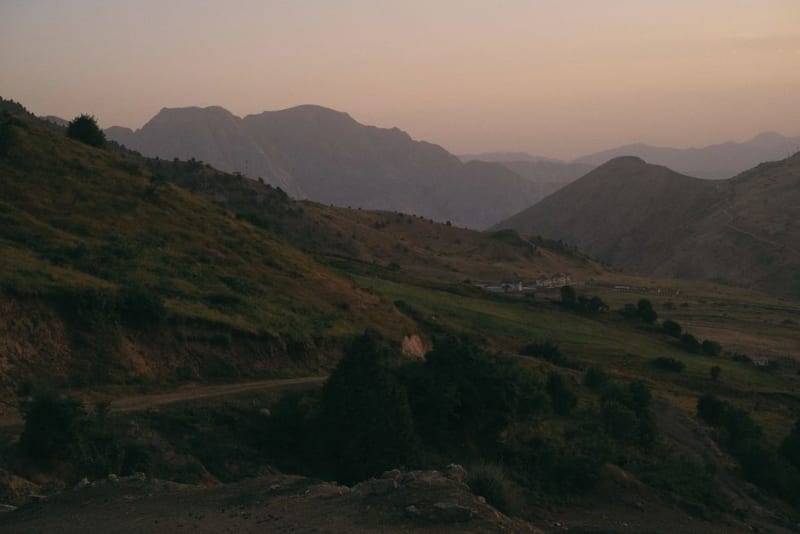
 Kalai-Khumb
A dusty riverside town on the Panj where the Pamir Highway stops pretending to be a normal road and starts climbing into the mountains.
Explore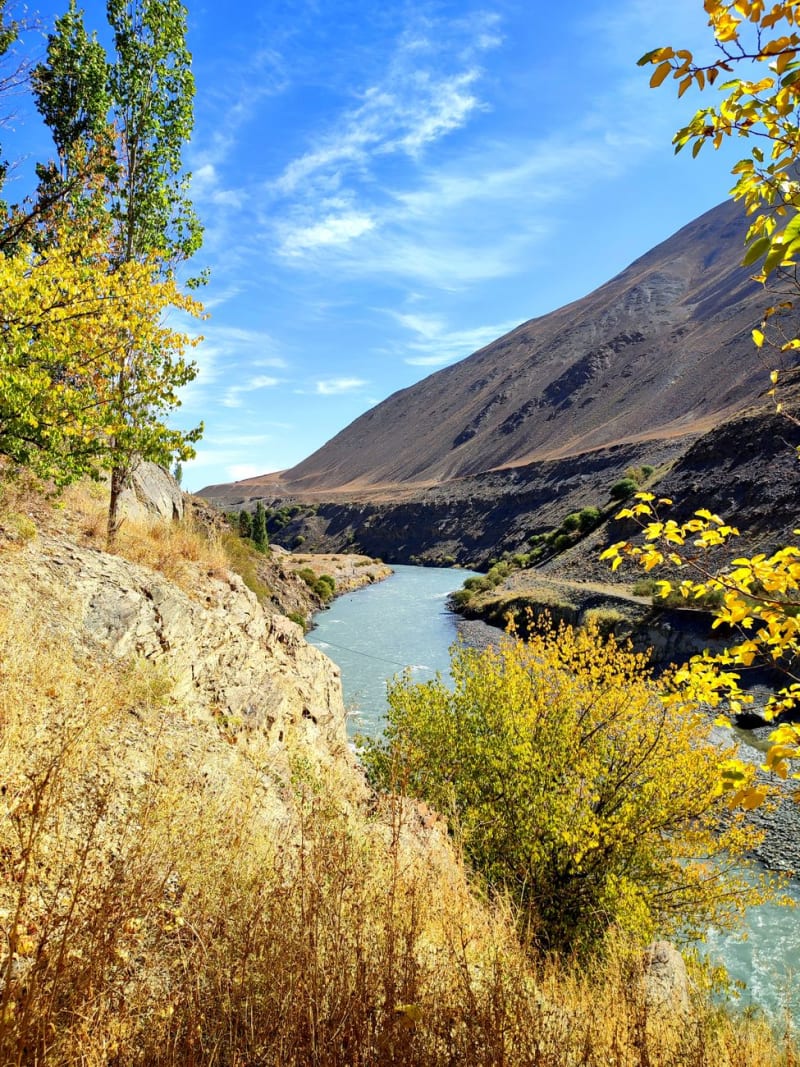 tajikistan
 Karakul Lake
A vast, fiercely blue salt lake sitting at nearly 4,000 metres inside an ancient meteorite crater on the high Pamir, where a single windblown village clings to the shore beneath the thinnest sky I have ever breathed.
Explore tajikistan
 Khorog
The unlikely capital of Gorno-Badakhshan sits in a deep river gorge where two rivers meet, and where the Aga Khan's development projects have created something quietly extraordinary.
Explore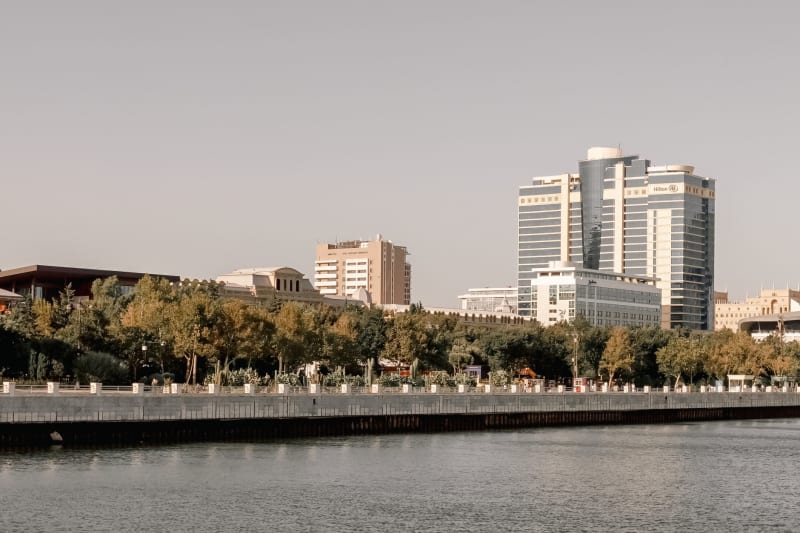 tajikistan
 Khujand
Tajikistan's second city sits in the fertile Fergana Valley where Silk Road merchants once stopped and where the bazaar still runs on the same logic.
Explore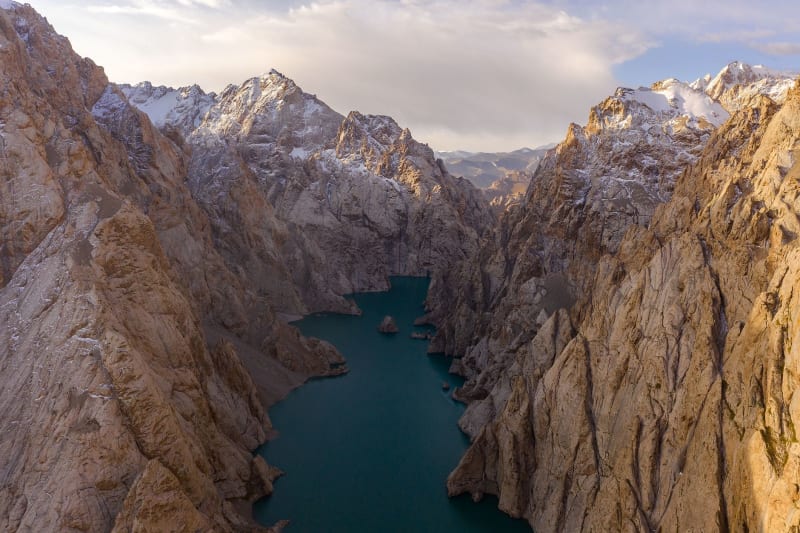 tajikistan
 Murghab
A Kyrgyz market town at 3,600 meters on the Pamir Plateau, where the sky is closer than anywhere I've been and the wind never quite stops.
Explore tajikistan
 Nurek
A Soviet-built dam town on the Vakhsh River where one of the world's tallest earthen dams holds back a reservoir that turns improbable shades of green.
Explore