
Nampo
"They built an eight-kilometer dam to reclaim land from the sea, and somehow the apples are the proudest thing about it."
Pyongyang's port city on the Yellow Sea, where a tidal barrage the length of a small highway crosses the Taedong estuary and the country's best apples grow in the hills behind.

Nampo is fifty kilometers west of Pyongyang, and the road there passes through a landscape that surprised me: the flatlands around the capital give way to orchards as you approach the city, apple trees in rows stretching up gentle slopes, the fruit still hanging in October in clusters of red and green. My guide mentioned Nampo’s apples the way a person mentions something they genuinely love — not reciting a fact but offering a recommendation. She had grown up in this region. The apples, she said, were the best in the country. I ate one she produced from a bag under her seat. She was right.
The West Sea Barrage is the reason most tours include Nampo on the itinerary, and it justifies its inclusion. Completed in 1986 after five years of construction, it closes the mouth of the Taedong estuary with eight kilometers of concrete embankment and three lock gates large enough to pass ocean-going ships. The scale is genuinely astonishing in person — not in the way that grand architecture is astonishing, but in the way that engineering at the limit of what seemed possible is astonishing. It also reclaimed vast tracts of agricultural land from the tidal flats. Whether this was worth the ecological cost to the Yellow Sea fisheries is not a question anyone asks aloud in Nampo.

We walked out onto the barrage embankment in the afternoon. The wind off the Yellow Sea was cold and tasted of salt and something more distant — that open-ocean smell that comes from water that has been traveling for a long time before it reaches you. On the western side, the sea stretched to the horizon with nothing breaking it. On the eastern side, the freshwater reservoir was still and brown in the October light, reed beds along its margins, a few egrets working the shallows. The barrage created two different worlds on either side of itself, and walking between them felt like crossing a much larger boundary than it was.
The city of Nampo itself is a working port, and the waterfront has the honest neglect of port cities everywhere — rusting cranes, container stacks, the smell of fuel and cold water. A few fishing boats were coming in as we drove past the harbor, and the catch was being sorted on the dock by women in rubber aprons. No one waved at the tour bus. This seemed right. The harbor was busy doing harbor things and we were beside the point.

We stopped on the way back at a roadside stand where a woman was selling the apples I’d been told about. They were smaller than export apples, slightly asymmetric, and their skin had the roughness of fruit that hasn’t been polished. The flesh was dense and very sweet with a slight tartness at the core. My guide bought a kilo and we ate them on the bus back to Pyongyang with the late sun coming through the windows orange and warm, and the apple taste mixed with the smell of dust from the road, and for a moment the bus felt like any bus anywhere, carrying ordinary people home through an ordinary afternoon.
When to go: September and October are ideal — the apple harvest is in full swing and the coastal light is at its most dramatic. The West Sea Barrage is accessible year-round as a day trip from Pyongyang. Allow a full day to combine the barrage with the port area and a drive through the orchard country in the hills above the city.
Keep exploring
More from North Korea
 north-korea
Panmunjom
The Joint Security Area where the Korean War never quite ended — a strip of concrete and painted lines where two soldiers stand a meter apart and do not look at each other.
Explore north-korea
Pyongsong
A closed science city an hour from Pyongyang, glimpsed only through a bus window on the one detour our guides ever allowed.
Explore north-korea
Pyongyang
The world's most choreographed capital, where every boulevard, monument, and smile has been arranged for an audience of one: you.
Explore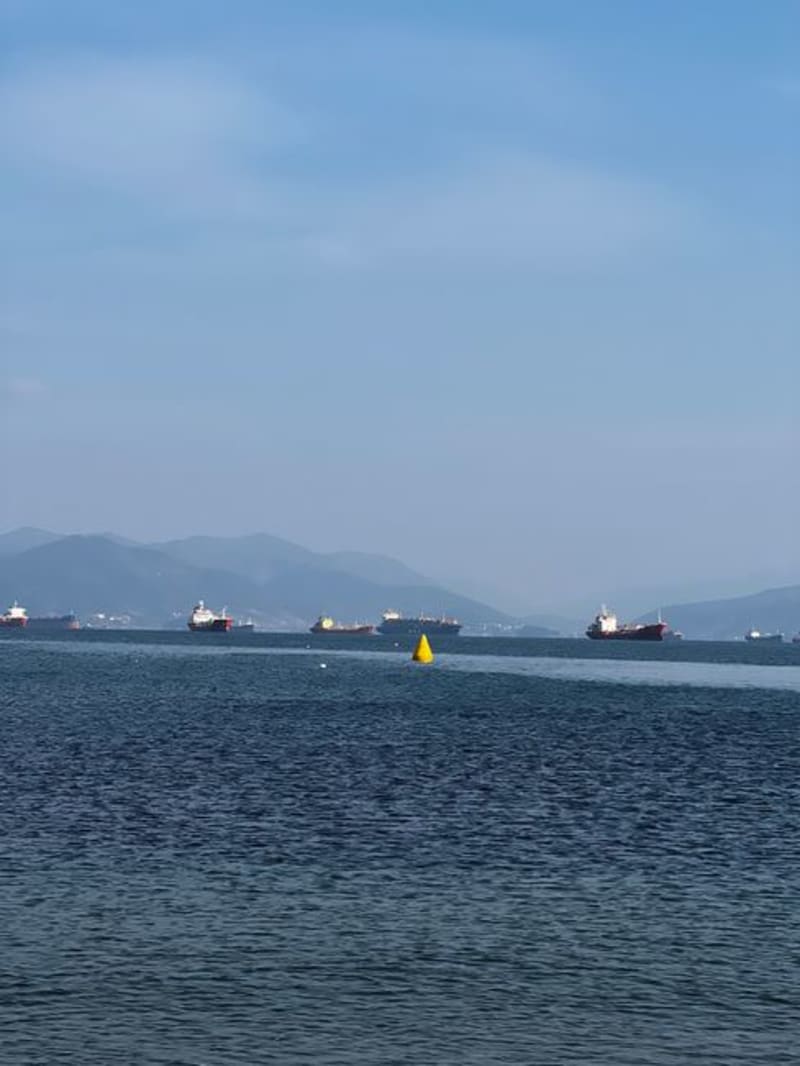 north-korea
Rason
A strange free-trade port on North Korea's northern edge, where Chinese traders, a casino, and fishing boats share a coastline the state rarely opens.
Explore north-korea
Samjiyon
A gleaming new town near Mount Paektu built almost overnight, where the concrete still smelled fresh under a bitter mountain wind.
Explore north-korea
Sariwon
A rebuilt 'folk village' of tiled-roof houses and painted pavilions where I watched a wedding-dance performance staged just for us.
Explore