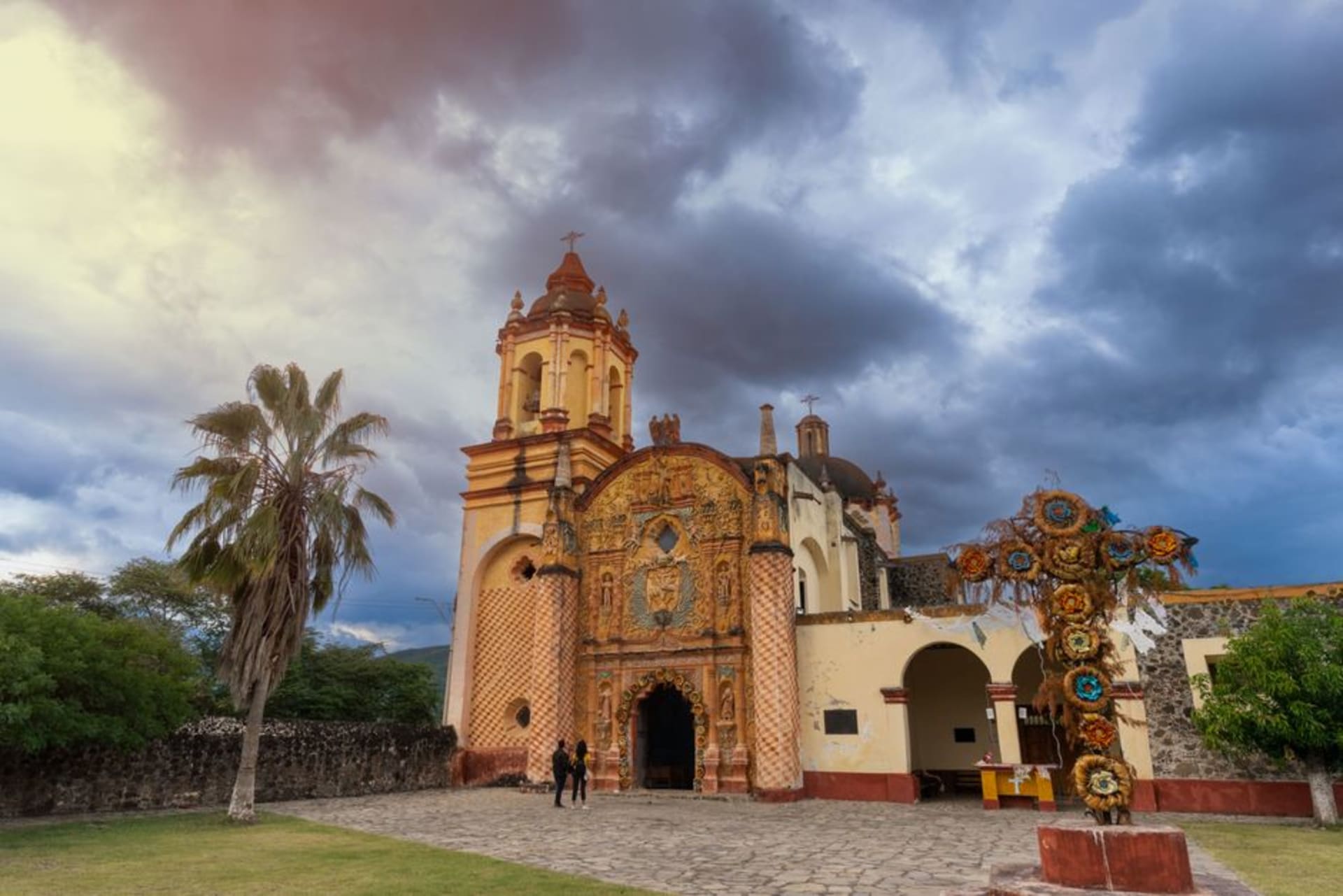
Huépac
"This is the Sonora that does not come up in any travel guide, the one where the silence is loud enough to make you stop talking."
Huépac is a seventeenth-century Jesuit mission town folded into the Sonora River valley so quietly that the highway barely acknowledges it. A whitewashed church, a shaded plaza, old men playing cards under fig trees — the kind of place that asks nothing of you except that you slow down.

I came through Huépac on a Tuesday in early March, following Federal Highway 89 south along the Río Sonora from Ures, and the town arrived so quietly I nearly drove past it. No billboard, no arch, no painted welcome. Just a cluster of low adobe walls, a single palm, and then the church tower appearing above the roofline like an afterthought someone placed there by hand. I parked, walked the plaza once, and counted seven people including myself. An old man was dealing cards at a shaded table. A dog slept under a fig tree. Fallen figs were rotting in the dust and no one had thought to sweep them up. I stayed four hours longer than planned.
The Mission at the End of the Plaza
The Templo de Nuestra Señora de la Asunción stands at the far end of Huépac’s main plaza with the particular confidence of a building that has survived three centuries of indifference. Built by Jesuits in the seventeenth century as part of the Ruta de las Misiones threading through the Sonora River valley, it wears its age without apology: thick whitewashed walls, a single bell tower, a carved door frame where Baroque ambition met frontier pragmatism and reached a reasonable compromise. Inside it is cool and dim and smells of candle wax and old wood. There is no tourist information. There is no gift shop. On most afternoons a woman arranges flowers on the altar and will acknowledge your presence with the minimal nod that is the correct greeting between people who are both busy with something. I sat in a back pew for twenty minutes and felt the kind of quiet that cities spend enormous effort trying to manufacture.

The Comedor on Calle Independencia
The Sonoran flour tortilla is one of the underrated food events of Mexico, and Huépac is the sort of place where you understand why. I ate at a small comedor with no name on the door — just a hand-lettered sign in the window that said COMIDA — on Calle Independencia, maybe half a block from the church. The woman running it made tortillas by hand, pressing them thin on a comal that had been seasoned for longer than I have been alive. She served them with machaca, the salted dried shredded beef that Sonora treats as both breakfast staple and emergency ration, alongside frijoles cooked slow with a little lard. Coffee came black and strong without my asking. The bill was seventy-five pesos. I mention this not to perform surprise at the price but because it is the kind of specific detail I always wish someone had told me before I arrived somewhere.

The Orchards Below Town
What surrounds Huépac is nearly as quiet as the town itself. The Río Sonora runs below, brown and shallow in March, through a valley planted with citrus, pomegranate, and fig. These are smallholder plots, each one fenced with old wire, each one looking as if it was planted by a particular person with a particular argument about how a farm should work. I walked a dirt track south of the church for thirty minutes without meeting anyone. The surrounding hills are dry and ochre, dotted with cardon cactus, and in the afternoon light they go a color I have not managed to photograph correctly in three attempts. Some places resist the phone camera. Huépac is one of them, and I have decided this is a feature rather than a problem.

Getting There
Huépac sits on Federal Highway 89, roughly two hours northeast of Hermosillo along the Río Sonora corridor. The road is paved and in reasonable condition. The nearest town of any size is Ures, about forty kilometers south. There is no bus service I am aware of, so a car is necessary. Fill the tank in Ures or Hermosillo — Huépac has no gas station, and the next one north is a long stretch of valley away.
Keep exploring
More of Sonora
Keep exploring
More from Sonora
 mexico
 Banámichi
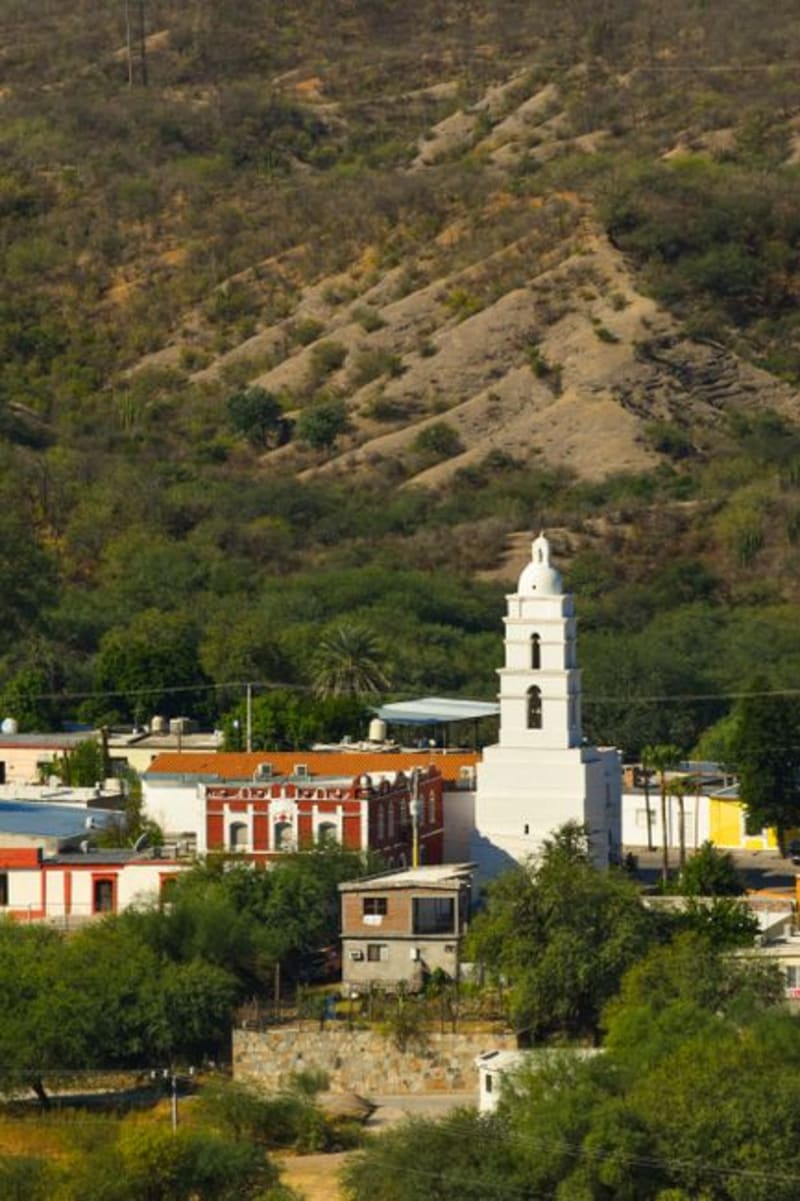
A colonial village in the Río Sonora valley where orchards of quince and pomegranate line both banks of the river and the pink facade of La Purísima glows at dusk without a tourist in sight. The cheese is pressed in family courtyards, the mezcal arrives without a label, and the Ruta del Río Sonora passes through without quite disturbing any of it.
Explore mexico
 Baviacora
Strung along the Rio Sonora between Ures and Banamichi, Baviacora is a small colonial town that seems to have quietly opted out of the last century. The cottonwood-lined river canyon makes it one of the most photographically unfair places on the Ruta Rio Sonora — a drive that remains, bafflingly, one of the least-visited good routes in the country.
Explore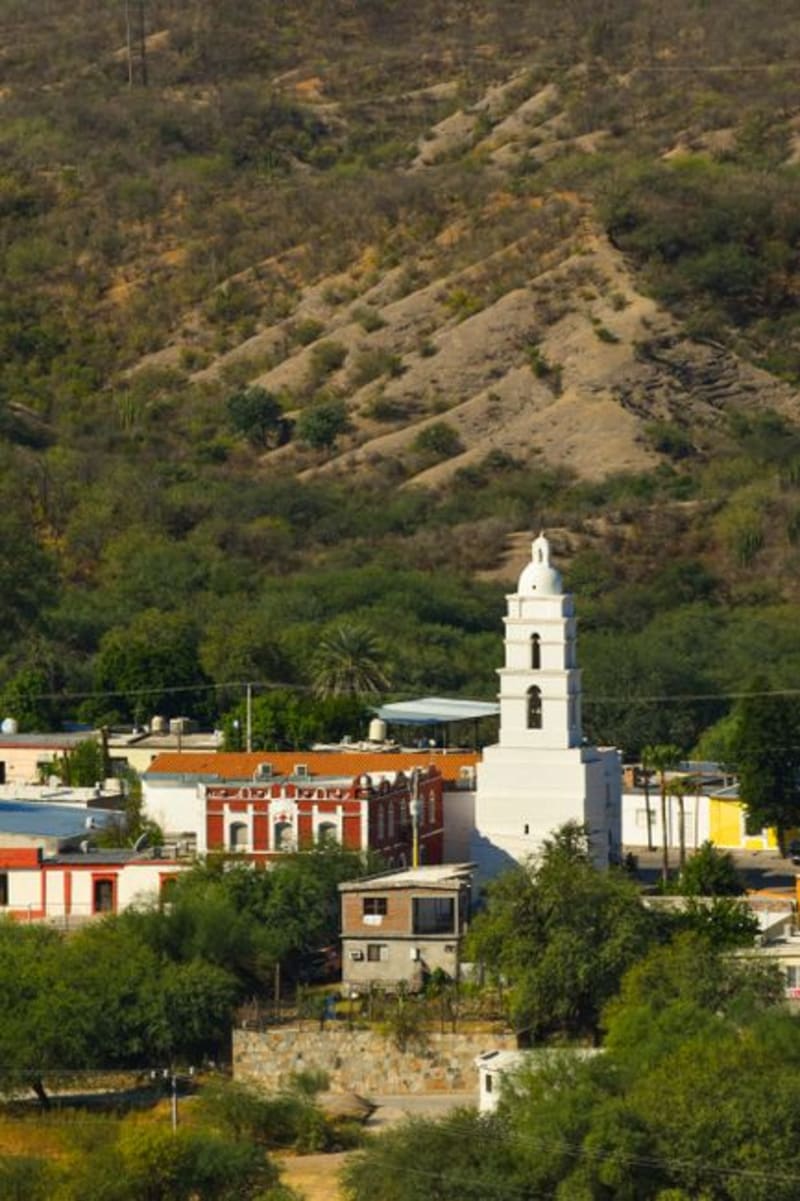 mexico
 Arizpe
Arizpe is a canyon town of three thousand people on the Río Sonora, once the seat of the Comandancia General de las Provincias Internas — an 18th-century capital governing territory that stretched from California to Texas. Its colonial church holds the remains of Juan Bautista de Anza, the man who founded San Francisco but died here, far from anything named after him. The gap between that monumental past and the goats-crossing-the-plaza present is what makes Arizpe unlike anywhere else in Sonora.
Explore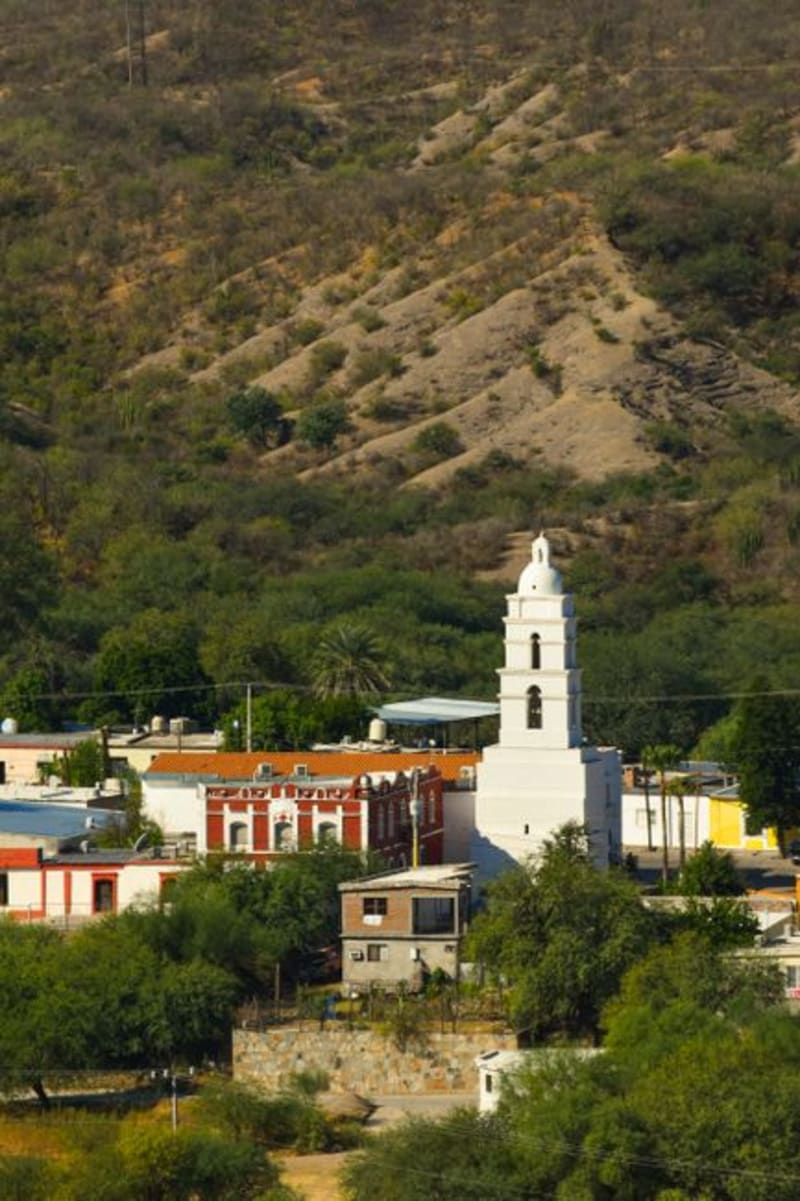 mexico
 Ures
The former capital of Sonora spent four decades at the center of the state's political life, and the cathedral and main plaza still carry that institutional weight — even now that the highway bypasses it and the orange groves along the Sonora River have long outlasted the bureaucrats.
Explore mexico
 Cucurpe
At the northern tip of the Ruta Rio Sonora, Cucurpe is the smallest and most remote of the river towns, pressed into a sierra fold where the road more or less gives up. The Jesuit mission is partly ruined, the streets are unpaved, and the silence arrives quickly.
Explore mexico
 Magdalena de Kino
A quiet Sonoran town where a 300-year-old Jesuit missionary lies beneath a glass floor in the central plaza — and every October, a hundred thousand pilgrims arrive to remind you this place is anything but ordinary.
Explore