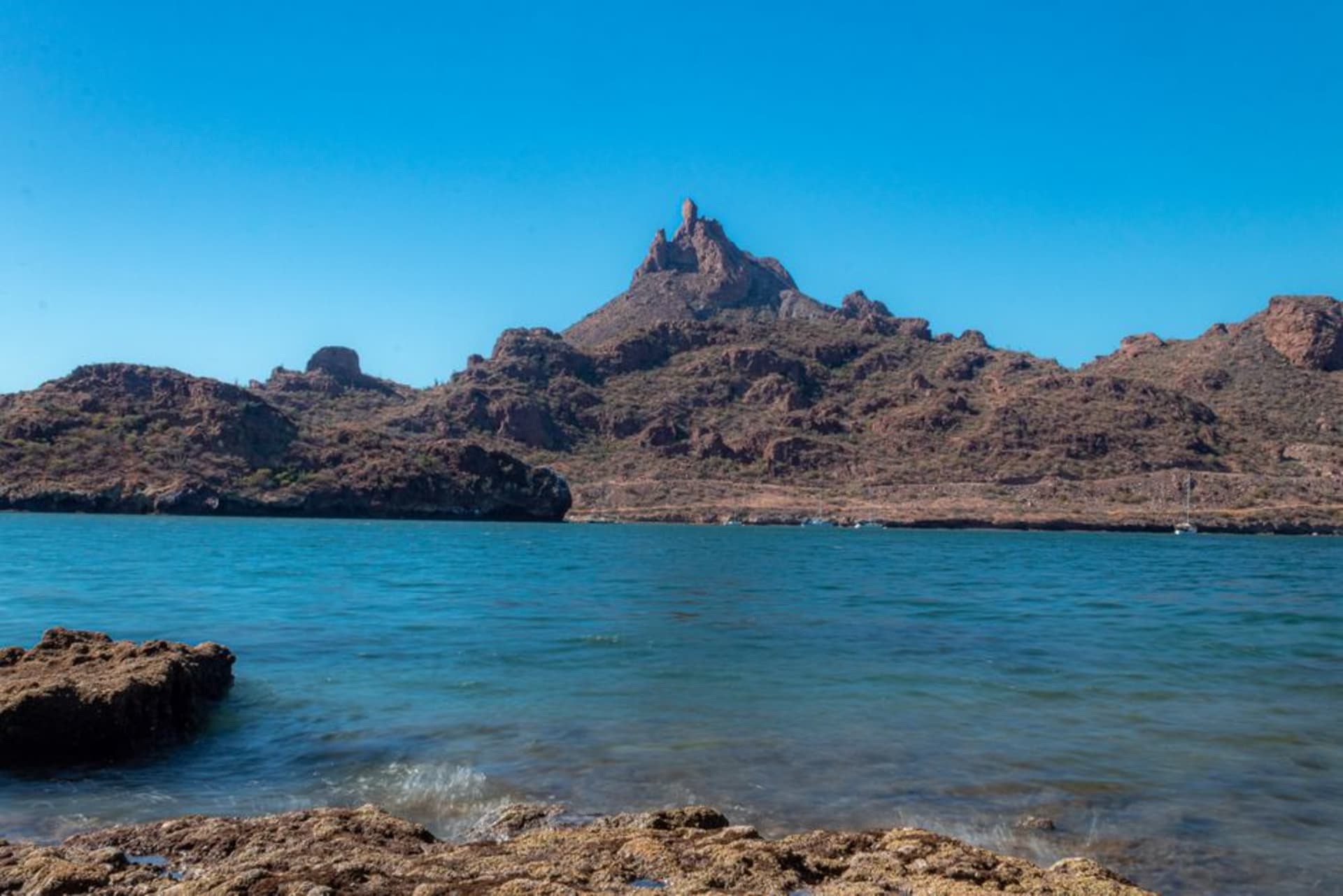
Arizpe
"The entire American Southwest was once governed from this sleepy canyon plaza. The guy selling mangonadas doesn't seem to know — and frankly neither did I until I looked it up the night before I arrived."
Arizpe is a canyon town of three thousand people on the Río Sonora, once the seat of the Comandancia General de las Provincias Internas — an 18th-century capital governing territory that stretched from California to Texas. Its colonial church holds the remains of Juan Bautista de Anza, the man who founded San Francisco but died here, far from anything named after him. The gap between that monumental past and the goats-crossing-the-plaza present is what makes Arizpe unlike anywhere else in Sonora.

I pulled into Arizpe on a Thursday afternoon when the light was already going amber over the canyon walls. A goat crossed the main street in front of my car. A man on a bicycle waited. Nobody seemed bothered. I had driven north from Hermosillo — three and a half hours of mesquite and cattle country — expecting something more dramatic at the end. What I found instead was a town that has quietly decided to let its history be enormous and its streets stay small, and the combination is one of the stranger things I’ve encountered in Sonora.
The Church and the Man Who Founded San Francisco
The Iglesia de Nuestra Señora de la Asunción sits at the corner of the plaza — a colonial church that looks exactly like a colonial church in a town of three thousand people. You could walk past it without slowing down. Inside, beneath a stone toward the front of the nave, are the remains of Juan Bautista de Anza. He led an overland expedition from Sonora to Alta California in 1775, established the presidio that would become San Francisco, then came back, was made governor of New Mexico, and eventually died in Arizpe in 1788, buried far from anything that carries his name. That afternoon I was the only person in the church for a long while. A woman came in to sweep. Neither of us said anything. I kept thinking about the fact that this quiet floor holds someone whose overland route became a modern interstate. The placards are modest. The town is modest. The history is not.

Flour Tortillas and Rooms That Open at Five
Sonoran food is different from what most people mean when they say Mexican food, and Arizpe is a fine place to understand why. The tortillas here are flour — large, soft, made at the tortillería three blocks from the plaza, where you can buy them warm by the dozen for nearly nothing. I ate my first meal standing at the counter of a small comedor near the market: a caldo de res dark with chiles and time, with a stack of those tortillas beside it. The menu on the wall offered machaca con huevo, chilorio, and what the woman behind the counter simply called carne — which turned out to be thin-cut beef grilled to exactly the right side of dry. Everything tasted like it was made for people who had been working since five in the morning. I was not one of those people, but I ate like I had been.

The Canyon at the End of the Day
The Río Sonora runs along the edge of town — low in summer but clear, lined with cottonwoods that go bright yellow come November. I walked down to the bank in the late afternoon and sat on a rock for longer than I had planned. The canyon walls to the north are the color of dry rust. You can follow the river upstream for a couple of hours without meeting anyone. I recommend doing this before you get back in the car — it resets something. The light at that hour is the kind photographers drive hours for. Nobody here is driving for it. They’re cooking dinner.

Getting There
Arizpe sits about 200 kilometers northeast of Hermosillo on Highway 17 — roughly three and a half hours by car. There is no direct bus service; the realistic route connects through Ures or Baviácora. October through March is the comfortable window; the canyon heats up seriously in summer. Accommodation is limited to a couple of small guesthouses, so book ahead, especially around Semana Santa when the town actually fills.
Keep exploring
More of Sonora
Keep exploring
More from Sonora
 mexico
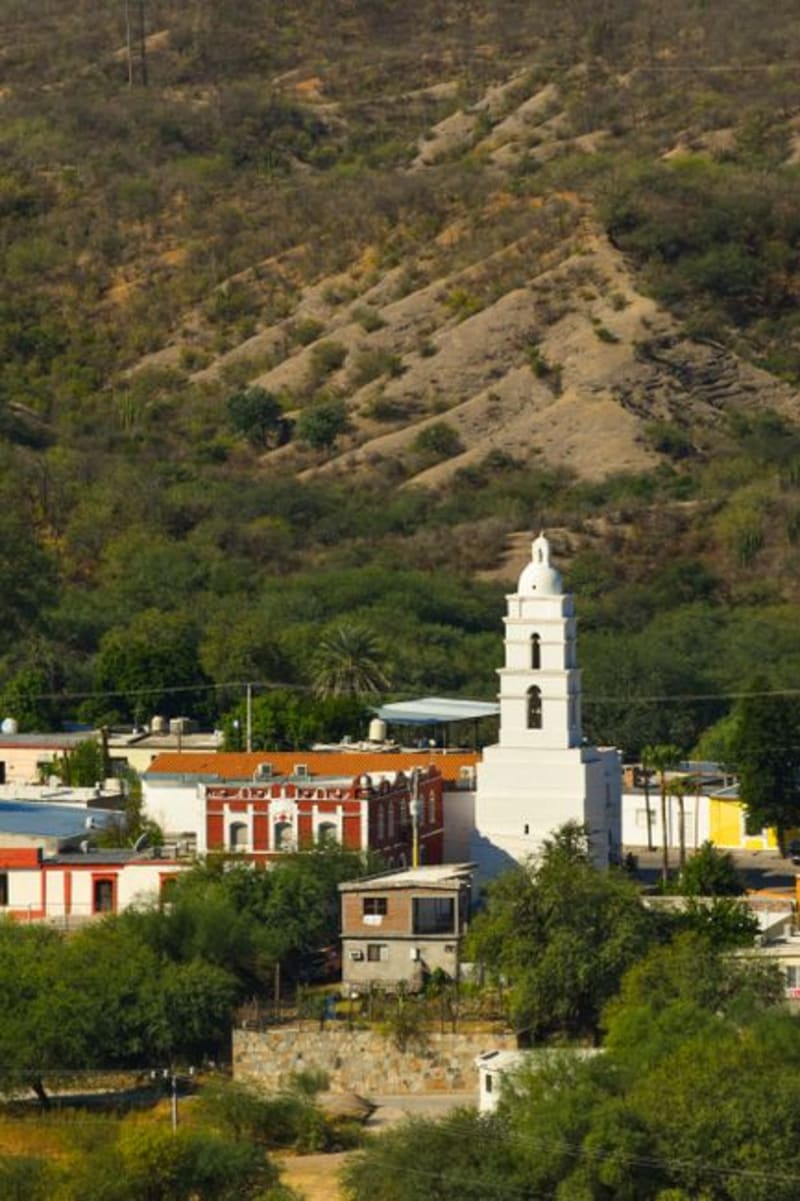
 Banámichi
A colonial village in the Río Sonora valley where orchards of quince and pomegranate line both banks of the river and the pink facade of La Purísima glows at dusk without a tourist in sight. The cheese is pressed in family courtyards, the mezcal arrives without a label, and the Ruta del Río Sonora passes through without quite disturbing any of it.
Explore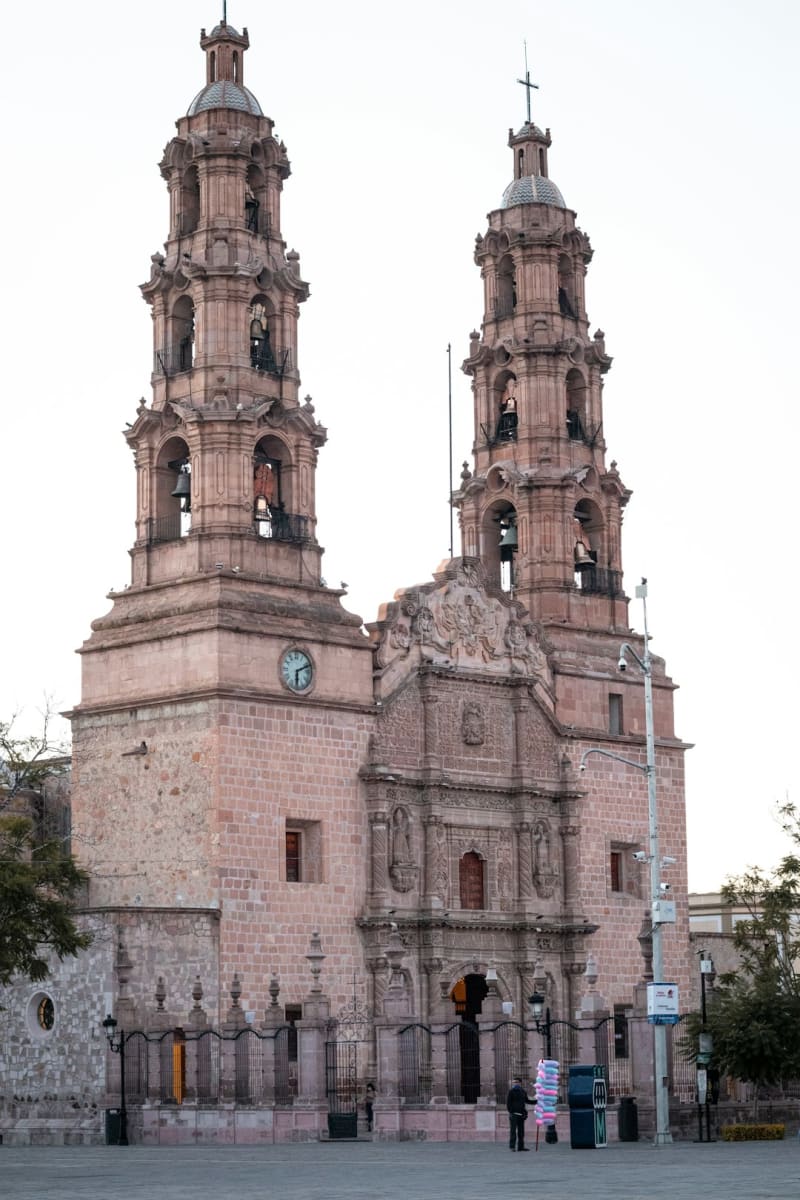 mexico
 Huépac
Huépac is a seventeenth-century Jesuit mission town folded into the Sonora River valley so quietly that the highway barely acknowledges it. A whitewashed church, a shaded plaza, old men playing cards under fig trees — the kind of place that asks nothing of you except that you slow down.
Explore mexico
 Cucurpe
At the northern tip of the Ruta Rio Sonora, Cucurpe is the smallest and most remote of the river towns, pressed into a sierra fold where the road more or less gives up. The Jesuit mission is partly ruined, the streets are unpaved, and the silence arrives quickly.
Explore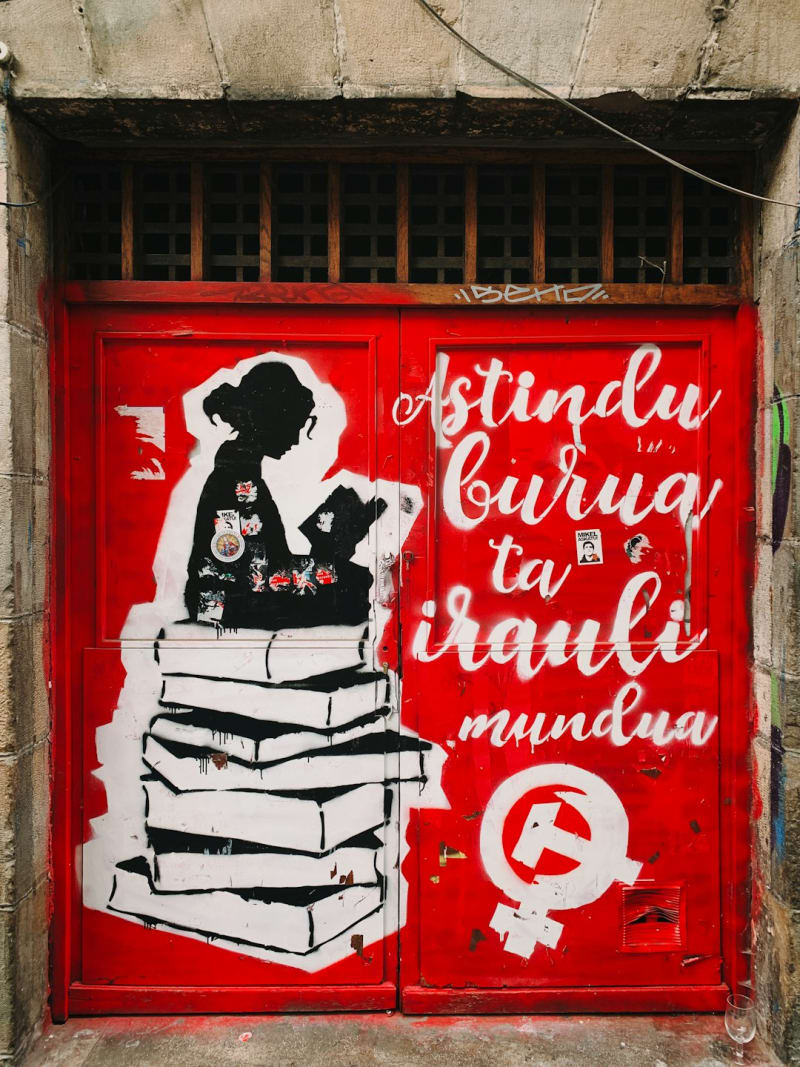 mexico
 Cananea
In 1906, copper miners in Cananea walked off the job and lit one of the fuses that became the Mexican Revolution. The murals covering the city centre still commemorate that moment with a raw intensity no history textbook can replicate. The open-pit mine next door — one of the world's largest — ensures the city has never had the luxury of forgetting where it came from.
Explore mexico
 Baviacora
Strung along the Rio Sonora between Ures and Banamichi, Baviacora is a small colonial town that seems to have quietly opted out of the last century. The cottonwood-lined river canyon makes it one of the most photographically unfair places on the Ruta Rio Sonora — a drive that remains, bafflingly, one of the least-visited good routes in the country.
Explore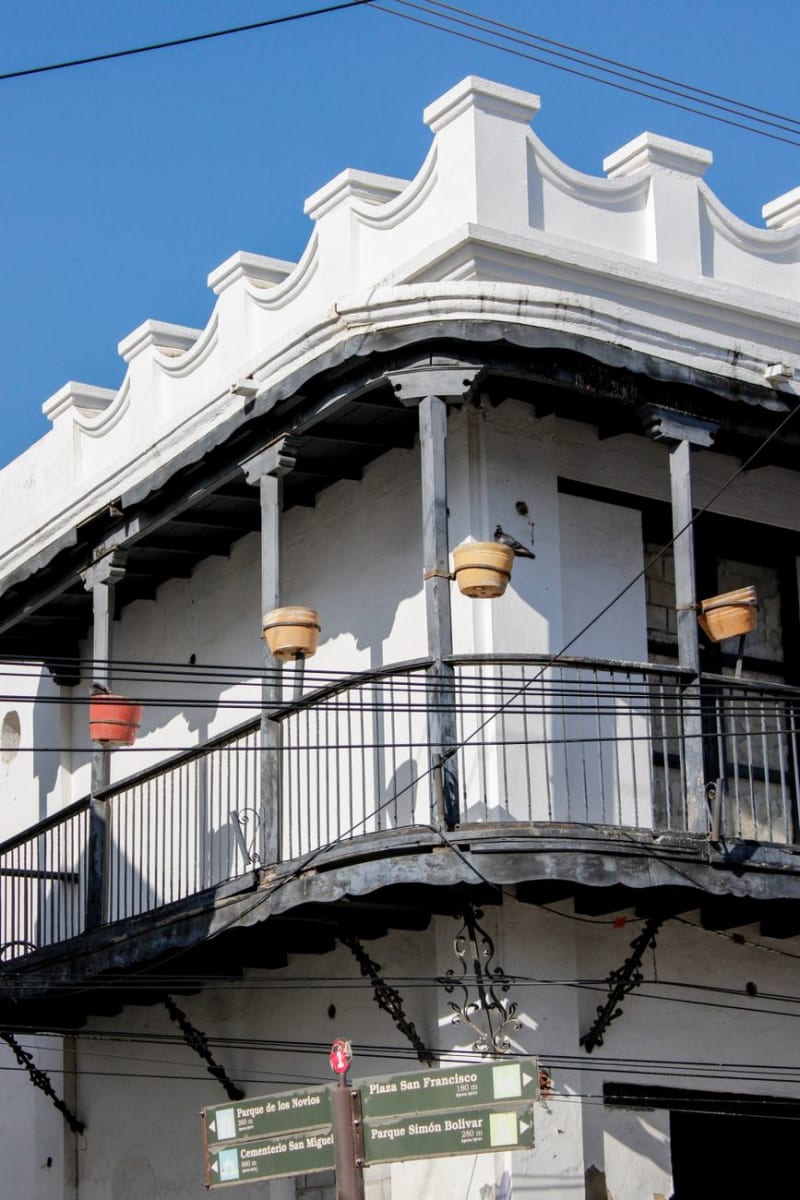 mexico
 Magdalena de Kino
A quiet Sonoran town where a 300-year-old Jesuit missionary lies beneath a glass floor in the central plaza — and every October, a hundred thousand pilgrims arrive to remind you this place is anything but ordinary.
Explore