Toyokawa Inari
"A Zen temple that worships a fox god, Lia kept saying, like the contradiction itself was the whole appeal."
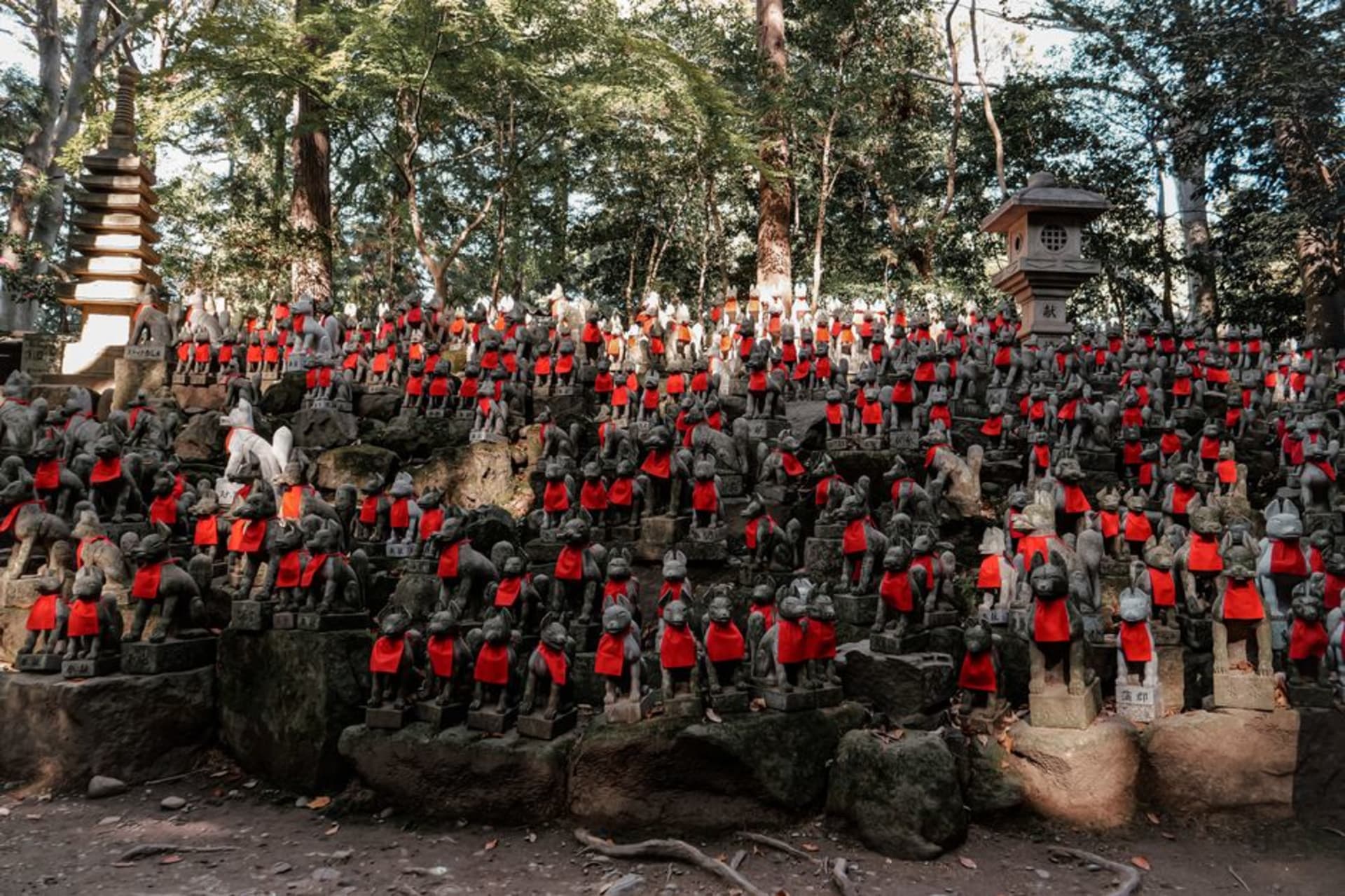
A striking Zen Buddhist temple in Aichi that simultaneously worships the fox deity Inari, its hillside crowded with roughly a thousand red-bibbed stone fox statues each donated by a grateful believer.

I like places that refuse to fit neatly into one category, and Toyokawa Inari is exactly that kind of place. It presents itself as a Soto Zen Buddhist temple, with all the formal architecture and quiet discipline that implies, and yet at the same time it’s one of the country’s major centers of devotion to Inari, the fox deity more commonly associated with separate Shinto shrines entirely. Lia had read about this hybrid identity and couldn’t quite picture how it worked in practice, so we made a point of stopping on our way through Aichi to see it for ourselves. What we found was less a contradiction than a genuinely comfortable coexistence, decades in the making.
A Thousand Foxes on the Hillside
The part of the complex that stopped us both in our tracks was Reikozuka, a hillside within the temple grounds crowded with an estimated thousand stone fox statues, each one wearing a small red bib and each donated by an individual believer whose prayer, according to the temple, had been answered. Walking the narrow paths between them, foxes stacked shoulder to shoulder in every direction, ranging from weathered ancient stone to statues that looked freshly placed, gave the whole hillside a texture unlike anywhere else we’d visited in Japan. Lia moved slowly through it, reading what inscriptions she could make out, struck by the idea that every single fox represented someone’s specific, private relief.

Warlords and Merchants, All Believers
What gives Toyokawa Inari its long-standing prestige is the roster of historical figures who were patrons here, warlords among them, drawn by Inari’s association with success, protection, and prosperity in ways that cut across military and commercial life alike. Walking through the temple’s older halls, their dark wood and worn floors clearly built to withstand centuries of visitors rather than decades, it was easy to imagine generals stopping here before a campaign the same way modern visitors stop before a business decision or an exam. The temple’s main hall, blending Buddhist and Inari iconography without apparent tension, made that long lineage of belief feel continuous rather than merely historical.

The Approach and the Town Around It
The approach to the temple runs through a lively shopping street selling inari-zushi, the fried tofu pouches associated with the fox deity, alongside the usual charms and souvenirs, and we ate a quick, simple lunch there before heading in. Toyokawa itself is a modest, unpretentious city, and the temple’s fame clearly outsizes the town around it, but that mismatch gave the whole visit an appealing lack of pretension. It’s an easy, worthwhile detour if you’re moving between Nagoya and the coast, offering a genuinely different flavor of religious site than the shrines and temples most itineraries default to.

Getting There
Toyokawa Inari is reached via Toyokawa Station on the JR Iida Line, with direct trains connecting from Toyohashi, itself on the Tokaido Shinkansen line, making the temple an easy stop for travelers moving between Nagoya and points further along the coast. The temple grounds are a short walk from the station through the approach shopping street, and most visitors comfortably see the main complex and Reikozuka hillside within a couple of unhurried hours.
Keep exploring
More of Chūbu
Keep exploring
More from Chūbu
 japan
japan Tsumago
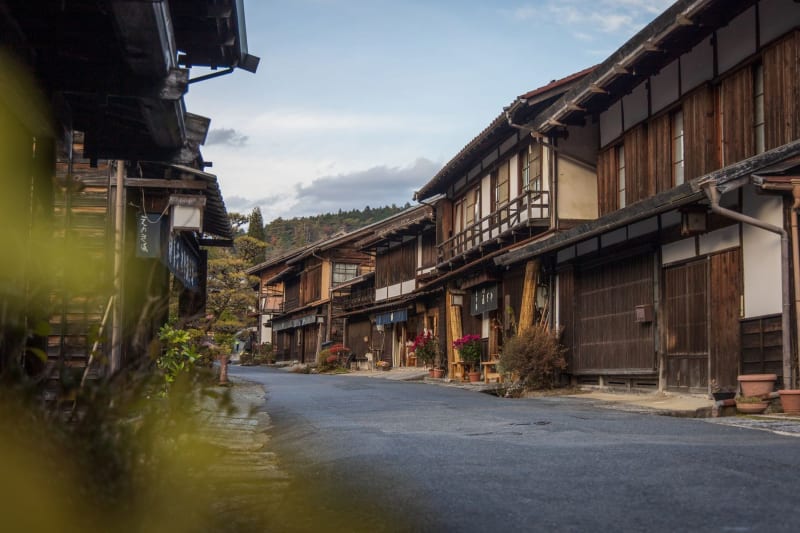
A perfectly preserved Edo-period post town on the Nakasendo trail in the Kiso Valley, with cars banned from the main street.
Explore japan
japan Ueda
A Nagano castle town that once belonged to the Sanada, the samurai clan who twice humiliated far larger armies from behind these walls. Now it's a easygoing river town with a ruined keep, a temple-quiet hot spring called Bessho tucked in the hills, and a stubborn sense of its own history. We came for the castle and lingered for the baths.
Explore japan
japan Unazuki Onsen
A small hot-spring town at the mouth of Toyama's Kurobe Gorge, where clear alkaline water is piped down from a source high in the mountains and a little red train rattles off into one of the deepest ravines in Japan. It is a place of steam and cedar and the long whistle of the sightseeing railway. You come for the gorge; you stay for the bath.
Explore japan
japan Wajima
A weathered town on the wild tip of the Noto Peninsula, where a morning market has run for a thousand years, lacquer masters still lay gold onto black bowls, and rice terraces step down to the very edge of the Sea of Japan.
Explore japan
japan Wakura Onsen
A hot spring town on the Noto Peninsula whose waters are pumped up from the seabed itself, legend crediting the discovery to a wounded white heron that once guided villagers there.
Explore japan
japan Yahiko
A small Niigata village built around one of Japan's oldest and most venerated shrines, its cedar-lined approach and summit ropeway making for an easy, atmospheric day away from the coast.
Explore