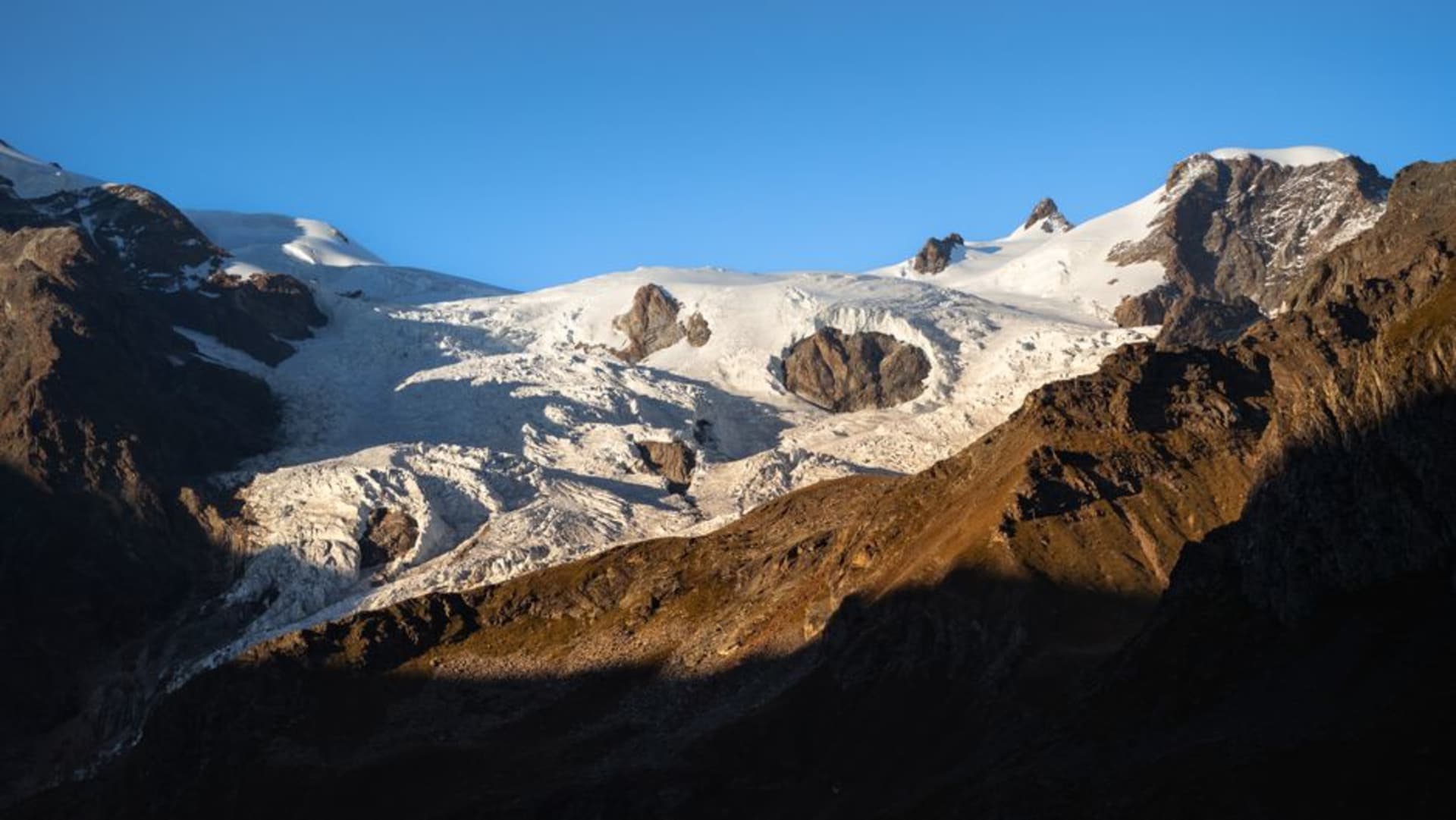
Chaukhi Massif
"Lia stopped mid-sentence when the ridge caught the sunset, and neither of us said anything for a good five minutes."
A jagged granite ridge above the village of Juta, nicknamed the Georgian Dolomites, that turns pink and gold in the last light of the day.

I’d seen photos of the Chaukhi Massif before we went — the jagged silhouette that’s earned it the nickname “Georgian Dolomites” — and I braced myself for disappointment, the way photos always oversell a mountain. They didn’t. We drove up the rough track from the Kazbegi road to Juta, the last village before the massif, in a beat-up Niva our driver clearly loved more than most people love their cars, and the ridge just kept growing in the windshield the whole way up.
Juta itself is barely a village — a scatter of guesthouses, a couple of yurts pitched for summer trekkers, and cows that wander the one street like they own it, which I suppose they do. We based ourselves there for two nights and hiked up toward the Chaukhi Pass on the second day, a climb that starts gently through wildflower meadows and gets serious fast once you’re on the scree below the ridge proper. The massif itself isn’t a single peak but a wall of granite towers, some over 3,800 meters, spiky enough that early climbers apparently argued about which spire was actually the highest.

We didn’t attempt the pass itself — that’s a proper mountaineering objective, not a day hike for two people whose idea of technical gear is decent boots — but we got high enough to look across at Mount Kazbek in the other direction, its dome shape almost boring next to Chaukhi’s chaos of spires. That’s the thing about this massif that I keep coming back to: it looks less like a mountain and more like something broken, teeth from a jaw that shattered upward. Georgian friends later told me some routes here are genuinely technical, popular with local climbers precisely because the granite is so sharp and reliable.
What I’ll remember longest, though, is the evening we spent just sitting outside our guesthouse in Juta with beers from the small shop, watching the light change on the ridge. It goes gray, then a strange flat gold, then for maybe ten minutes the whole massif turns pink-orange like it’s been lit from inside. I’ve watched a lot of sunsets in the Caucasus by now and this was the one that made both of us stop talking.

Juta has started showing up more on trekking itineraries, and I understand why, but it hasn’t been ruined yet. Go before it is.
When to go: July through September is the window — the road to Juta is often impassable earlier, and by October the high pass routes are already collecting snow.
Keep exploring
More from Greater Caucasus
 caucasus-mountains
 Dariali Gorge
The ancient passage through the Caucasus where the Terek river has carved a canyon so narrow and sheer it was once considered the literal gate between Europe and Asia.
Explore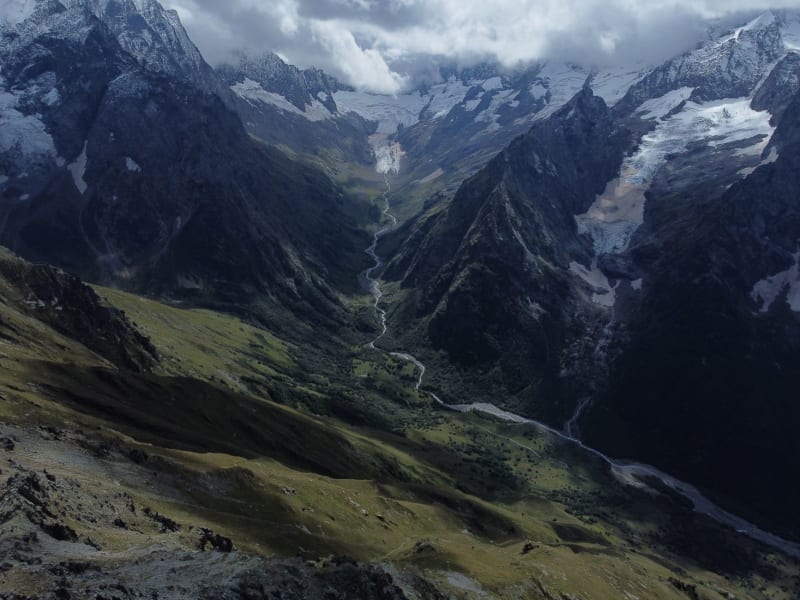 caucasus-mountains
 Dombay
A Soviet-era mountain resort in the Russian Caucasus where the vertical rises over 3,000 meters and the forests below the glaciers are so dense they muffle all sound.
Explore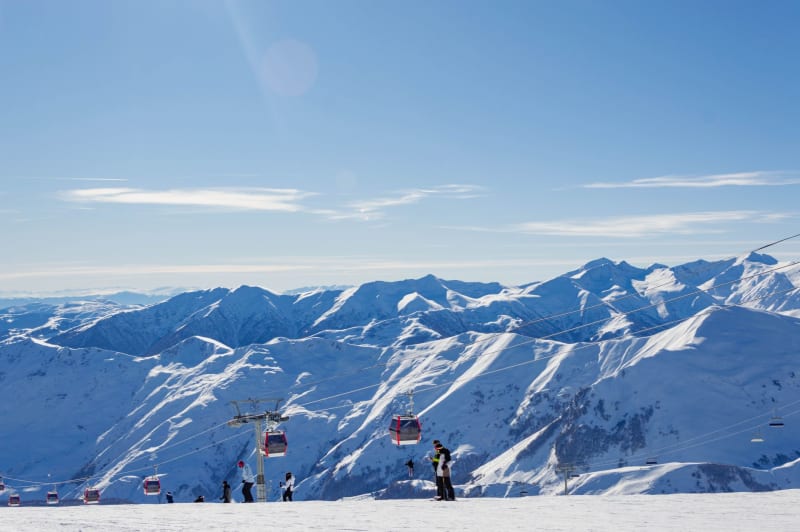 caucasus-mountains
 Gudauri
A high Caucasian plateau at 2,200 meters where Georgia's best skiing happens in winter and paragliders hang in the thermals all summer long above a gorge that drops a thousand meters straight down.
Explore caucasus-mountains
 Juta Valley
A hidden dead-end valley near Kazbegi where the trail ends at a glacial cirque and the only sounds are wind, water, and the occasional crack of a glacier calving.
Explore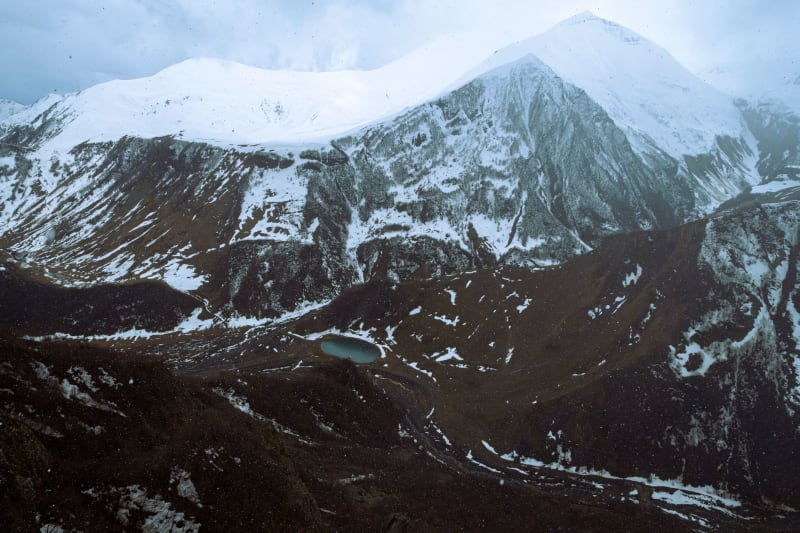 caucasus-mountains
 Khinalig
One of the highest permanently inhabited villages in the world, home to a people who speak a language found nowhere else on earth and live above the clouds in northern Azerbaijan.
Explore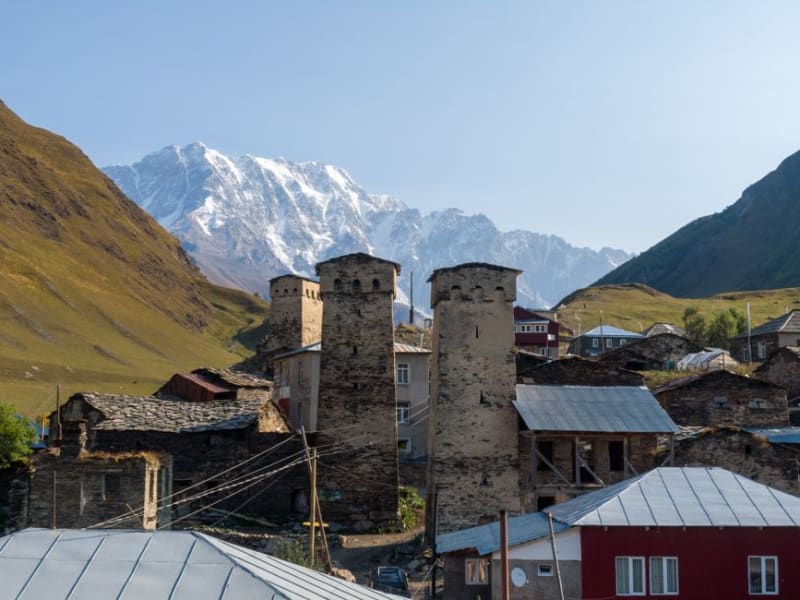 caucasus-mountains
 Laghami
A tiny Svan hamlet on the trekking route between Mestia and Ushguli where a handful of families still live under medieval stone towers.
Explore