Dombay
"The Soviet architects who designed these resorts understood one thing perfectly: the mountains do not care about your aesthetics."
A Soviet-era mountain resort in the Russian Caucasus where the vertical rises over 3,000 meters and the forests below the glaciers are so dense they muffle all sound.

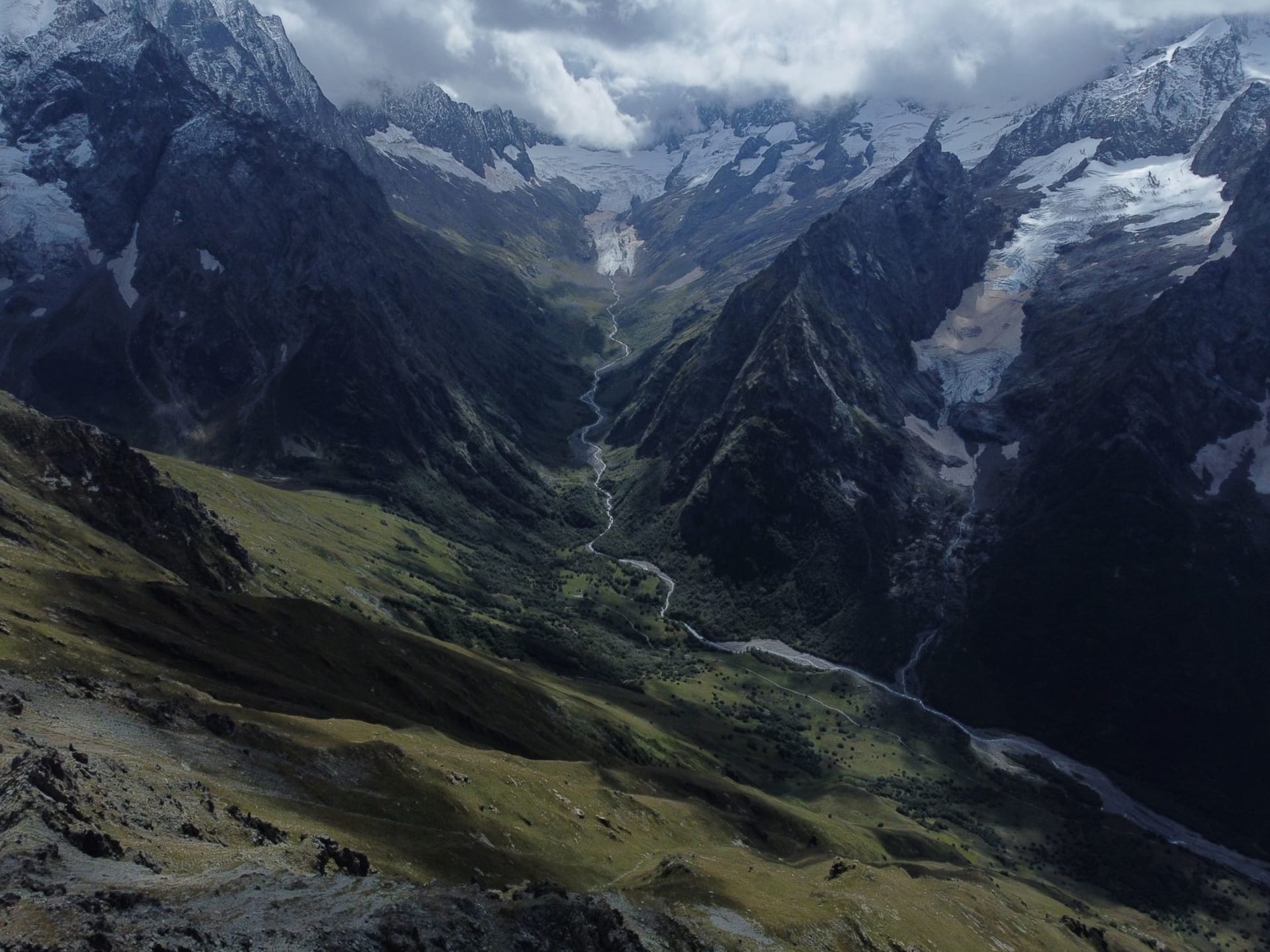
The road into Dombay from Teberda runs through a valley of such implausible beauty that the concrete towers of the resort, when they appear at the end of it, seem almost irrelevant. Almost. The Dombay-Ulgen peak at 4,046 meters stands above the treeline directly behind the main resort area, and its permanent snowfields and hanging glaciers make the Soviet-era hotels that line the valley floor look like they have been placed there specifically to establish scale. This is a mountain that makes you feel small in the most uncomplicated way.
I came to Dombay from Tbilisi via the Verkhny Lars border crossing into North Ossetia, a journey that takes a full day and involves a border queue that runs by its own temporal logic. The Russian Caucasus receives very few Western visitors by comparison to the Georgian side — the combination of visa requirements, the border crossing complexity, and the general difficulty of information means that the trails above Dombay often hold only Russian and Ukrainian hikers plus a handful of people who have planned carefully. This is not a complaint.

The cable car system — three stages, the top gondola a Soviet-era cabin that moves with a rattle that suggests it has strong opinions about its age — reaches an elevation of about 3,008 meters. Above the top station, the terrain is alpine: moraines, rock, ice, the Alibek glacier visible to the east and the Dombay-Ulgen glacier directly above. I walked from the top cable car station to the edge of the Dombay-Ulgen glacier in about ninety minutes, following a path marked by cairns and, in the upper section, by the footprints of previous hikers in residual snow.
The valley itself is what stays with me. The coniferous forest that covers the lower slopes of the Dombay valley is old-growth Caucasian forest — silver fir and spruce and beech at lower elevations, with a density and silence that you feel immediately as you descend from the exposed upper slopes. The light in the forest in the afternoon is cathedral light, broken into columns and softened until it has almost no edge. I walked through it for two hours on my last evening without any destination and thought about nothing in particular, which is, for me, one of the better available uses of time.

The guesthouses at Dombay range from genuine Soviet-era hotels — large, cold in the corridors, with dining rooms that serve borscht and blini and Georgian food simultaneously, as if the kitchen cannot decide which side of the mountains it belongs to — to smaller family operations that are warmer and cheaper. I ate well everywhere: the Caucasian lamb dishes here have the same bone-in, slow-cooked logic as the Georgian side, but served with black bread and sour cream and without the amber wine, which I missed.
When to go: July through September for hiking and glacier access, with August bringing the fullest trails and most reliable weather. Skiing runs from December through March, with February the most reliable for snow depth. Check current Russian visa requirements before planning — regulations change. The border crossing at Verkhny Lars is the most practical entry point from Georgia, but research conditions before attempting.
Keep exploring
More from Greater Caucasus
 caucasus-mountains
 Gudauri
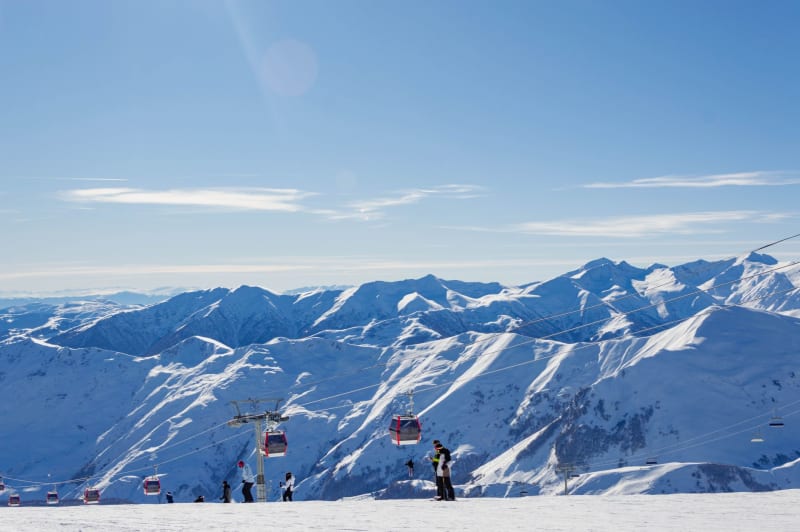
A high Caucasian plateau at 2,200 meters where Georgia's best skiing happens in winter and paragliders hang in the thermals all summer long above a gorge that drops a thousand meters straight down.
Explore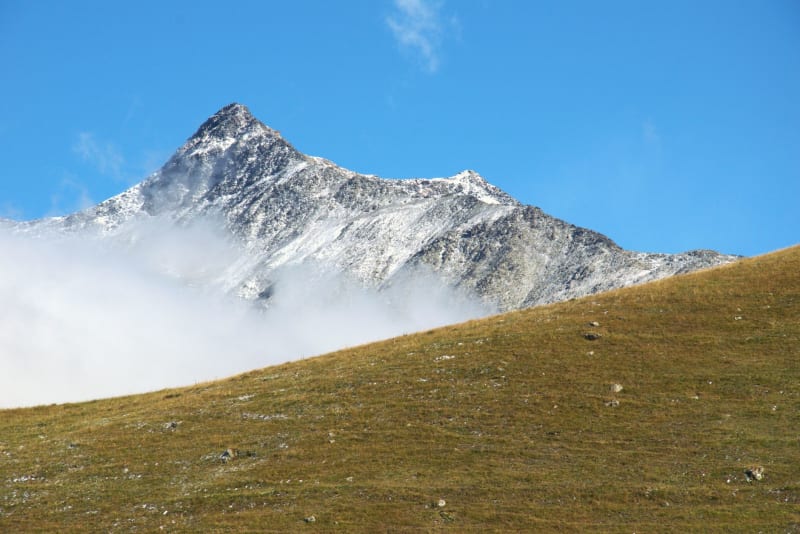 caucasus-mountains
 Juta Valley
A hidden dead-end valley near Kazbegi where the trail ends at a glacial cirque and the only sounds are wind, water, and the occasional crack of a glacier calving.
Explore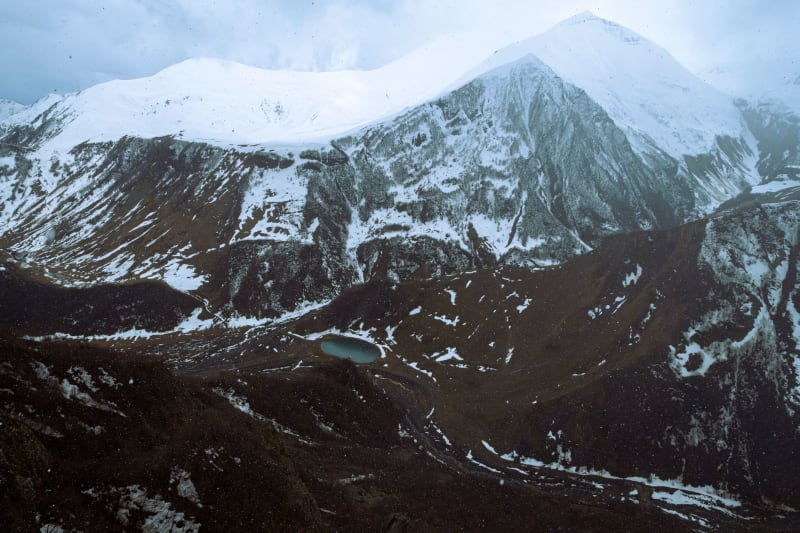 caucasus-mountains
 Khinalig
One of the highest permanently inhabited villages in the world, home to a people who speak a language found nowhere else on earth and live above the clouds in northern Azerbaijan.
Explore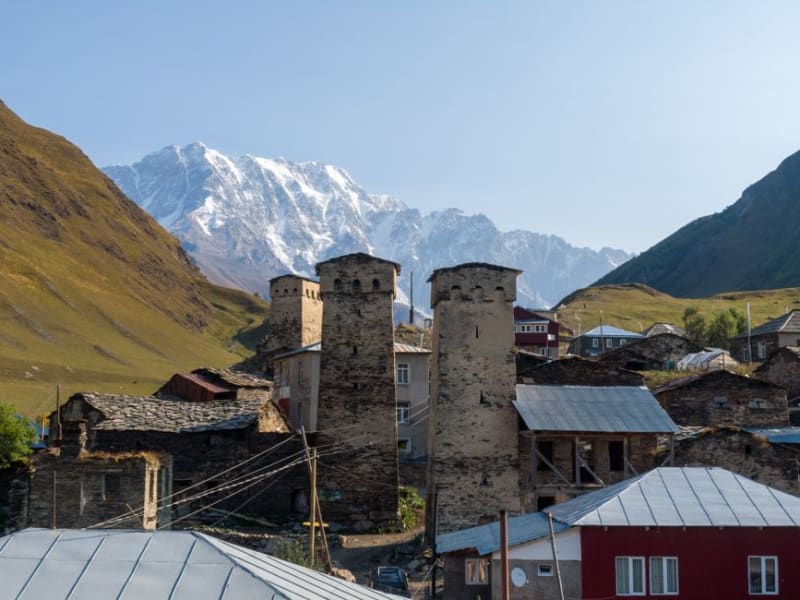 caucasus-mountains
 Laghami
A tiny Svan hamlet on the trekking route between Mestia and Ushguli where a handful of families still live under medieval stone towers.
Explore caucasus-mountains
 Lahic
An Azerbaijani copper-working village in the Caucasus foothills where the sound of hammers on metal has echoed down the same stone lane for six centuries.
Explore caucasus-mountains
 Mestia
The compact capital of Svanetia where stone towers erupt between modern guesthouses and every street points toward a different glacier.
Explore