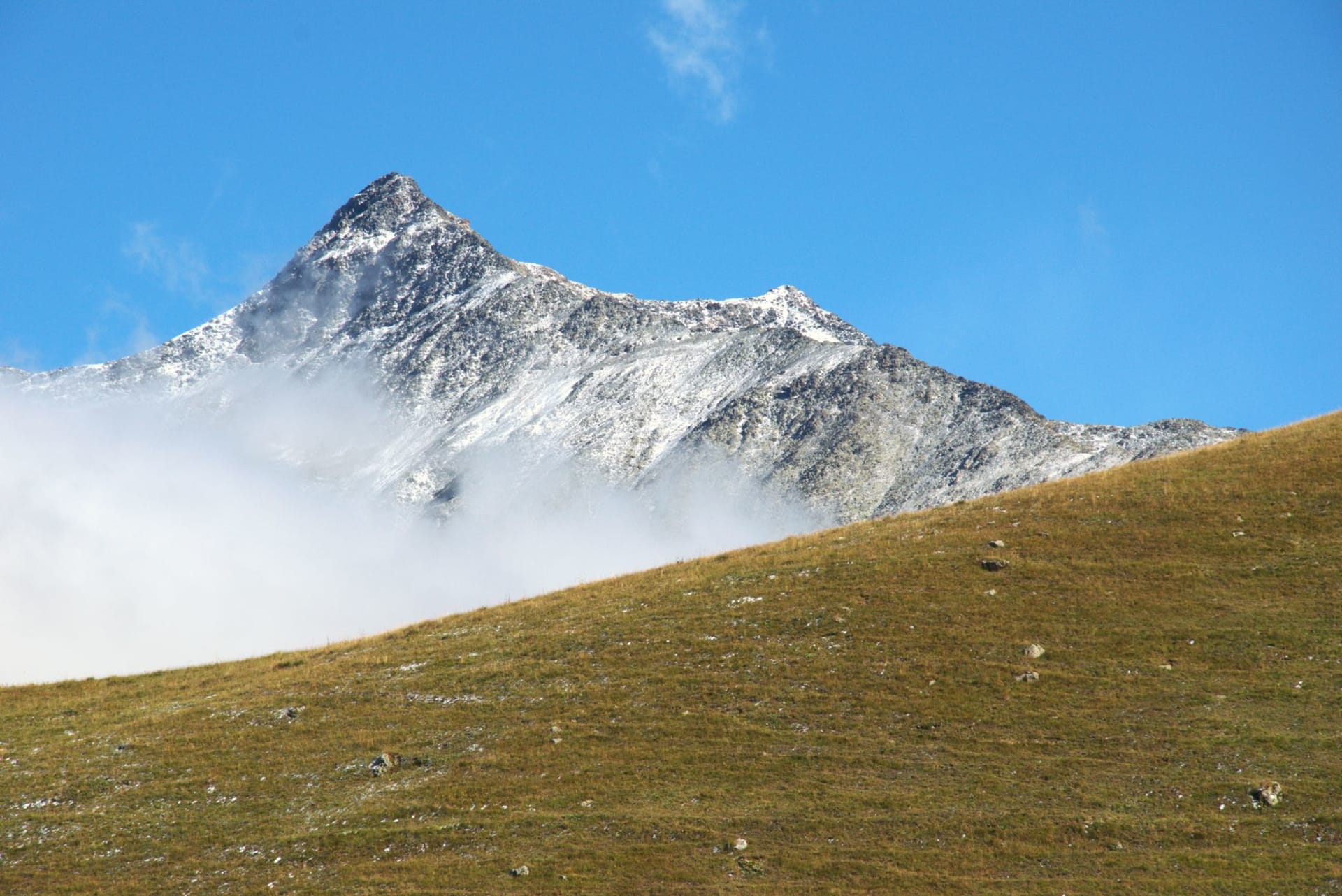
Juta Valley
"Stepantsminda is where everyone goes. Juta is where you go when you want to be the only one there."
A hidden dead-end valley near Kazbegi where the trail ends at a glacial cirque and the only sounds are wind, water, and the occasional crack of a glacier calving.

From Stepantsminda the road climbs east for about fourteen kilometers to the village of Juta — a small cluster of stone guesthouses at 2,200 meters in a valley that dead-ends at the base of the Chaukhi massif. I walked the road rather than taking a taxi, which took about three hours and which I recommend to no one who is not interested in understanding precisely how the landscape changes as you gain elevation through a Caucasian valley: the pine forest thickening, then thinning, then giving way to scrub and wildflower meadow, then to bare rock, the valley narrowing until the walls on either side feel like they might touch.
The Chaukhi massif is not the highest thing in the Greater Caucasus — that is Kazbek, visible from Stepantsminda — but it is among the most dramatic in the purely visual sense. A series of rocky towers that rise from the valley floor like something a geologist would use to illustrate the concept of “intrusion,” the massif catches the morning light on faces that are almost vertical. Rock climbers from Georgia and beyond come specifically for Chaukhi. Hikers with less technical ambitions reach the Chaukhi Pass at 3,338 meters for views into the valley on the other side. I went as far as the glacial tarn below the pass and sat there for a long time doing nothing productive.

The village of Juta itself has perhaps ten families, all running guesthouses in summer, all seemingly related to each other in ways that become clear only over a long dinner. The family I stayed with had three generations at the table: the grandmother who cooked and said almost nothing, the parents who divided duties between hosting and farming, and a sixteen-year-old son who spoke good English and wanted to know what I thought about football and whether France was cold. He had never left the valley for more than a week. He showed me photographs of the valley in winter on his phone — two meters of snow, the guesthouses half-buried, the family confined to the lower floor.
The food follows the same template as the rest of Svaneti and Kazbegi — khmeli-suneli spiced lamb, bean soups, cheese in various forms, cornbread that absorbs butter with a specific and irreplaceable satisfaction — but in Juta the portions have the generosity of places that expect you to be genuinely hungry. I was.

There is a multi-day trekking route that connects Juta, via the Chaukhi Pass, to Roshka in Khevsureti — a traverse that puts you through two distinct mountain worlds in about two days of walking. I met a German couple on the trail who had done it twice in the same week because the first day had been clouded over and they wanted to see the views. This is the kind of lunacy that the Caucasus produces in certain people.
When to go: Late June through September. The road to Juta can be muddy and challenging in early spring, and some years it does not clear until July. August sees the meadows in full bloom and the guesthouses at capacity. September is colder but clear, with golden light on the valley walls from mid-afternoon.
Keep exploring
More from Greater Caucasus
 caucasus-mountains
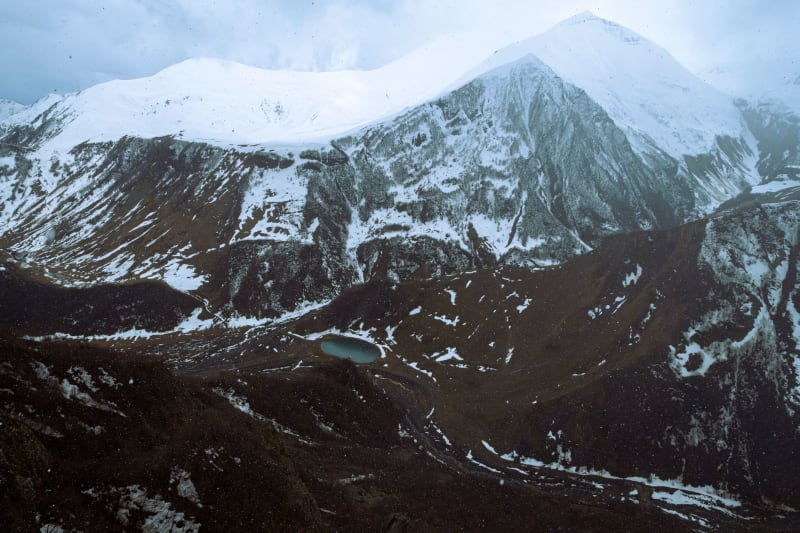
 Khinalig
One of the highest permanently inhabited villages in the world, home to a people who speak a language found nowhere else on earth and live above the clouds in northern Azerbaijan.
Explore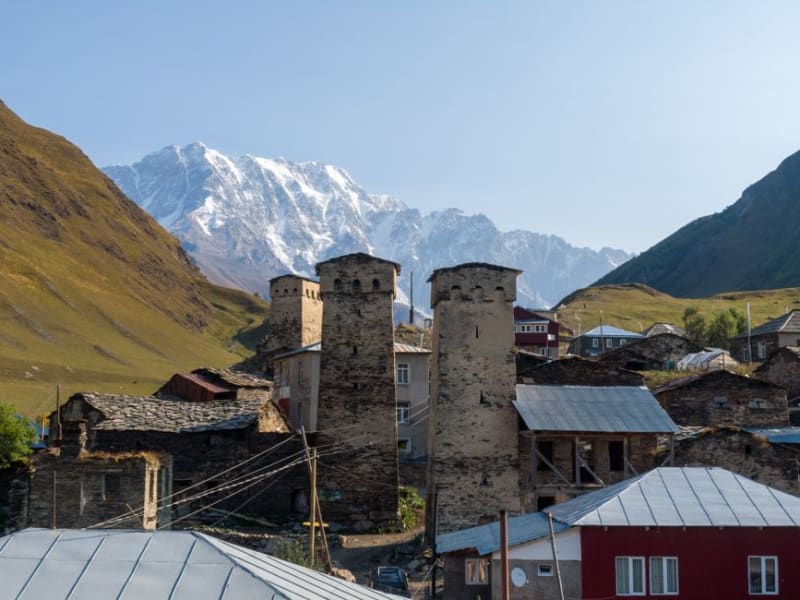 caucasus-mountains
 Laghami
A tiny Svan hamlet on the trekking route between Mestia and Ushguli where a handful of families still live under medieval stone towers.
Explore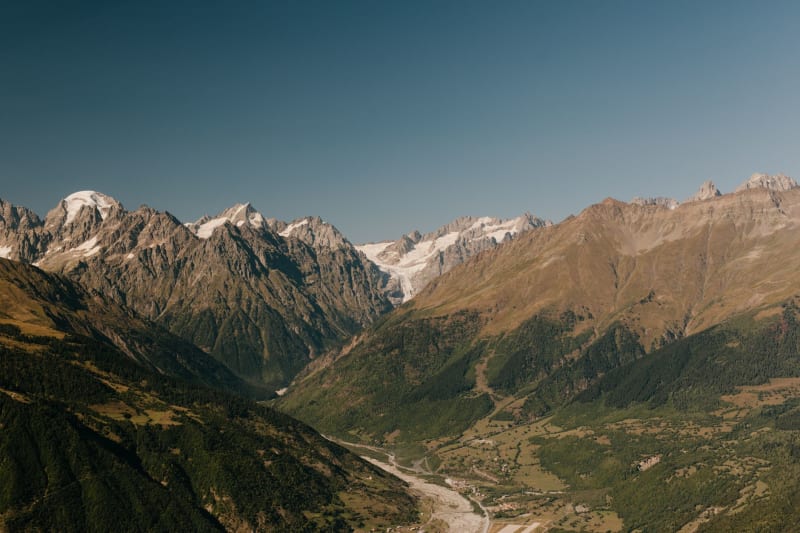 caucasus-mountains
 Lahic
An Azerbaijani copper-working village in the Caucasus foothills where the sound of hammers on metal has echoed down the same stone lane for six centuries.
Explore caucasus-mountains
 Mestia
The compact capital of Svanetia where stone towers erupt between modern guesthouses and every street points toward a different glacier.
Explore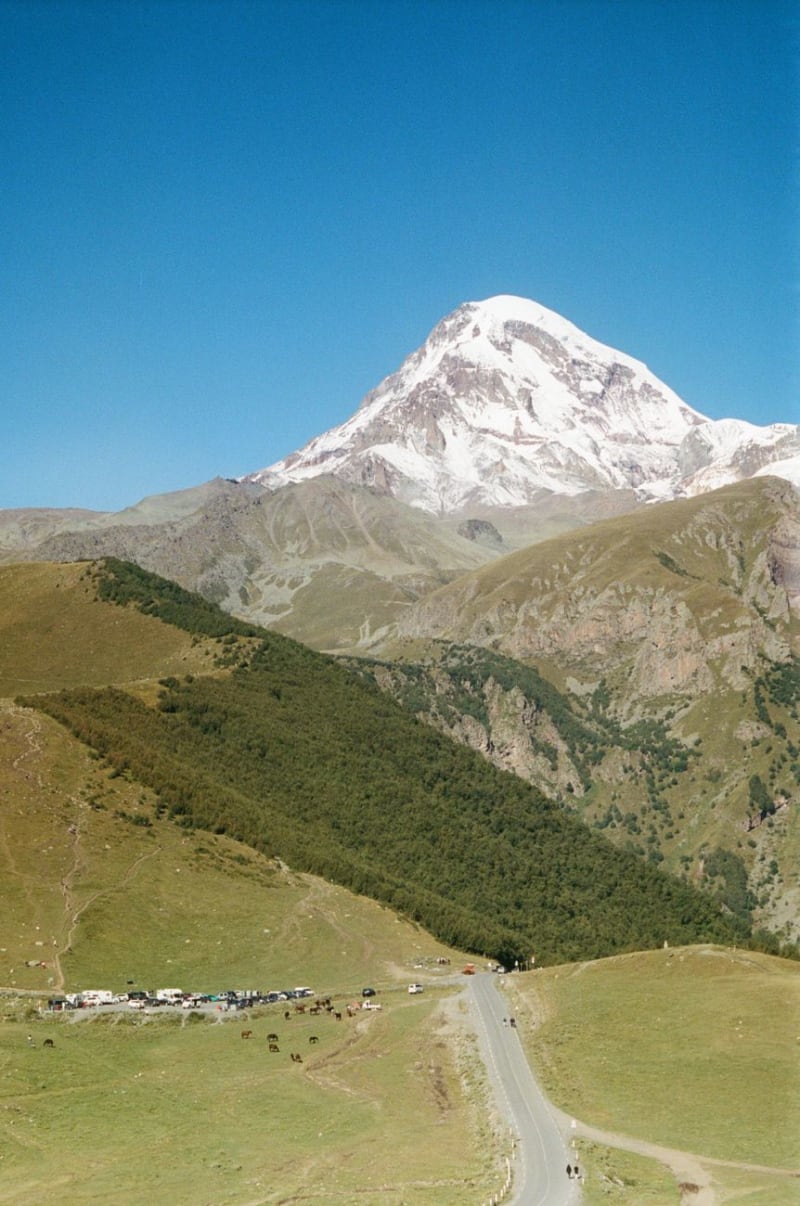 caucasus-mountains
 Mount Elbrus
The highest peak in the Caucasus and in Europe — a twin-coned dormant volcano in the Russian republic of Kabardino-Balkaria, where Soviet cable cars haul you to the edge of the glaciers.
Explore caucasus-mountains
 Omalo & Tusheti
Georgia's most remote inhabited region: a cluster of medieval villages reachable only by one of the most terrifying mountain roads in existence.
Explore