Gudauri
"In summer you throw yourself off the edge of the plateau in a paraglider and feel completely reasonable about it."
A high Caucasian plateau at 2,200 meters where Georgia's best skiing happens in winter and paragliders hang in the thermals all summer long above a gorge that drops a thousand meters straight down.

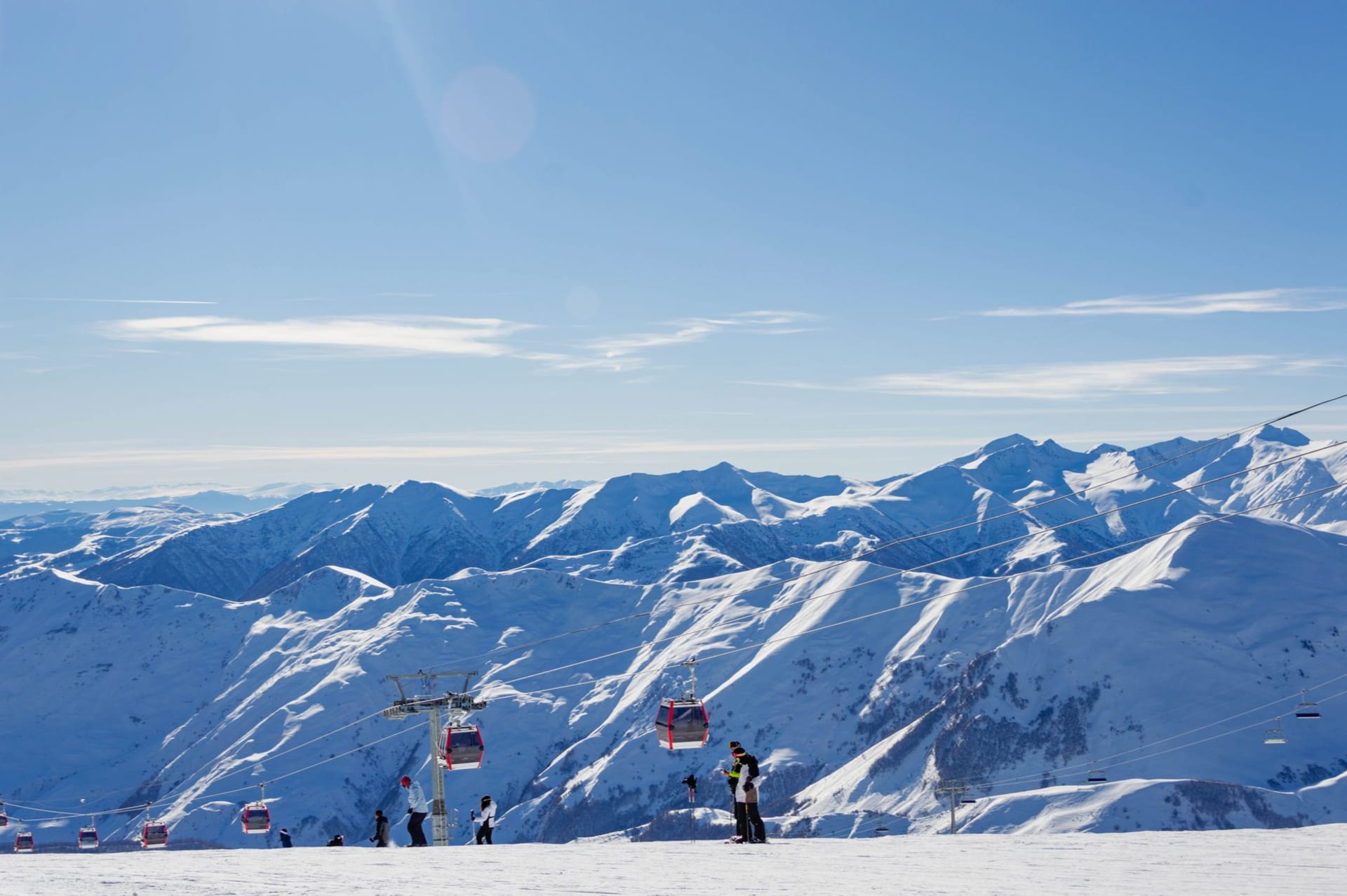
I came to Gudauri in September expecting not much — a ski resort out of season, which is usually a particular kind of melancholy — and found instead a plateau of such horizontal vastness that it takes a moment to locate the edge. The Georgian Military Highway runs through here, dropping off the Jvari Pass to the north, and the views from the pass are the most theatrical along the whole route: a 180-degree panorama of Greater Caucasus peaks running wall to wall, and somewhere below them the white ribbon of the Terek river working its way toward Stepantsminda.
Gudauri proper is a collection of ski infrastructure — chairlifts, a gondola, a cluster of hotels and guesthouses built without much architectural conviction — built on a plateau between 2,200 and 3,276 meters. In winter, it works. The skiing is genuine, the snow is reliable, and the views from the top lifts would satisfy anyone who came primarily for scenery rather than gradient. In summer, the plateau empties of its ski crowds and fills — improbably, wonderfully — with paragliders.

The Gudauri paragliding school operates from a launch site on the plateau edge directly above the Aragvi gorge — a drop of roughly 1,000 meters from the edge to the valley floor. I signed up for a tandem flight on my second morning, attached myself to an instructor named Vakho, and spent twenty minutes in the thermal above the gorge looking at the Caucasus from a position that made no architectural sense. The mountains appear from above to be continuous and infinite, ridge behind ridge, the snow line descending slowly from the highest peaks. Vakho pointed out Kazbek to the north, about fifty kilometers away, its summit above the cloud deck.
The road itself is part of the experience. The Georgian Military Highway through this section passes through three tunnels, skirts the edges of several gorges, and twice offers views of the Ananuri fortress below — a sixteenth-century complex where two towers and a church stand at the confluence of the Aragvi and its tributary, surrounded by the waters of the Zhinvali reservoir. I stopped for half an hour. The reservoir had turned the valley below the fortress into something that looked like a fjord, the church tower reflected in water the color of glacial melt.
Food at Gudauri’s guesthouses is a slightly more international proposition than the deep mountain villages — there are pasta dishes and pizzas for the European ski crowd alongside the Georgian standards — but I ate exclusively Georgian and ate well: khinkali (the soup dumplings you bite from the top and drain of their broth before eating the dough), cheese-stuffed bread, grilled trout from the mountain streams. The chacha at the guesthouse I chose was the best I had in Georgia: very cold, very clean, tasting of grape and almost nothing else.
When to go: December through March for skiing, with January and February the most reliable for snow. June through September for hiking and paragliding, with September offering the clearest skies and the golden light that the plateau is particularly good at catching. Avoid late April and May when the plateau is mostly mud and the ski season has ended but summer warmth has not yet arrived.
Keep exploring
More from Greater Caucasus
 caucasus-mountains
 Juta Valley
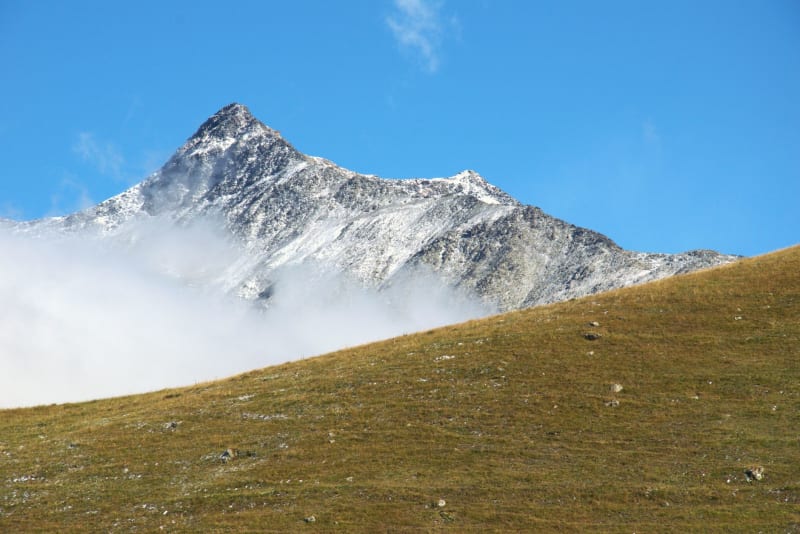
A hidden dead-end valley near Kazbegi where the trail ends at a glacial cirque and the only sounds are wind, water, and the occasional crack of a glacier calving.
Explore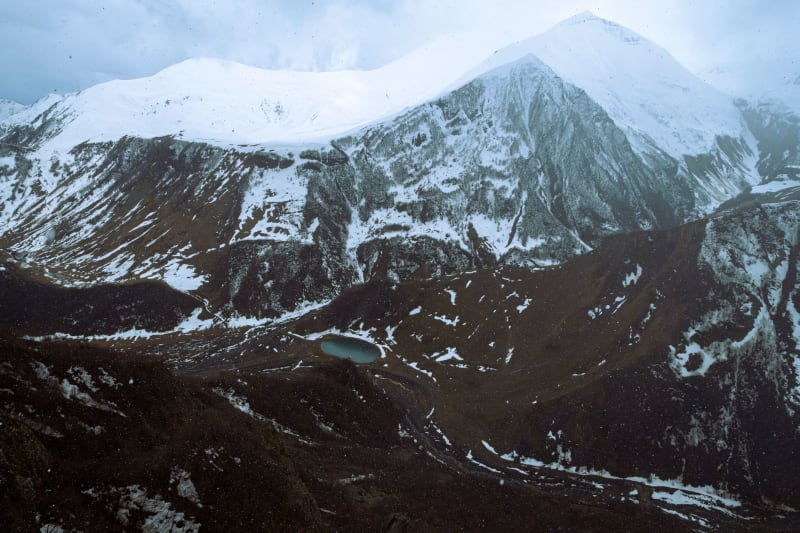 caucasus-mountains
 Khinalig
One of the highest permanently inhabited villages in the world, home to a people who speak a language found nowhere else on earth and live above the clouds in northern Azerbaijan.
Explore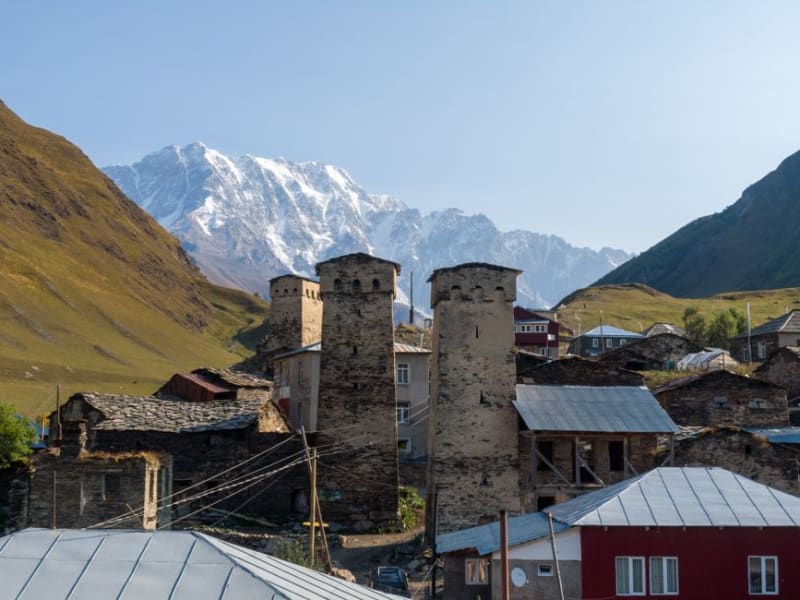 caucasus-mountains
 Laghami
A tiny Svan hamlet on the trekking route between Mestia and Ushguli where a handful of families still live under medieval stone towers.
Explore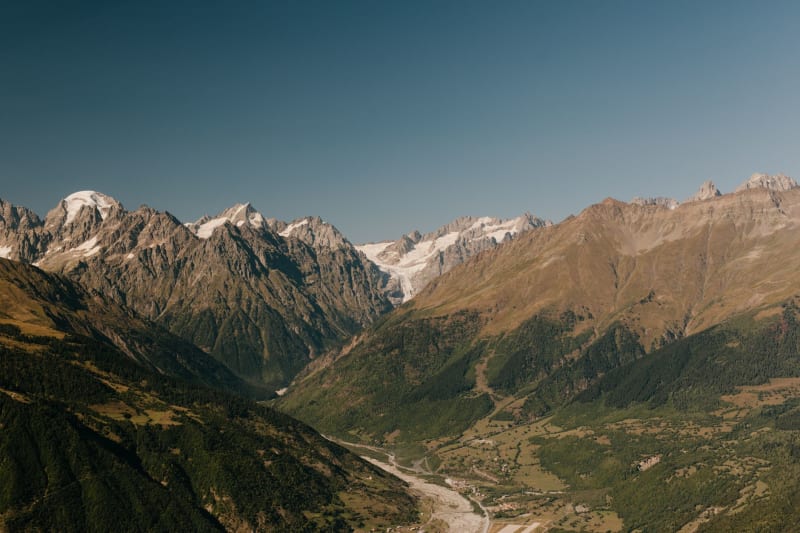 caucasus-mountains
 Lahic
An Azerbaijani copper-working village in the Caucasus foothills where the sound of hammers on metal has echoed down the same stone lane for six centuries.
Explore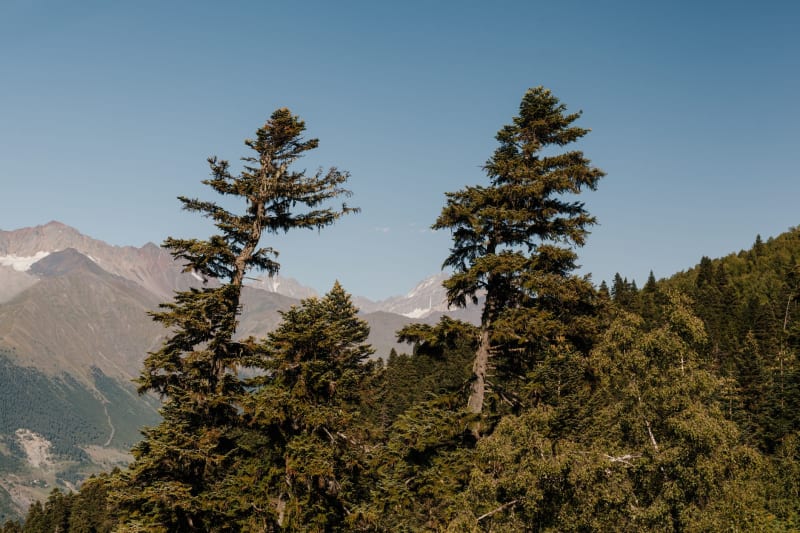 caucasus-mountains
 Mestia
The compact capital of Svanetia where stone towers erupt between modern guesthouses and every street points toward a different glacier.
Explore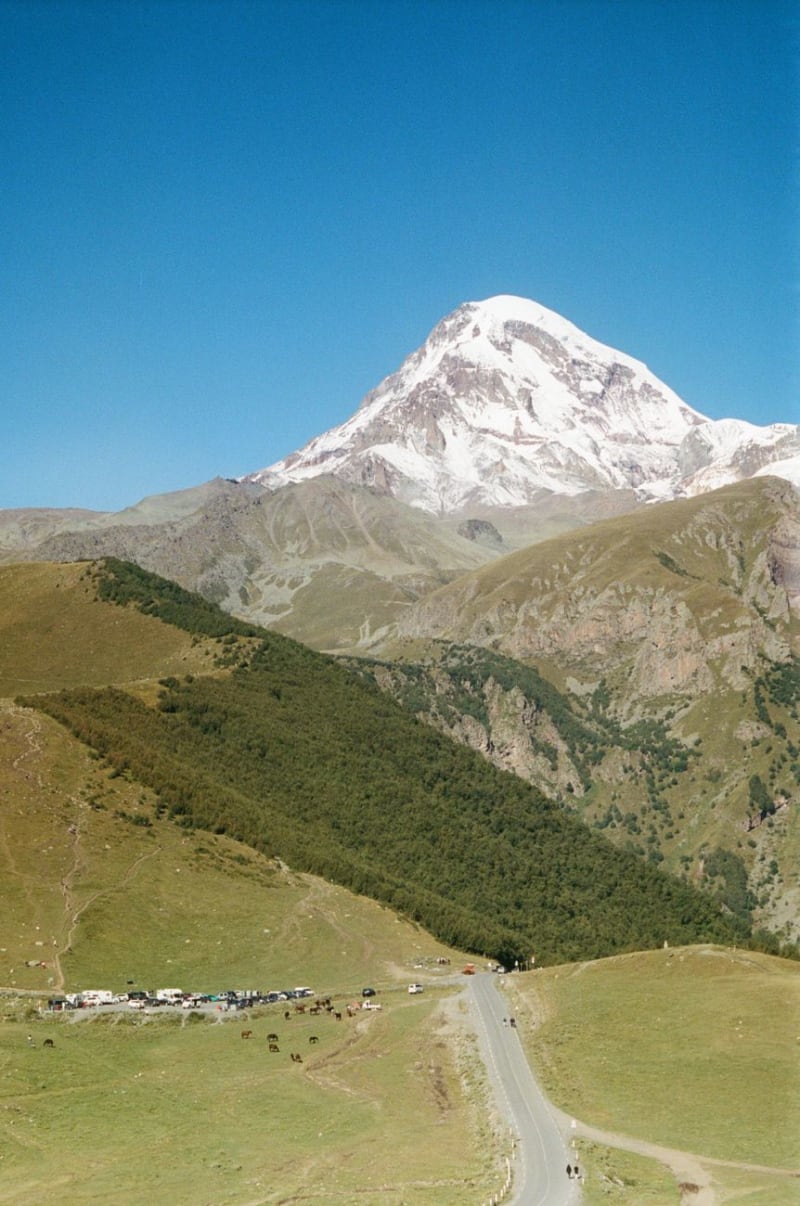 caucasus-mountains
 Mount Elbrus
The highest peak in the Caucasus and in Europe — a twin-coned dormant volcano in the Russian republic of Kabardino-Balkaria, where Soviet cable cars haul you to the edge of the glaciers.
Explore