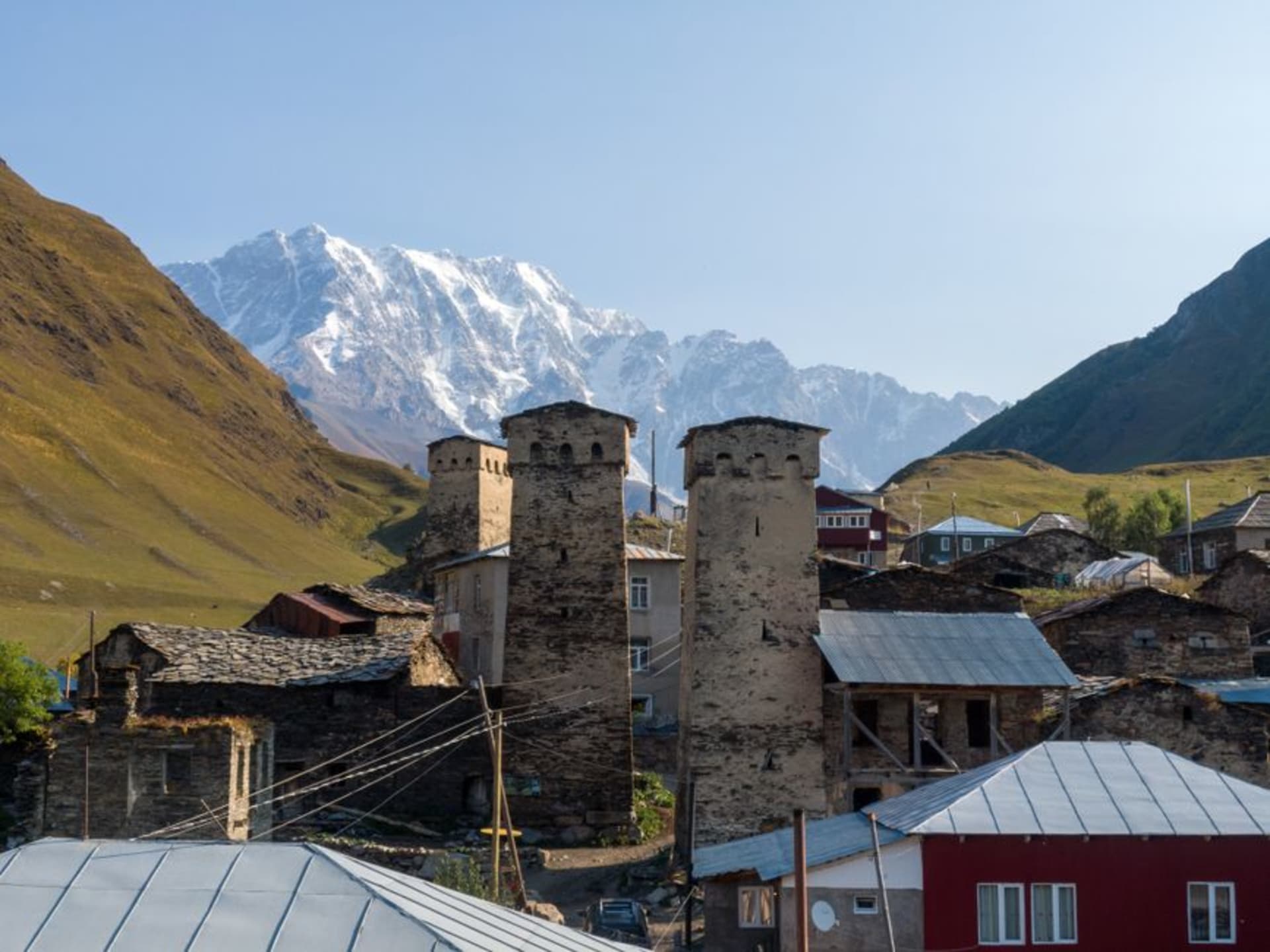
Laghami
"The woman who fed us that night refused payment twice before finally letting me leave a few lari under my plate."
A tiny Svan hamlet on the trekking route between Mestia and Ushguli where a handful of families still live under medieval stone towers.

Laghami isn’t a place you plan a trip around — it’s a place you pass through, usually on day two of the Mestia-to-Ushguli trek, and I almost didn’t stop to look at it properly because by that point Lia and I were tired, sunburned, and thinking mostly about the next village with a bed. But we’d budgeted an easy day, so we slowed down, and I’m glad we did, because Laghami turned out to be one of the smallest, most quietly beautiful stops on the whole route.
It’s barely a hamlet — a scatter of maybe a dozen households along the valley, several of them still anchored by the Svan defensive towers that give this whole region its distinct silhouette. Unlike Mestia, where the towers have become a photogenic backdrop for guesthouses and cafés, in Laghami they’re just part of the working landscape, standing over hay fields and cow pens like nobody’s told them tourism exists yet. We stopped to rest by one and an elderly man came out, more curious about us than we were about his tower, and gestured for us to look inside — dark, cool, smelling of stone and old smoke.

There’s no real infrastructure in Laghami — no shop that we found, no sign for a guesthouse — but that’s part of what makes it memorable. Trekking guidebooks mention it mostly as a waypoint, a place to note on the map between the bigger, better-equipped villages of the Enguri valley trek. We ended up asking, half-awkwardly, if a family might have a spare room for the night, and within minutes we were sitting at a kitchen table while a woman who spoke maybe ten words of English fed us more khachapuri and honey than two people should eat in one sitting.
That’s the version of Svaneti I keep telling people about when they ask what the trek is actually like — not the postcard tower shots in Mestia’s main square, but a random evening in a hamlet too small to have a name on most maps, eating dinner with strangers because there was nowhere else to go. Lia still talks about the honey.

If you’re doing the Mestia–Ushguli trek, don’t treat Laghami as just a waypoint to tick off. Slow down for an hour, or better, ask around for a bed — the hospitality here is unlike anywhere else on the route.
When to go: Trek through in July or August when the high passes toward Ushguli are clear of snow and the trail is at its most reliable.
Keep exploring
More from Greater Caucasus
 caucasus-mountains
 Lahic
An Azerbaijani copper-working village in the Caucasus foothills where the sound of hammers on metal has echoed down the same stone lane for six centuries.
Explore caucasus-mountains
 Mestia
The compact capital of Svanetia where stone towers erupt between modern guesthouses and every street points toward a different glacier.
Explore caucasus-mountains
 Mount Elbrus
The highest peak in the Caucasus and in Europe — a twin-coned dormant volcano in the Russian republic of Kabardino-Balkaria, where Soviet cable cars haul you to the edge of the glaciers.
Explore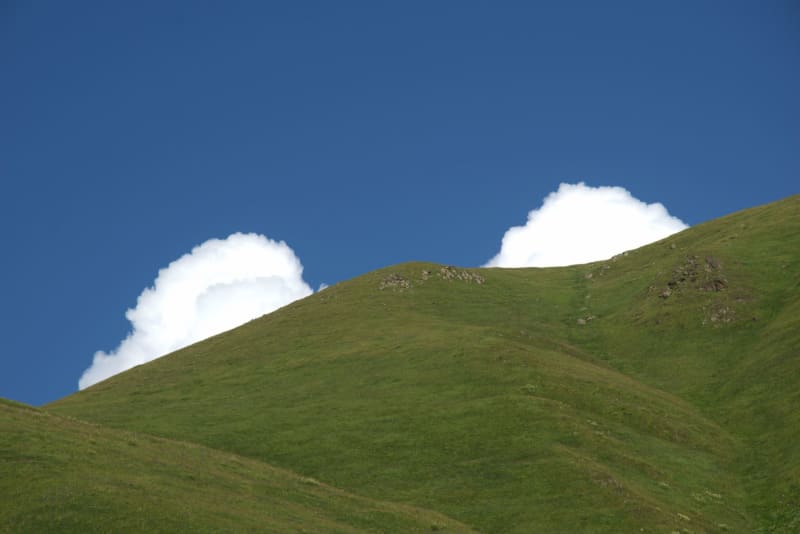 caucasus-mountains
 Omalo & Tusheti
Georgia's most remote inhabited region: a cluster of medieval villages reachable only by one of the most terrifying mountain roads in existence.
Explore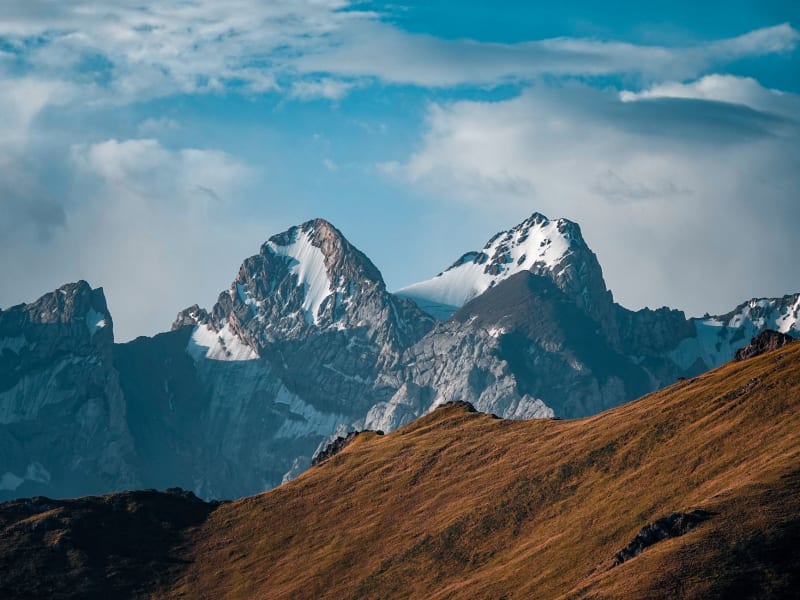 caucasus-mountains
 Shatili
A Khevsur fortress village on the Chechen border so well-preserved it looks like someone forgot to tell the Middle Ages they were over.
Explore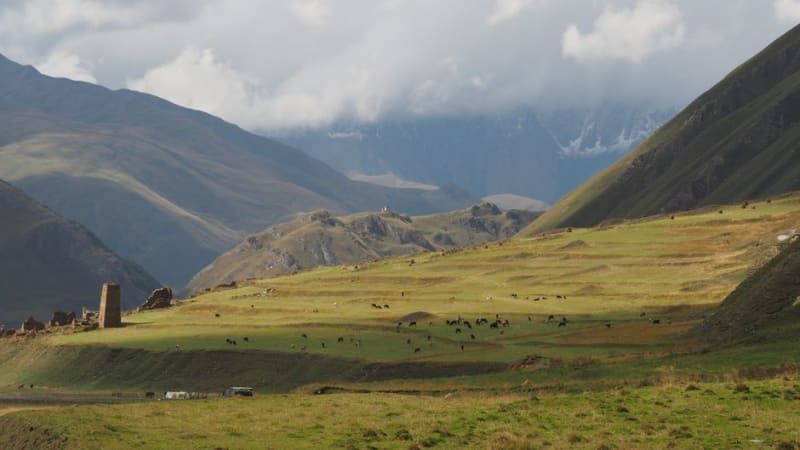 caucasus-mountains
 Sno Valley
A quiet side valley near Kazbegi where medieval Georgian watchtowers still guard a handful of stone villages against a backdrop of glaciers.
Explore