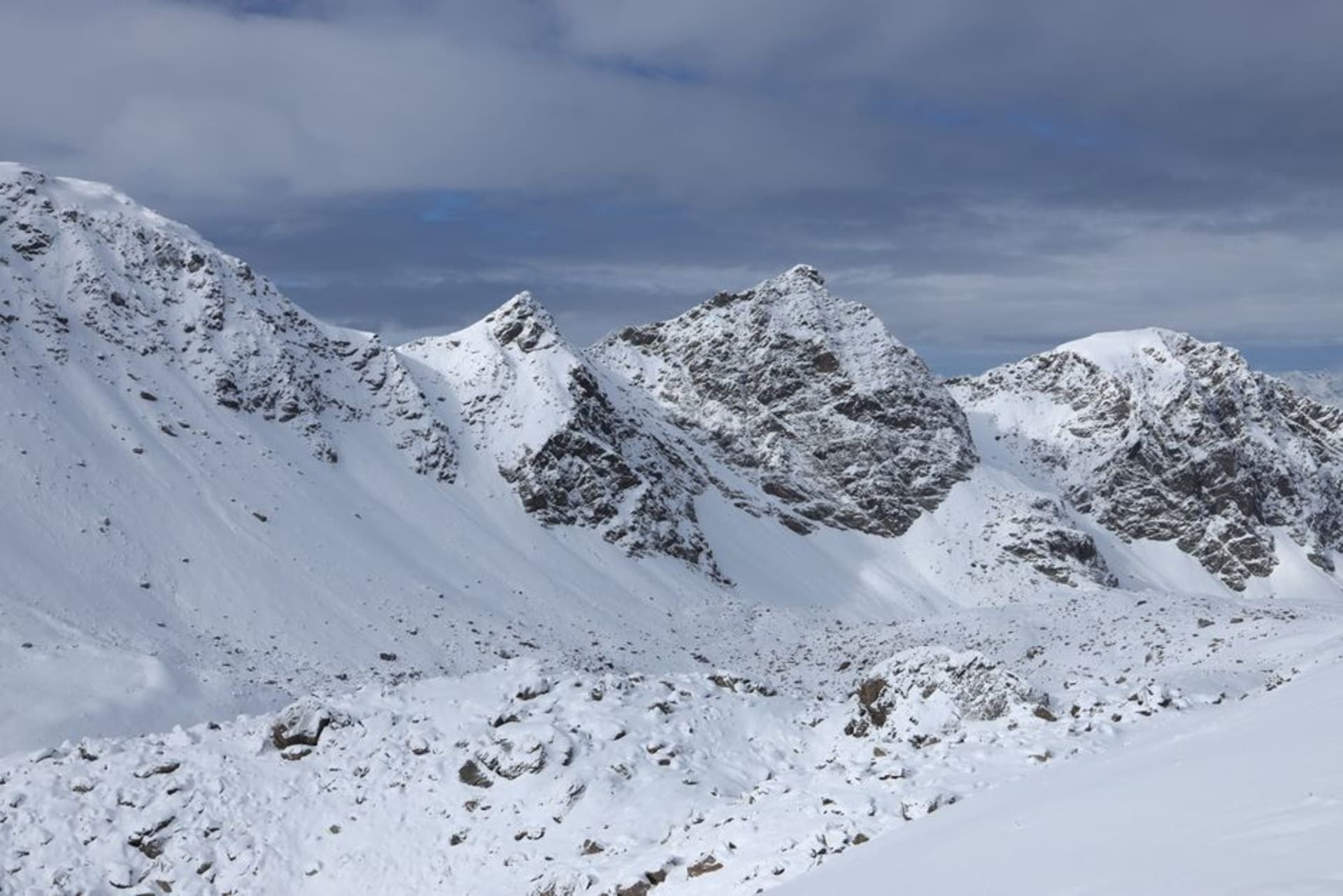
Arkhyz
"I stood under the BTA-6 dome at two in the morning, breath fogging, and felt smaller than I had in years."
A ski valley in Russia's Karachay-Cherkessia where a Soviet-era telescope watches the same peaks that hide 10th-century stone churches.

Getting to Arkhyz took longer than I expected — a long drive up from Cherkessk, the road narrowing and the pines thickening, until the valley finally opened out and I understood why people compare it to a smaller, wilder Chamonix. Lia had wanted to go for the skiing, and the resort itself was fine, unremarkable in the way most purpose-built ski villages are: neat lift lines, a strip of cafés selling khychiny, families in matching snowsuits. What I hadn’t expected was how much the place would pull at me once we left the pistes behind.
The real reason to come to Arkhyz isn’t the skiing, though. It’s the Special Astrophysical Observatory up on Mount Pastukhov, home to the BTA-6, which for years was the largest single-mirror telescope in the world. We booked a night visit almost as an afterthought, and I remember the cold hitting differently up there — thinner, sharper, the kind of cold that makes you talk in a lower voice without meaning to. The dome creaked open above us and a guide who’d clearly done this a thousand times still seemed a little in awe of his own instrument.

What surprised me more, honestly, was what came the next morning. Down in the lower valley, tucked among birch trees, stand three small stone churches — the Zelenchuk churches — that date to somewhere around the 10th century, built when this was Alanian territory and Byzantine missionaries were pushing Christianity into the mountains. They’re some of the oldest churches anywhere in Russia, and almost nobody visits them. I walked around the largest one alone, running my hand along stone that had outlasted empires, while Lia photographed a stray dog that had adopted us for the morning.
There’s a strange rhythm to Arkhyz because of this — you ski or hike all day among granite peaks that feel entirely indifferent to human history, then in the evening you’re standing next to either a cutting-edge telescope or a thousand-year-old church, both trying to answer the same question about our place in all this. I didn’t expect a ski trip to leave me thinking about deep time, but that’s what happened.

We stayed four nights, which felt about right — enough time to ski, hike a little way up toward the Sofia glacier on a clear afternoon, and still have an evening free for the observatory. I’d go back just for the churches, though. There’s something about finding that kind of quiet, deliberate history in a valley best known for its ski lifts that stuck with me longer than the skiing did.
When to go: Come in February or March for reliable snow and clear mountain light, or in September for golden birch forests and warm days without the crowds.
Keep exploring
More from Greater Caucasus
 caucasus-mountains
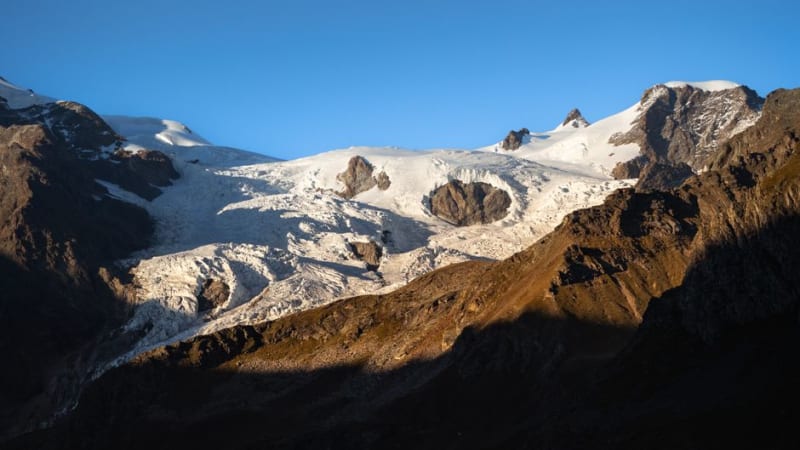
 Chaukhi Massif
A jagged granite ridge above the village of Juta, nicknamed the Georgian Dolomites, that turns pink and gold in the last light of the day.
Explore caucasus-mountains
 Dariali Gorge
The ancient passage through the Caucasus where the Terek river has carved a canyon so narrow and sheer it was once considered the literal gate between Europe and Asia.
Explore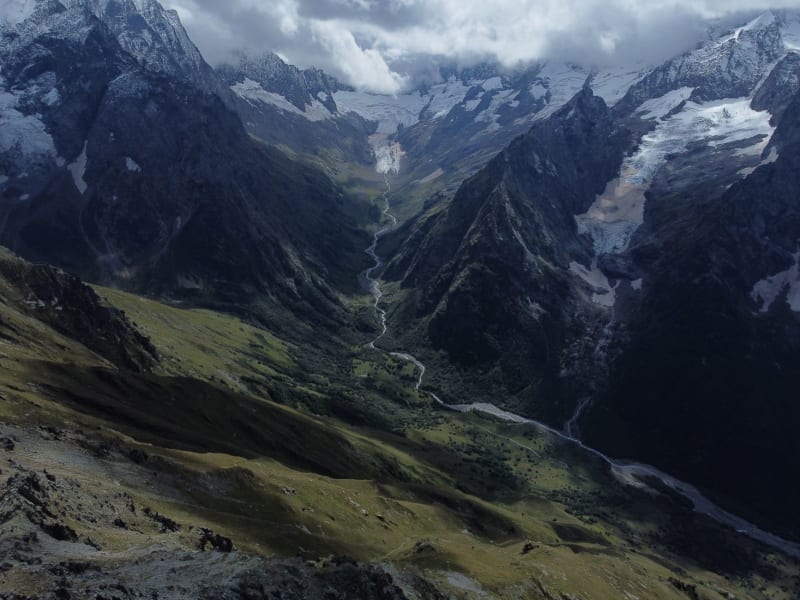 caucasus-mountains
 Dombay
A Soviet-era mountain resort in the Russian Caucasus where the vertical rises over 3,000 meters and the forests below the glaciers are so dense they muffle all sound.
Explore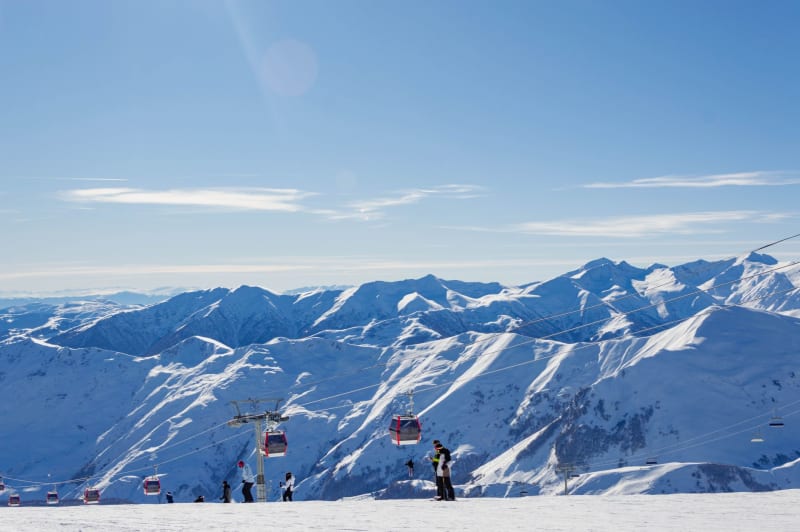 caucasus-mountains
 Gudauri
A high Caucasian plateau at 2,200 meters where Georgia's best skiing happens in winter and paragliders hang in the thermals all summer long above a gorge that drops a thousand meters straight down.
Explore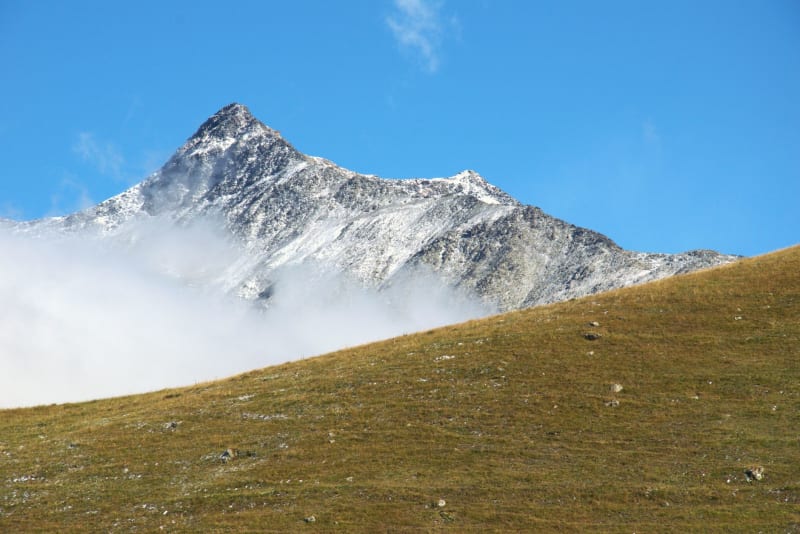 caucasus-mountains
 Juta Valley
A hidden dead-end valley near Kazbegi where the trail ends at a glacial cirque and the only sounds are wind, water, and the occasional crack of a glacier calving.
Explore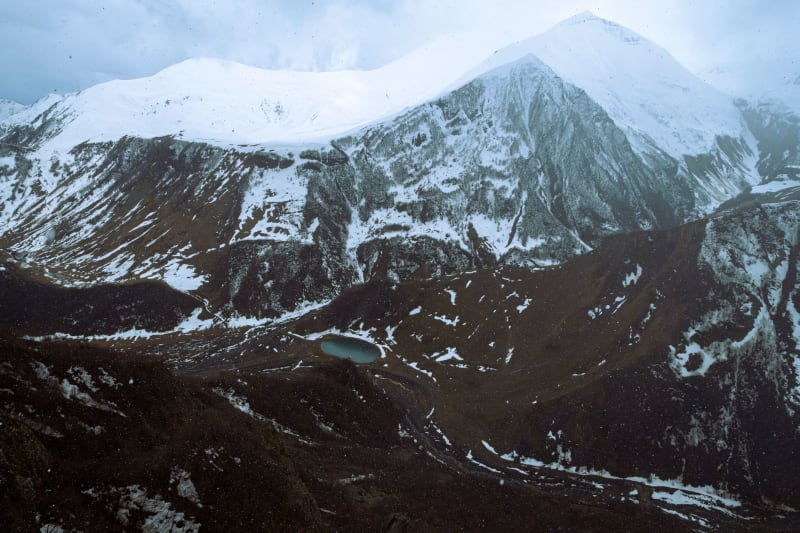 caucasus-mountains
 Khinalig
One of the highest permanently inhabited villages in the world, home to a people who speak a language found nowhere else on earth and live above the clouds in northern Azerbaijan.
Explore