Chianti
"I've driven these roads three times now and I still don't entirely understand the topography."
A wine region between Florence and Siena where the landscape itself seems designed as a delivery mechanism for Sangiovese, and the roads exist mainly to connect one cellar to the next.

The Landscape Between the Cities
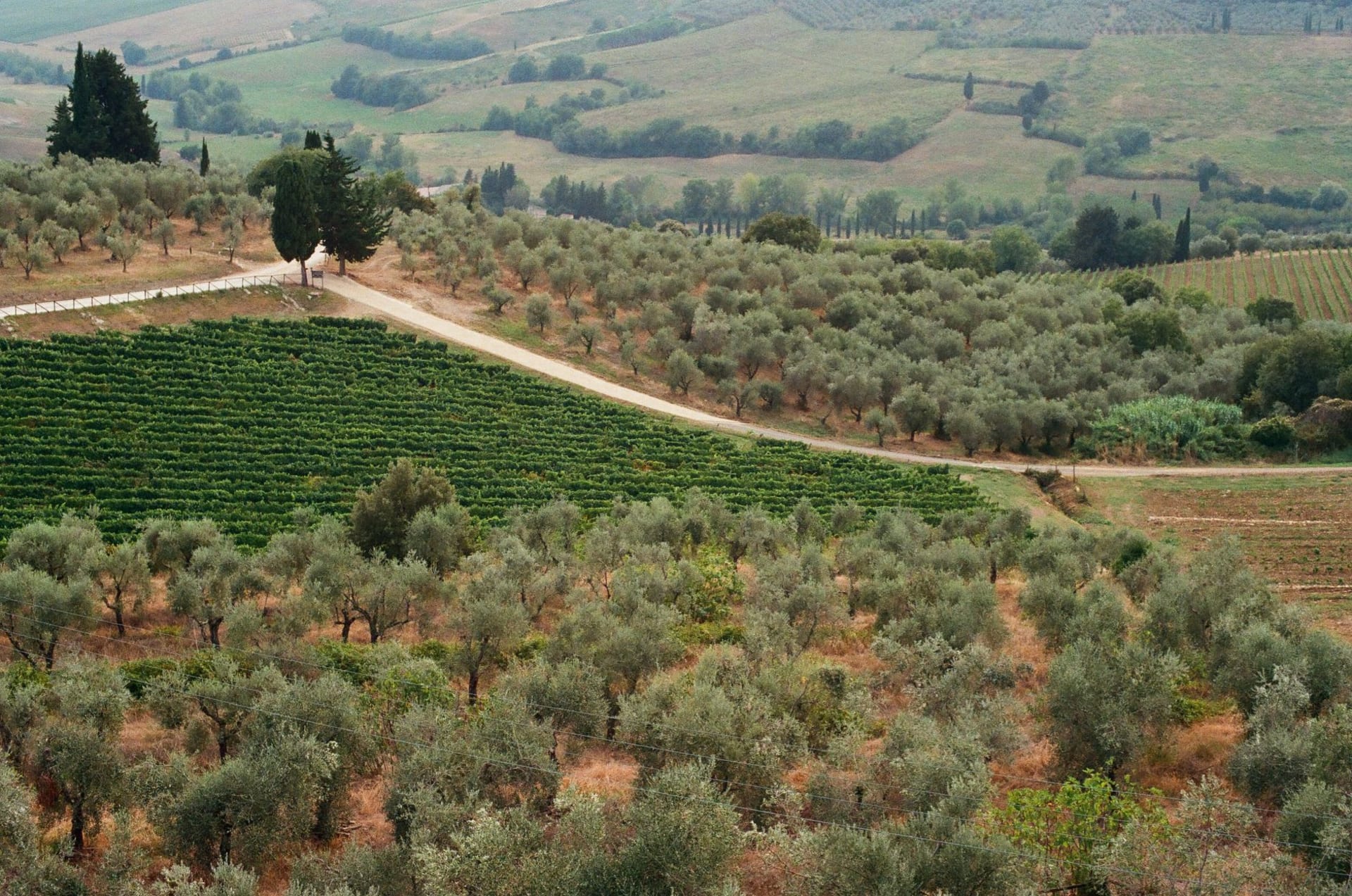
The Chianti zone sits in the hills between Florence and Siena, a band of terrain that runs north-south for about forty kilometers and defies easy summary. It’s not one valley — it’s a series of ridges and drops and unexpected clearings, oak woods alternating with vineyards, olive groves on the slopes that face south, medieval towers visible on the higher points. The villages are small and they all have bars where the espresso is taken seriously.
I drove through it in October, which is the honest time to be here: the harvest is either finishing or just done, the leaves are turning, and the air smells of must and wet stone and something faintly smoky. The vines go from green to yellow to rust-red over the course of about two weeks in late October, and if you time it right the whole landscape turns warm.
Greve in Chianti is the main town — a triangular piazza lined with arcaded buildings, a butcher famous for its finocchiona (fennel salami), and several wine shops with no particular interest in selling you anything you don’t actually want. I spent an hour in one of them talking to the owner about why his Riserva was better than last year’s and left with two bottles and a strong opinion about 2019 vintages.
How to Actually Drink the Wine
The mistake is treating Chianti Classico like a simple table wine because the price is modest. The Classico DOCG zone produces Sangiovese-based wines that range from the drinkable to the genuinely serious, and the Riserva and Gran Selezione designations indicate wines that have aged long enough to show complexity — leather, dried cherry, that characteristic high-acid finish that makes them useful with food rather than against it.
The right setting for Chianti Classico is a plate of bistecca Fiorentina or a thick ragù, ideally eaten on a terrace in the fading afternoon. I managed this on a hillside outside Radda, at a restaurant that charged very little for a very large amount of food, and I sat there long enough that the sun went down and they brought a candle.
The Villages Worth the Turn-Off
Radda in Chianti sits on a ridge with views east and west, its medieval walls intact enough to give it the feeling of a proper fortified village. Castelnuovo Berardenga, at the southern edge of the zone, has a quieter, more agricultural character — less touristic, more given to local life. Panzano in Chianti is home to the butcher Dario Cecchini, who has become somewhat famous for his theatrical approach to meat and who genuinely produces exceptional bistecca, if you can navigate the performance around it.
I prefer Radda in the evening, when the light comes over the western ridge and the valley below fills with shadow while the village stays lit for another twenty minutes.
The Smaller Producers
The major estates — Antinori, Frescobaldi, Badia a Coltibuono — are well-documented and worth visiting for the architecture as much as the wine. But the more interesting experiences are with producers whose names you don’t recognize, who will pour you a glass across a stone counter in a cellar that smells of oak and time, and explain at length what makes their piece of hillside distinct from the one down the road.
These conversations follow a pattern — terroir, altitude, the specific drainage of the soil — and they’re usually correct in their conclusions even when they’re slightly self-serving in their framing.
When to go: September through November for harvest and autumn colour, which is the most photographically and gastronomically rewarding time. May and June have pleasant temperatures and the vines in leaf. July and August are hot and crowded along the main SS222 road, but the back roads are quieter than you’d expect.
Keep exploring
More from Tuscany
 tuscany
 Cortona
An Etruscan hill town so steep you half-expect it to slide into the Val di Chiana below, where the air is always cooler than the valley, and where the art in the local museum is better than anyone seems to have told the tourists.
Explore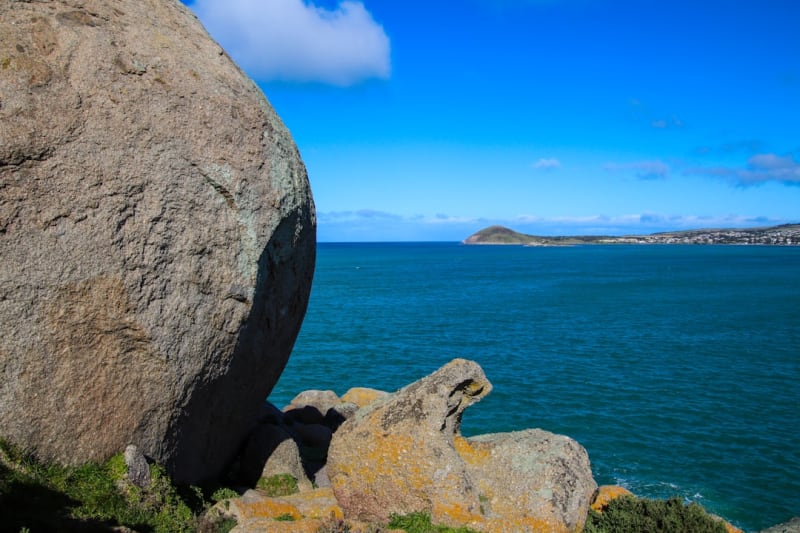 tuscany
 Elba Island
Napoleon's island of exile off the Tuscan coast, ringed by granite coves and turquoise water that makes the Caribbean comparisons feel almost fair.
Explore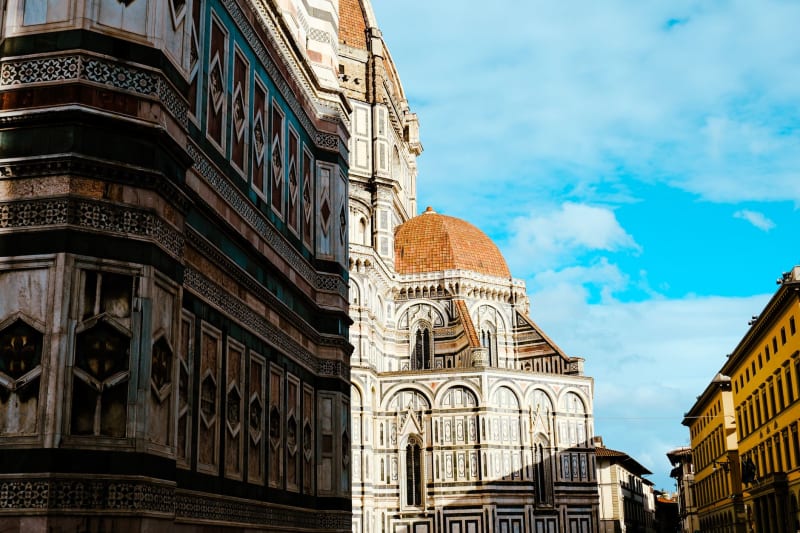 tuscany
 Florence
The city where Renaissance ambition calcified into stone and every piazza feels like a stage set that refuses to acknowledge it's still running.
Explore tuscany
 Garfagnana
A rugged Apennine valley in northern Tuscany where chestnut forests, marble quarries, and near-empty mountain roads replace the region's usual vineyard postcards.
Explore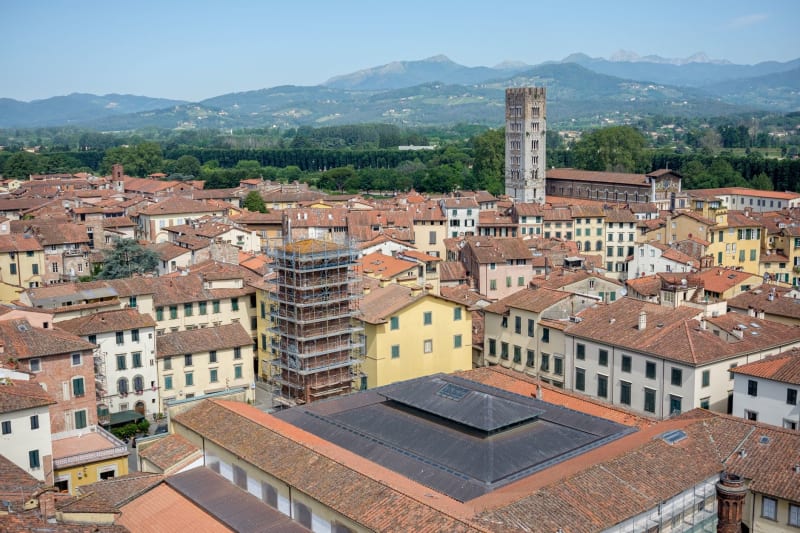 tuscany
 Lucca
The only city in Tuscany where the Renaissance walls are intact enough to cycle along the top, and where locals seem genuinely puzzled that anyone would visit Florence when this exists.
Explore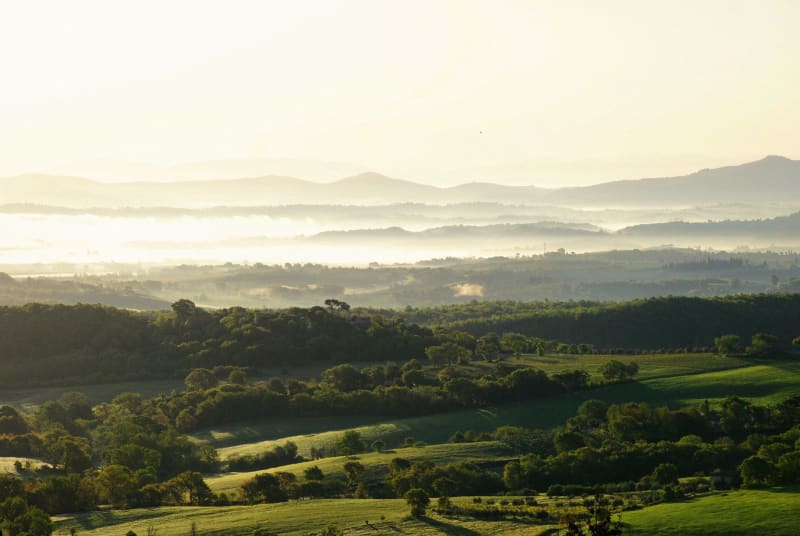 tuscany
 Maremma
Tuscany's overlooked coastal south — a region of wild beaches, Etruscan ruins, cowboy culture, and wine that has only recently discovered its own reputation.
Explore