
Caltagirone
"I counted maybe forty steps of the Scala di Santa Maria del Monte before I gave up counting, because every single riser had a different hand-painted tile pattern and I kept stopping to look properly instead."
A hill town in central Sicily built on centuries of maiolica ceramic craft, most visible on a monumental staircase tiled step by step.

Caltagirone sits inland, away from the coastal crowds, and that alone changes the feel of a visit. Fewer tour buses, more workshops with their shutters actually open, ceramicists visible at their wheels through doorways as you walk past. The town has been making maiolica — tin-glazed earthenware, painted before firing — since at least the Arab period, and the tradition never really broke, just kept adapting through Norman, Spanish, and Baroque rule, each era leaving its fingerprint on the patterns.
The staircase is the reason everyone comes, and rightly so. La Scala, 142 steps connecting the lower town to the church of Santa Maria del Monte, was tiled in the 1950s with hand-painted ceramic risers depicting centuries of Sicilian ceramic history in sequence — you climb literally through styles, Byzantine geometric patterns near the bottom giving way to Arab-influenced motifs, then Renaissance, then full Baroque explosion near the top. Once a year, for the Festa di San Giacomo in late July, they line the whole staircase with thousands of oil lamps for La Scala Illuminata, and the risers glow instead of just being seen — we missed it by about a week and I’m still annoyed about the timing.

We spent an afternoon in the ceramic workshops below the staircase, and one potter let me watch him throw a pignatta, the traditional squat jug shape, explaining between turns that the clay here has a particular mineral content that fires to a specific warm color nobody else in Sicily quite replicates. Lia bought a small teste di moro — the ceramic Moor’s head planters you see everywhere in Sicily, with a legend behind them dark enough that the shopkeeper hesitated before telling us the full version, something about a jealous husband and a decapitation dressed up as a love story. She still displays it on our balcony in Mexico City, slightly incongruous next to the succulents.

What I liked most about Caltagirone was how unfussy it was about its own history — the ceramics aren’t roped off in a museum case, they’re on the steps you walk on, in the balustrades, holding up the bridge railings, sold out of the same shopfronts that have probably sold them for generations. We climbed the whole staircase twice, once at midday in flat light and once closer to sunset when the colors on the tiles turned genuinely rich, and the second climb was the one that stuck with me.
When to go: Late July for the Scala Illuminata lamp festival if you can time it, otherwise spring or early autumn for cooler climbing weather.
Keep exploring
More from Sicily
 sicily
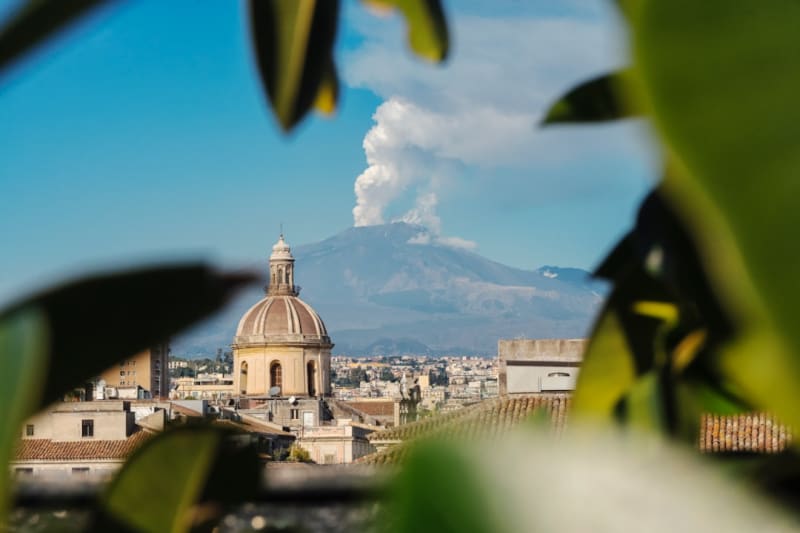
 Catania
Built from Etna's lava and rebuilt after earthquakes, Catania is the fastest, noisiest, most honest city in Sicily — and its fish market is one of the great spectacles of Italian street life.
Explore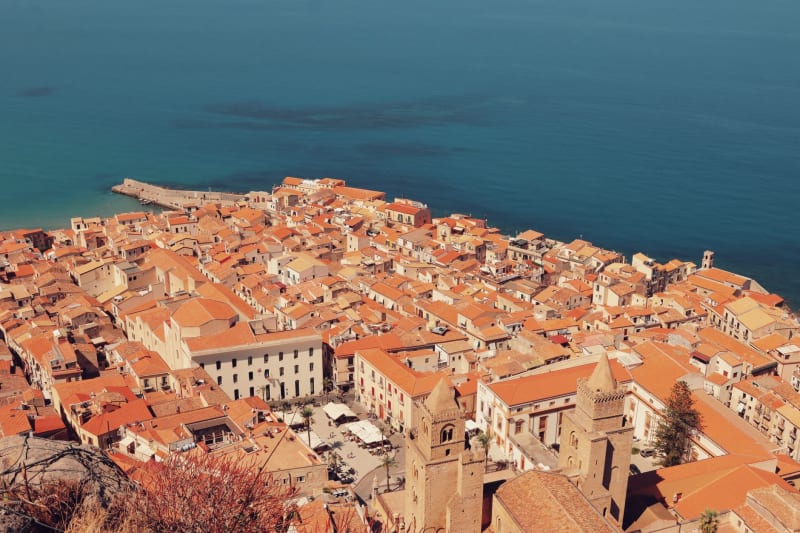 sicily
 Cefalù
A Norman cathedral, a Arab-Byzantine mosaic Christ, a medieval fishing port, and a beach that actually delivers — Cefalù manages to be several things at once without feeling scattered.
Explore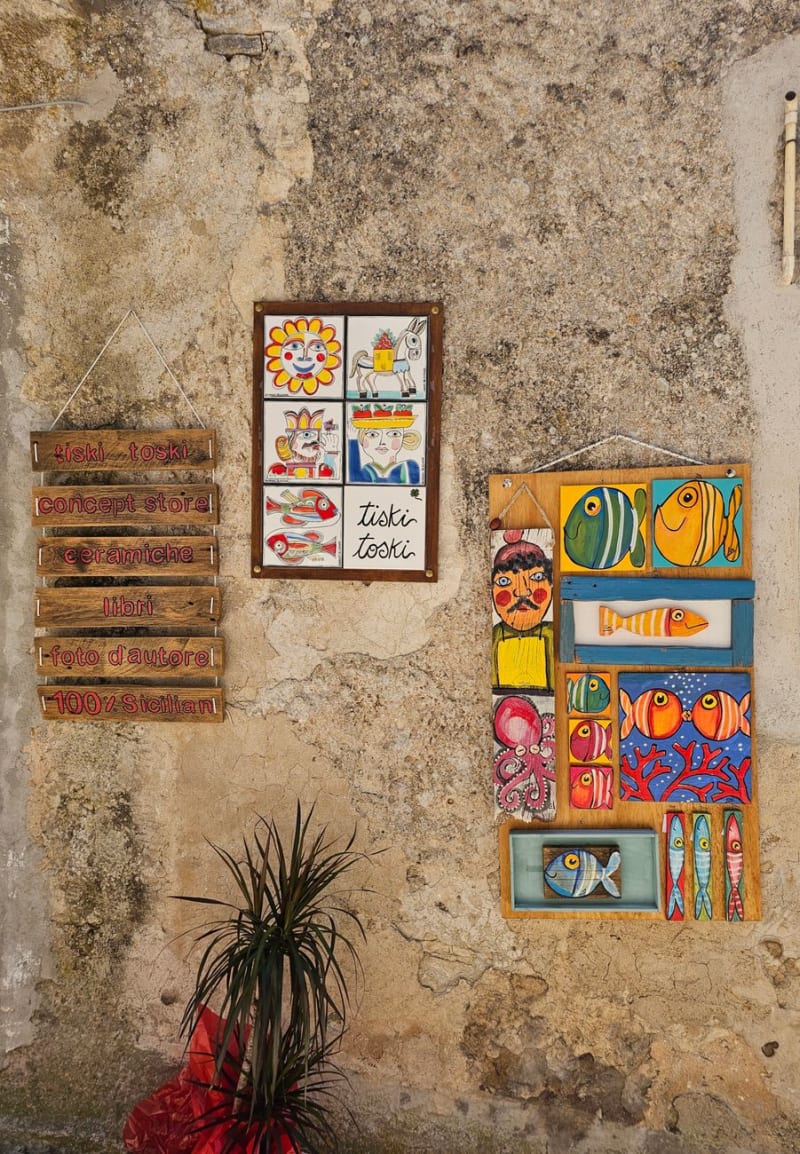 sicily
 Erice
A medieval town adrift in the clouds above Trapani, all cobbled lanes, stone courtyards, and almond pastries made by a woman who guards her recipes like state secrets.
Explore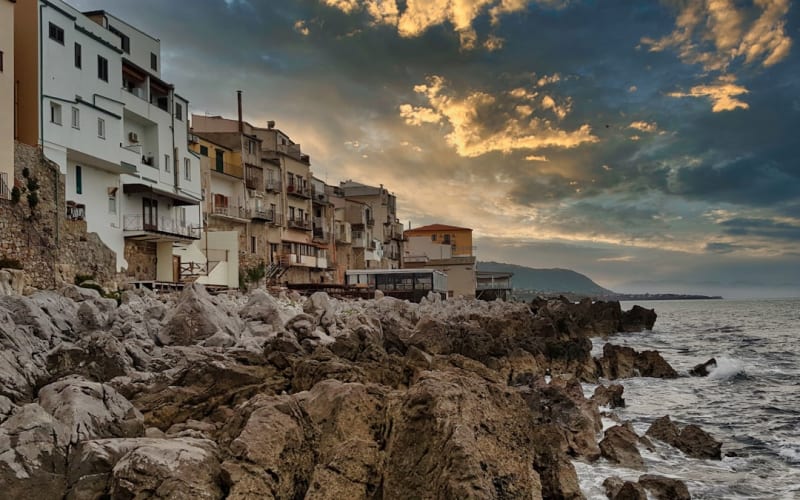 sicily
 Marsala
A Phoenician port on the western tip of Sicily that accidentally invented a fortified wine the English loved, and still makes it in stone cantinas that smell of oak and slow time.
Explore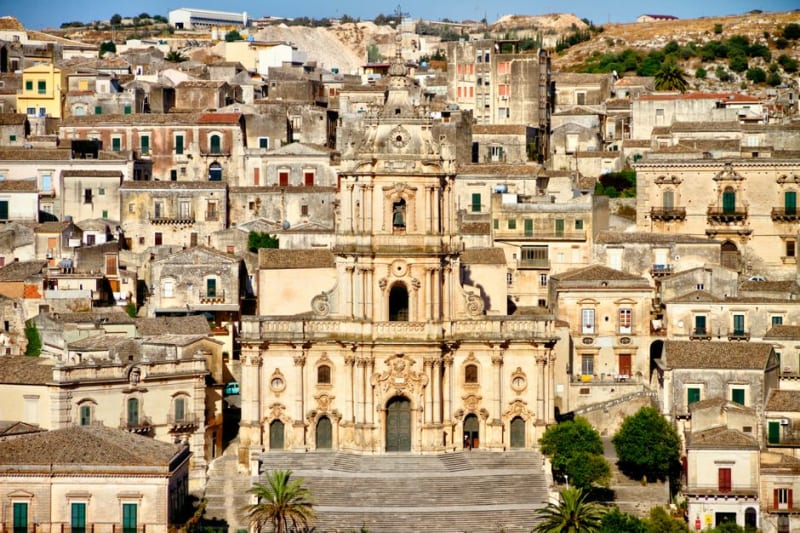 sicily
 Modica
A steep baroque town in southeastern Sicily where cold-worked chocolate, gritty and unrefined, still gets made the way the Spanish learned it from the Aztecs.
Explore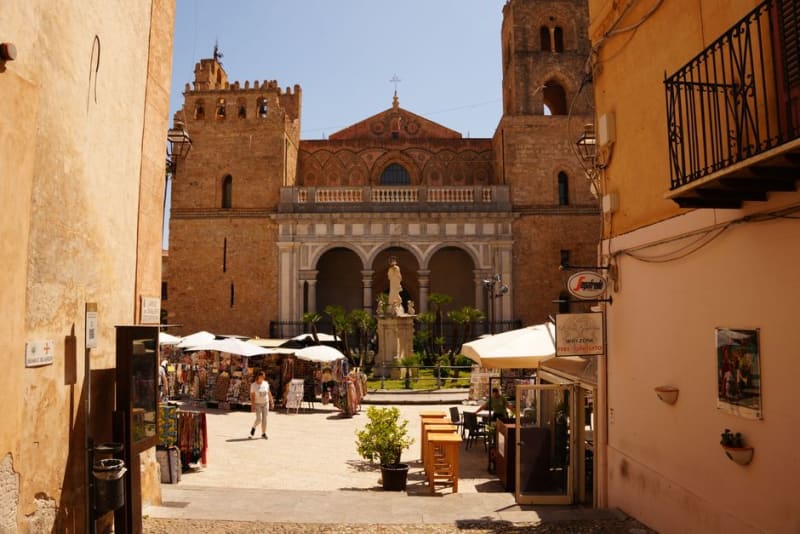 sicily
 Monreale
A hilltop town above Palermo where a Norman cathedral holds acres of Byzantine gold mosaic that still stop conversations mid-sentence.
Explore