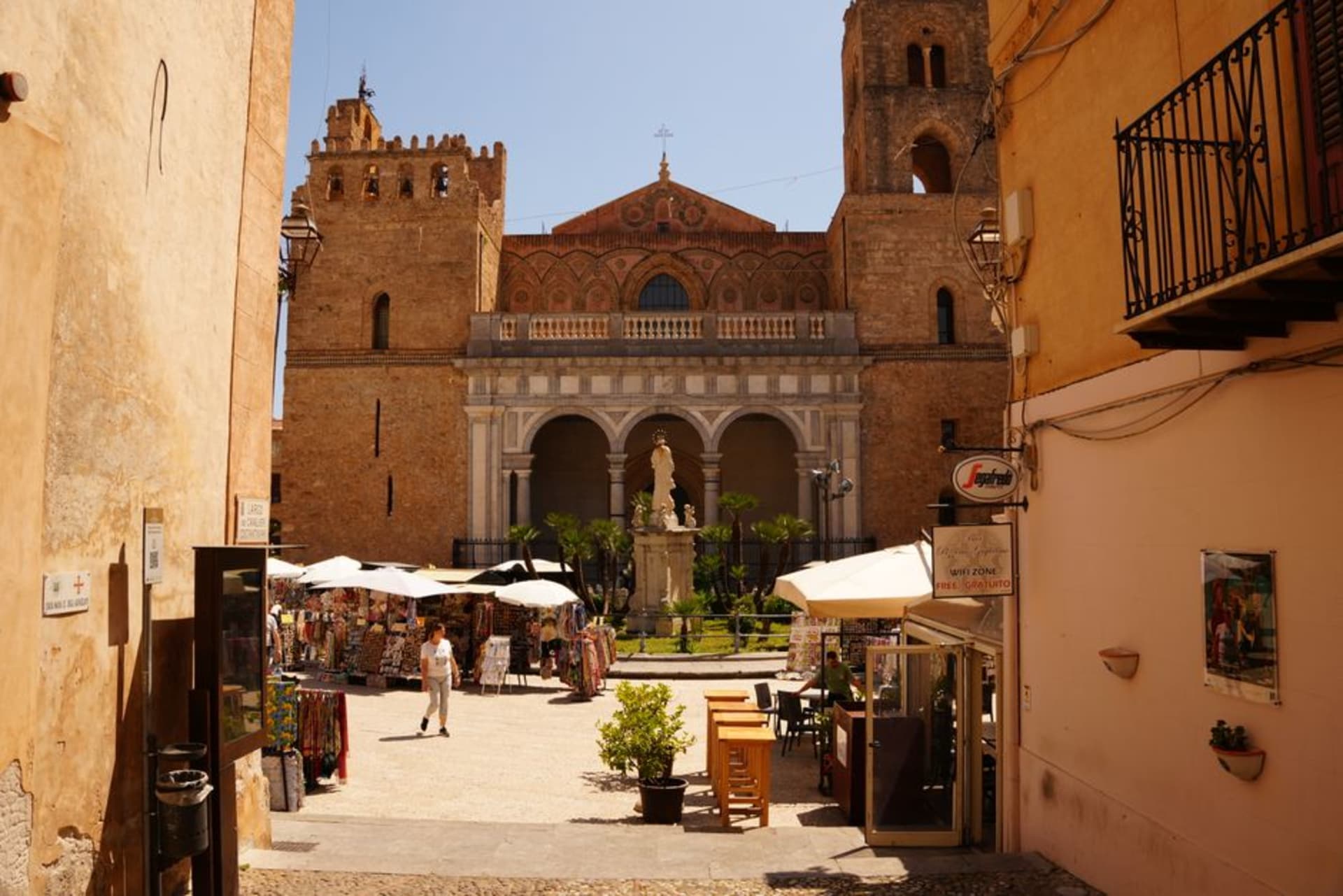
Monreale
"I stood under the apse in Monreale with my neck craned back so long that Lia had to tap my shoulder to remind me other people were trying to see too, because I genuinely lost track of time looking at a wall made entirely of gold."
A hilltop town above Palermo where a Norman cathedral holds acres of Byzantine gold mosaic that still stop conversations mid-sentence.

The bus up from Palermo takes maybe forty minutes, climbing through switchbacks with the city and its bay spreading out below in a way that makes you understand why the Norman kings picked this exact hill for their summer retreat. William II built the cathedral here in the 1170s, partly out of piety and partly, historians think, out of spite toward the Archbishop of Palermo — a bit of medieval one-upmanship that happened to produce one of the most staggering interiors in Europe.
Nothing prepares you for walking in. From outside, the cathedral is handsome but restrained, all bronze doors and interlacing Arab-Norman stonework. Then you step through and the entire building is gold — something like 6,400 square meters of mosaic, Christ Pantocrator staring down from the apse with a face so large and calm it feels less like religious art and more like weather, something happening to the room rather than decorating it. Byzantine craftsmen did the work, brought in by Norman kings who wanted their new kingdom to look as legitimate as Constantinople, and the mix of cultures shows everywhere: Islamic muqarnas ceilings, Latin inscriptions, Greek iconography, all under one Sicilian roof.

We climbed to the cathedral roof afterward, which almost nobody seems to do — the ticket is separate and cheap, and the staircase is narrow enough that Lia and I had to go single file with our shoulders brushing stone on both sides. Up top you walk along the roofline itself, right beside the small domes, with Palermo and the Conca d’Oro valley spread out in every direction, orange groves running down toward the sea. It’s one of the few places I’ve been where the view competes seriously with what’s inside the building.

The cloister next door, part of the old Benedictine monastery, is its own quiet marvel — 228 twin columns, each pair carved with different patterns, some inlaid with the same glinting mosaic as the church. We sat there for a while afterward, ears still ringing a little from the gold, and I remember thinking that Monreale gets treated as a half-day side trip from Palermo when really it deserves the whole day. We rushed the town itself, the market stalls and the little bar where we grabbed a granita, because we’d spent so long inside the cathedral and on the roof. I’d give it more time next time.
When to go: Morning, right at opening, before the tour buses from Palermo cruise ships arrive and the nave fills with guides shouting over each other in five languages.
Keep exploring
More from Sicily
 sicily
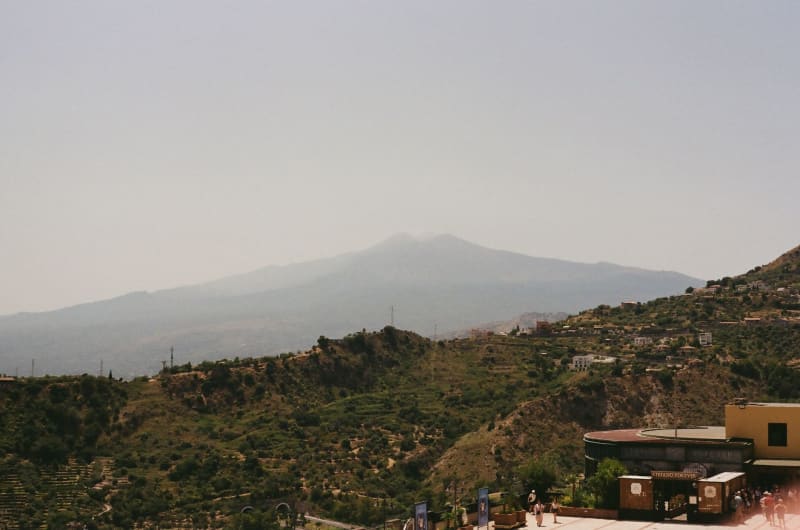
 Mount Etna
Europe's largest active volcano sits above the eastern coast of Sicily like a slow, smoking argument — and everything grown in its shadow tastes better for it.
Explore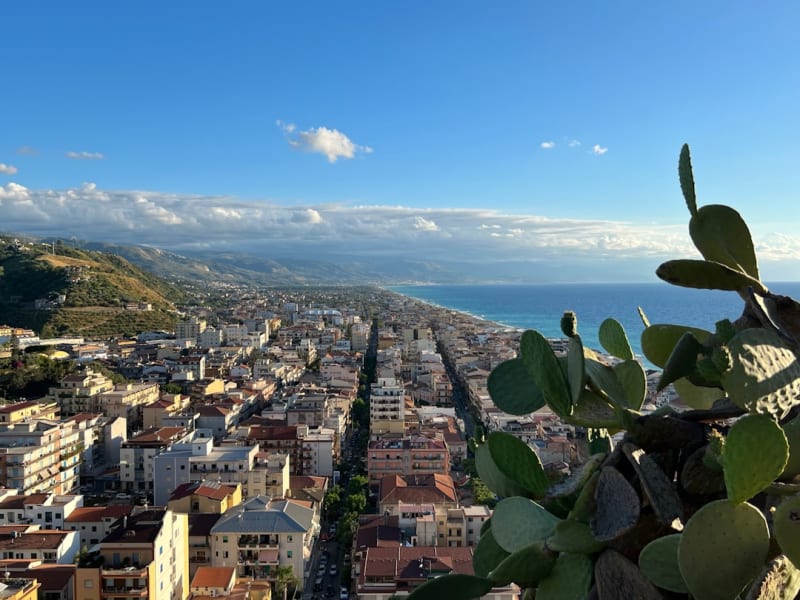 sicily
 Noto
The most perfectly composed baroque town in Sicily, rebuilt from scratch in honey-colored limestone after the 1693 earthquake and looking, implausibly, like it was finished last week.
Explore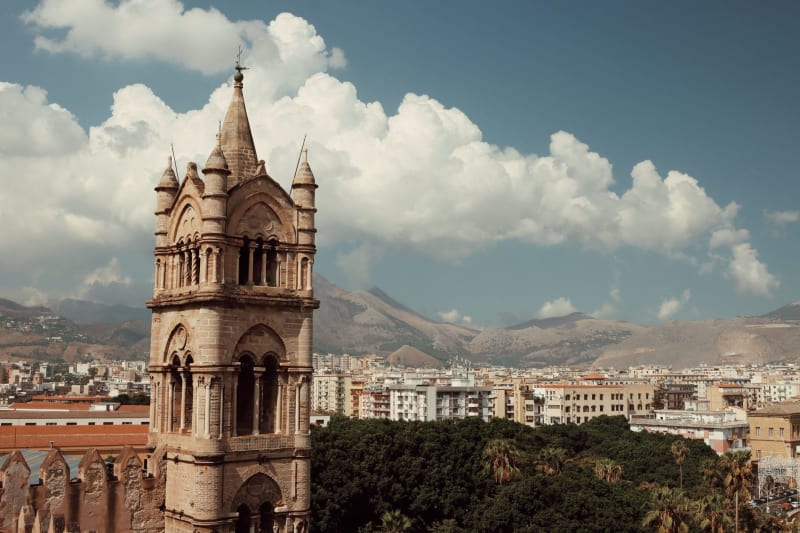 sicily
 Palermo
A city that fries its street food in public and dares you to look away — Palermo is loud, layered, and relentlessly alive.
Explore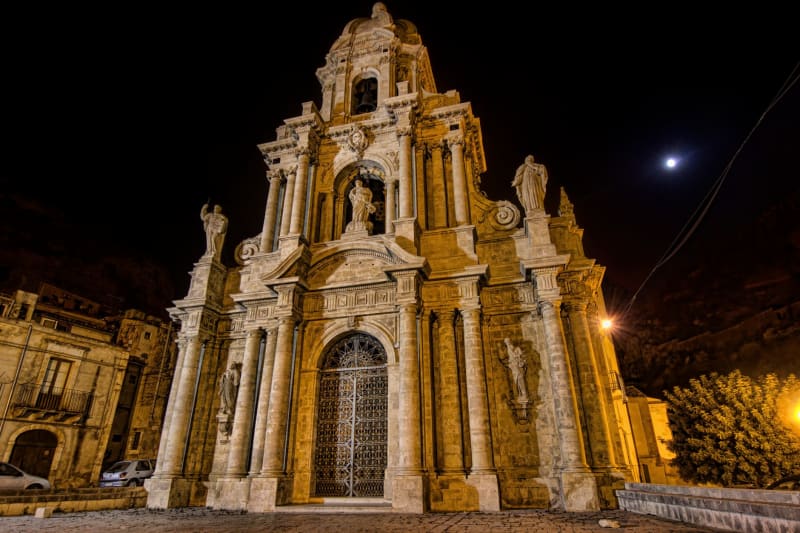 sicily
 Ragusa
A baroque hilltop town rebuilt after a 1693 earthquake, Ragusa Ibla occupies its limestone ridge with a quiet self-possession that makes it the most underrated UNESCO site in southern Sicily.
Explore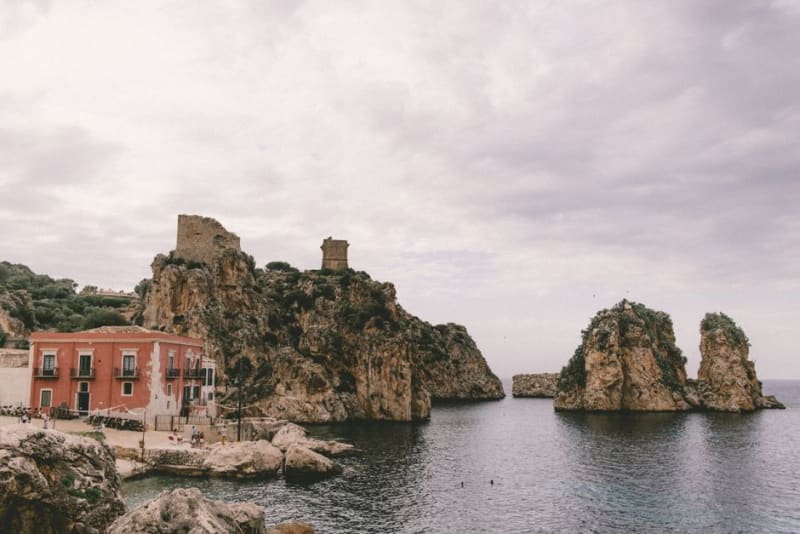 sicily
 Scopello
A tiny former tuna-fishing hamlet on Sicily's northwest coast, watched over by the jagged faraglioni sea stacks rising just offshore.
Explore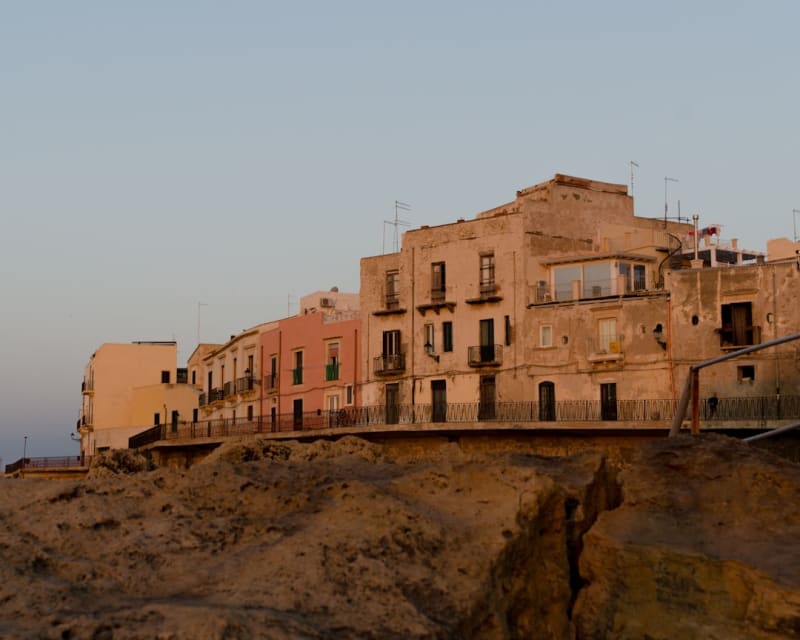 sicily
 Siracusa
A Greek city that became Roman, then Byzantine, then Norman, then baroque — Siracusa carries every layer at once and somehow wears them all well.
Explore