Villa de Cos
"The desert does not apologize for being empty. Neither should you for going."
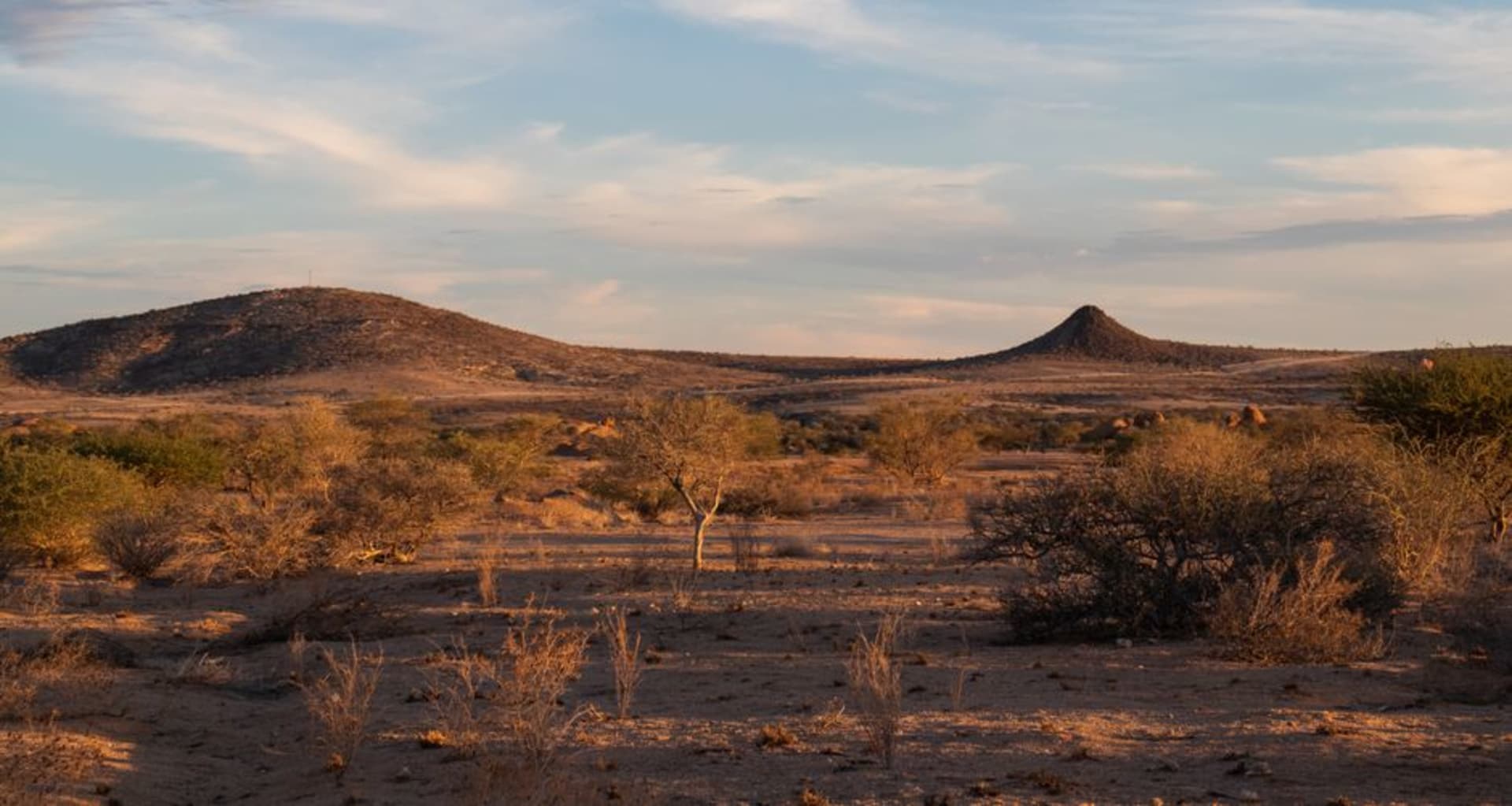
A desert mining town on the high Zacatecan plain where ochre rock and scrub stretch to every horizon and the silence is thick enough to taste. The surrounding semi-desert holds petroglyphs, collapsed haciendas, and a sky so uninterrupted it feels like a second landscape laid over the first.

I took the second-class bus from Zacatecas city on a Thursday morning and arrived in Villa de Cos around noon, when the sun on the plaza was the kind that makes you want to press yourself flat against the shaded wall of the presidencia. The town is small, functional, not performing anything for anyone. There is a church, a market corridor, a handful of comedores with hand-painted signs. I ate a bowl of caldo de res and watched a man argue with a dog over a tortilla for ten minutes. I already liked it here.
The Altiplano and Its Petroglyphs
What brings people out this far — though not many people, which is the point — is the semi-desert itself. The landscape around Villa de Cos is classified as a transition zone between the Chihuahuan Desert and the highlands, which in practice means scrub, lechuguilla, and horizons that go on longer than seems reasonable. To the north and east, scattered across volcanic rock outcroppings, there are petroglyphs left by pre-Hispanic communities whose names have mostly dissolved into scholarly debate. You reach some of them on dirt tracks that require asking locally for directions — no signage to speak of, no parking lot. I hired a man named Guadalupe who had a truck and knew which tracks to take. We drove forty minutes into absolute nowhere and arrived at a basalt face covered in spirals, deer, and geometric forms that nobody can quite agree on. Standing in front of them in full afternoon silence, I thought about what it means to leave a mark on something that will outlast every version of yourself.

Abandoned Haciendas and the Arithmetic of Decline
The mining era left its signature all over this part of Zacatecas, and Villa de Cos is no exception. Within an hour’s drive you can find haciendas in various states of elegant ruin — thick adobe walls with their plaster falling away in sheets, arched gateways standing without buildings behind them, patios where the well is still intact but everything else has returned to dust. The thing nobody tells you about these places is how unhurried the collapse looks. It does not feel violent or abandoned in the dramatic sense. It feels like the desert simply absorbed what was offered. I spent a long afternoon at one such hacienda, whose name I never confirmed because the locals just called it la vieja, photographing the quality of light through a collapsed roof onto a tile floor. That kind of afternoon is either a waste of time or the whole point, depending on who you are.

The Sunsets Are Non-Negotiable
There is no soft way to say this: the sunsets on the altiplano around Villa de Cos are absurd. The sky is too big, the dust in the air turns everything amber before shifting into something closer to violet, and there are no buildings tall enough to interrupt it. I watched three of them from the edge of town, sitting on a low wall with a cup of café de olla from the comedor on Calle Hidalgo. By the third evening I had stopped trying to photograph it properly and just sat there. Some things work better as memory than as image.

Getting There
Second-class buses from the Central Camionera in Zacatecas city run to Villa de Cos several times a day — the ride is roughly two hours along Federal Highway 45. There is no bus station in town, just a stop near the plaza. A few basic posadas offer rooms; it is worth calling ahead. Bring cash.
Keep exploring
More of Zacatecas
Keep exploring
More from Zacatecas
 mexico
Fresnillo
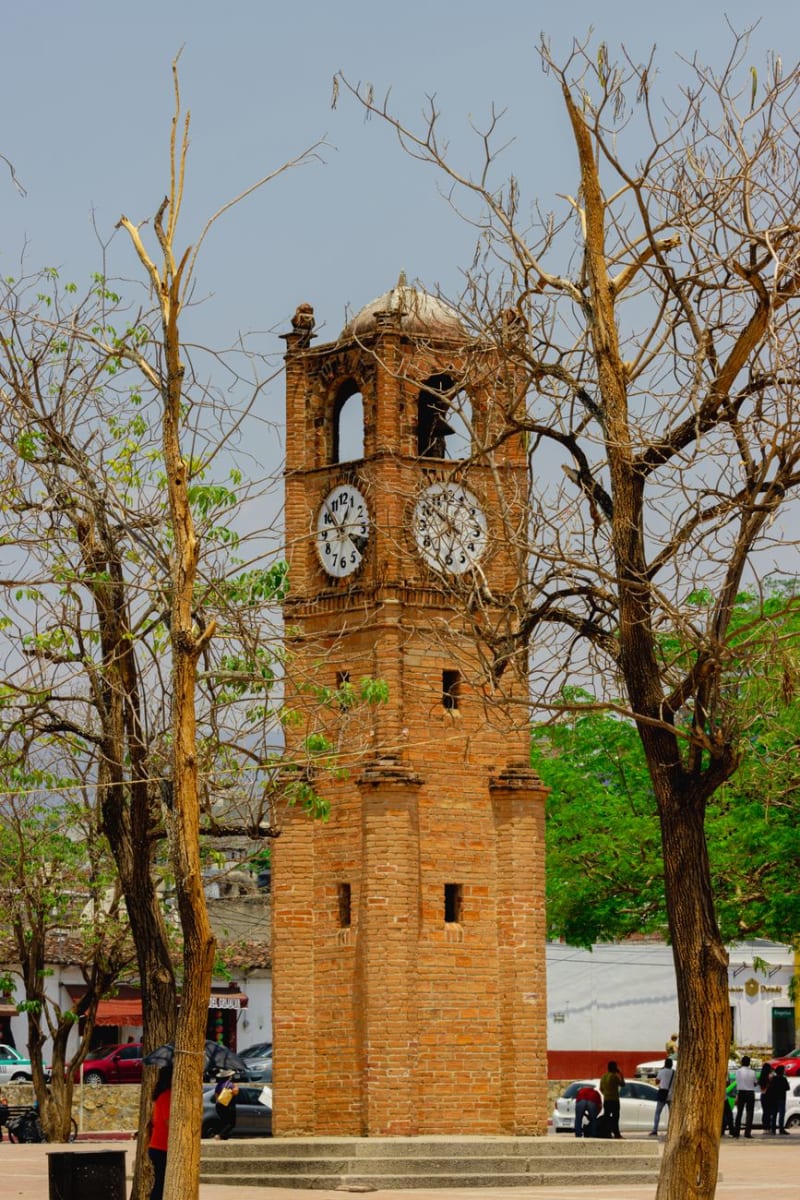
Fresnillo is the second-largest city in Zacatecas state, built around a silver mine that is still one of the largest operating silver mines in the world. It is a working northern Mexican city without pretension: wide streets, norteño music from car stereos, a colonial church on a functional plaza, the mine infrastructure visible from the surrounding hills. I ate cabrito — slow-roasted young goat, the northern Mexico specialty — in a lunch restaurant full of mine workers and thought this was a more honest version of the state than the cable car and the pink cathedral sixty kilometers south, though I love the cable car.
Explore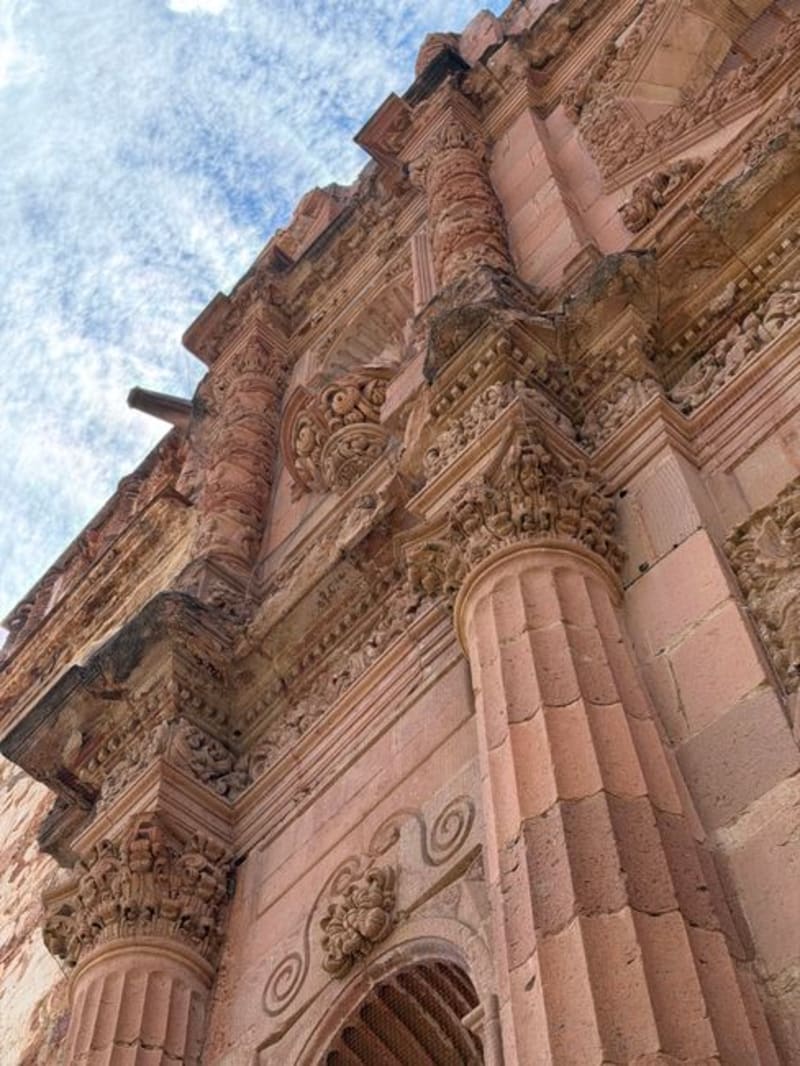 mexico
Mazapil
Founded in 1568 as a silver-mining outpost in the high Chihuahuan desert, Mazapil is one of the oldest towns in Zacatecas — a place where a 16th-century Augustinian convent rises from scrubland and a meteorite crater sits just down the road, reminding you that geography here has always been extreme.
Explore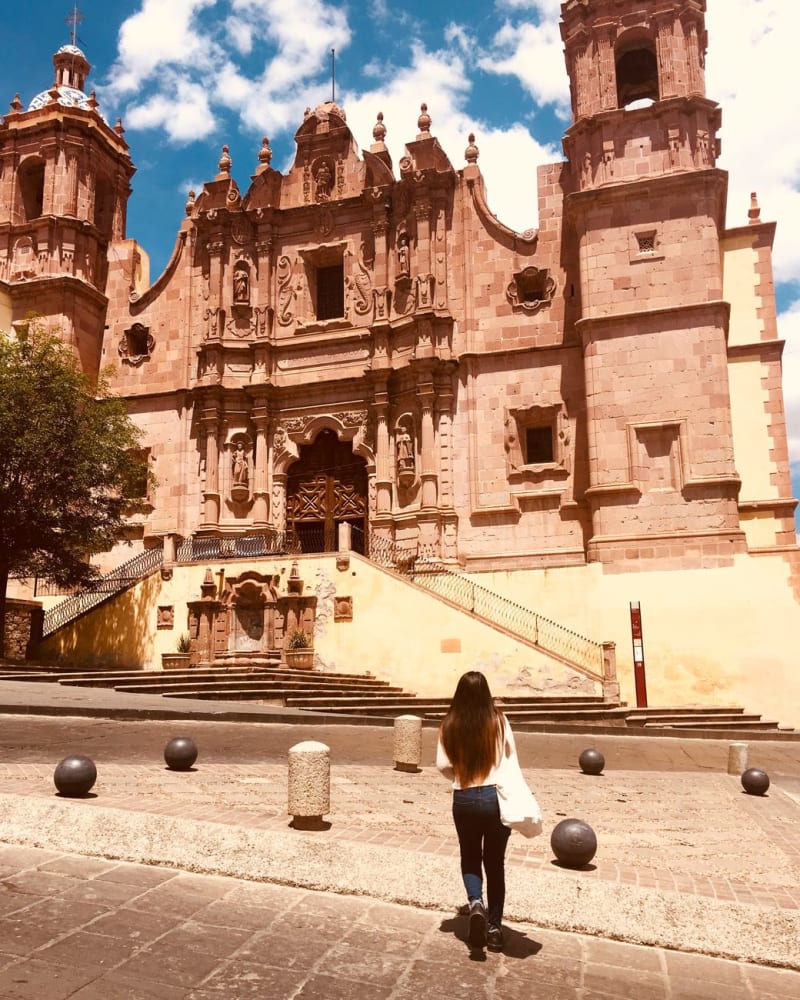 mexico
Zacatecas City
Zacatecas City is a UNESCO World Heritage colonial mining city built almost entirely from cantera rosa, a local volcanic stone that turns the historic center a deep rose-pink in daylight and copper at sunset. The churrigueresque cathedral facade is the most ornate in Mexico. You enter the old silver mine in a miniature train, descend into the mountain, and walk extraction tunnels that funded a significant portion of the Spanish colonial empire. A cable car connects the two hills that bracket the city.
Explore mexico
Jerez de García Salinas
Jerez is a Pueblo Mágico 50km from Zacatecas City and the birthplace of Ramón López Velarde, the poet whose 'La suave patria' became the defining literary expression of Mexican national identity after the revolution. The town is also famous for handcrafted sombreros charro — wide-brim formal hats made in workshops you can walk into — and has a bullring culture that predates everything around it. It is a town that takes its own seriousness for granted.
Explore mexico
Loreto Zacatecas
A highland Zacatecas town built on Franciscan faith and silver money, Loreto carries the particular composure of a place that mattered once and has never quite stopped knowing it. The surrounding hills still show their mine workings, and the mission church holds the square with quiet authority.
Explore mexico
Concepción del Oro
A former silver and gold mining town marooned in the high desert of northern Zacatecas, Concepción del Oro wears its boom-and-bust history in crumbling stone walls and family names that trace back to the Bonanza mine. The landscape reads closer to the American Southwest than to central Mexico — bone-dry, wide, and very quiet.
Explore