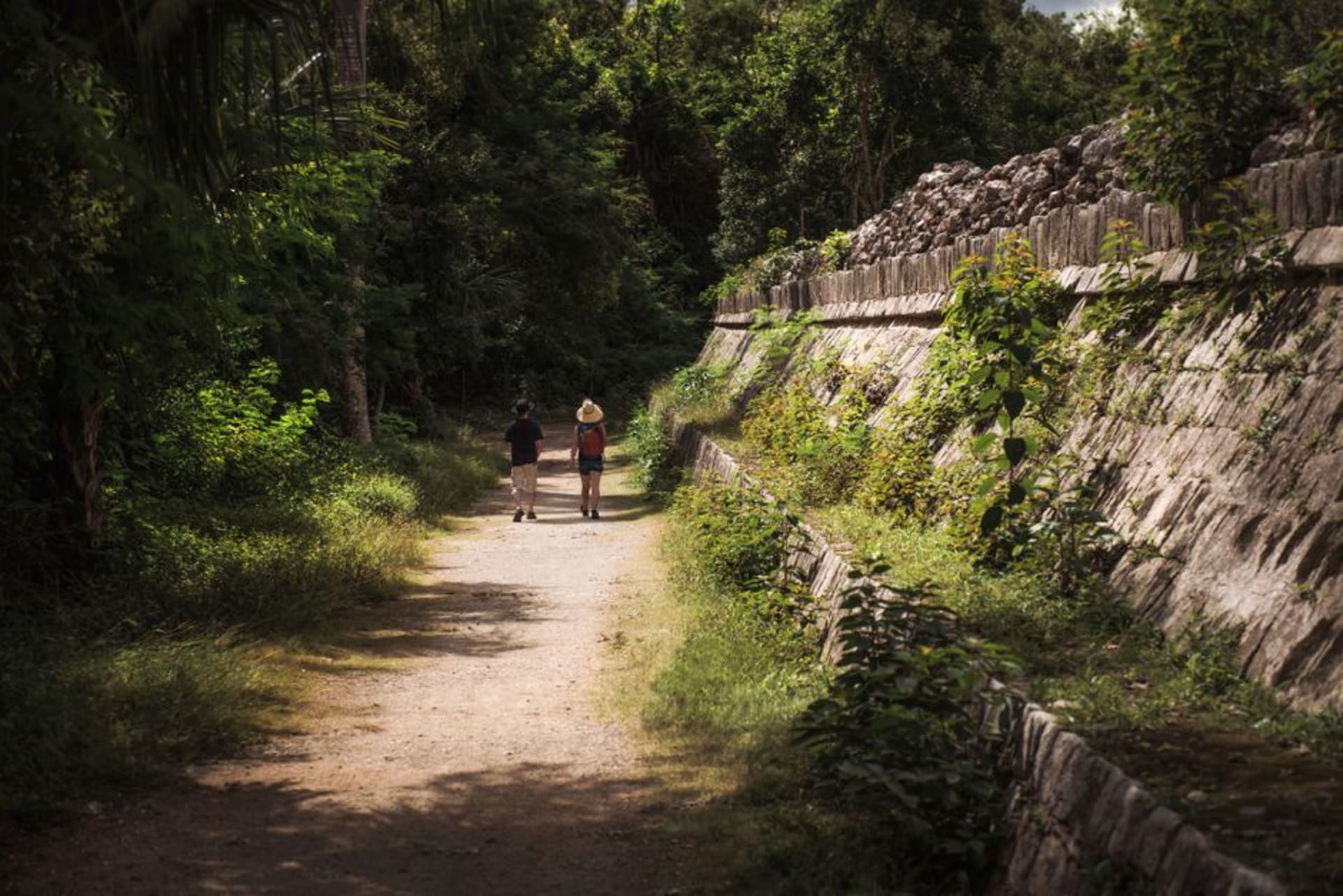
Malpasito
"The guard had gone to lunch, the path was unmarked, and I spent two hours in Zoque ruins with nobody but a coati for company — Malpasito earns its obscurity."
In the forested foothills south of Huimanguillo, these Zoque ruins sit in a kind of comfortable obscurity: a carved ball court, ceiba-crowded platforms, and petroglyphs that still stump researchers. At the base, a stream pools into a swimming hole cold enough to constitute a personal affront on a Tabasco afternoon.

The road south of Huimanguillo goes rough about eight kilometers before the site. I had a GPS pin, no phone signal, and a vague assurance from someone at my hotel in Villahermosa that the guard was generally present in the mornings. He was not. The gate was open — or rather, there was no gate, just a hand-painted sign listing sideways in the humidity and a dirt path disappearing into the trees. I went in anyway. A coati was watching from a ceiba branch when I reached the first platform. We regarded each other briefly, then both continued with our respective days.
A Third Civilization
Tabasco gets framed almost entirely through two lenses: the Maya sites along its rivers, and the Olmec artifacts in its museum in Villahermosa. Malpasito belongs to neither. The Zoque were a distinct civilization — linguistically and culturally separate — whose presence in these foothills predates the major Maya expansion into the region. The ball court here is among the more complete you will find outside of Chiapas or Oaxaca, and its carved stone reliefs — a jaguar, a crouching figure, something that may be a hand — still carry enough legibility to be unsettling. The petroglyphs on the surrounding stones are another matter. The interpretations I have read range from celestial mapping to ritual boundary markers, and the researchers do not seem particularly close to agreement. That ambiguity is part of the appeal. The platforms themselves are rough-cut and unrestored in any meaningful way, which means the jungle is still very much negotiating with the stone. Roots pry at corners. Trees have replaced columns. You climb through it rather than past it.

The Pool
Below the main platform cluster, maybe a five-minute walk down an unmarked track that I was not entirely sure was a trail, a stream pools against a low rock shelf. The water is the kind of cold that reads as a personal affront on a Tabasco afternoon — which is to say, thirty-two degrees and approximately ninety percent humidity. I swam for twenty minutes and then sat on a flat rock and ate the torta I had brought from Huimanguillo and listened to birds I could not identify compete in volume. The forest here is genuinely thick. Howler monkeys will announce themselves if the timing is right; I heard them in the distance but they did not approach. The birds did. A motmot sat about three meters away for an extended period, apparently doing nothing, which is apparently what motmots do when they have no particular agenda. The pool is easy to miss on the way in. On the way out, you will not want to.

What to Bring
The site has no food, no water, and no shade beyond the forest itself. I carried two liters and wished I had brought three. There is no entrance booth in any reliable sense — some days a fee is collected by whoever is present, some days there is nobody to collect it. Bring small bills regardless. The path from the parking area to the main ruins takes about fifteen minutes at an easy pace; the ground is uneven and gets slippery after rain, so actual shoes rather than sandals matter here. The track down to the swimming hole is easy to miss — look for a gap in the vegetation just below the second platform cluster and follow the sound.

Getting There
Huimanguillo is the nearest town of any size, roughly forty-five minutes from the site on a road that is paved until it is not. From Villahermosa, expect two hours total. Colectivos run to Huimanguillo from the city; beyond that you will need a taxi or your own vehicle. The dry season — roughly November through April — makes the access road considerably more cooperative. July brought me mud and a close acquaintance with the car’s clearance.
Keep exploring
More of Tabasco
Keep exploring
More from Tabasco
 mexico
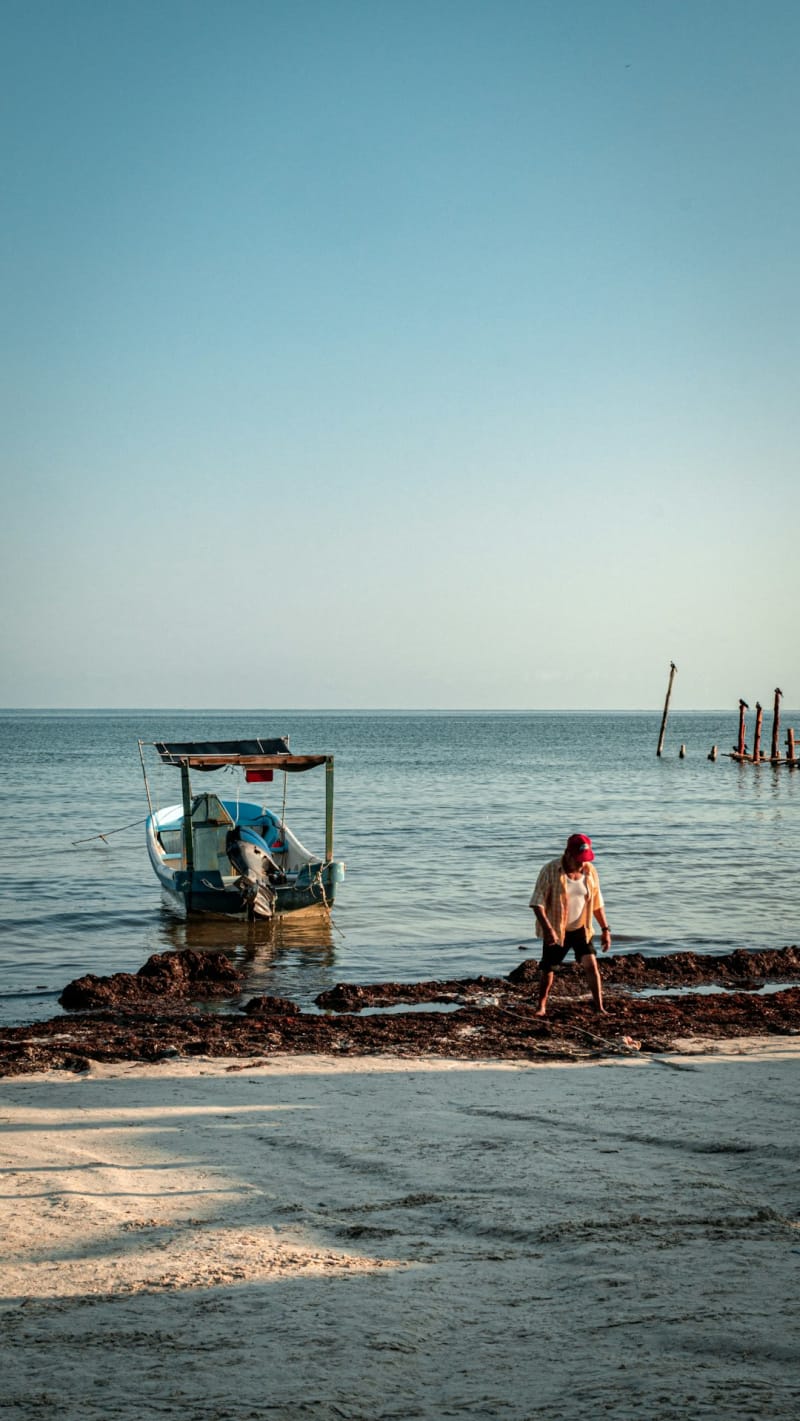
 Huimanguillo
Huimanguillo anchors the western edge of Tabasco where cacao plantations give way to a network of rivers and lagoons, and the landscape begins doing interesting things with water. It is one of the better places in southern Mexico to observe waterbirds from a lancha, and one of the few where cacao culture is woven into daily market life rather than staged for visitors.
Explore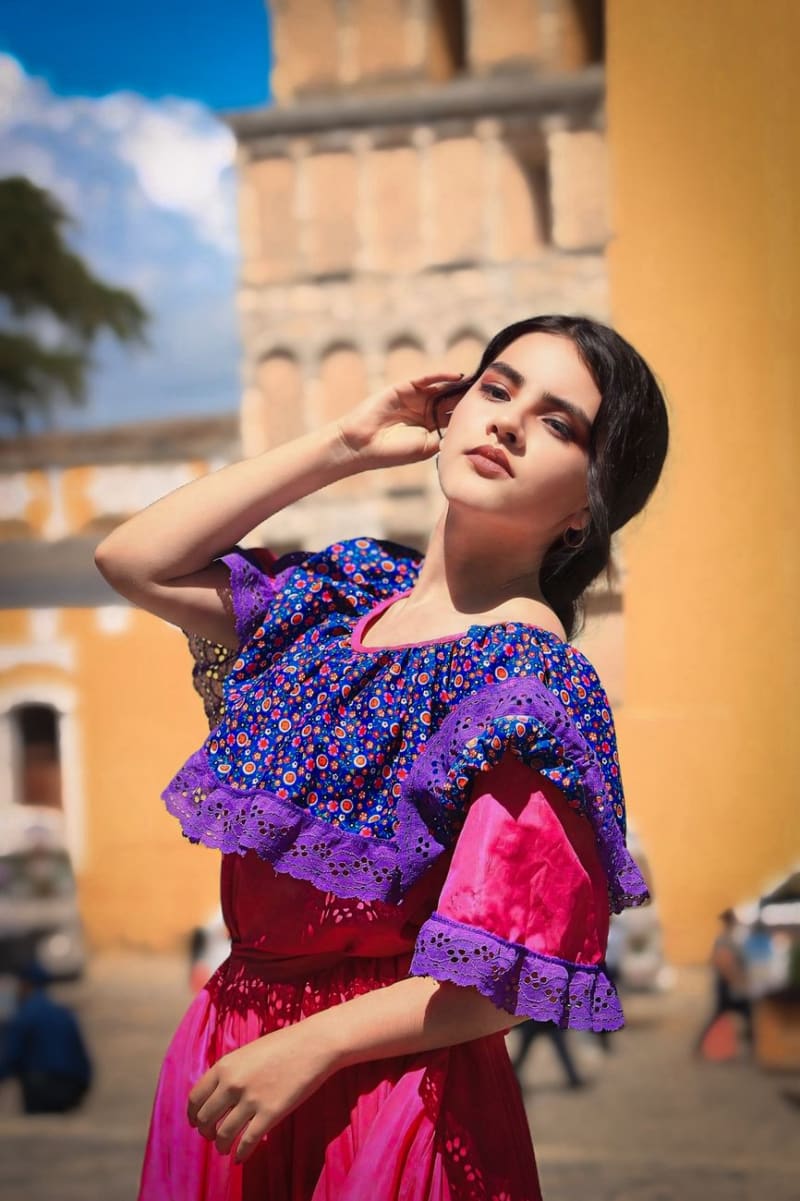 mexico
 Teapa
A sierra town in southern Tabasco where the flat coastal plain suddenly becomes hills, sulfur springs bubble warm from the earth, and a cave system 4km from the center hides a river running through the dark. Almost nobody comes here from outside Tabasco, which is precisely its logic.
Explore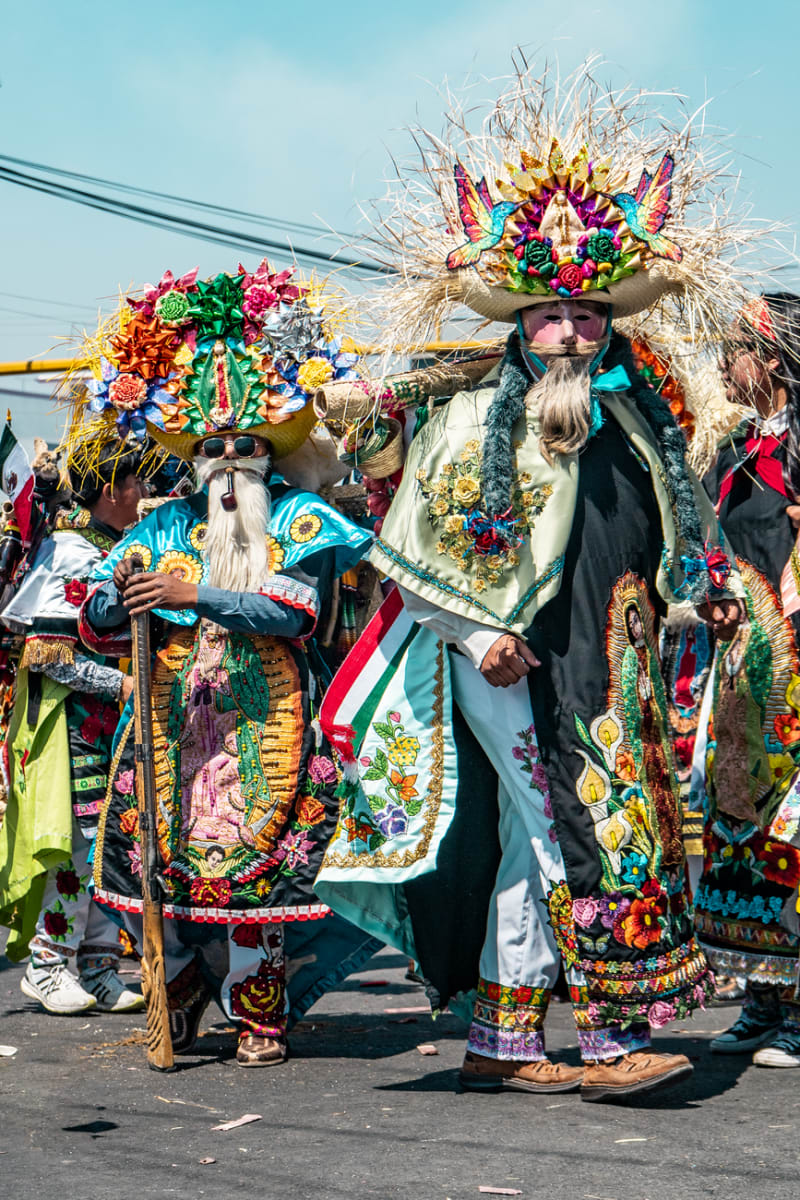 mexico
 Tacotalpa
Tacotalpa sits in the cool sierra of northern Tabasco, a world of mist, forest, and Zoque-Chontal Maya tradition that most people driving through the state never suspect exists. The town is known for its elaborate carnival masks and ceremonial dances, and the surrounding hills hold caves and rivers that feel nothing like the hot cacao lowlands an hour south.
Explore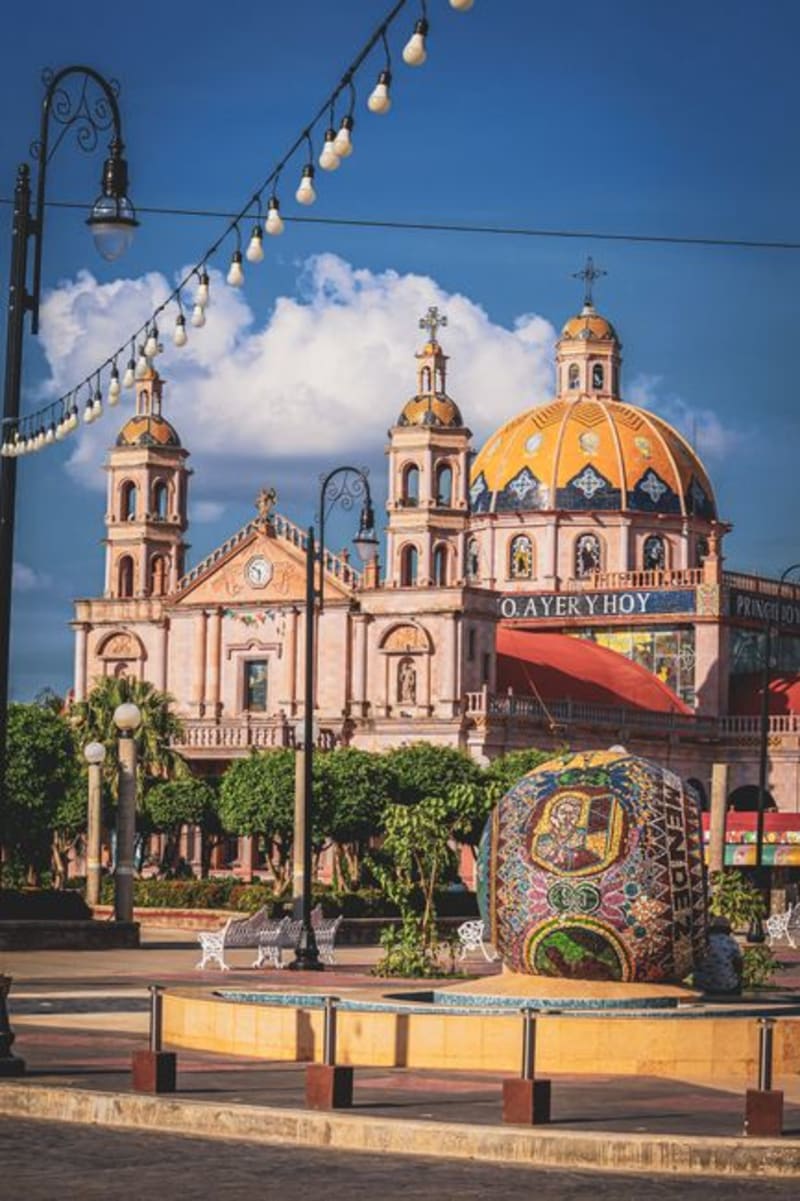 mexico
 Tapijulapa
A whitewashed Pueblo Mágico tucked into a jungle canyon where sulfurous springs feed the Villa Luz caves and a turquoise river cuts through karst limestone. Tabasco almost never makes travel lists, which is exactly why Tapijulapa stays quiet.
Explore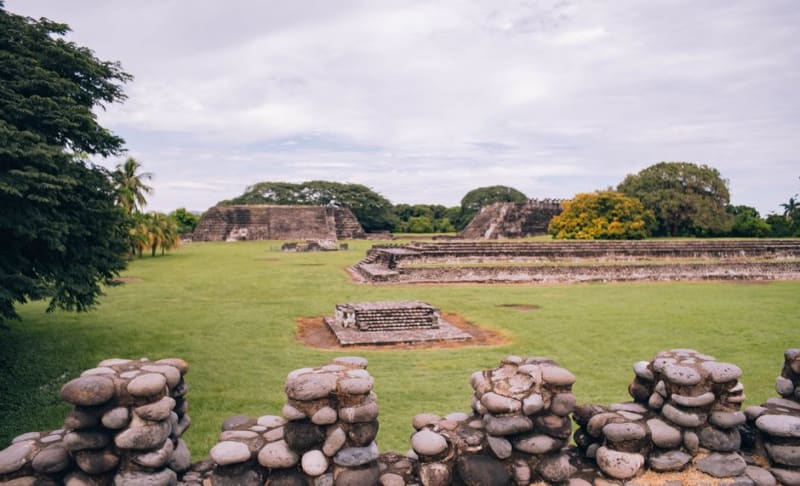 mexico
 Villahermosa
The Tabasco capital that holds the most remarkable outdoor museum in Mexico — colossal Olmec heads and monuments displayed in a tropical park at La Venta, the cradle of Mesoamerican civilization in a city built on cacao and oil.
Explore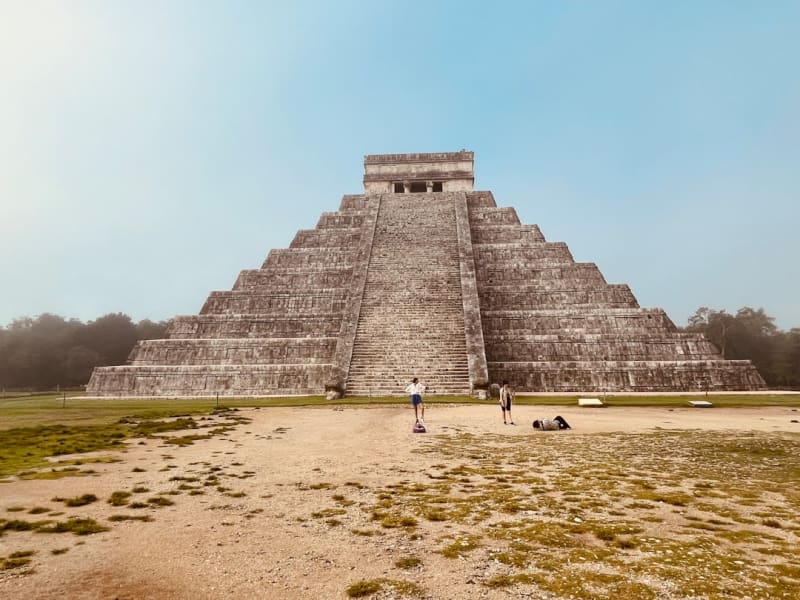 mexico
 Comalcalco
The only Maya city built from brick — the lowland Tabasco Maya who had no stone quarried clay and fired bricks instead, creating a pyramid city that looks like ancient Rome dropped into a cacao plantation.
Explore