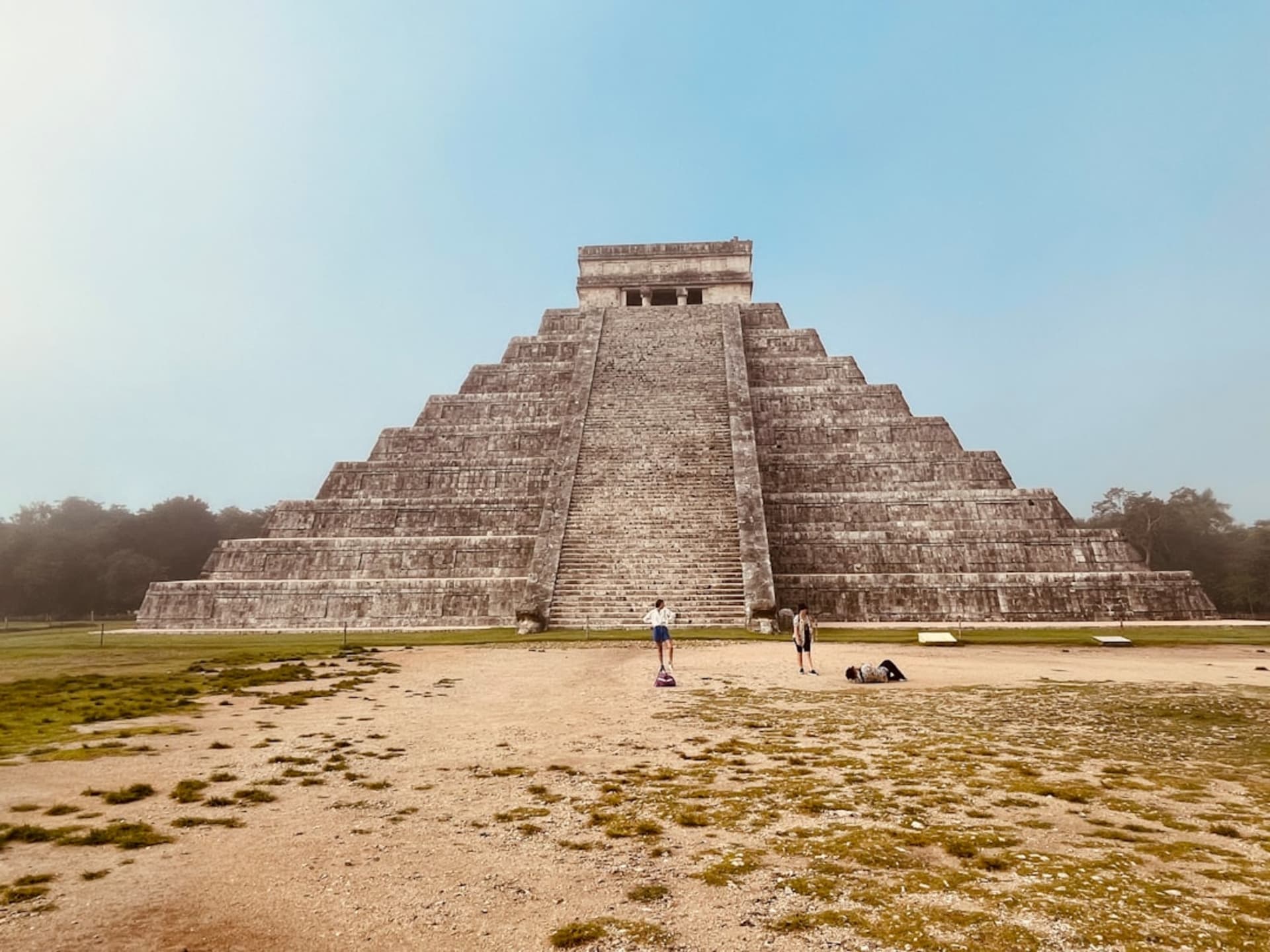
Comalcalco
"The Maya of the lowland swamps had no limestone. They had clay. They made bricks. The bricks have graffiti on them — drawings made by the workers before the bricks were laid."
The only Maya city built from brick — the lowland Tabasco Maya who had no stone quarried clay and fired bricks instead, creating a pyramid city that looks like ancient Rome dropped into a cacao plantation.

Comalcalco is the outlier of Maya archaeology — a city that looks fundamentally different from every other major Maya site because the Chontal Maya who built it between 100 and 900 CE had no access to the limestone that every other Maya civilization used for construction. The Tabasco lowlands are deltaic swamp: clay soil, no bedrock, the rivers carrying silt rather than stone. The Comalcalco Maya quarried clay, formed it into bricks, fired the bricks in kilns, and built their city from these bricks using oyster-shell mortar.
The result, seen from the plaza in front of the Great Acropolis: a Maya ceremonial center in red and ochre brick that reads, in its texture and surface quality, more like ancient Rome than like Chichén Itzá. The comparison is not inapt — brick construction at this scale, at this period, using these techniques, is genuinely unusual in Mesoamerican architecture.
The Site
The Gran Acrópolis — a platform of seven interconnected temples built to a height of 25 meters — is the dominant structure and the one that best shows the brick construction at scale: the individual bricks visible in the exposed sections, the variety of brick sizes and firing temperatures recorded in the different building phases. The site has been partially restored (the restoration program fills eroded sections with new bricks that are visually distinguishable from the originals) and partially left in its excavated condition.
The inscribed bricks are the most unusual feature at Comalcalco. Before the bricks were laid, the workers who formed them inscribed designs on the unfired surfaces: glyphs, animal figures, human faces, abstract geometric patterns. These were decorative and possibly ritual, but they were intended to be hidden — the inscribed surface was typically laid facing inward, invisible once the wall was complete. Scholars have identified over 10,000 inscribed bricks, creating an inadvertent archive of the casual artistic production of the building workforce.

The Templo IX at the northern end of the site carries the best-preserved stucco reliefs at Comalcalco — figures of Chontal Maya lords and deities in the late Classic style, the stucco applied over the brick base. The stucco relief tradition at Comalcalco connects the site stylistically to Palenque (two hours away), which used the same medium for its own extraordinary relief sculpture.
The Cacao Plantation Context
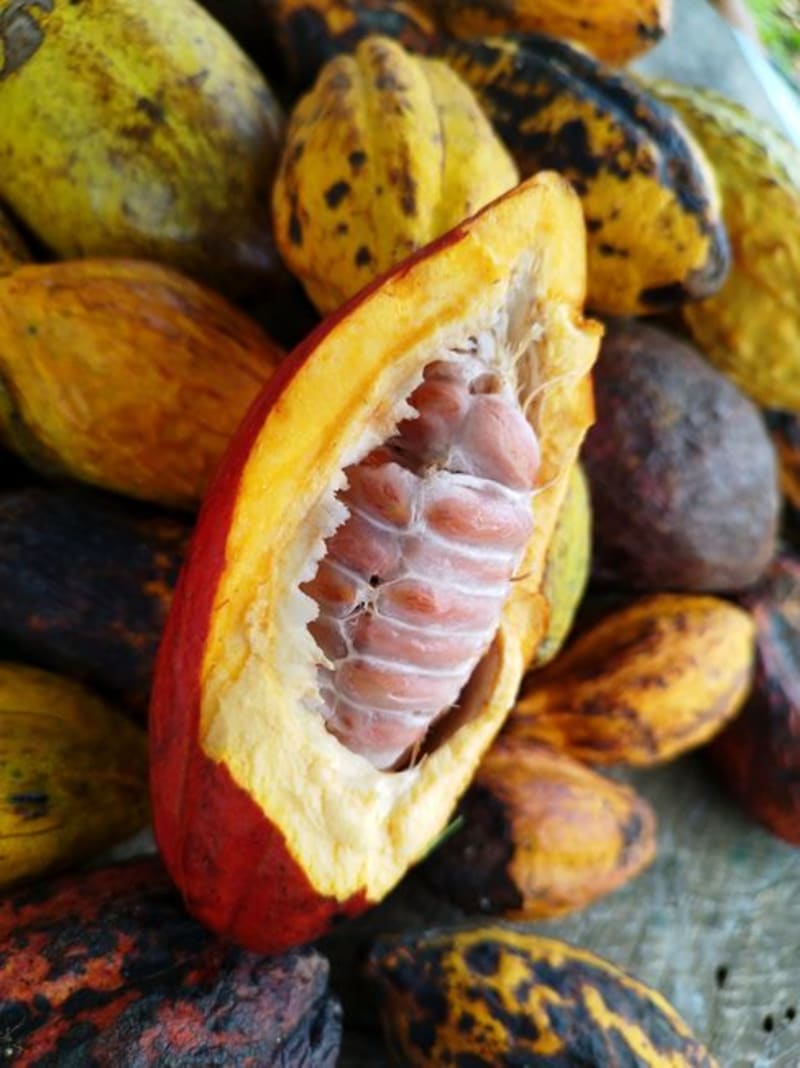
Comalcalco sits surrounded by active cacao plantations — the Tabasco lowlands are still one of Mexico’s primary cacao-growing regions, and the trees visible from the site’s outer edges are producing the crop that the Chontal Maya were cultivating in the same river delta fifteen hundred years ago. The site management organization runs tours of the adjacent hacienda cacao farm (Hacienda La Luz) that connect the archaeological context to the living agricultural tradition.
The tour demonstrates the full process from pod to chocolate: harvesting the pods from the tree trunks (cacao pods grow directly from the trunk, not from branches — the flowers and fruit appear on the main stem in a biological adaptation to the bat pollination the plant requires), fermenting the seeds for five to seven days in wooden boxes, sun-drying on raised platforms, roasting, grinding in the pre-Columbian metate technique, and producing the traditional Mexican chocolate drink in both the sweetened colonial version and the unsweetened, slightly bitter, foam-on-top version that the Maya prepared for ceremonial use.
The connection between the archaeological site and the living cacao economy: walking from the inscribed brick pyramid to the fermenting boxes of fresh cacao seeds on the hacienda, a kilometer apart, covers fifteen hundred years of continuous agricultural practice on the same soil.

Getting there: ADO buses from Villahermosa (1h) to Comalcalco town. The archaeological site is 3 kilometers from town by taxi. Hacienda La Luz is adjacent to the site and accepts visitors; confirm hours before visiting. Comalcalco is an easy day trip from Villahermosa, optionally combined with a Palenque visit (2h from Comalcalco).
When to go: November through March for least heat and humidity. Tabasco’s climate is punishing from April through October; early morning visits (the site opens at 8am) are strongly recommended regardless of season.
Keep exploring
More of Tabasco
Keep exploring
More from Tabasco
 mexico
 Comalcalco
Comalcalco is the westernmost Maya city, built not from carved stone but from fired brick — the flat Tabasco plain had no limestone to offer. The ruins are rarely crowded, and the surrounding farms produce some of the finest cacao in Mexico under old-growth shade canopy.
Explore mexico
 Paraíso
Paraíso is a Gulf Coast port town in northwestern Tabasco where Tabasqueños drive on weekends to eat fresh shrimp and pejelagarto, a prehistoric armored fish found only in the Grijalva-Usumacinta river system that looks like it should have gone extinct with the dinosaurs and tastes like nothing else in Mexico. The beach is Gulf brown-green, not tropical turquoise, with working boats and coconut palms and restaurant tables full of families celebrating things.
Explore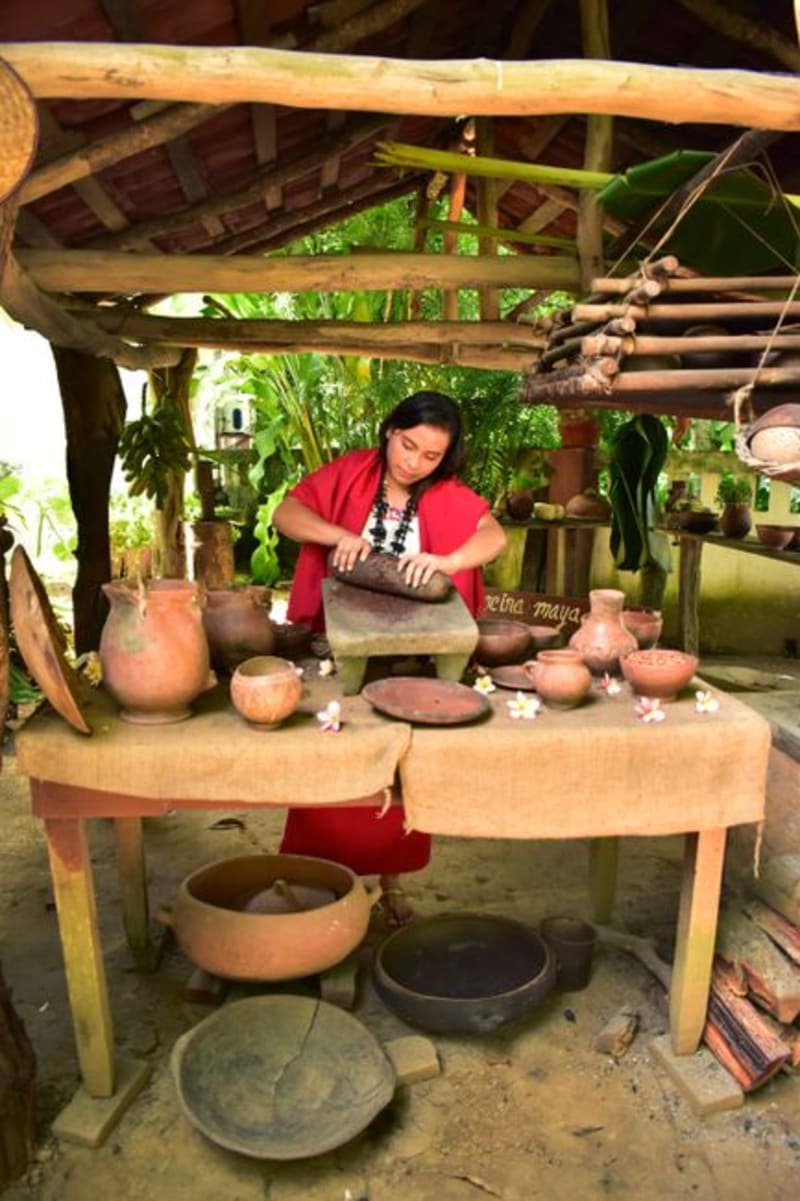 mexico
 Nacajuca
Fifteen minutes from Villahermosa and most travelers never make the turn. Nacajuca is Chontal Maya country threaded through with lagoons and canals — a municipality where flat-bottomed cayucos are still working transport, embroidery traditions run community by community, and the landscape itself sets the pace.
Explore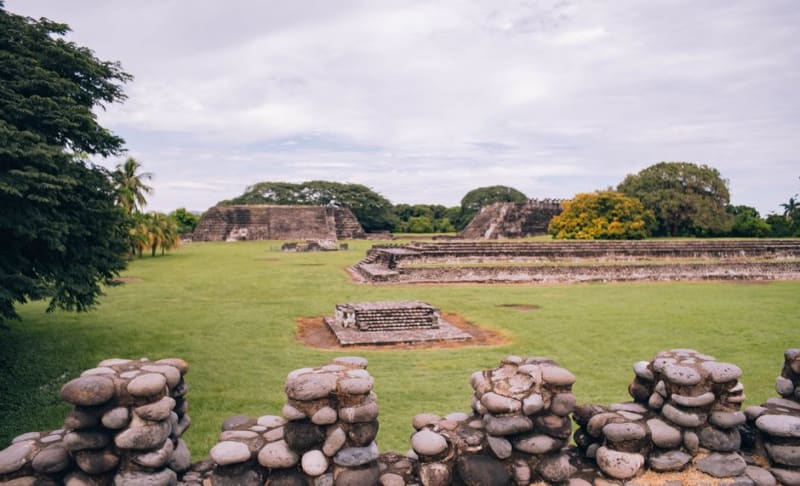 mexico
 Villahermosa
The Tabasco capital that holds the most remarkable outdoor museum in Mexico — colossal Olmec heads and monuments displayed in a tropical park at La Venta, the cradle of Mesoamerican civilization in a city built on cacao and oil.
Explore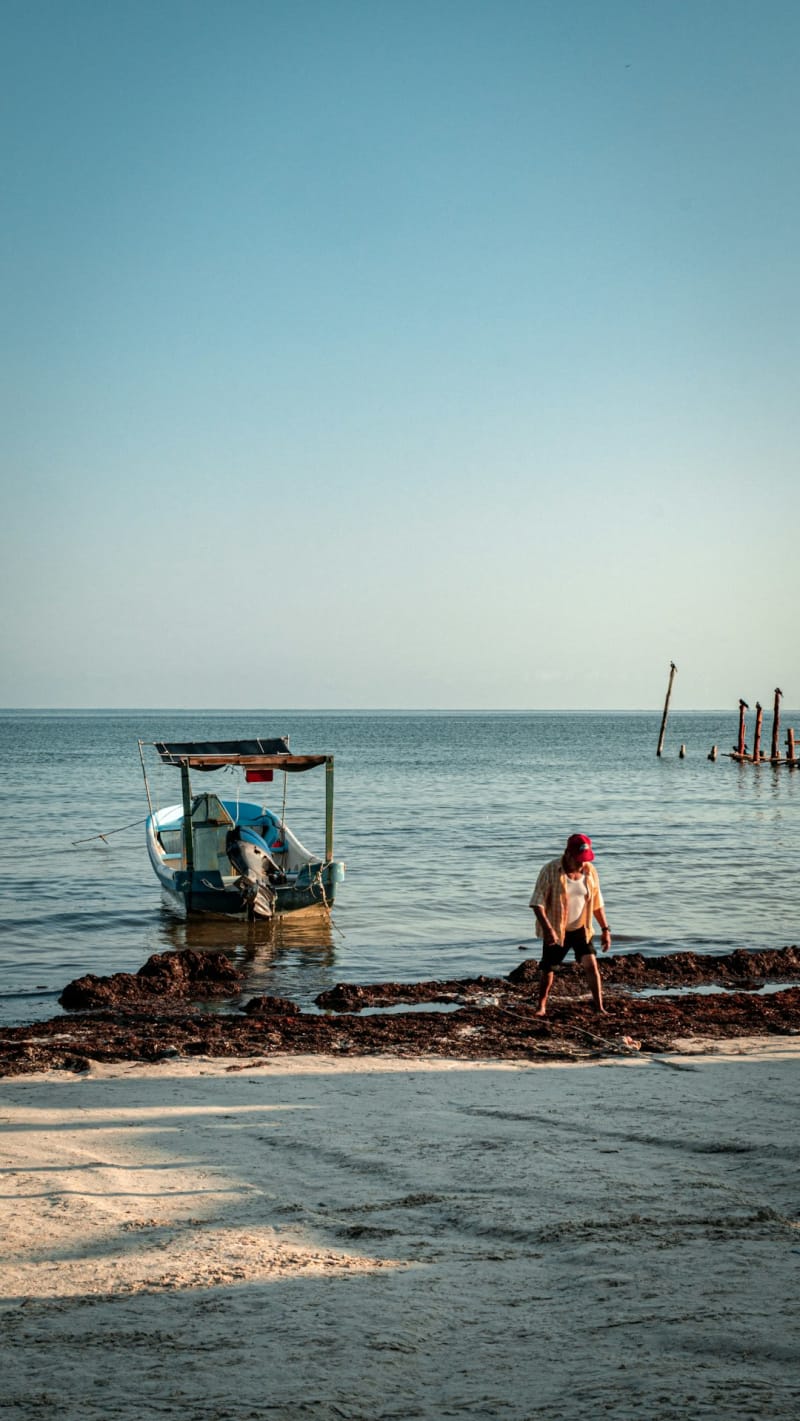 mexico
 Huimanguillo
Huimanguillo anchors the western edge of Tabasco where cacao plantations give way to a network of rivers and lagoons, and the landscape begins doing interesting things with water. It is one of the better places in southern Mexico to observe waterbirds from a lancha, and one of the few where cacao culture is woven into daily market life rather than staged for visitors.
Explore mexico
 Teapa
A sierra town in southern Tabasco where the flat coastal plain suddenly becomes hills, sulfur springs bubble warm from the earth, and a cave system 4km from the center hides a river running through the dark. Almost nobody comes here from outside Tabasco, which is precisely its logic.
Explore