Acatlán de Osorio
"The palms they weave here are stripped, dried, and soaked in a process the weavers learned from their grandmothers and their grandmothers learned from theirs — nothing digital has disrupted that chain."
A Mixtec town in the southern Puebla highlands where palm-leaf weaving is practiced as daily life rather than tourist performance — workshops are open houses with their doors ajar, strips soaking in buckets, weavers who learned from grandmothers who learned from theirs. The central market draws produce and crafts from across the Mixteca Baja, and the town is worth considerably more than the fuel stop most drivers give it.

The fuel gauge persuaded me to stop in Acatlán de Osorio. That was on a January Thursday, somewhere between Oaxaca City and Puebla, and I had the vague plan to stretch my legs and be back on the road within the hour. I ended up sitting in a weaving workshop for most of the afternoon, watching a woman named Lucía fold and split palm strips with a rhythm so practiced it looked more like breathing than craft. By the time I found a coffee, the light had changed and the forty-minute stop had quietly become an overnight.
The Weavers and Their Palm
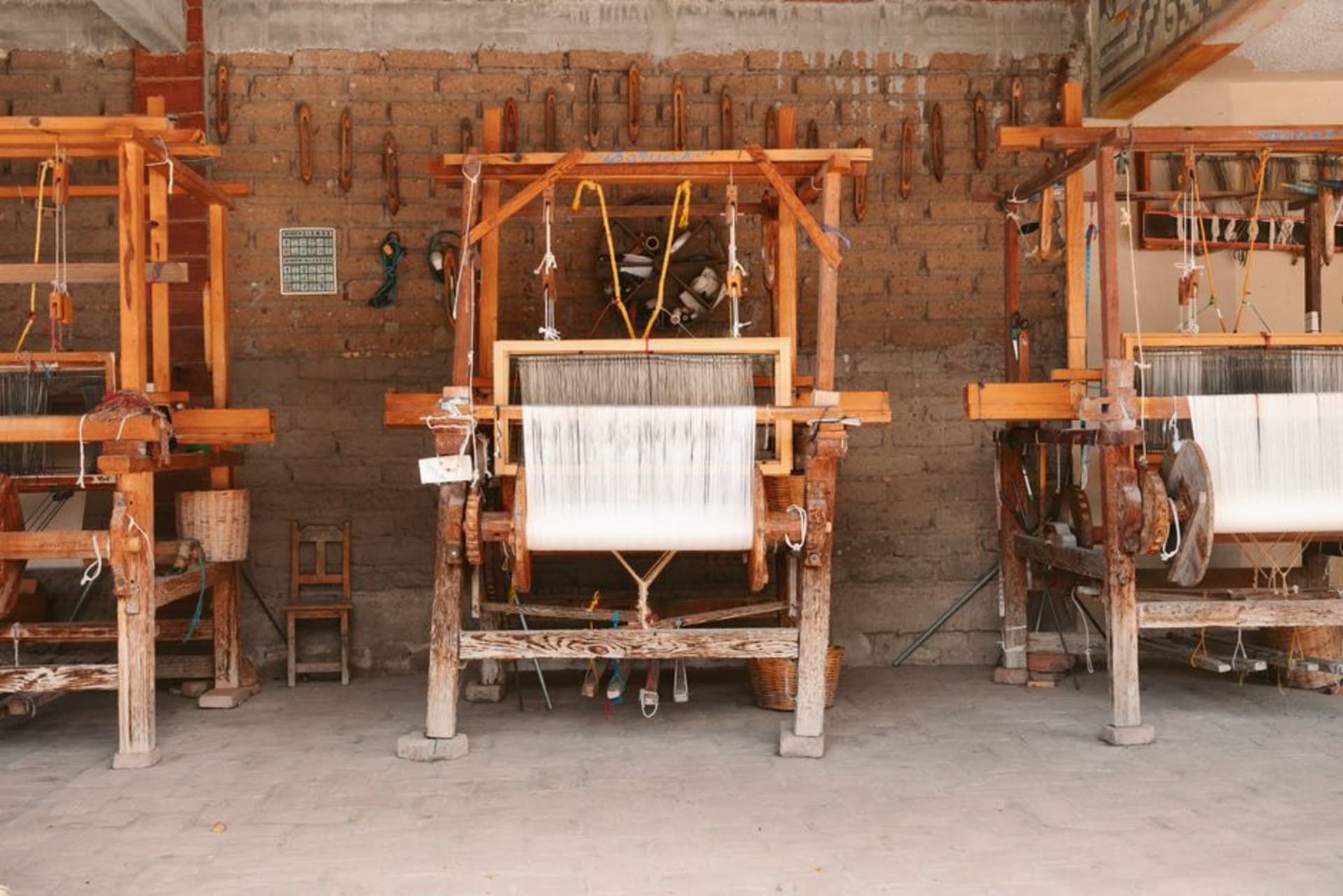
Acatlán’s weaving is not performance craft. The workshops are houses with their front doors open: a woman at the threshold, bundles of palm stacked against the wall, a plastic bucket of soaking strips on the floor. The process begins in the fields outside town, where young palm leaves are harvested, stripped of their spines, boiled, spread on concrete to dry in the sun, and then soaked again before anyone touches them with purpose. What comes out the other end is a material simultaneously pliable and strong — capable of becoming a simple market basket in an afternoon or an architectural sculpture of a peacock over three weeks, depending on who is holding it and what they have decided to prove. The Mercado Artesanal on the edge of the main plaza sells finished pieces at prices that will quietly rearrange your ideas about what skilled labor is worth.
The Market and What Comes In from the Mixteca
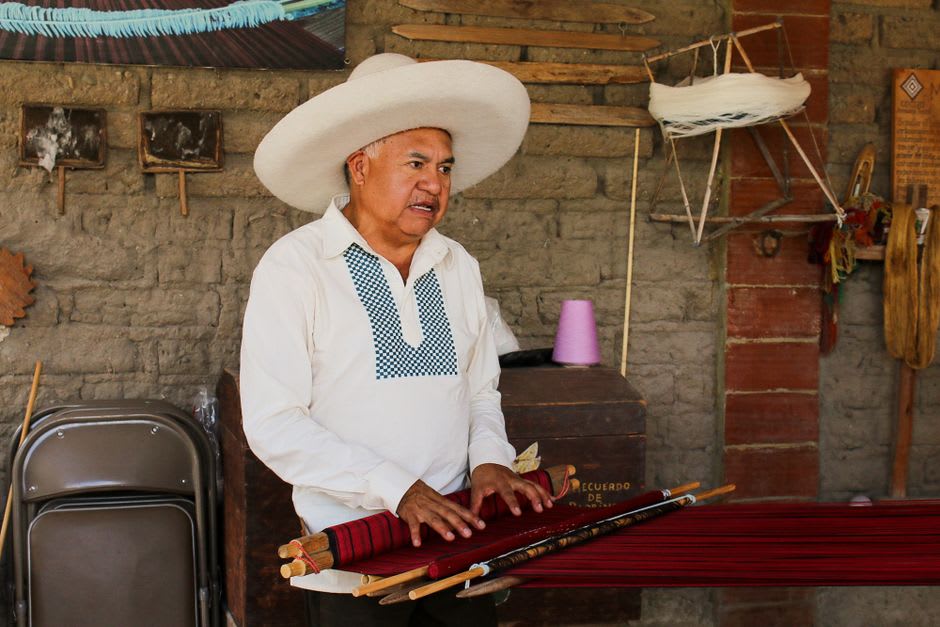
The central market runs every day but reaches its full density on Sundays, when vendors from the surrounding Mixteca Baja communities bring in dried chiles, piloncillo cones, jamaica by the kilo, and regional cheeses that rarely make it to the tourist stalls in Oaxaca City. I ate at one of the comedor stands near the back — a blue-corn tlayuda loaded with quesillo and tasajo, assembled by a woman who was simultaneously managing a toddler and a queue of four people. The quesillo came from a stall three meters to her left; she had an arrangement. Alongside the produce, weavers sell small animals and flowers they make while they wait for customers — a palm rooster, a palm turtle, a palm bunch of cempasúchil that will outlast the real ones. I bought a rooster for thirty pesos. It is somewhere in my apartment in Puerto Escondido and I remember exactly how it was made.
Showing Up Without an Appointment
The best approach to the workshops is not to have one. Walk the streets north of the zócalo — Calle Independencia and the surrounding blocks — on a weekday morning between eight and noon, and you will find doors open. Most weavers are glad for company if you arrive without expectations and without haste. Bring small bills. Speak slowly. Don’t photograph anything before you’ve spent ten minutes just watching. The larger workshops, identifiable by palm bundles stacked outside like firewood, often have pieces for sale at the source, which is where the prices finally make sense relative to the labor involved. The town has at least one decent posada off the main square if you want to catch the Sunday market from a standing start rather than a two-hour drive.
Getting There
Acatlán de Osorio sits on Federal Highway 190, the main Oaxaca-Puebla road, roughly three and a half hours from Oaxaca City and two from Puebla. ADO buses on the Mexico City-Oaxaca corridor stop here. There is a Pemex on the highway — which is how most people meet the town — and parking near the market if you are driving. From Puerto Escondido via Huajuapan de León, plan around five hours.
Keep exploring
More of Puebla
Keep exploring
More from Puebla
 mexico
 Tepexi de Rodríguez
A dry-hill town in southern Puebla built on stone — onyx and marble pulled from the surrounding quarries and carved in workshops full of translucent light. Semi-arid, stony, and quietly proud of its craft, with deep-time fossil country in the hills nearby.
Explore mexico
 Izúcar de Matamoros
Izúcar de Matamoros sits in the hot lowlands of southern Puebla, largely ignored by the tourist circuit, which is exactly how its clay artisans and its outsized baroque cathedral have managed to remain fully themselves. The trees of life made here — árboles de la vida — are in galleries in New York and in grandmothers' workshops on dusty side streets, often made by the same family.
Explore mexico
 Chietla
A warm sugarcane town in the lowlands of southwestern Puebla, where the valley heat presses down on the cane fields and the river runs green through the flats. Unhurried, agricultural, honest — the kind of place you slow down in whether you mean to or not.
Explore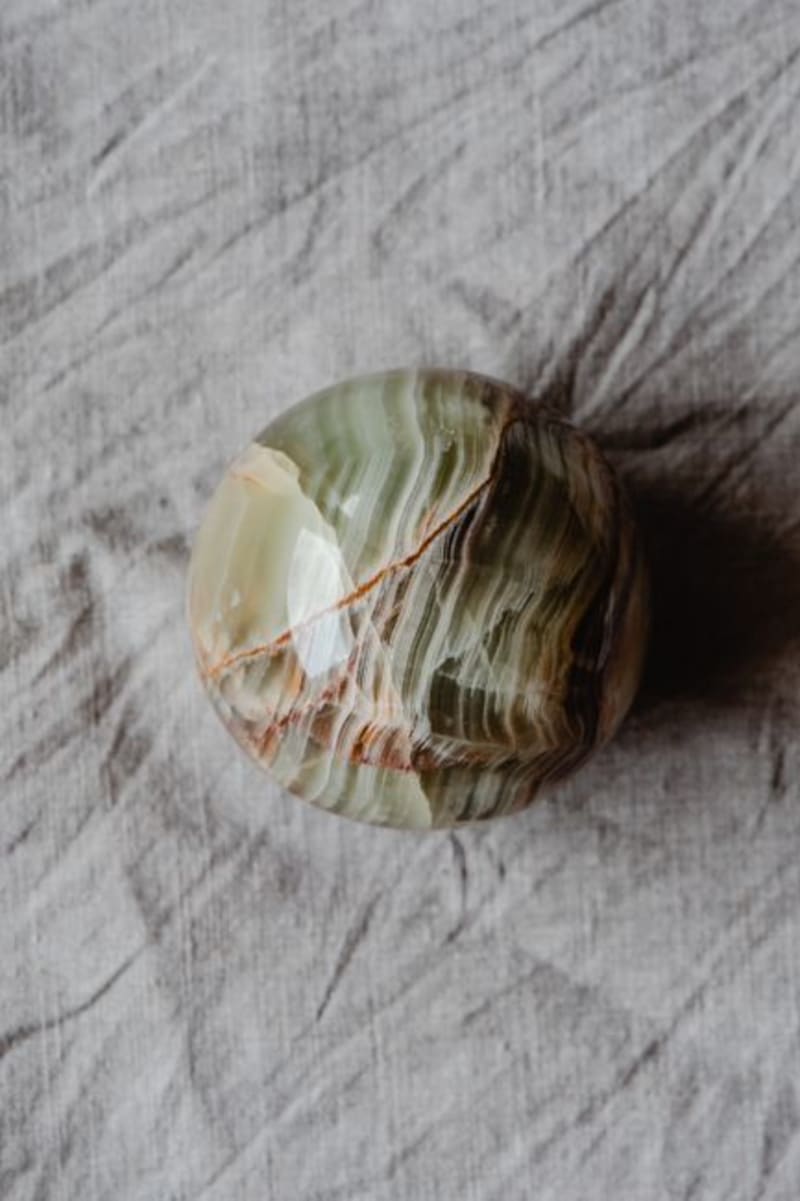 mexico
 Tecali de Herrera
Tecali de Herrera is a small Puebla town built entirely around one material: banded calcite onyx, quarried from the surrounding hills and carved here since before the Spanish arrived. Walk the workshop streets on any weekday morning and the grinding wheels are already running.
Explore mexico
 Tehuacán
A semi-arid city at the foot of the Tehuacán-Cuicatlán Biosphere Reserve, where the world's largest columnar cactus forest rises from a fossil valley once walked by mastodons. UNESCO-listed and largely overlooked, it rewards the detour with honest market food, mineral springs, and a landscape that defies every expectation.
Explore mexico
 Huaquechula
A quiet Puebla town anchored by a 16th-century Franciscan open chapel built to convert thousands at once — and by a Day of the Dead altar tradition so elaborate it makes that original ambition look modest. Outside of November, Huaquechula belongs almost entirely to locals.
Explore