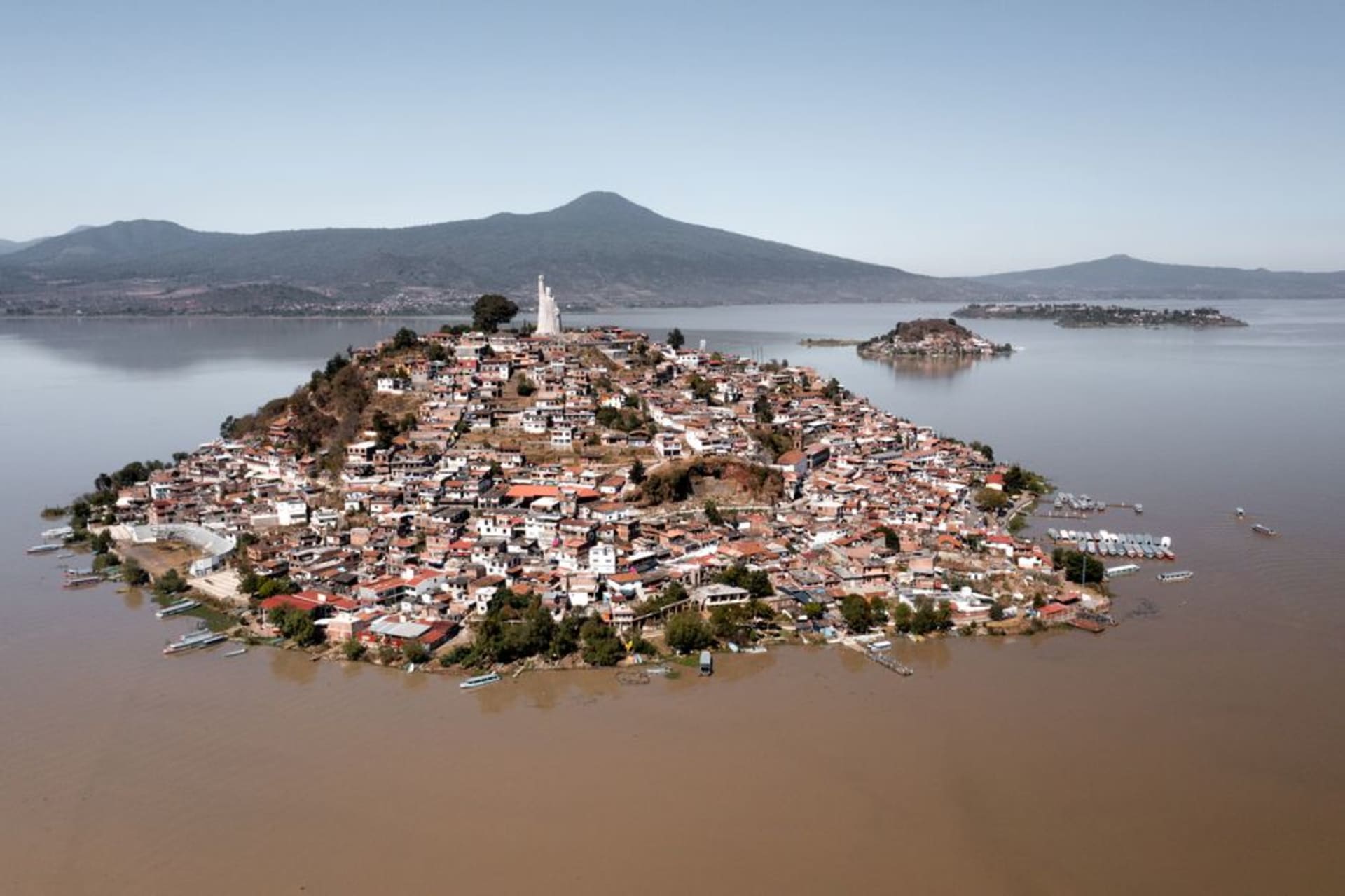
Tzintzuntzan
"The yácatas at dusk, with Lake Pátzcuaro below and the volcanoes behind — this was the center of an empire, and it still feels like it."
The ancient capital of the Purépecha empire, Tzintzuntzan sits above Lake Pátzcuaro with five stepped pyramids — yácatas — still intact on a long ceremonial platform. A 16th-century Franciscan convent and one of Mexico's oldest olive orchards share the town with artisan workshops, and on Día de Muertos the cemetery becomes something you do not easily forget.

I took the combi from Pátzcuaro on a Tuesday morning, fifteen minutes along the lake road, and stepped out onto a quiet main street lined with vendors selling straw figures and black clay. What struck me first was the scale of the place against its size — a town of a few thousand people with pyramids on the hill, a convent large enough to lose yourself in, and the flat silver surface of Lake Pátzcuaro stretching south. Tzintzuntzan was the capital of an empire that stretched across western Mexico, and the Spanish, when they arrived, chose to build right beside it rather than over it. That decision is the reason you can still see both.
The Yácatas
The ceremonial platform above town holds five yácatas — rectangular bases topped with circular structures, each one faced in fitted stone. The Purépecha built them between the 14th and 16th centuries, and unlike Teotihuacán or Monte Albán, there are almost no crowds here. I walked the platform in the late afternoon when the light came in low from the west and the lake went copper below. You can see Janitzio island from up there, and on a clear day the volcanoes line the horizon. The site is managed by INAH and costs a small entry fee; the small on-site museum has carved stone pieces and a clear account of the Purépecha kingdom, which resisted Aztec expansion right up until the Spanish arrived. Take your time. The setting does most of the work.

The Convent and the Olive Trees
The Ex-Convento de Santa Ana, built by Franciscans starting in 1526, sits just below the main road with an atrium large enough to have served as an outdoor church for thousands of new converts. What nobody mentioned to me before I went: the olive trees. There are dozens of them in the convent grounds, gnarled and silver-leafed, planted by the friars in the 16th century and still producing fruit. They may be the oldest olive trees in the Americas. Walking among them on a quiet morning, the light broken by old branches, I found it one of the more unexpectedly peaceful hours I have spent anywhere in Michoacán. The open chapel and the murals inside are worth seeing too, but the orchard is the thing.

Día de Muertos
If you are in Michoacán in late October, do not skip the cemetery here on the night of November 1st. Families have been keeping vigil at the graves of their dead since well before the colonial period, and the tradition has not been packaged for tourism in the way it has elsewhere. Marigold petals, candles, photographs, food left at the graves — and a quiet that is not sad exactly, more like a different kind of attention. Come after dark and stay a while.

Getting There
Combis run frequently between Pátzcuaro’s bus terminal and Tzintzuntzan throughout the day — the ride takes around 15 minutes and costs next to nothing. Pátzcuaro itself is well connected by bus from Morelia (about an hour) and Mexico City. Most people visit Tzintzuntzan as a day trip, though a couple of small guesthouses exist in town if you want to stay for the light at both ends of the day.
Keep exploring
More of Michoacán
Keep exploring
More from Michoacán
 mexico
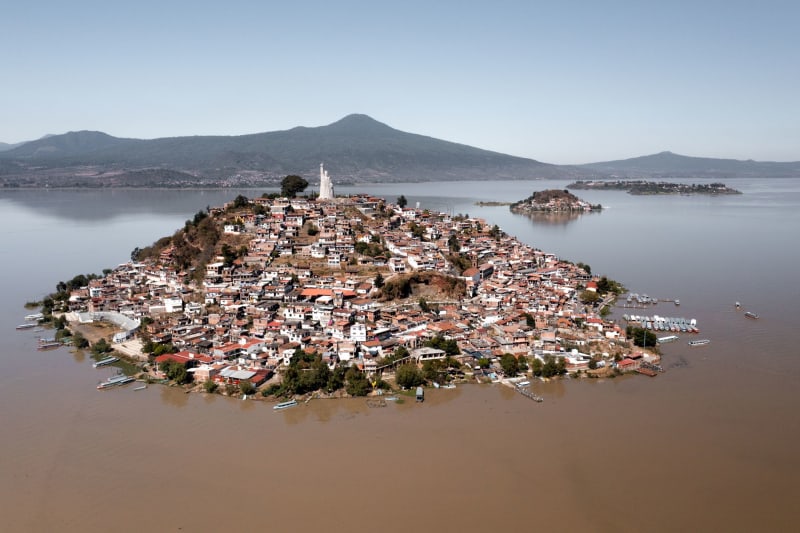
 Tzintzuntzan
The former capital of the Purépecha empire on the shores of Lake Pátzcuaro — five pyramid temples on a hillside platform, olive trees planted by Vasco de Quiroga in 1548 still producing fruit, and the most beautiful Day of the Dead cemetery in Mexico.
Explore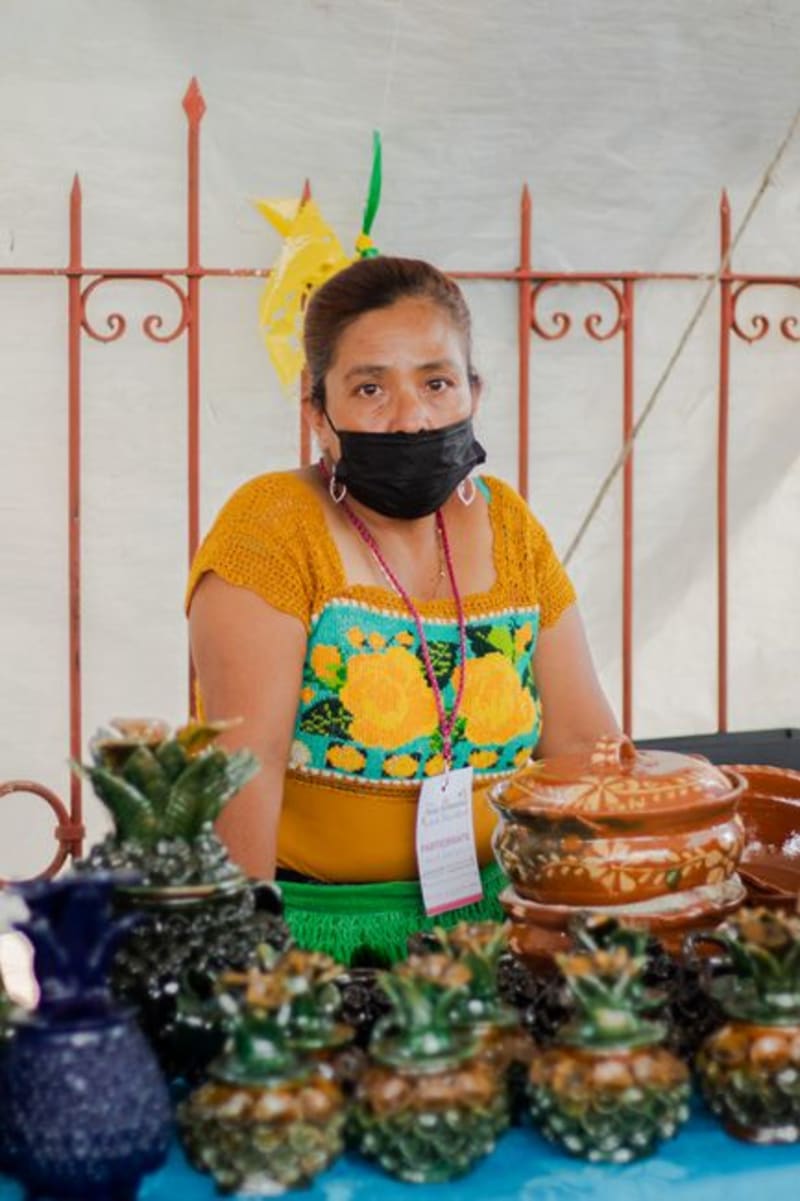 mexico
 Quiroga
Quiroga sits at the edge of Lake Pátzcuaro without pretending to compete with its neighbor — a working town that happens to make some of the best carnitas in Mexico, cooked the Purépecha way in massive copper cauldrons along the main road. The artisan market is unpolished and negotiable, which makes it more interesting.
Explore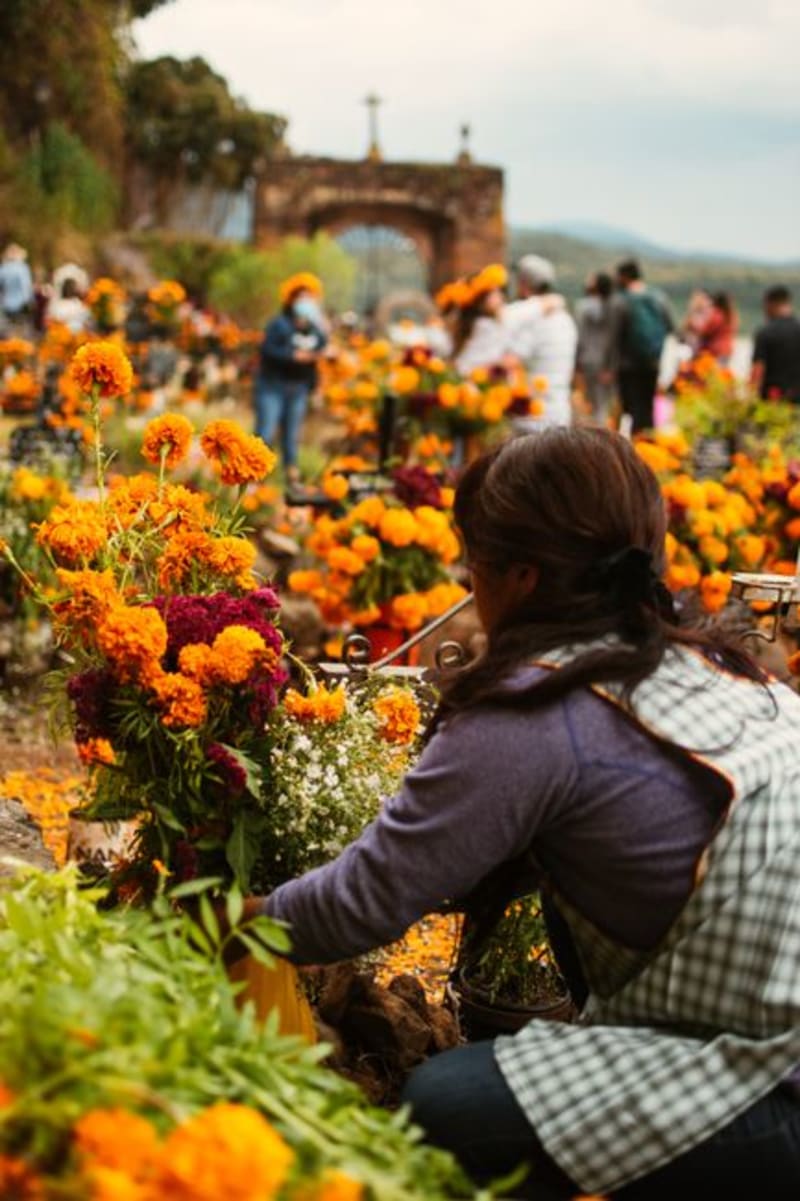 mexico
 Pátzcuaro
A colonial lakeside town built from dark volcanic stone, where Purepecha culture runs deeper than the tourist routes, and the lake at dawn still catches the nets of fishermen who learned the craft from their grandfathers. Come for the uchepos, the silence of the plazuela, and if you can time it right, the night of the dead on Janitzio.
Explore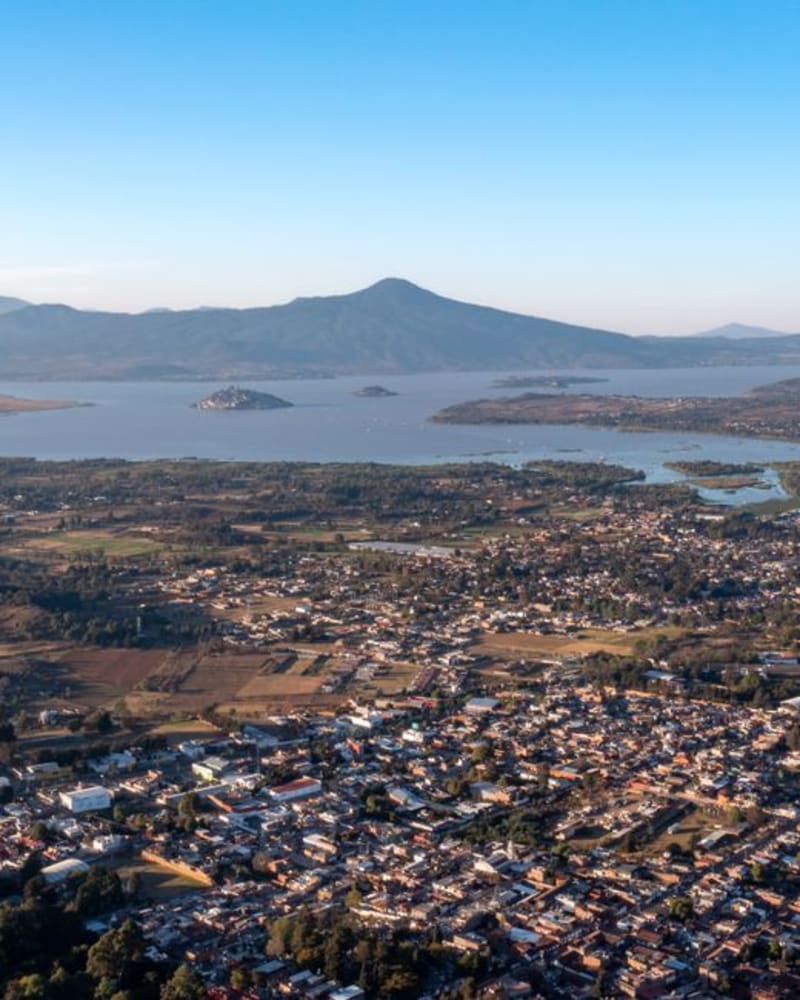 mexico
 Erongaricuaro
A small Purepecha village on the western shore of Lake Patzcuaro where artisan weavers still work backstrap looms, a handful of foreign painters settled decades ago and never left, and the dock offers what might be the quietest hour in all of Michoacán.
Explore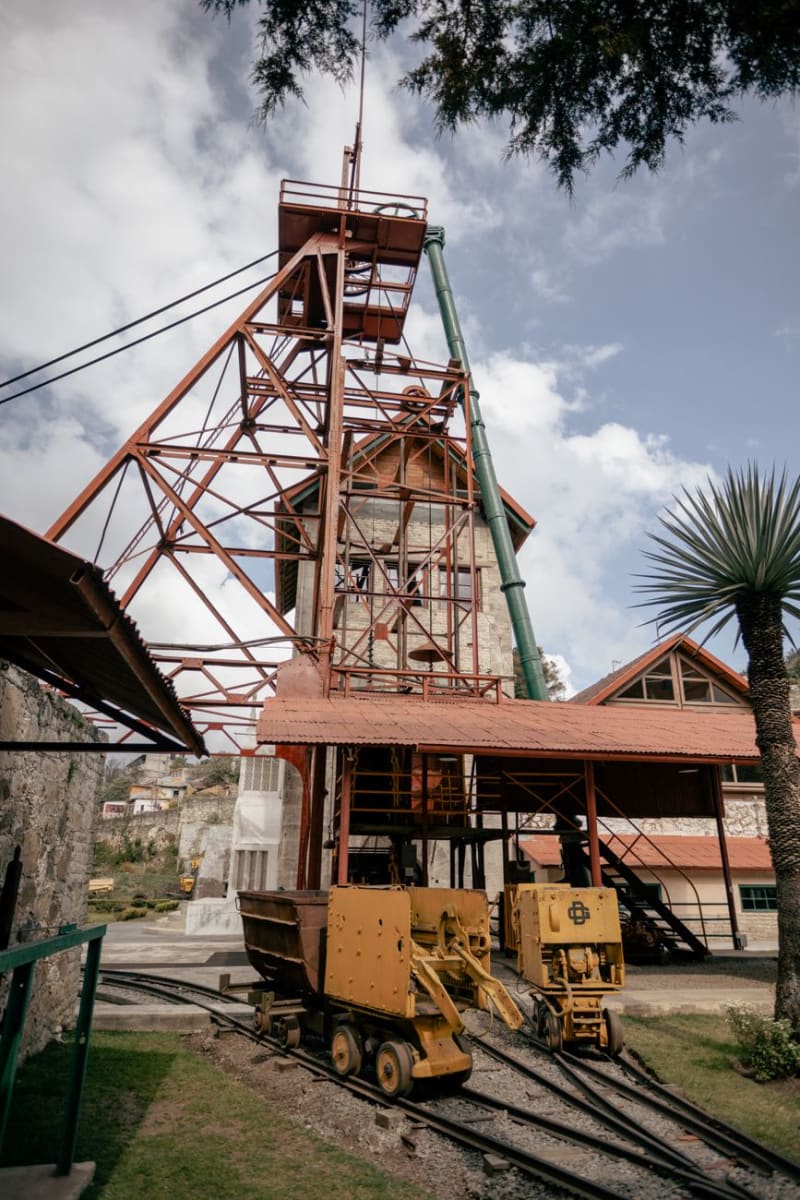 mexico
 Santa Clara del Cobre
A Pueblo Mágico in Michoacán where copper workshops line every street and the sound of hammers on metal has been the town's rhythm for centuries. Purépecha artisans still shape copper entirely by hand, using techniques that predate the Spanish by generations.
Explore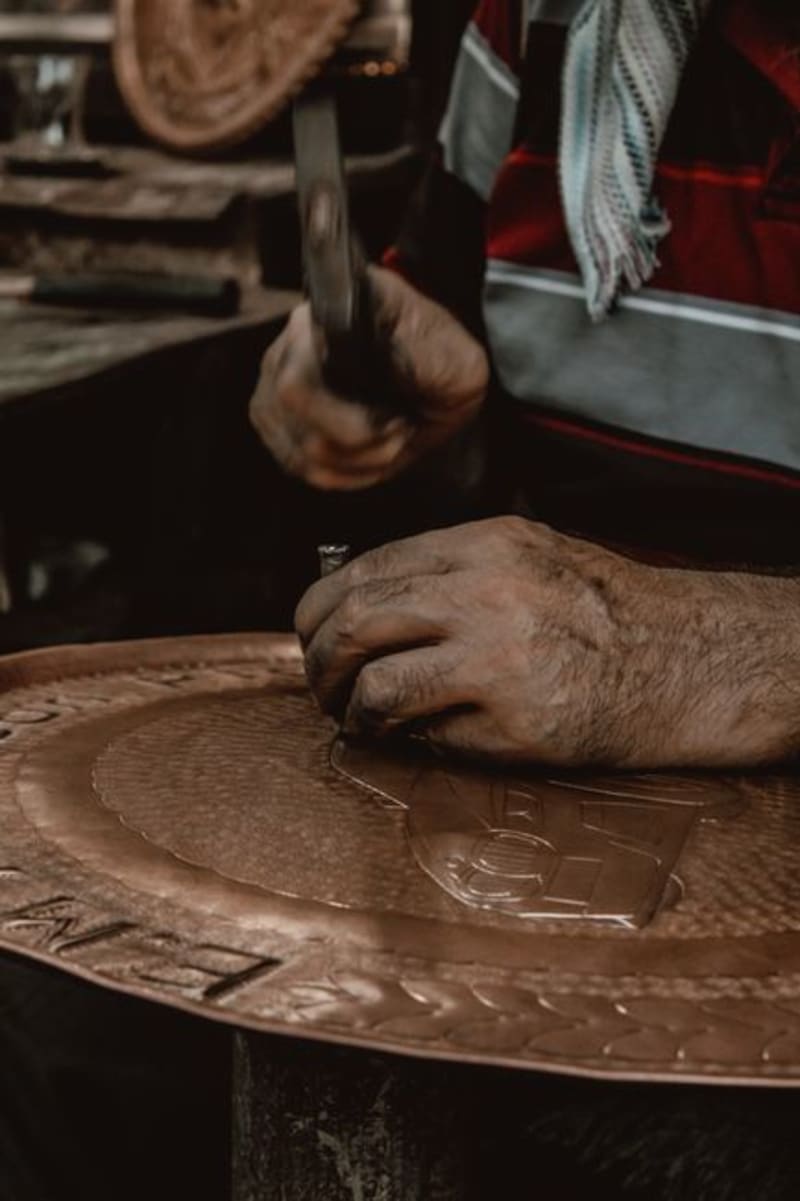 mexico
 Santa Clara del Cobre
Santa Clara del Cobre, officially Villa Escalante, is a Purépecha town in Michoacán where copper-working is not a craft revival or a tourist attraction — it is simply what people do here, as they have for centuries. Every alley leads to a workshop, every morning begins with the ring of mallets, and the best pieces cost a fraction of what they would anywhere else.
Explore