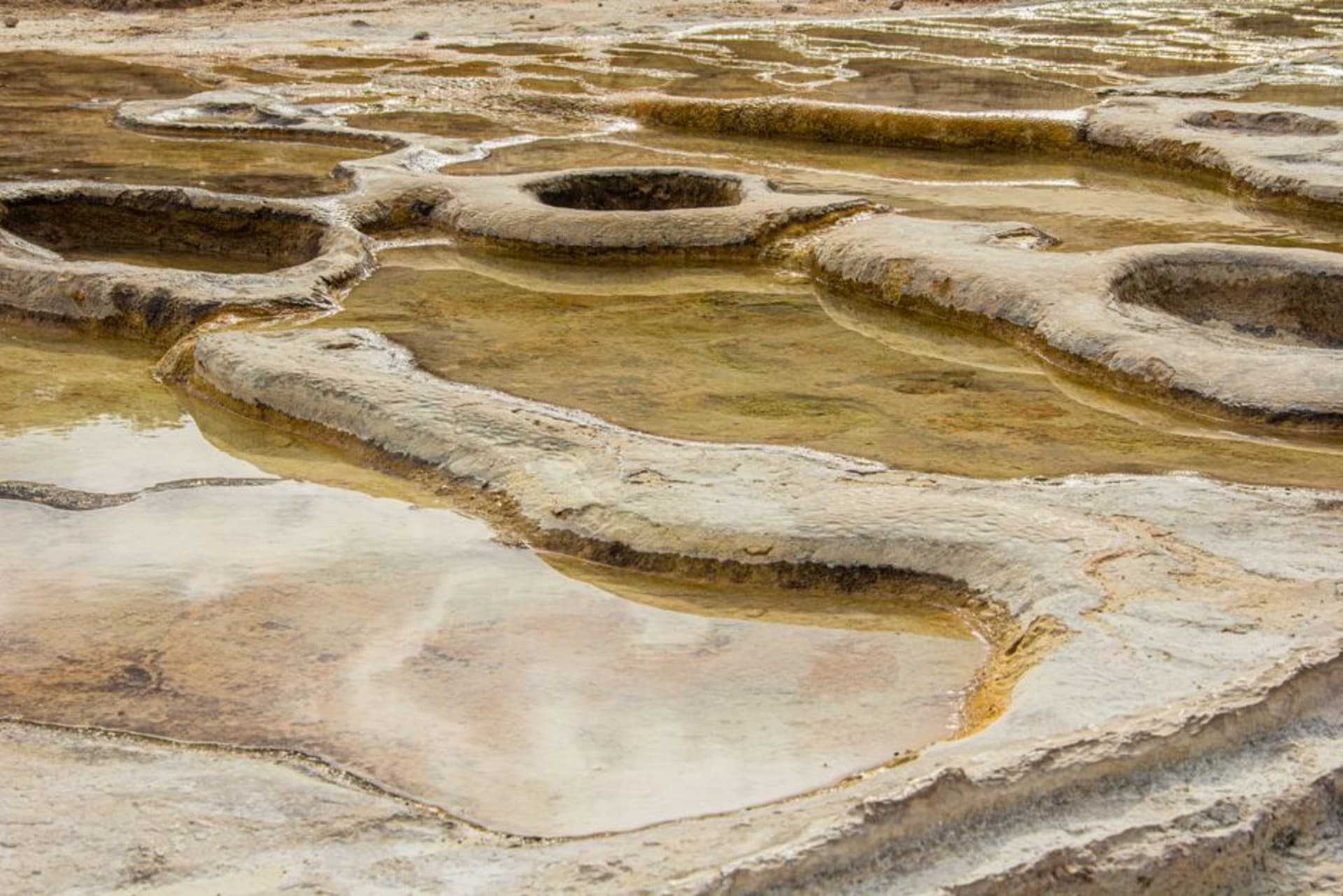
Abasolo
"Three hours in the Gran Baño with a cold beer and zero agenda fixed things that two weeks of regular travel had broken — Abasolo is serious infrastructure for the soul."
Abasolo is a small colonial town in the Bajío region of Guanajuato whose entire identity revolves around the Gran Baño, an enormous thermal mineral pool that has been drawing families from across central Mexico for generations. Come on a Sunday and you will understand immediately why this town needs no other justification.

I drove into Abasolo on a Sunday morning in March, running on three hours of sleep and the vague idea that thermal water might correct whatever two weeks of continuous movement had done to me. The town announced itself the way small Bajío towns do — a church tower, a farmacia, a taquería with plastic chairs still stacked outside — and then the Gran Baño parking lot materialized, already half-full at nine in the morning. I had not expected the scale of the complex, or the noise, or the smell of mineral water mixing with sunscreen and carnitas smoke drifting from the cart just inside the gate.
The Pool That Runs the Town
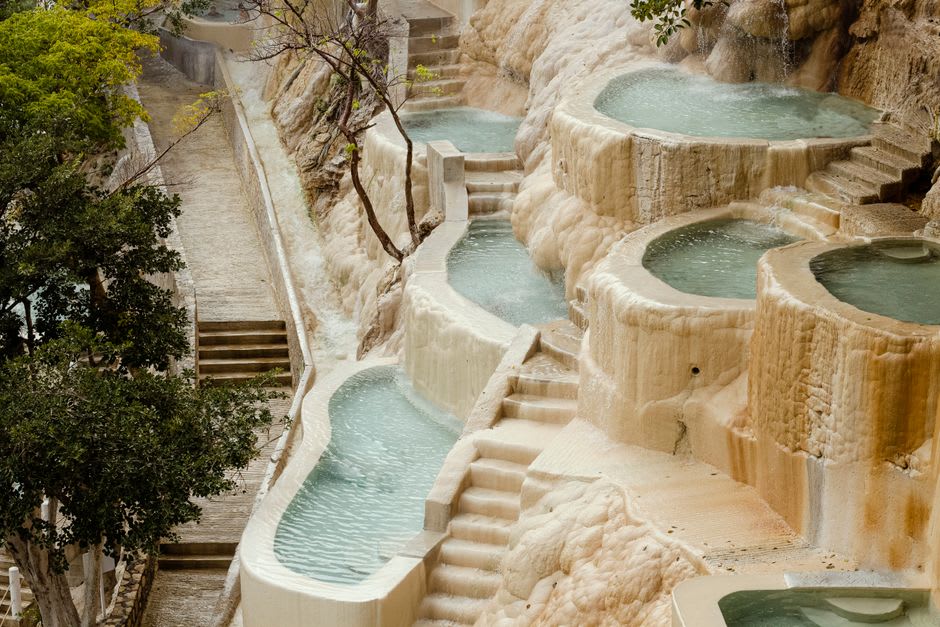
The Gran Baño de Abasolo is enormous in the way that only Mexican public works from a certain era manage to be — a main pool that could comfortably hold several hundred people at once, fed by natural mineral springs that hold the water at a temperature sitting exactly between warm bath and actual swimming pool. On a Sunday the place runs at full social capacity: children doing cannonballs off the edge, abuelas waist-deep in animated conversation, teenagers occupying the corners with phones in waterproof cases, and vendors working the perimeter with Coronas, agua de jamaica, and bags of chicharrón. A speaker somewhere is playing norteño at a volume that suggests the operator has been doing this for thirty years and has stopped second-guessing his choices. I rented a towel for twenty pesos, bought a beer from the man who appeared beside my plastic chair without me having to stand up, and sat with my feet in the water for two and a half hours. Nothing was solved. Everything felt considerably better.
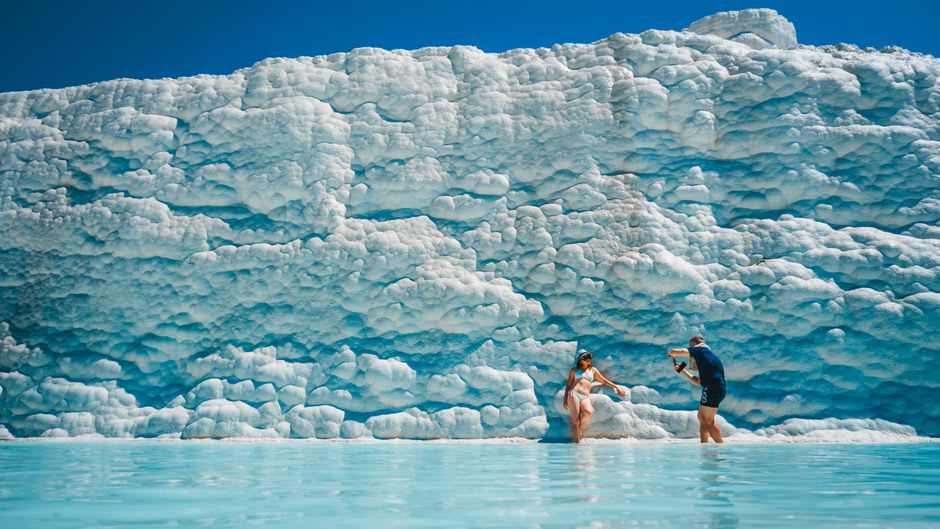
The Church Nobody Came Here For
The Parroquia de Nuestra Señora de los Dolores faces the main plaza at an angle that suggests the town grew around the spring first and figured out the civic layout second. It is not the reason anyone drives to Abasolo, which means it receives the particular quality of quiet attention from the rare visitor who wanders in — plain white walls, a gilded altarpiece that looks a century younger than it is, and the specific smell of stone churches in the Bajío that I have never managed to precisely describe but that I associate with every good road trip in this part of Mexico. After the water I walked over, still slightly damp, and stayed for twenty minutes without anyone trying to sell me anything. Back near the plaza, a handful of restaurants serve the standard Sunday afternoon rotation — birria, caldo de res, menudo for those who feel they need it — and there was a carnitas operation on Calle Guerrero with a line of locals long enough that I respected it unconditionally and joined.
A Few Notes for the Actual Visit
The Gran Baño entry fee has stayed low enough to still function as a working-class institution rather than a boutique wellness experience, which is precisely what makes it worth going to. Go on a Sunday if you want the full social version; go on a weekday if you prefer a third of the pool to yourself and silence except for the water. Bring your own towel if you have one — the rentals are adequate but thin — and wear something you do not mind smelling faintly of sulfur for the remainder of the day. Bring cash. The vendors inside do not have card readers and this is not a limitation they have any plans to correct.
Getting There
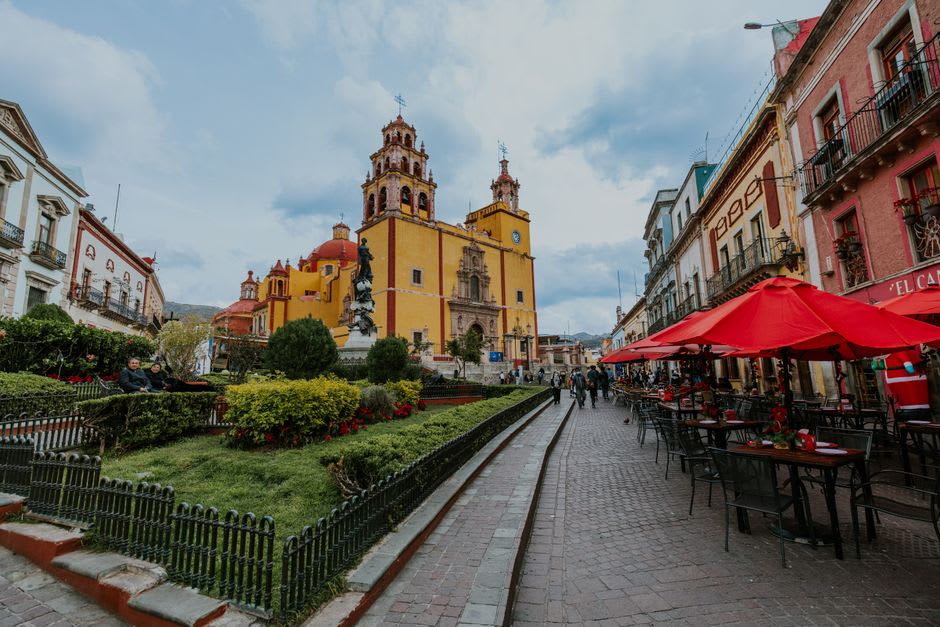
Abasolo sits roughly 60 kilometers southwest of Guanajuato city and about 35 kilometers from Irapuato. By car the roads from both are straightforward and well-signed. There is no significant bus terminal in town; the practical connection is via Irapuato, from which combis run to Abasolo through the day. Most people come as a day trip from Guanajuato, León, or Celaya, which is exactly the right way to do it.
Keep exploring
More of Guanajuato
Keep exploring
More from Guanajuato
 mexico
 Irapuato
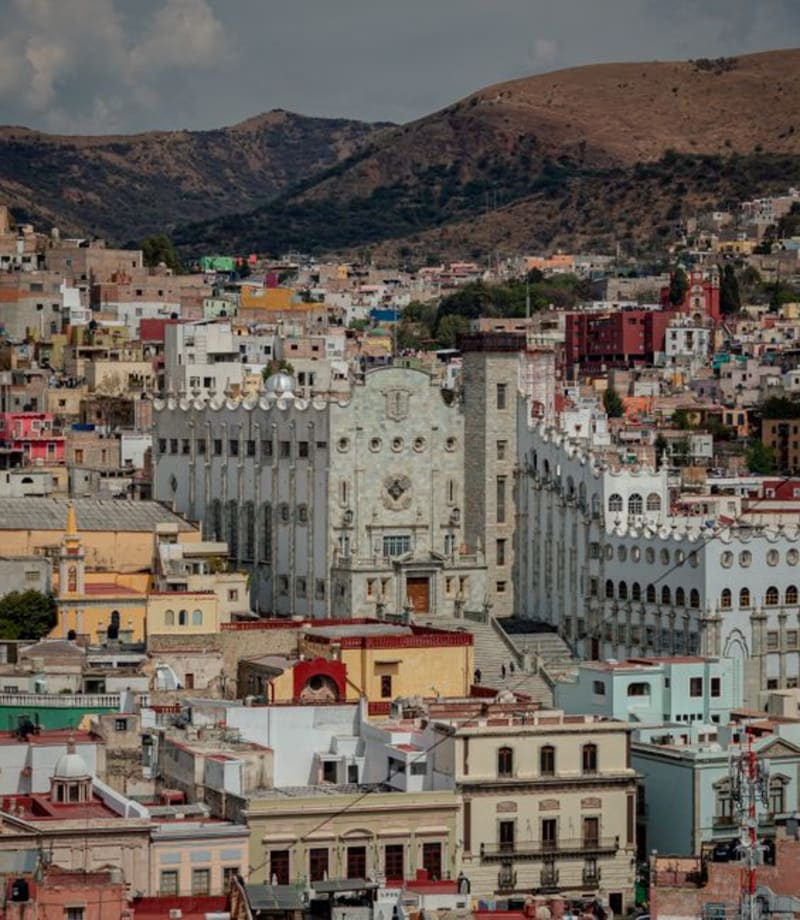
Irapuato is the strawberry capital of Mexico with only slight exaggeration — the fields around the city are extraordinary in spring, the mercado sells fresas con crema in quantities that should be regulated, and the graceful ex-convento and shaded central plaza reward anyone willing to stay past the first bowl.
Explore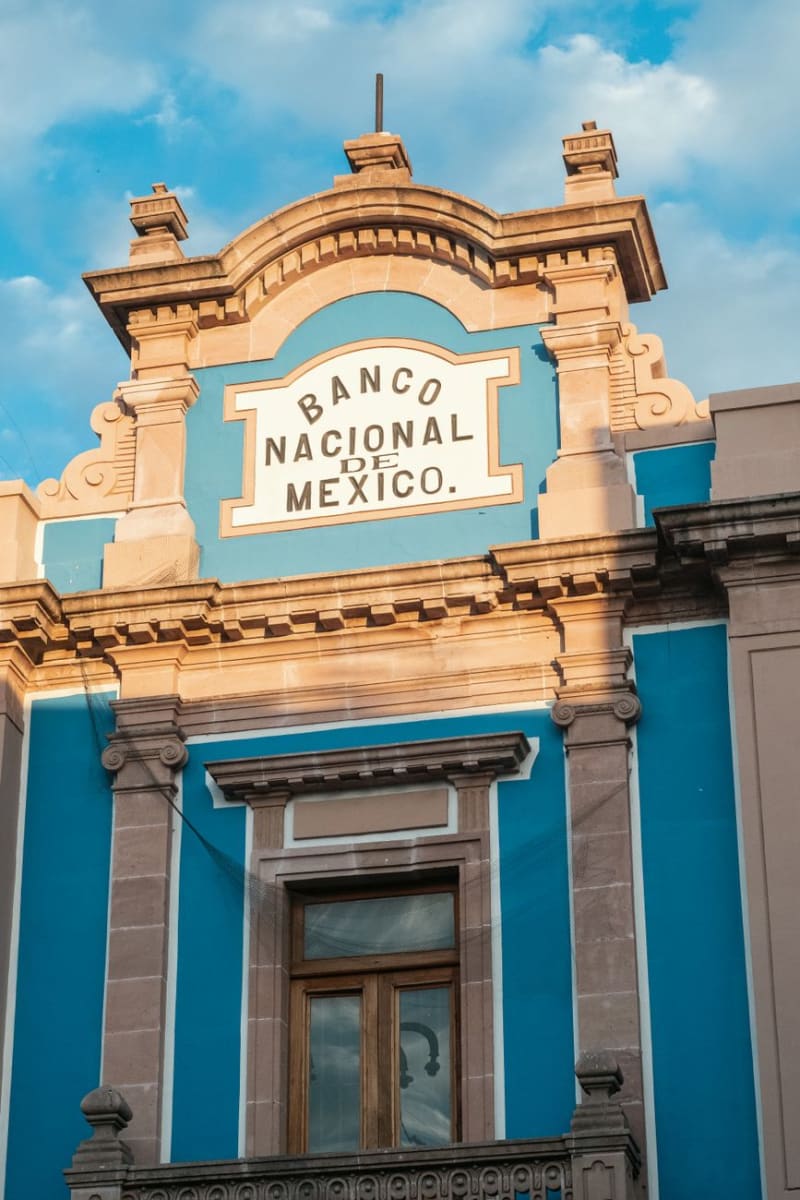 mexico
 Pénjamo
Pénjamo is a small Bajío city on the Lerma River that most people drive through on the way to somewhere else, which is their loss. It was born here — Guadalupe Victoria, Mexico's first president, who fought alongside Hidalgo and then outlasted every rival to take office in 1824. The surrounding countryside is thick with eighteenth-century haciendas and agave fields at the edge of the tequila zone. I visited the birthplace museum and bought a bottle of local mezcal on the way out.
Explore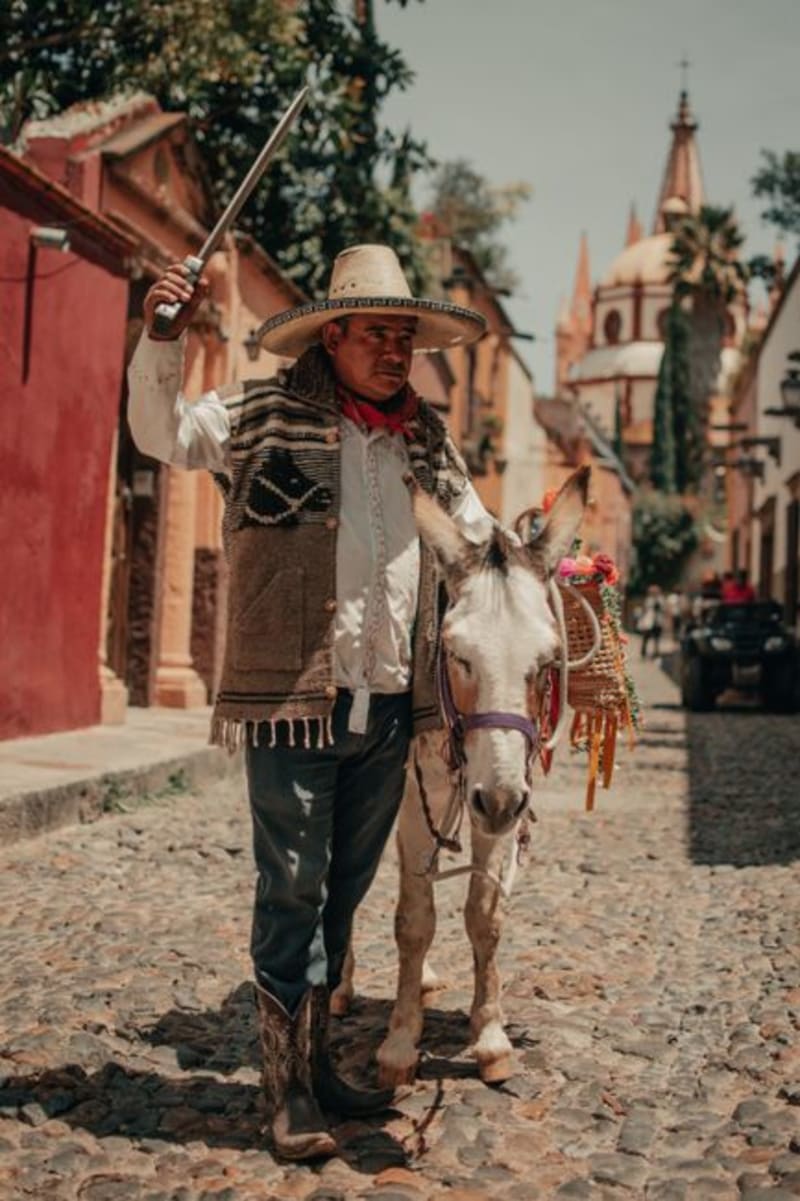 mexico
 Pénjamo
A small agricultural town on the Guanajuato-Jalisco border, Pénjamo is the birthplace of Agustín de Iturbide and a place where carnitas, birria, and local aguardiente define the table. Unpretentious and easy to underestimate, it rewards the traveler willing to stay past the plaza.
Explore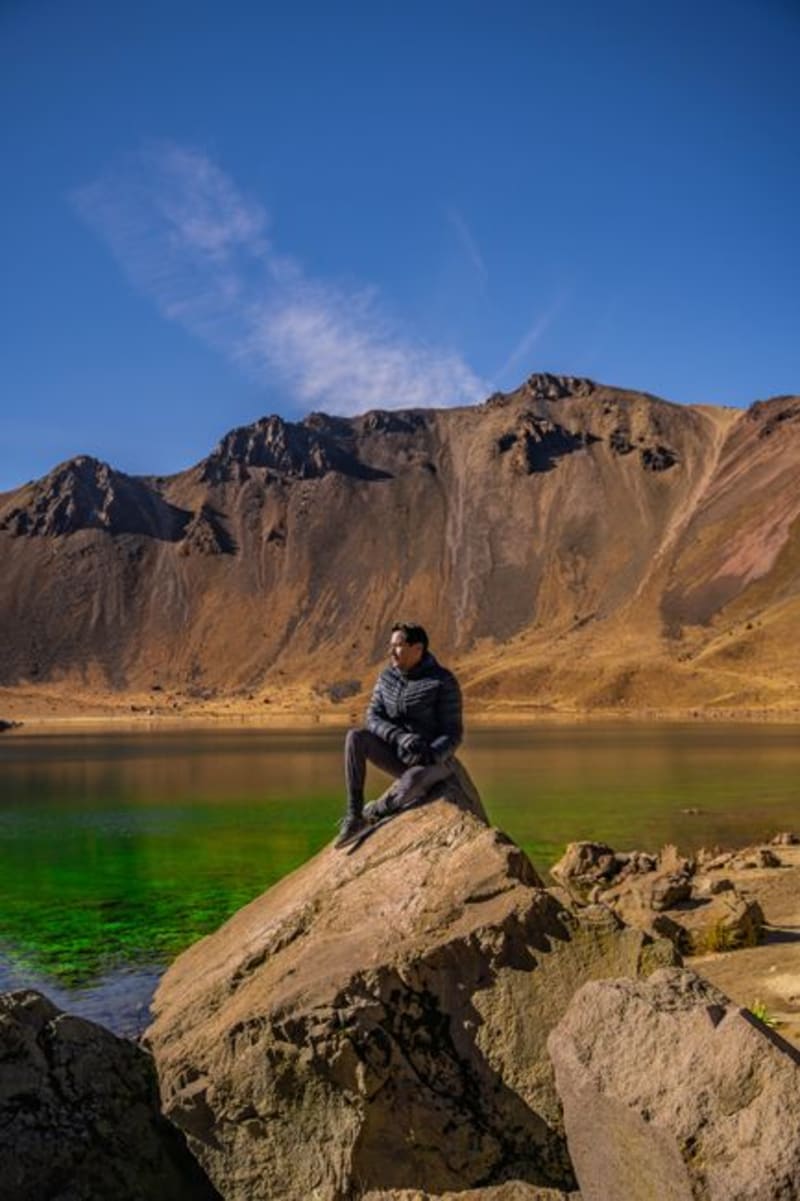 mexico
 Valle de Santiago
Seven volcanic craters dot the farmland south of the Bajío, each holding a lake tinted turquoise, emerald, or rust-red by minerals and shifting light. The Siete Luminarias are one of the quieter geological oddities in Mexico — an hour from Celaya, almost entirely off the international circuit. The town itself is a working agricultural center that has not yet learned to perform for visitors.
Explore mexico
 Salamanca
Salamanca arrives with Pemex smokestacks on the horizon and leaves you with the memory of a baroque church so elaborate it seems impossible nobody warned you about it. The industrial city Guanajuato built around its oil wealth turns out to have a colonial center of rare quality — ex-haciendas, a grand plaza, and a Churrigueresque facade that stops you mid-step.
Explore mexico
 Yuriria
A small lakeside town on the shore of the Laguna de Yuriria — the largest natural lake in Guanajuato — dominated by a monumental sixteenth-century Augustinian convent-fortress that makes everything around it look provisional.
Explore