Salamanca
"Nobody mentioned that Salamanca had this kind of colonial center hidden behind the industrial approach roads — arriving felt like finding a bonus chapter in a book I thought I had finished."
Salamanca arrives with Pemex smokestacks on the horizon and leaves you with the memory of a baroque church so elaborate it seems impossible nobody warned you about it. The industrial city Guanajuato built around its oil wealth turns out to have a colonial center of rare quality — ex-haciendas, a grand plaza, and a Churrigueresque facade that stops you mid-step.

I came through Salamanca on a second-class bus from Celaya, watching the refinería slide past the window like something from a different country — the smokestacks of Pemex, the industrial flatness, the working-class colonias ringing the access roads. Nothing resembled the hillside towns I had been moving through for a week. From the road, Salamanca looks like a city that processes petroleum and not much else, which is accurate in one sense and completely wrong in another. I grabbed my bag from the overhead rack and stepped down anyway. Stubbornness is sometimes good travel methodology.
The Facade That Stops You Mid-Step
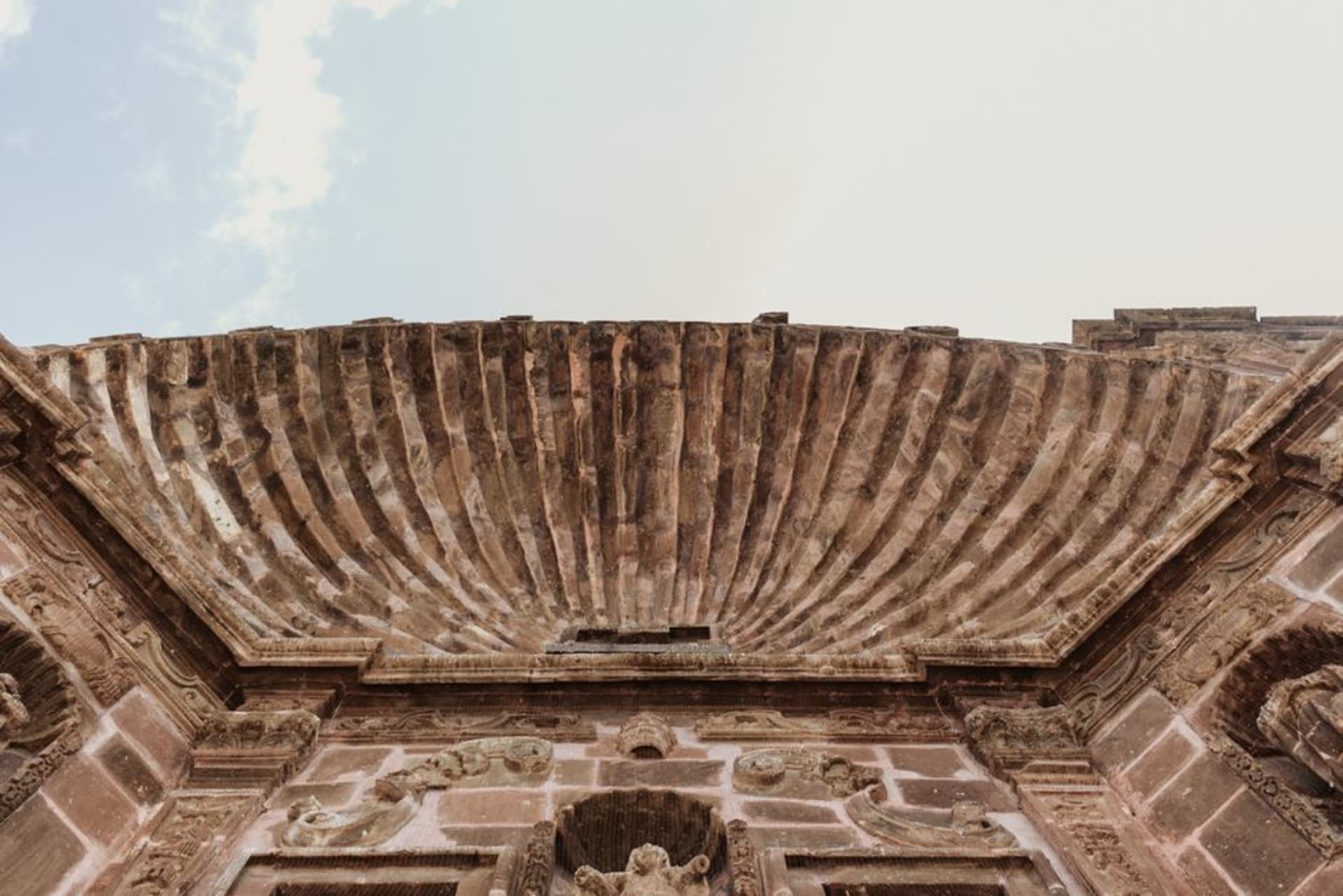
The Templo de San Agustín sits on the eastern edge of the main plaza, and its facade is one of the more extravagant things I have seen in a state that does not lack for extravagance. Guanajuato city has its Basílica, San Miguel has its Parroquia, but San Agustín’s Churrigueresque stonework goes further than either — the surface is layered so densely with saints, botanical forms, and geometric eruptions that the eye cannot find anywhere to rest. It was built across the seventeenth and eighteenth centuries by the Augustinian order, during a period when the surrounding haciendas were producing enough agricultural wealth to fund architecture at this scale. I spent a long time on the atrium steps in the late morning, which is the correct hour to see it — the facade faces east, and by eleven the stonework is lit cleanly without the flatness of full midday sun. The interior is quieter than the outside suggests: a high barrel vault, enough shadow to make the gilded retablos glow without looking theatrical.

The Hacienda Circuit
The countryside immediately around Salamanca contains some of the best-preserved ex-haciendas in the state, and a morning moving between two or three of them is quietly unsettling in useful ways. The Hacienda de Ibarrilla is accessible and partially restored; the Hacienda de Trojes has a main house with proportions designed to communicate that whoever lived here occupied a different order of existence from almost everyone else. The tours, when you can find a guide, tend to be honest about the economics: these estates ran on debt peonage, which kept labor forces effectively captive across generations. The scale of the architecture makes that history more present rather than less — you walk through rooms built for banquets and you keep doing the arithmetic. I find that more useful than the version of hacienda tourism that frames everything as heritage and nothing as consequence.

The Mercado and the Plaza at Dusk
The Mercado Hidalgo is the practical reason to linger in Salamanca rather than just pass through. The stalls along the back corridor do a carnitas plate that is not trying to compete with Michoacán but is solid and cheap — I ate at a counter near the entrance on a Tuesday afternoon and the woman running it seemed genuinely puzzled that I was writing anything down. The Jardín de los Mártires, the main plaza, is the kind of space where people actually use it rather than perform leisure: grandmothers on benches, kids balanced on the fountain rim, food carts with elotes and chicharrones after four. Come back to the plaza at dusk. The illuminated facade of San Agustín from across the jardín is a different church from the daytime version, and worth staying for.

Getting There
Salamanca sits on the main highway between Celaya and Irapuato, with direct buses running from Guanajuato city (about 1.5 hours) and León (about an hour) on ETN and Primera Plus. The bus terminals are on the periphery — take a taxi to the centro. It works well as a half-day stop between Celaya and Guanajuato city, or as a base for a slower exploration of the hacienda circuit in the surrounding valley.
Keep exploring
More of Guanajuato
Keep exploring
More from Guanajuato
 mexico
 Irapuato
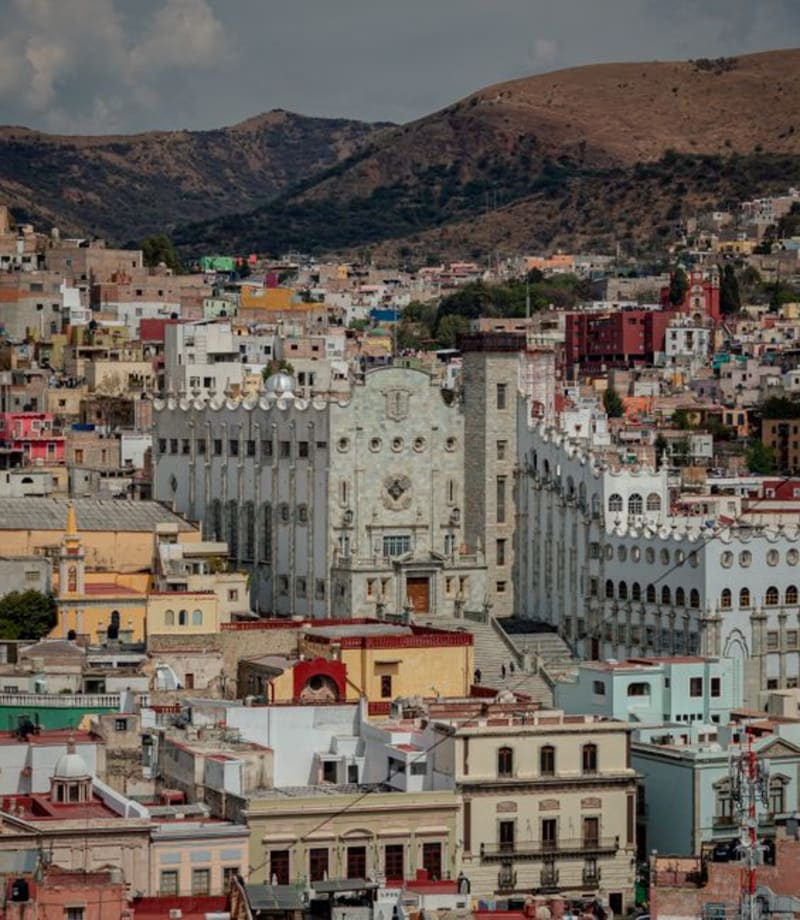
Irapuato is the strawberry capital of Mexico with only slight exaggeration — the fields around the city are extraordinary in spring, the mercado sells fresas con crema in quantities that should be regulated, and the graceful ex-convento and shaded central plaza reward anyone willing to stay past the first bowl.
Explore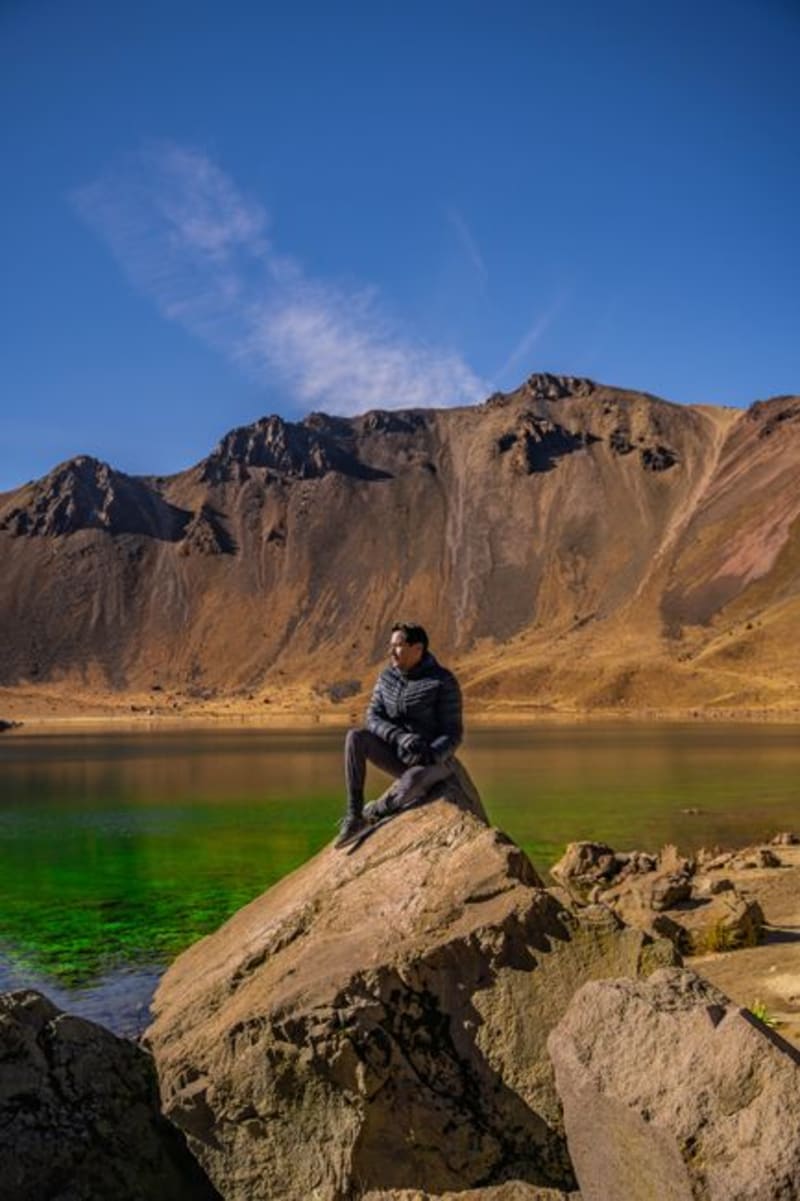 mexico
 Valle de Santiago
Seven volcanic craters dot the farmland south of the Bajío, each holding a lake tinted turquoise, emerald, or rust-red by minerals and shifting light. The Siete Luminarias are one of the quieter geological oddities in Mexico — an hour from Celaya, almost entirely off the international circuit. The town itself is a working agricultural center that has not yet learned to perform for visitors.
Explore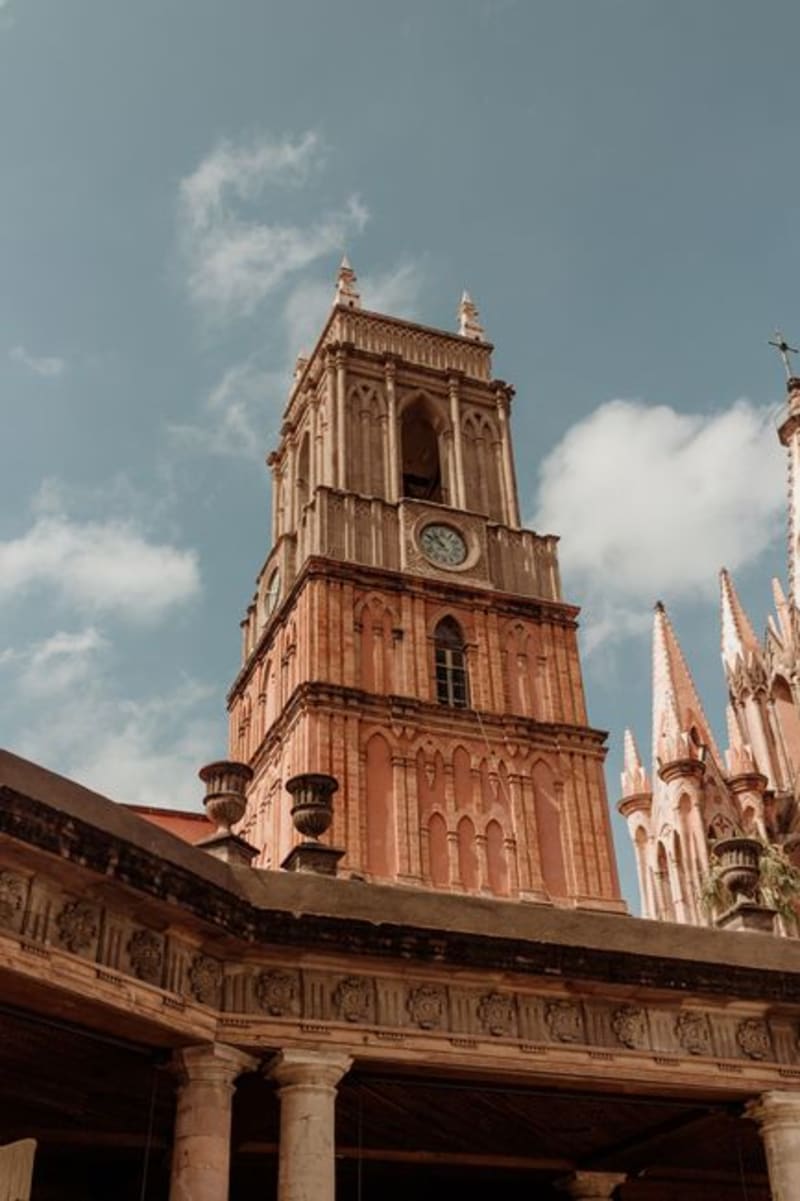 mexico
 Celaya
Celaya is Guanajuato's most overlooked city — and one of its most rewarding. The neoclassical dome of the Templo del Carmen, the baroque extravagance of San Francisco, and the family workshops slow-cooking Mexico's finest cajeta in copper pots give this place a quiet depth that most travelers miss entirely.
Explore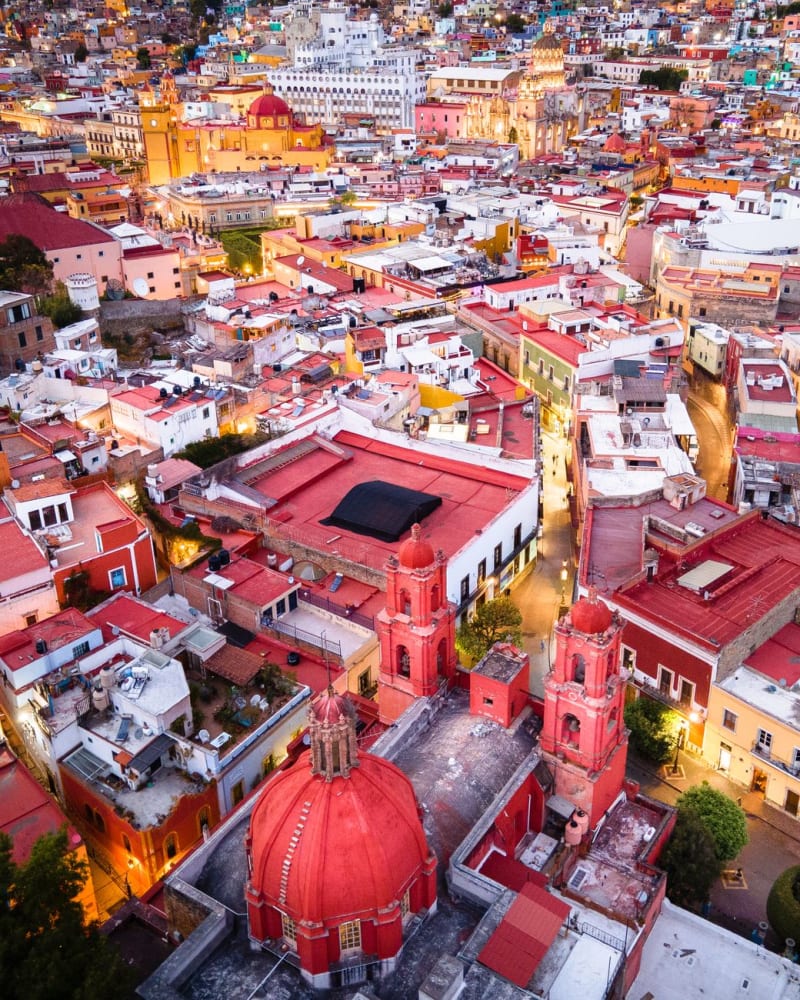 mexico
 Guanajuato City
A UNESCO World Heritage city folded into a ravine, where subterranean callejones, facades painted in twenty shades of ochre and turquoise, and the annual Festival Internacional Cervantino make it one of the most theatrically beautiful cities in the Americas. The silver mines that built colonial Spain still run beneath its streets.
Explore mexico
 Comonfort
Comonfort is a colonial town on the Laja River between San Miguel de Allende and Celaya, known locally for its ceramics and known to very few people outside the region for the Cañada de la Virgen — a pre-Columbian pyramid complex on the edge of a river canyon 25km from town that was only opened to visitors in 2011. On a clear morning with the light coming low across the canyon, the site felt like a real discovery rather than an attraction.
Explore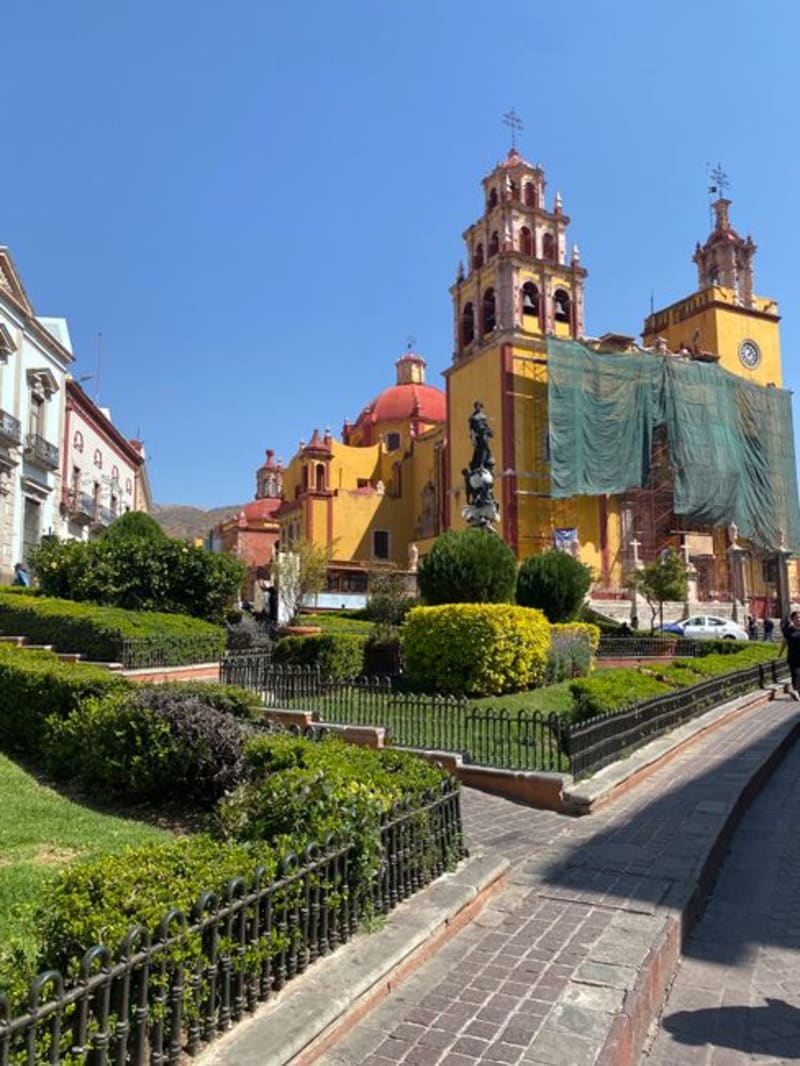 mexico
 Abasolo
Abasolo is a small colonial town in the Bajío region of Guanajuato whose entire identity revolves around the Gran Baño, an enormous thermal mineral pool that has been drawing families from across central Mexico for generations. Come on a Sunday and you will understand immediately why this town needs no other justification.
Explore