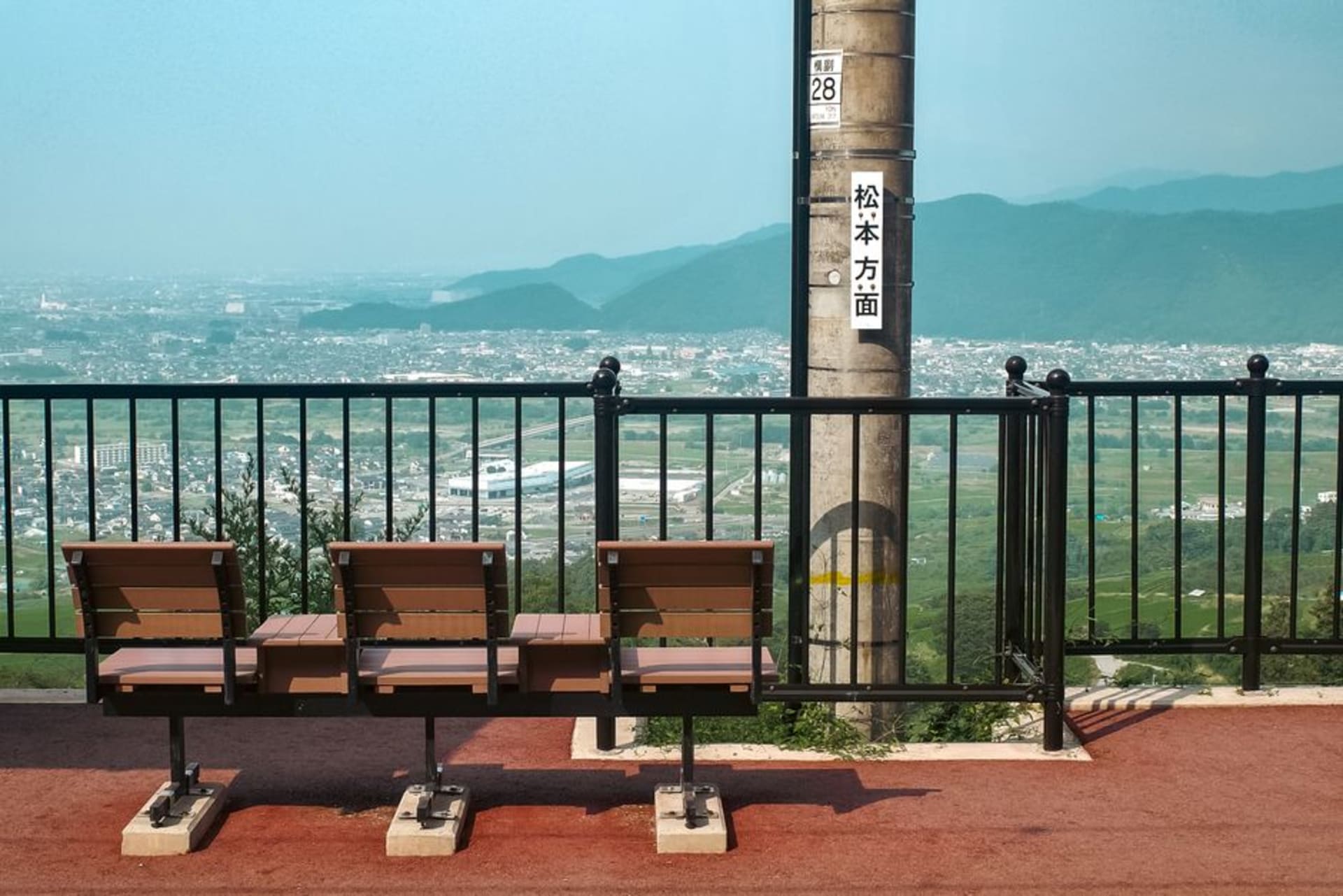
A Seto Inland Sea checkpoint town dating to the Heian period, once tied to pirate raids and Choshu-era coastal trade, now caught in a decades-long standoff over a still-unbuilt nuclear plant on the strait it faces.

We came to Kaminoseki almost by accident, following a coast road out of curiosity after a night on Suo-Oshima, and ended up somewhere far more layered than either of us expected from a place this small. It’s a checkpoint town in the oldest sense — for over a thousand years, ships moving through this stretch of the Seto Inland Sea have had to pass through the narrow strait here, and every era since the Heian period has left its own fingerprint on the town: guard posts, pirate history, Edo-period trade, and now a very present-day fight that neither of us had heard about before arriving.
A Thousand Years of Watching the Strait
Kaminoseki’s whole reason for existing is the narrowness of the water it sits beside, and walking the old harbor front, it’s easy to see why. Boats moving along the Seto Inland Sea had little choice but to funnel through this channel, and for centuries that made the town a natural checkpoint — a place to collect tolls, keep watch, and, in less official times, launch raids on ships heading to or from Korea and China. Later, under the Choshu domain, it settled into a more conventional role as a coastal trading post, and some of that Edo-period layout still survives in narrow lanes running down toward the water. Lia and I walked the harborfront at dusk, watching a single small fishing boat thread the strait exactly where, centuries earlier, far less friendly vessels had done the same.

A Fight That Isn’t Finished
What we hadn’t expected was how present a modern controversy still is here. For decades, a nuclear power plant has been proposed on the strait facing Kaminoseki, and the plan has never been fully built nor fully abandoned, caught in a long standoff between the utility company, national energy policy, and local opposition that includes fishing communities on both sides of the water. We noticed faded protest banners on a few buildings and a quiet, unresolved tension in how locals spoke about it when the subject came up, careful in a way that suggested the wound hadn’t closed. It’s not something the town advertises to visitors, but once you know to look, you see it everywhere — in the half-cleared construction land across the water, in the specific silences when you ask.

An Ordinary Evening on the Water
Despite all that history and tension, an evening in Kaminoseki felt mostly quiet and unremarkable in the best way. We ate grilled fish at a small restaurant that seemed to serve mostly regulars, the strait’s current visible as a shifting silver ribbon just past the window, and talked with the owner a little about the town’s slow population decline, a common thread up and down this coast. Afterward we walked along the water in the dark, listening to the tide pull through the narrow channel with an audible rush that made it obvious why sailors had respected, or feared, this stretch of coast for so long.

Getting There
Kaminoseki is most easily reached from Iwakuni or Yanai stations, both on the JR lines connecting to Hiroshima, with local buses and occasional ferries covering the final stretch to the town itself. A car makes exploring the coast road and the harbor area considerably easier, since bus schedules along this stretch can be sparse. It pairs naturally with a stop at nearby Suo-Oshima or as a quieter detour on a longer Seto Inland Sea coastal drive.
Keep exploring
More of Chūgoku
Keep exploring
More from Chūgoku
 japan
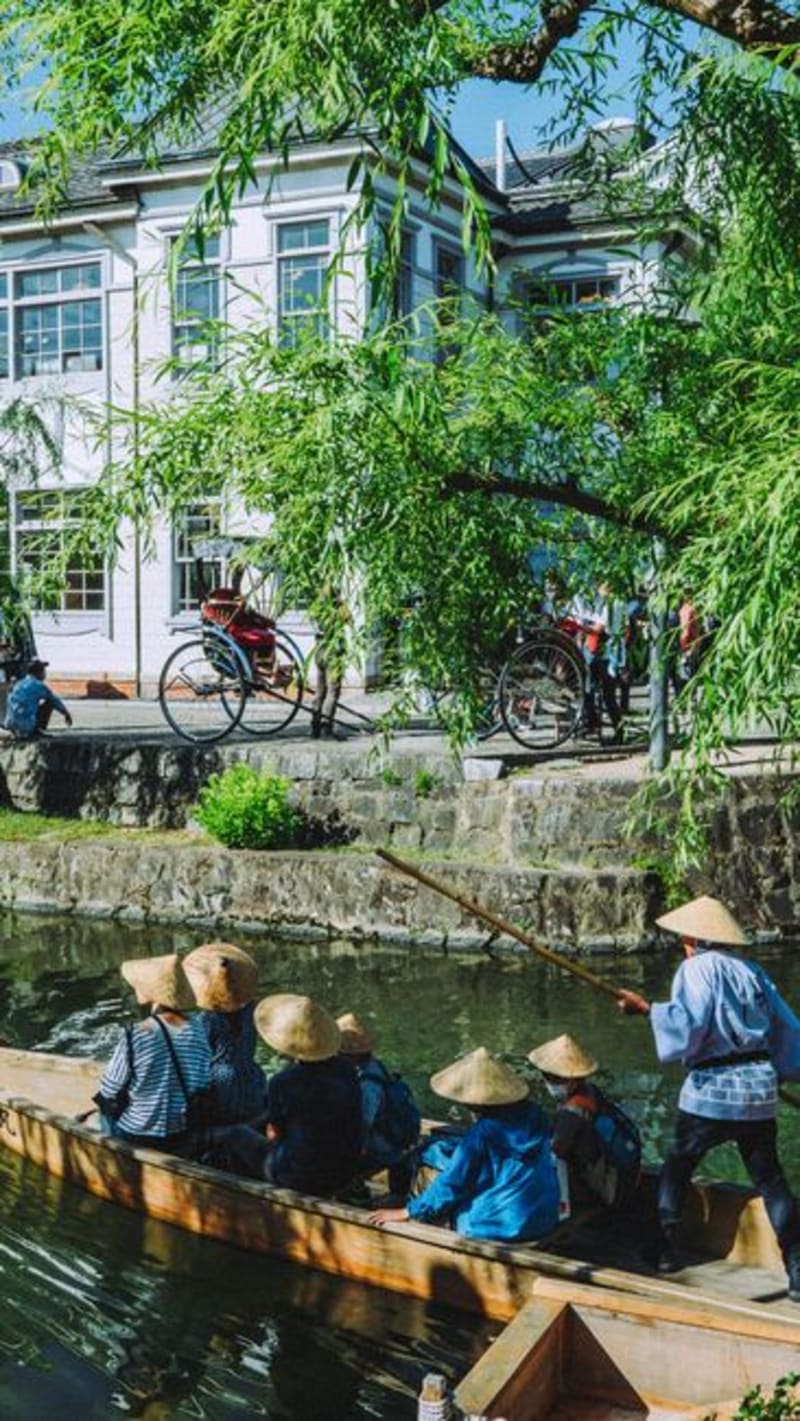
japan Kurashiki
A canal quarter of white-walled Edo merchant warehouses in Okayama, willows trailing over still water plied by flat wooden boats. Art museums, a deep denim heritage, and one of the most quietly beautiful streetscapes in Japan.
Explore japan
japan Kurayoshi
A small Tottori town where white-walled, red-tiled storehouses lean over a slow canal, and life carries on around them with almost no audience. It has the beauty of the famous old towns and none of the crowds. We had whole streets to ourselves, and it felt like a secret.
Explore japan
japan Kure
A naval-arsenal city on the Seto Inland Sea that built the battleship Yamato, the largest warship ever armed with the biggest guns ever mounted at sea, and still shares its harbor with a working submarine base today.
Explore japan
japan Manabeshima
A cat island off Kasaoka with a tiny human population and, by most accounts, more cats than people wandering a maze of wooden fishing-village lanes made famous by a French illustrator's sketchbooks.
Explore japan
japan Masuda
A quiet Iwami-coast city where the great ink-wash painter Sesshu Toyo spent his final years and built two surviving gardens, one in a rare Buddhist style and one in a stern samurai aesthetic, both nationally designated scenic sites.
Explore japan
japan Matsue
A castle town on the shores of Lake Shinji, famed for its lake sunsets, a rare original wooden keep, a preserved samurai quarter, and the ghost-hunting writer Lafcadio Hearn who made it his adopted home.
Explore