Sno Valley
"We climbed the tower's ladder in the dark, and I still don't know if I was more scared of falling or of what I'd see at the top."
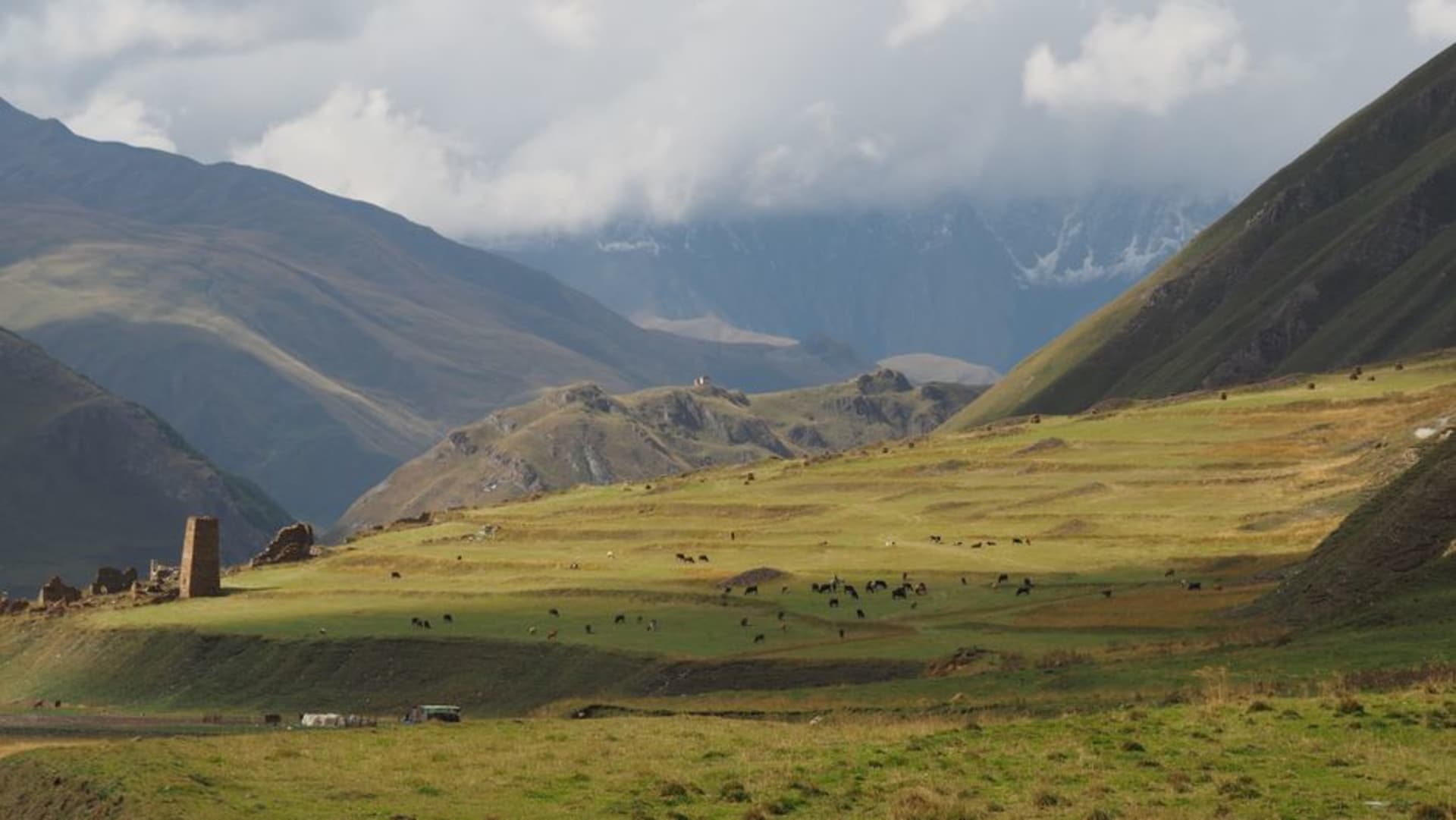
A quiet side valley near Kazbegi where medieval Georgian watchtowers still guard a handful of stone villages against a backdrop of glaciers.

Sno Valley is one of those places I only found because our Kazbegi guesthouse owner, over breakfast, mentioned it almost dismissively — “if you have an extra day, go to Sno, it’s quieter.” Lia and I had already planned to spend our time around Gergeti and the Trinity Church, so I nearly skipped it. I’m glad I didn’t. The turnoff from the main Kazbegi road is easy to miss, a rough track climbing up along the Sno River, and within twenty minutes the crowds of Stepantsminda were gone entirely.
What struck me first was how many watchtowers there were, packed into such a small area. Khevi villages like Sno built these defensive towers by the dozen starting in the medieval period, family by family, as insurance against raiders and blood feuds — some sources say nearly every household that could afford one built its own. Driving through, you count them almost without trying: five, then eight, then you lose count, stone fingers pointing up against green hillsides and, further back, the white wall of the Caucasus main range.

We stopped in the village of Sno itself, where a local family runs a small guesthouse, and an older man — maybe in his seventies, with hands like tree bark — offered to show us inside one of the towers for a few lari. The interior was nothing but bare stone and a series of wooden ladders leading up through floor after floor, no railings, no light beyond what came through arrow slits. Lia went first. I followed more slowly than I’d like to admit, and at the top we came out onto a narrow platform with a view down the whole valley that made the climb worth every wobbly rung.
There’s also a small ethnographic museum-house nearby dedicated to Alexander Kazbegi, the 19th-century Georgian writer whose family gave Mount Kazbek its Georgian name, which added a layer I hadn’t expected — literature tucked in among the fortifications. We ate lunch afterward at a family table, khinkali and a bottle of homemade wine that appeared without us ordering it, the way hospitality tends to ambush you in this part of Georgia.

If Kazbegi itself has started to feel a little too discovered — and it has, with tour vans lining up for the Trinity Church shot at sunrise — Sno is the antidote, fifteen minutes away and a world quieter. I think about that climb up the tower more than I think about most of the postcard views from that trip.
When to go: Visit June through September when the dirt road is reliably passable and the high pastures are green; the valley is largely cut off by snow in winter.
Keep exploring
More from Greater Caucasus
 caucasus-mountains
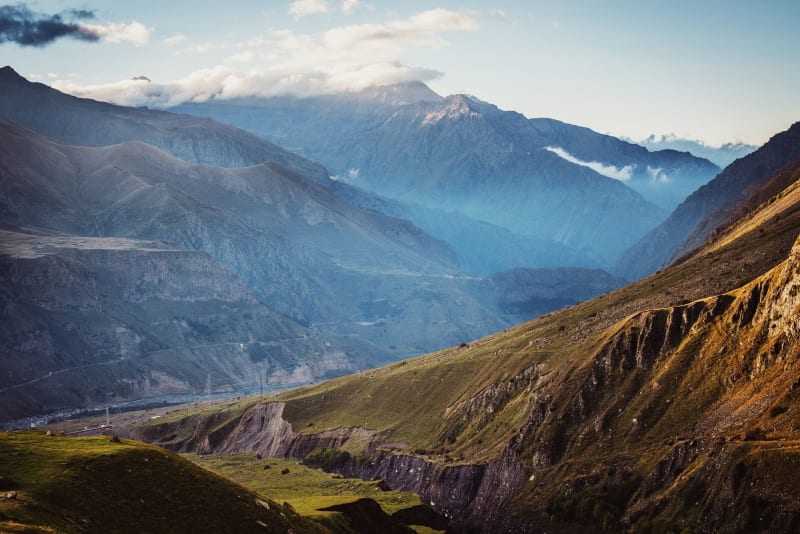
 Stepantsminda
A small Georgian town beneath Mount Kazbek where the Gergeti Trinity Church hangs above the clouds and the Military Highway cuts through some of the most dramatic gorge scenery on earth.
Explore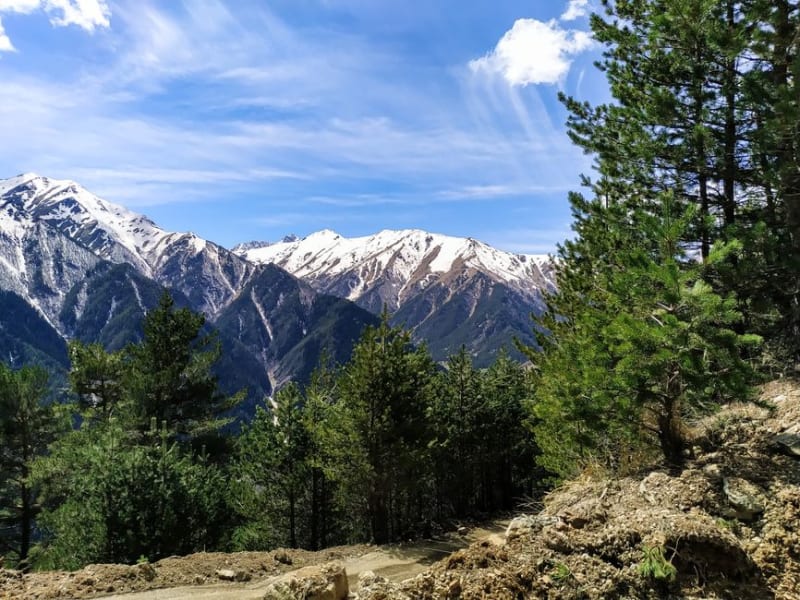 caucasus-mountains
 Teberda
A pine-forested resort valley and nature reserve in the Russian Caucasus, quieter and greener than its famous neighbor Dombay just up the road.
Explore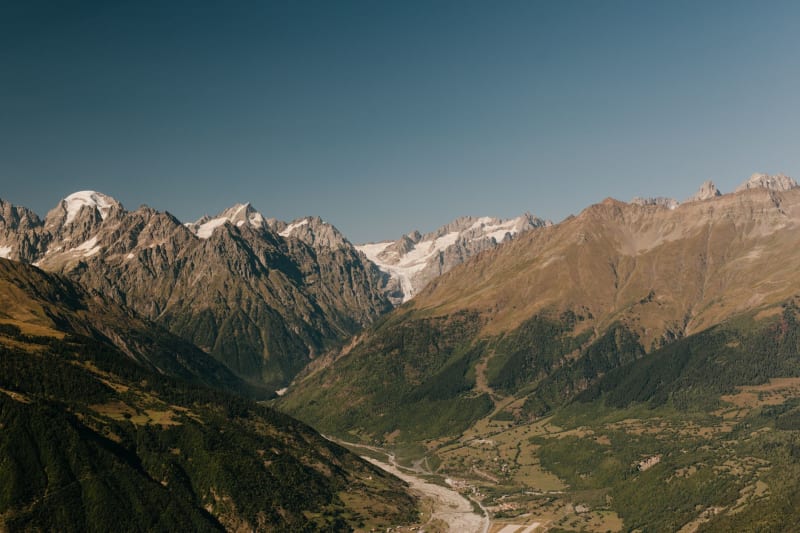 caucasus-mountains
 Ushguli
The highest continuously inhabited settlement in Europe, where medieval towers outnumber people and the glaciers feel close enough to touch.
Explore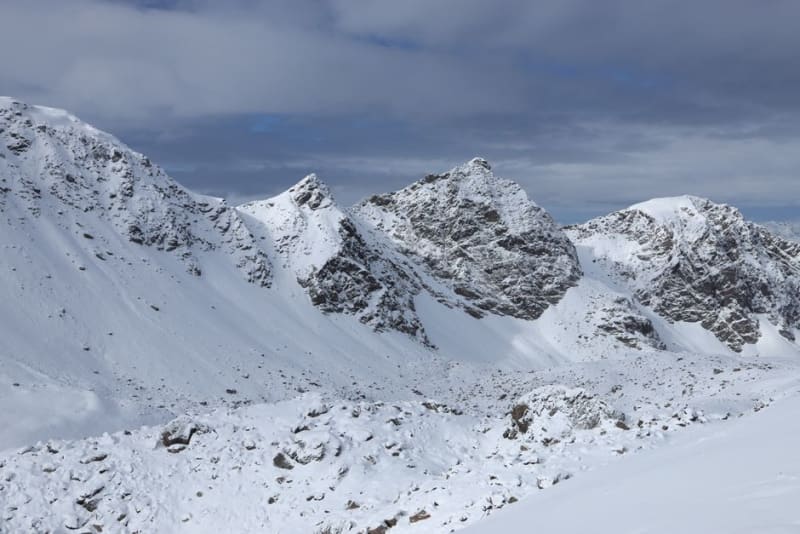 caucasus-mountains
 Arkhyz
A ski valley in Russia's Karachay-Cherkessia where a Soviet-era telescope watches the same peaks that hide 10th-century stone churches.
Explore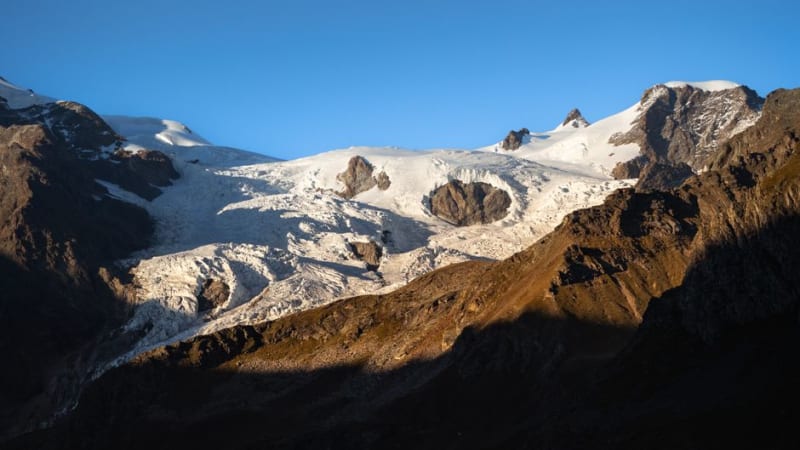 caucasus-mountains
 Chaukhi Massif
A jagged granite ridge above the village of Juta, nicknamed the Georgian Dolomites, that turns pink and gold in the last light of the day.
Explore caucasus-mountains
 Dariali Gorge
The ancient passage through the Caucasus where the Terek river has carved a canyon so narrow and sheer it was once considered the literal gate between Europe and Asia.
Explore