Five Minutes, a Different City
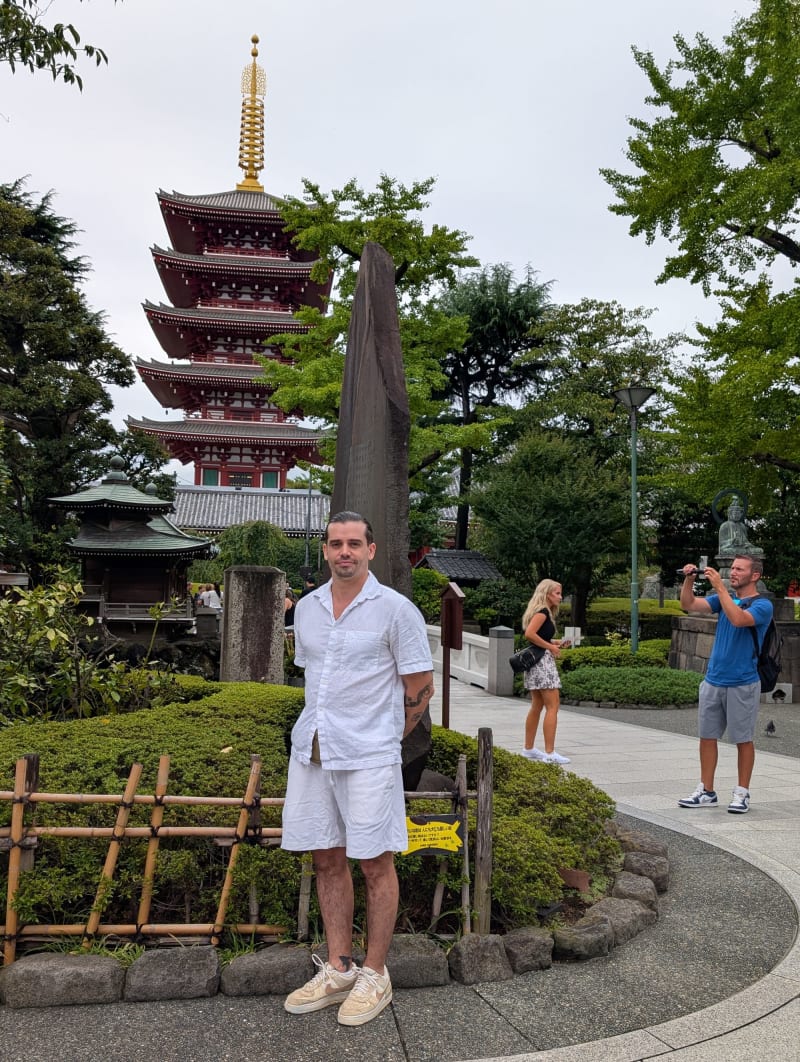
We’d spent the first half of our first evening in Japan at Senso-ji, jetlagged and reverent, watching incense smoke curl over a temple that’s been standing since before Tokyo was Tokyo. Then we got on the Ginza Line for five minutes — a hundred and eighty yen, barely enough time to sit down — and got off in a completely different country. Ueno at rush hour is salarymen in white short-sleeve shirts crossing against traffic, taxis and a Toei bus fighting for the same lane, a Pachinko-and-Slot parlor lit up like a casino floor, and a One Piece mural the size of a building watching over all of it. Nothing about it looked like the Asakusa we’d just left. That was the point of coming.
Under the Arch, Into Ameyoko
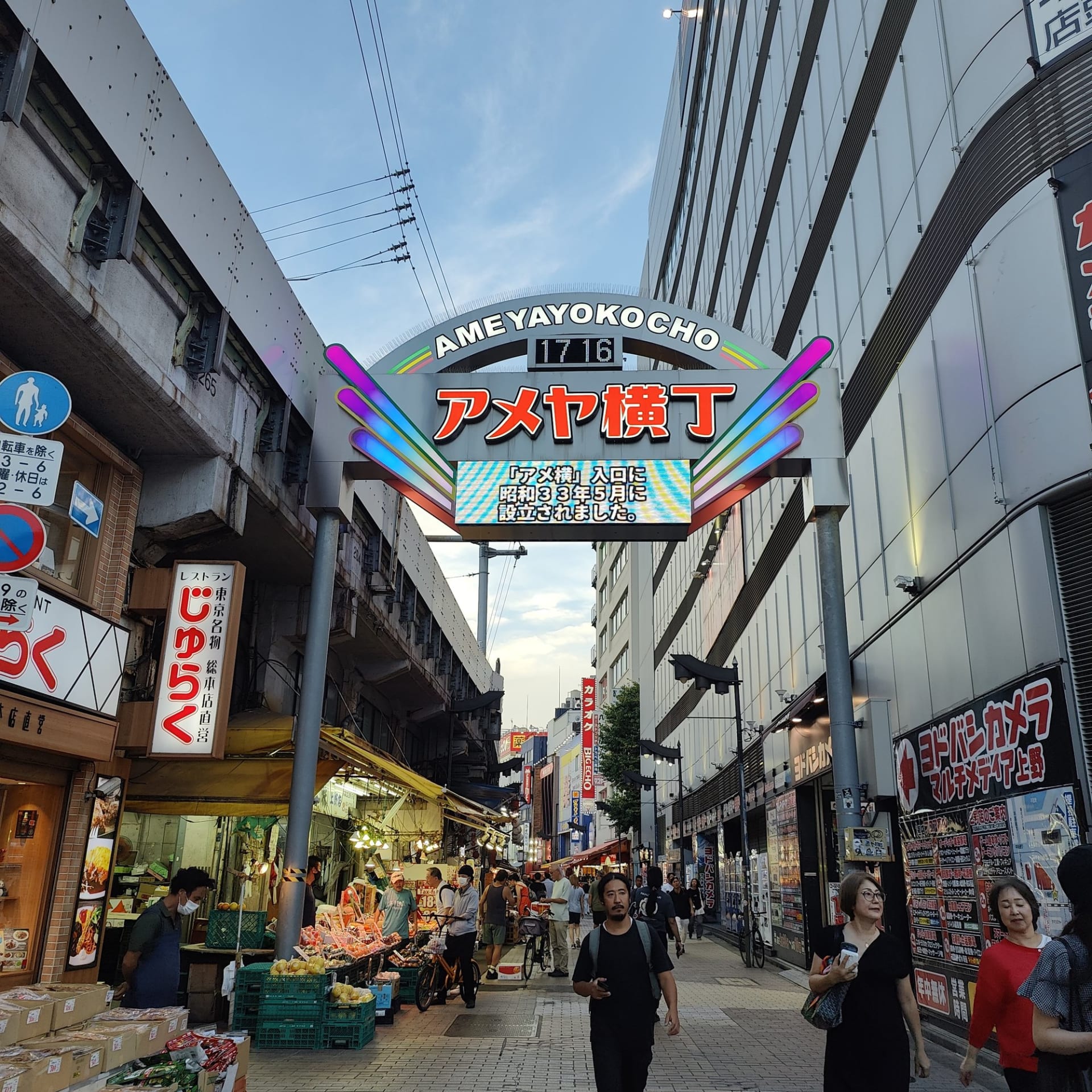
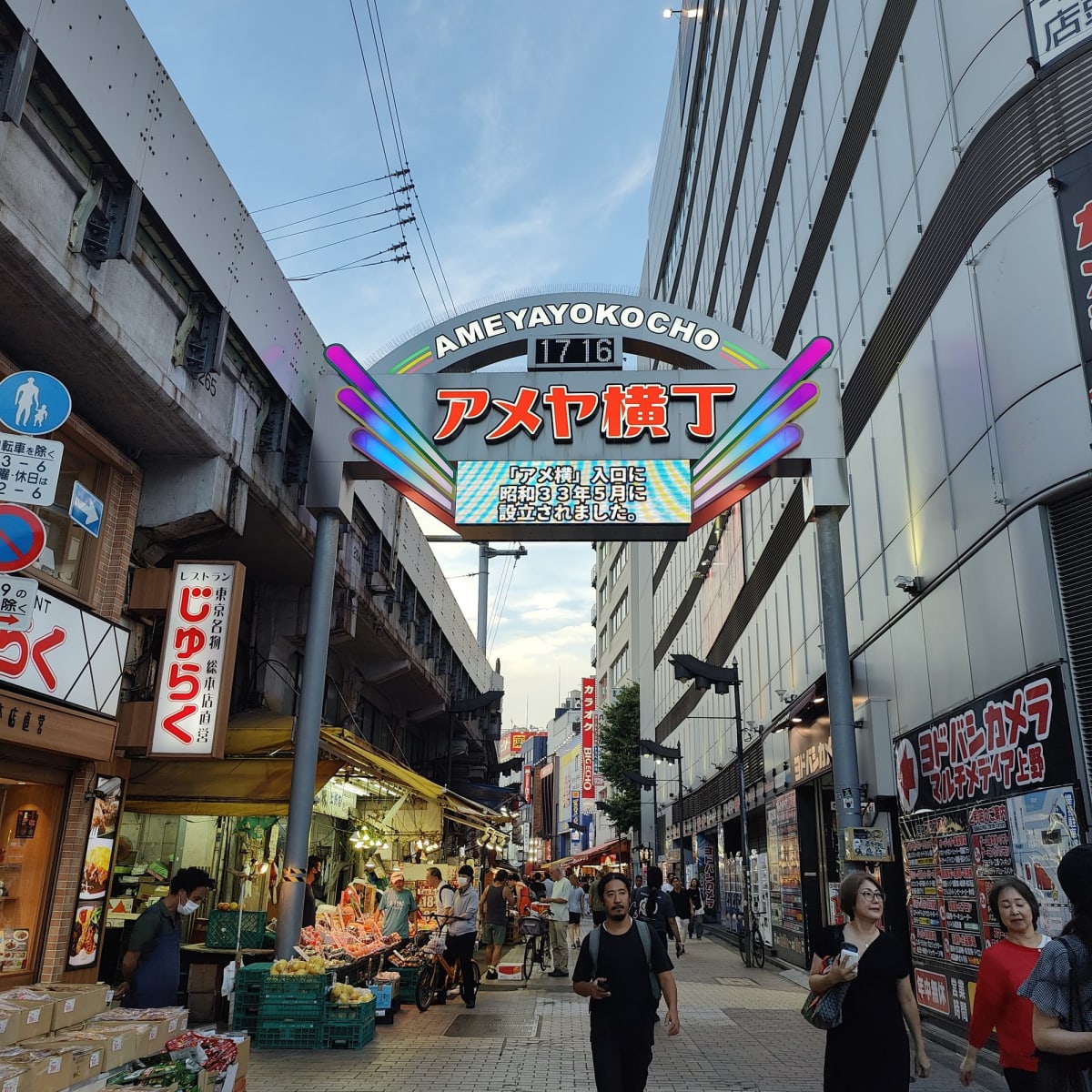
The Ameyayokocho arch is not subtle — rainbow neon tubes, a digital clock, a sign that translates to roughly “this entrance was built in May of Showa 33,” which is 1958, which means the market itself is far older than the arch bragging about it. We walked under it at 17:16 and the temperature of the trip changed instantly. Crates of fruit stacked on the pavement, vendors calling out prices, bicycles leaned against fish stalls, a restaurant sign in English promising “Tokyo Meibutsu” a few feet from boxes of dried squid. Ameyoko started as a black market after the war — the name literally means “candy alley,” from the sugar that was scarce and precious enough to be sold here illegally — and it still runs on that same slightly-outside-the-rules energy. Nothing about it is curated for tourists. It’s just Tokyo’s id, one block wide, running at full volume two stops from where the temple bells were still ringing behind us.
The Torii Nobody Built a Plaza Around
A few streets off the main drag, we turned a corner and there was a full-sized vermilion torii gate standing in the middle of an ordinary street, dwarfed by office buildings and a parking garage sign, cars driving straight past it like it was a stop sign. No plaza, no ticket booth, no crowd — just a shrine entrance that happened to be exactly where the street needed to bend. I’d gotten used to shrines being destinations by this point in the trip. This one was just infrastructure, a piece of the neighborhood’s spiritual plumbing that nobody had bothered to make a big deal out of, which somehow made it hit harder than half the famous ones.

Getting a Little Lost, on Purpose
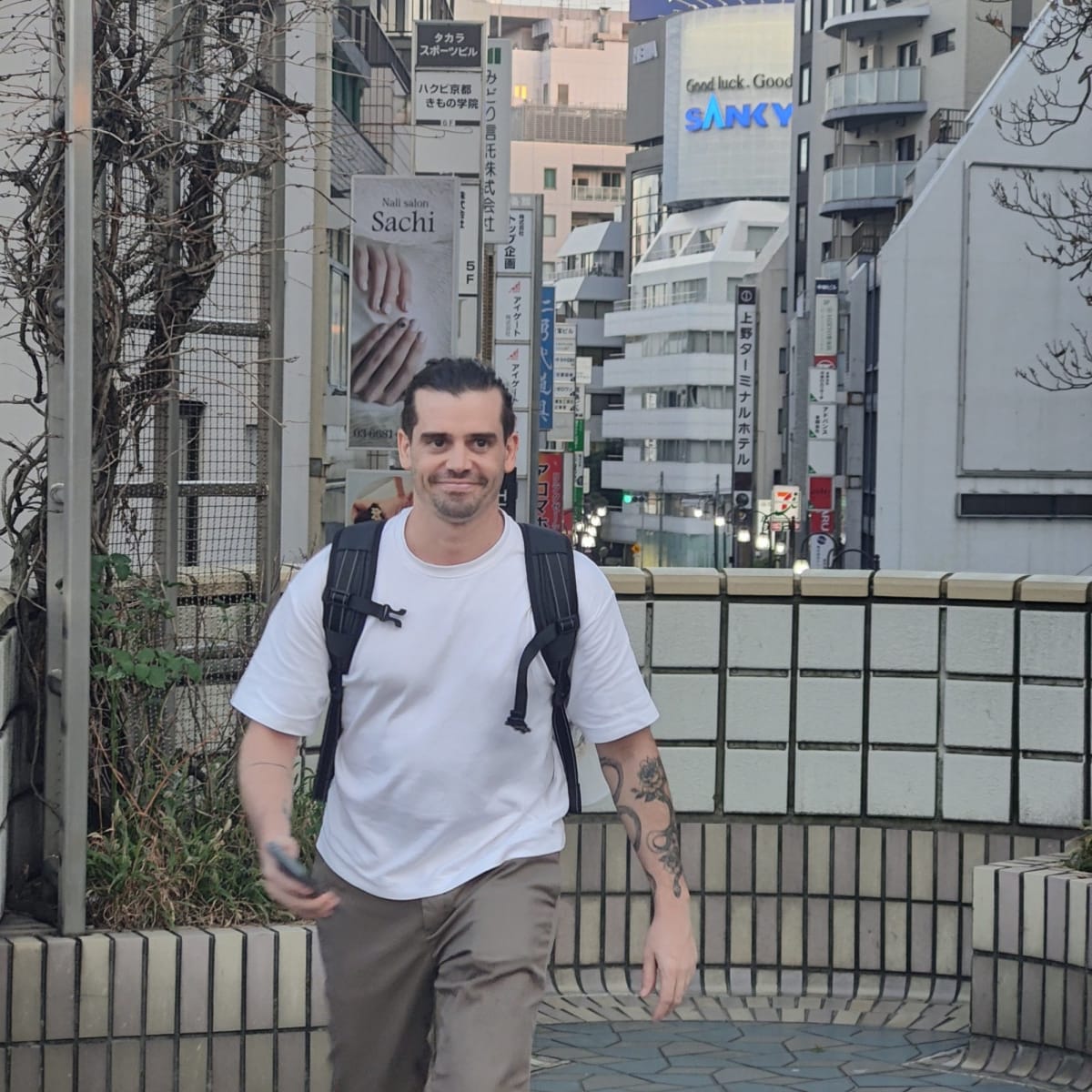
We didn’t have a plan for Ueno beyond “walk until something looks good,” so we ducked down a pedestrian overpass with a strange geodesic dome trellis over it, climbed some stairs, doubled back through an alley that dead-ended at a nail salon, and generally let the neighborhood route us instead of the other way around. I stopped for a photo with a tattoo showing under my sleeve and a backpack full of things we didn’t need yet, somewhere between a “Sachi” nail salon sign and the Ueno Terminal Hotel. I couldn’t tell you the street name. That’s usually a sign the walk was working.
Neon, Anime, and the Sound of a Thousand Pachinko Machines
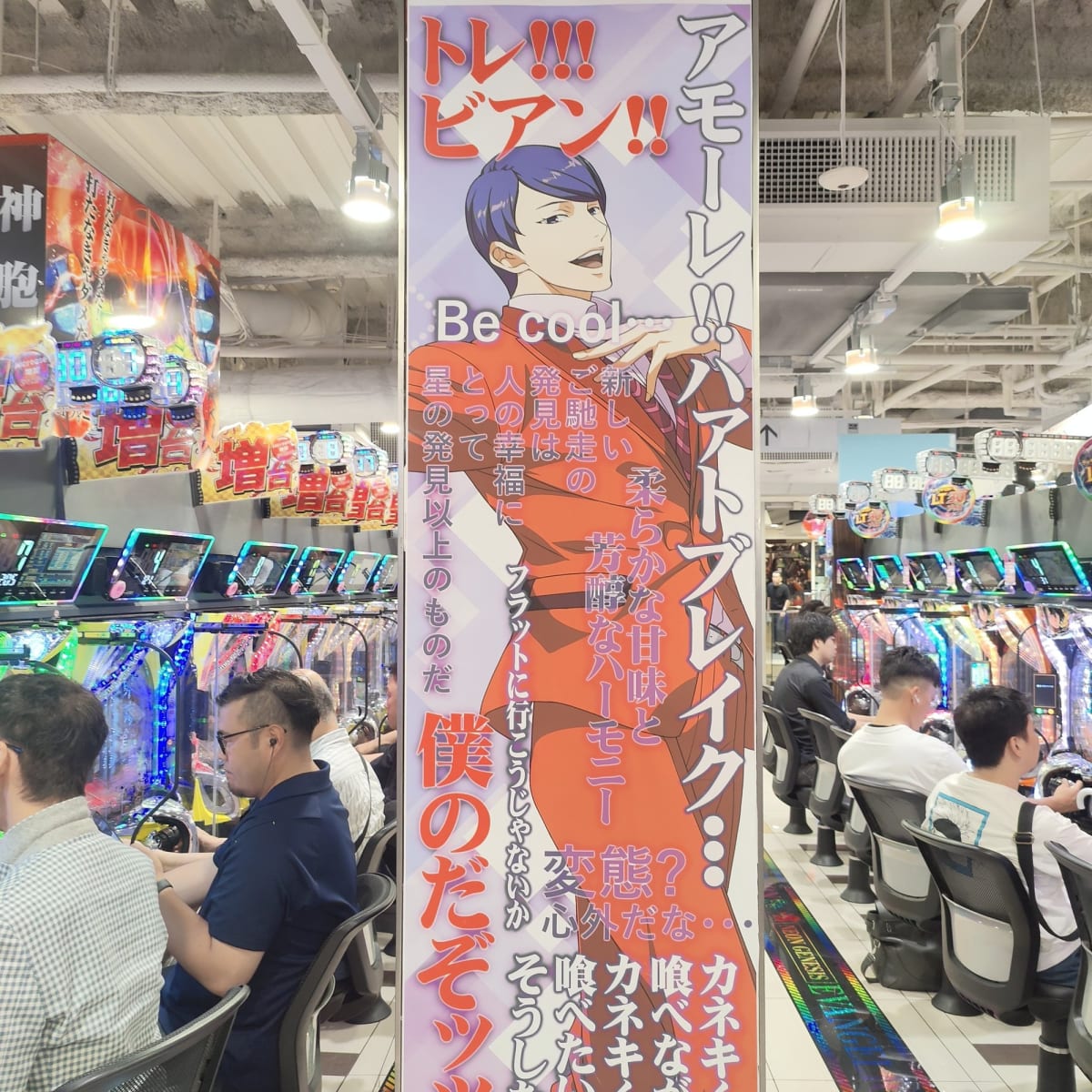
By evening we’d wandered into one of Ueno’s pachinko halls, and I still don’t fully understand the game, but I understand the experience: rows of chairs facing walls of vertical pinball machines, a life-sized Evangelion pilot statue lineup staring down at the players, jackpot chimes layered on top of jackpot chimes, and absolutely nobody making eye contact with anyone else in the room. It’s one of the strangest indoor spaces I’ve been in — part casino, part anime shrine, part sensory deprivation tank running in reverse. We didn’t play. We didn’t need to. Just standing in the doorway for two minutes told me more about a certain slice of Japanese nightlife than any guidebook paragraph could have.
Ueno’s covered arcade — different from Ameyoko, running under a canopy of shell-shaped lantern signs advertising a four-hundredth-anniversary festival for Kaneiji temple — looked almost empty by the time we walked through it after dark, bicycles parked in loose rows, a couple of guys checking their phones under the lights, restaurant signs promising yakiniku that was “tasty, quick, value.” During the day this street is packed. At night it goes quiet and a little eerie in the good way, all that neon working overtime for a much smaller audience, which somehow made the signage more impressive rather than less.

An Asahi in Front of the Shuttered Fish Stalls
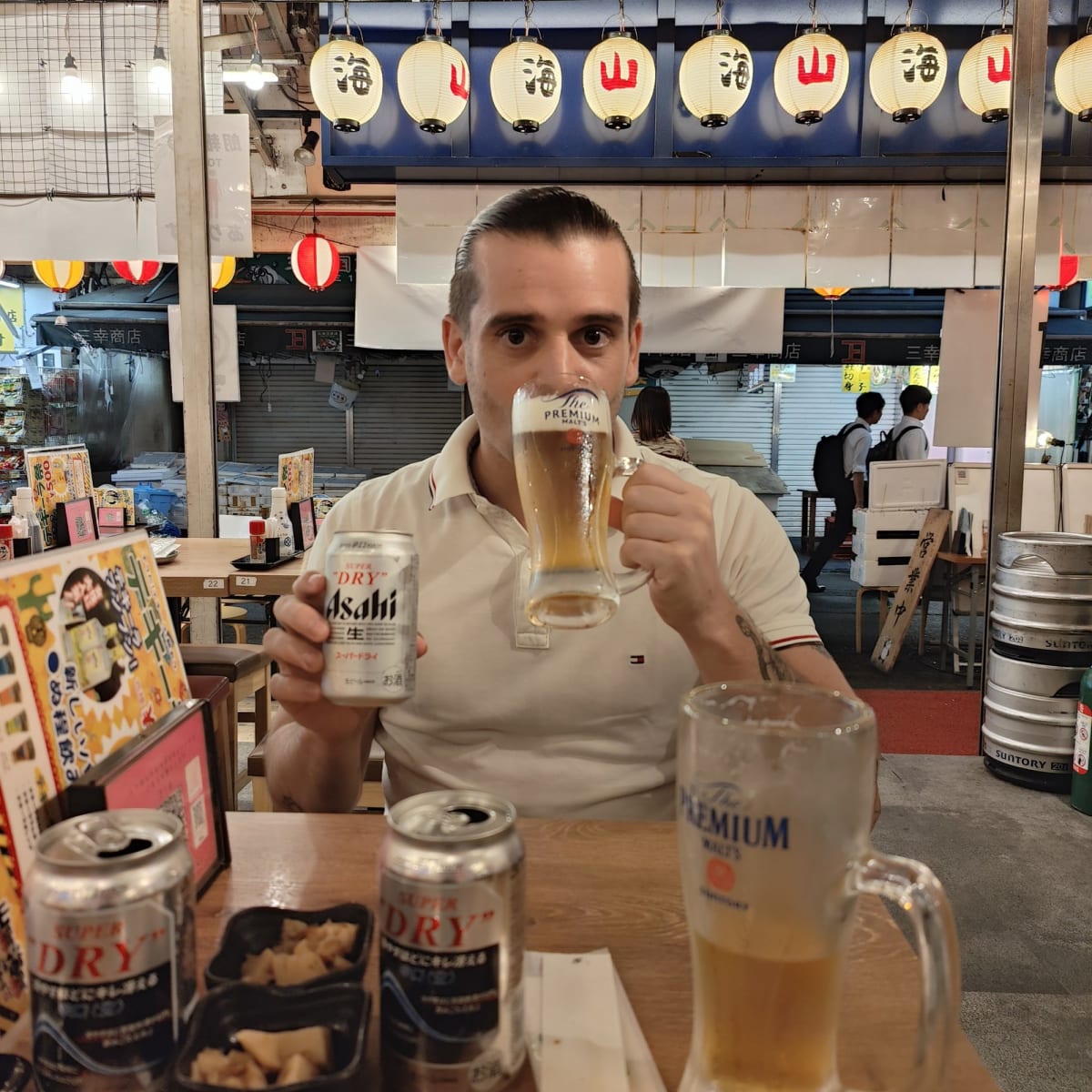
We found an outdoor izakaya counter set up right where Ameyoko’s fish vendors had been hours earlier — same stalls, shutters down for the night, a string of blue-and-white lanterns reading “umi, yama” (sea, mountain) over our heads. I held up my can of Asahi Super Dry next to a proper mug of it, mid-sip, with the closed shopfronts of the market behind me. This is the trick of Ueno at night: the same physical space that was a shouting, elbow-to-elbow market at 5pm quietly turns into rows of plastic stools and beer taps by 8, and almost nobody who works there during the day is still around to see it happen.
Bentendo, Floating on Shinobazu Pond
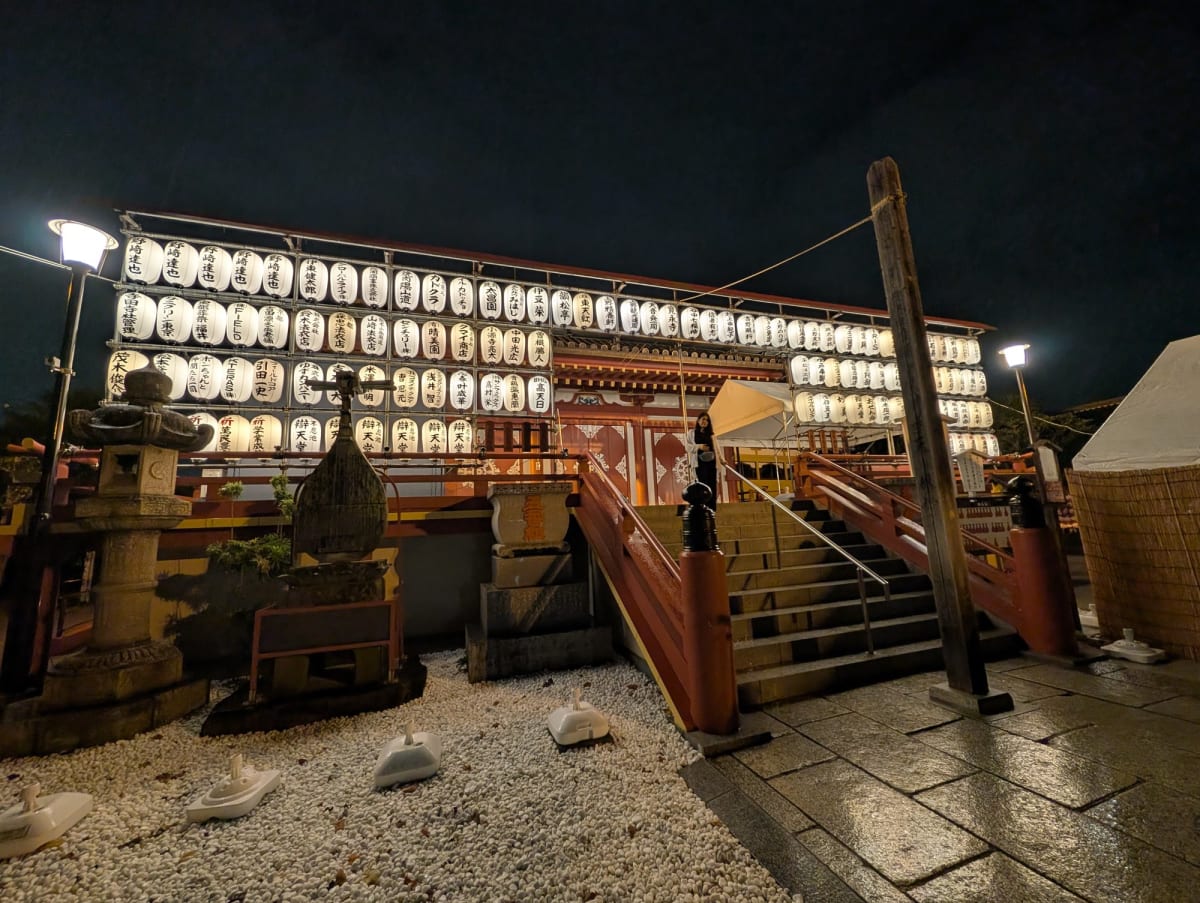
We crossed into Ueno Park after dinner and found Bentendo, the octagonal temple sitting on its own island in the middle of Shinobazu Pond, lit up gold against the night sky, rows of paper lanterns strung along the eaves with donor names printed on every one. Out front, a wooden rack held hundreds of lotus-shaped ema — wish plaques — written in a dozen languages: Korean, Italian, French, Japanese, Spanish, English, all hung by strangers asking for roughly the same things. Health for a parent. Happiness for a family. Safe travels. I read maybe thirty of them and didn’t find a single one asking for anything I wouldn’t have asked for myself.
By Midnight We Were All Friends
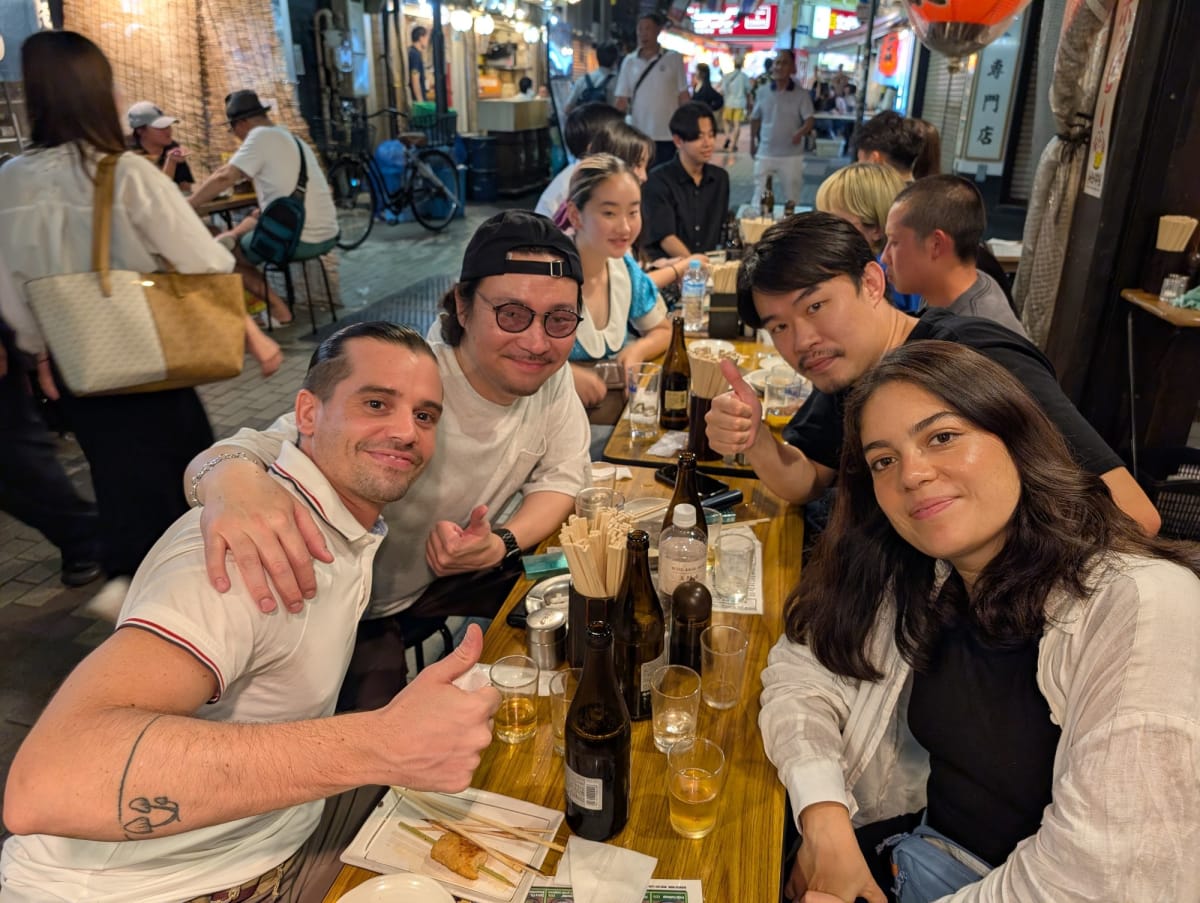
The night ended the way I still think about most when people ask what Japan was actually like: back in the market alleys, at a plastic table crowded with empty bottles and chopstick wrappers, sandwiched between a Mexican guy who’d been living in Tokyo for three years and a Japanese couple who spoke maybe ten words of English between them. Thumbs up, sake poured for people whose names I’d learned twenty minutes earlier, a language barrier that stopped mattering somewhere around the second round. Nobody at that table planned to be there. That’s Ueno’s whole trick, really — Asakusa gives you the postcard, and five minutes away on the Ginza Line, Ueno gives you the actual night.