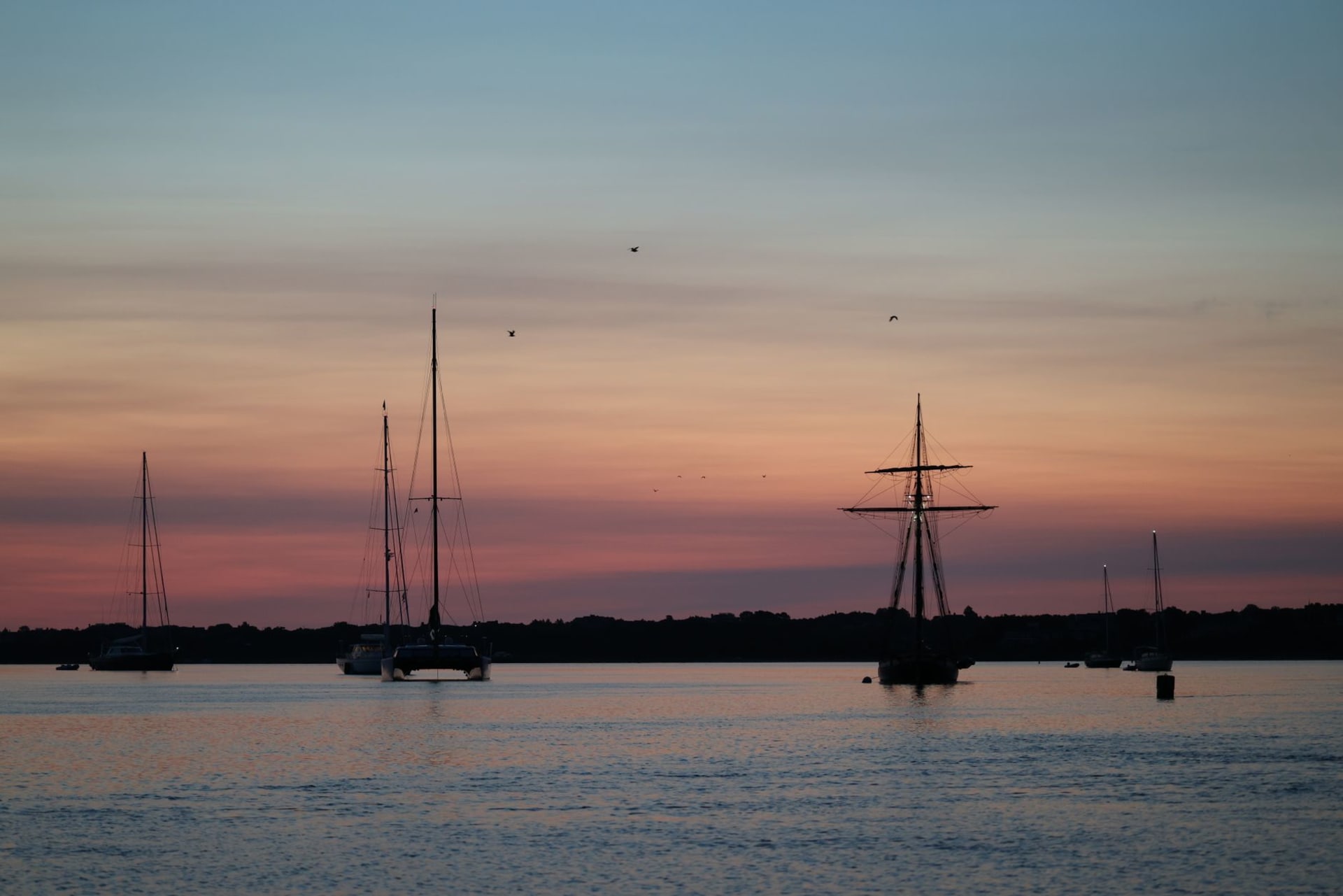
Sag Harbor
"Sag Harbor remembers it was a whaling port long before it was a Hamptons address, and it wears that memory well."
A former whaling port on Long Island's East End where a Greek Revival customs house and a working harbor still outshine the Hamptons glamour creeping in from the neighboring villages. Lia and I climbed the old Whalers' Church steeple, ate lobster rolls on a public dock, and found a town that still smells like salt and cedar shingles rather than money.
Lia and I drove into Sag Harbor from the back roads, past potato fields turning to vineyards turning to shingled cottages, and the town announced itself with a church steeple that looked more New England than Long Island. That’s the Old Whalers’ Church, its Egyptian Revival tower rising over Union Street like a leftover from the town’s nineteenth-century boom, when Sag Harbor was one of the busiest whaling ports in America — busier, for a time, than New York City itself. Unlike its glossier neighbors East Hampton and Southampton, Sag Harbor kept its working waterfront intact, and that history is still legible on nearly every block.
Main Street and the whaling museum
We spent our first morning wandering Main Street, past the American Hotel’s wraparound porch and a run of nineteenth-century storefronts that once served whaling captains and now house bookshops and galleries. The Sag Harbor Whaling and Historical Museum, set in an 1845 Greek Revival mansion with a whale-jawbone archway out front, traces the town’s rise on sperm oil money and its long, slow fade after petroleum killed the trade. Lia lingered longest over the scrimshaw cases — carved whale teeth and bone, the sailors’ idle art from months at sea — while I got stuck reading captains’ logs of voyages that lasted years at a stretch.
The working harbor
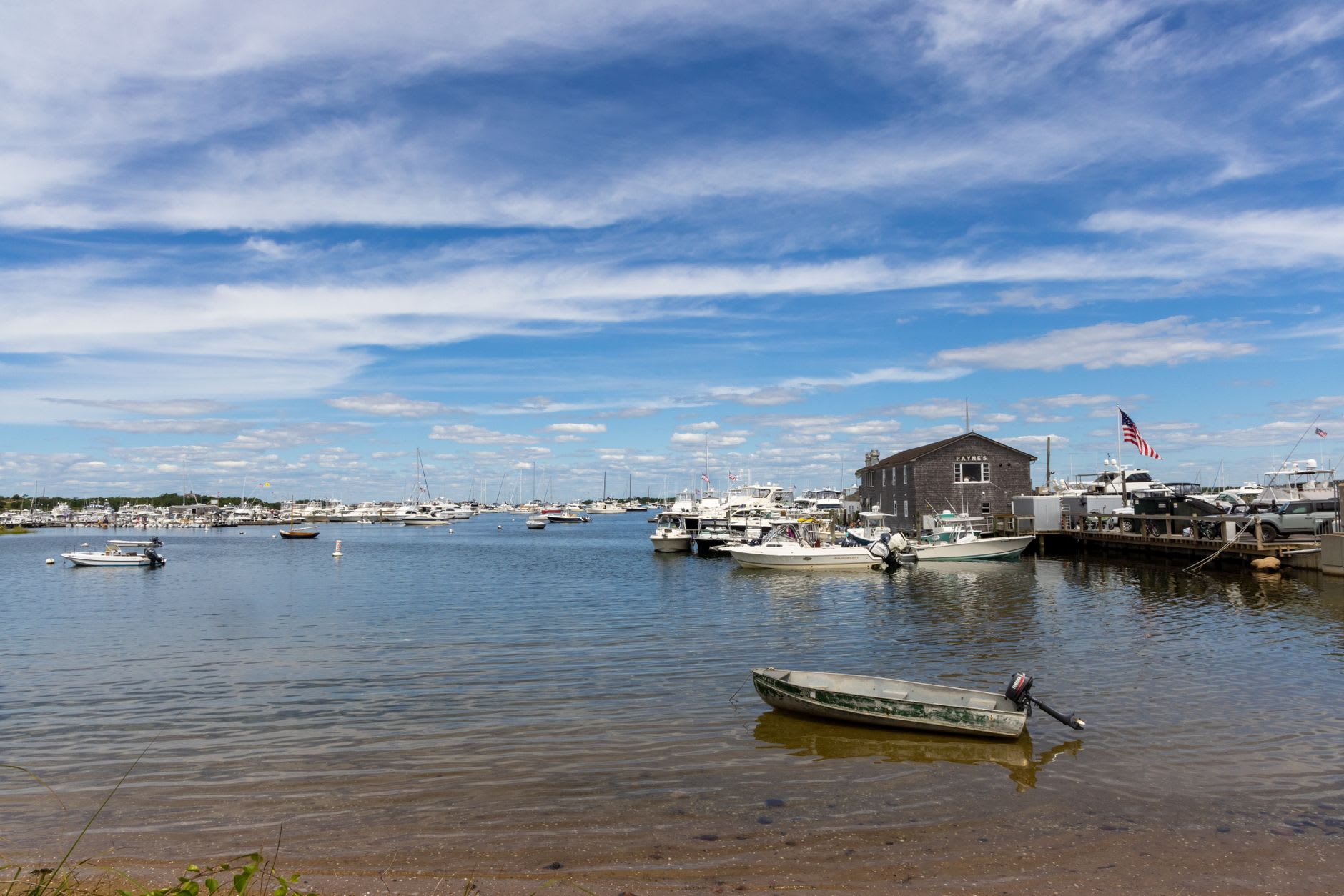
Unlike the manicured marinas elsewhere on the East End, Sag Harbor’s waterfront still feels functional — fishing boats and sailboats share the docks, and the long public pier lets anyone walk out over the water for free. We ate lobster rolls at a shack near the marina, feet dangling over the bulkhead, watching a wooden schooner from the local sailing school tack out toward Shelter Island. In late spring the harbor fills with classic wooden boats for the annual Old Gaffers regatta, their sails patched and their varnish worn, a fitting fleet for a town that never quite gave up its maritime identity.
Literary ghosts and quiet streets
Sag Harbor has long drawn writers escaping the city — John Steinbeck lived and sailed from here for years, and his modest waterfront property is still pointed out by locals with a certain proprietary pride. We wandered the residential lanes off Madison Street, past whaling-captain houses with widow’s walks and picket fences, and stopped at Canio’s Books, a beloved independent shop that has hosted readings for decades. It’s a town that rewards slow walking rather than a checklist of sights — better to let an afternoon dissolve between the harbor and the porches.
Getting There
Sag Harbor sits on the North Fork side of Long Island’s East End, about a three-hour drive from Manhattan via the Long Island Expressway and Route 27, longer on a summer Friday when Hamptons traffic backs up for miles. The Hampton Jitney and the Long Island Rail Road both run from the city to nearby stations, with local taxis or rideshares covering the last few miles. From spring through fall, the small passenger-and-car ferry across Shelter Island Sound also connects Sag Harbor to the North Fork, a scenic shortcut worth timing your trip around.
Keep exploring
More of New York
Keep exploring
More from New York
 united-states
 Saratoga Springs
An upstate New York town built on bubbling mineral springs, thoroughbred racing, and Victorian ambition. Grand hotels once lined its broad avenues; today the springs still flow and the oldest racetrack in America still thunders each August. Elegant, unhurried, and a little bit theatrical.
Explore united-states
 Skaneateles
A Finger Lakes village wrapped around water so clear the town drinks it unfiltered, its Main Street lined with white clapboard shops and the lake spread out like polished glass beyond. Lia and I came for an afternoon and found ourselves still sitting lakeside long after the sun had gone down.
Explore united-states
 Tarrytown
A Hudson River village steeped in Washington Irving's ghost stories, where a Gilded Age castle and a rambling old estate sit within walking distance of a Main Street strung with autumn lights. Lia and I chased the Headless Horseman's route at dusk and came away convinced this stretch of the Hudson Valley invented American gothic.
Explore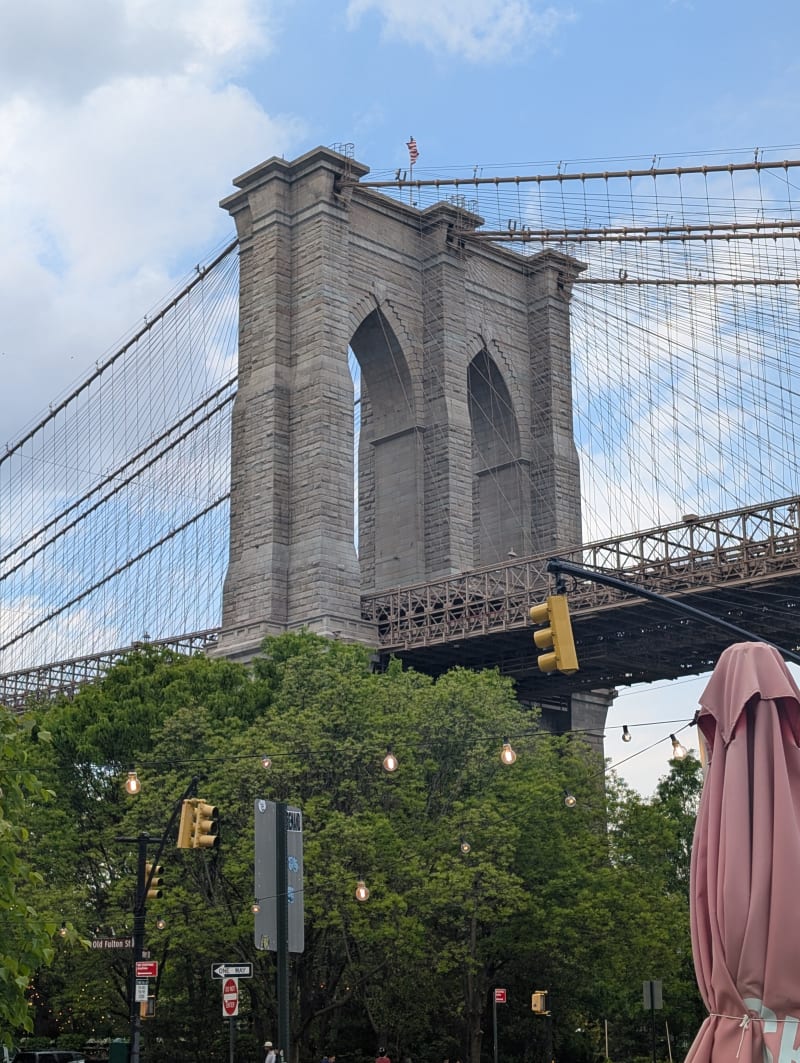 united-states
 Brooklyn
The borough that learned to look back at Manhattan — where brownstone streets give way to waterfront parks, the bridge lands on cobblestones, and the best pizza in New York starts an argument nobody wants to end.
Explore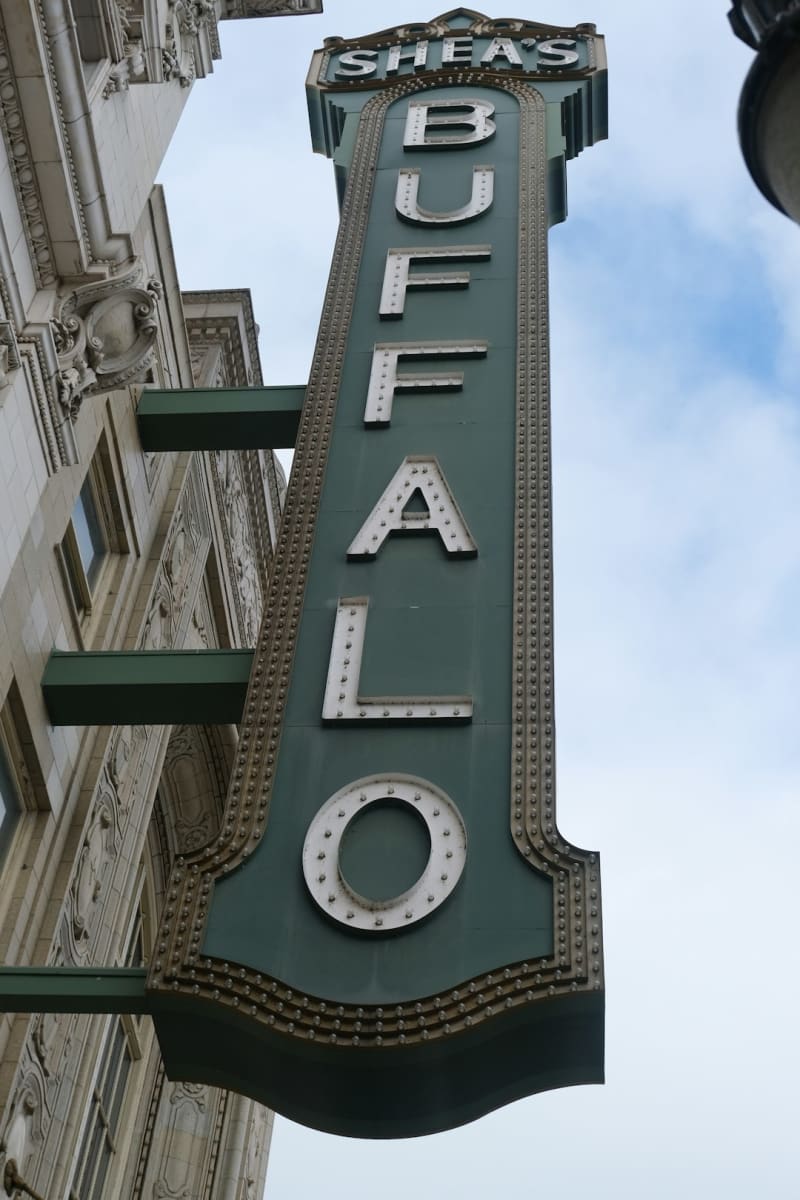 united-states
 Buffalo
We expected snow jokes and left in love with the architecture. Buffalo turned out to be a city of Frank Lloyd Wright houses, grain elevators reborn as bars, and wings so good they ruined every imitation for us forever. Its waterfront, once rusting, now hums.
Explore united-states
 Central Park
Four kilometres of green held inside the grid — where the city steps back and lets something older take over, and the skyline watches from the edges like it has always been there.
Explore