
St Davids
"The city is the size of a village and the cathedral is enormous and the contradiction resolves perfectly once you're inside."
Britain's smallest city — population seventeen hundred — built around a purple sandstone cathedral hidden in a hollow above the Pembrokeshire coast.

The Hidden Cathedral
St Davids earned city status in 1995 because it has a cathedral — that’s the British rule, population irrelevant — but the cathedral has been here since the sixth century when David, Wales’s patron saint, established a monastic community in this particular hollow. The hollow is the key. The cathedral is invisible from the surrounding streets; it doesn’t announce itself with a spire above the roofline. You walk down a path from the cross-shaped city centre and it appears below you, in its own small valley, purple-grey and enormous.
The nave is Norman, the proportions are overwhelming in the way that serious medieval buildings are overwhelming, and the floor slopes upward from west to east at a gradient noticeable enough to feel intentional even when you’re told it’s subsidence. The choir screen is fifteenth-century; the painted ceiling is sixteenth-century; the tomb of Edmund Tudor — father of Henry VII, grandfather of Henry VIII — is here because these things end up in cathedrals.
What I like best is the light. The windows are mostly clear glass in the nave, and in the afternoon the sandstone absorbs the light and radiates it back in a warm rose-purple that changes everything it touches. I sat in the nave for half an hour and watched the light move. No one came to tell me to move along.
The Bishop’s Palace
Immediately adjacent to the cathedral, across the Alun stream, are the ruins of the medieval Bishop’s Palace — a set of roofless arcaded halls and private apartments built in the fourteenth century when the bishops of St Davids were among the most powerful churchmen in Wales. The arcaded parapet along the great hall is the most elegant thing — a carved arcade running along the roofline that served no structural purpose and was clearly built to impress.
Standing in the empty great hall with the arch of the sky above it and the cathedral tower visible over the ruin wall, I felt the particular atmospheric quality that the best ruins carry: the shape of the space still holds, the activity is absent, and the gap between those two facts becomes the point.
The Coast at the Edge
St Davids sits a mile from the Pembrokeshire coast, and the paths out to the headlands are walkable from the city centre. St Non’s Bay, named for David’s mother, has a ruined chapel and a holy well — the kind of place that has been sacred for long enough that the original reason has become the secondary reason. A more recent Celtic pilgrimage chapel was built nearby in the 1930s in a style that tries to echo the original and mostly succeeds.
The coast path north takes you to Whitesands Bay, a surf beach where the Atlantic comes in clean and powerful, and to St Davids Head, the westernmost point of the Pembrokeshire peninsula, where the Iron Age hillfort sits above the sea and the Preseli Hills are visible to the northeast — the same hills from which the bluestones of Stonehenge were quarried and transported, somehow, to Wiltshire.
Lia surfed Whitesands in October with a borrowed wetsuit and cold Atlantic water at about fourteen degrees. She described it as invigorating in the way that cold things are invigorating when you survive them.
Eating in a City of Seventeen Hundred
The Cathedral Close has a refectory that does good lunch food in a vaulted room. The city’s restaurants are few but decent — the focus is on local crab and lobster from the coast, Welsh beef from the farms inland, and the vegetable growing that the mild climate of this far corner of Wales makes possible.
The Saturday market is the best time to stock up if you’re self-catering: local cheese, bread from a bakery that supplies most of Pembrokeshire, vegetables in sizes that suggest they’ve been competing.
When to go: May and June for the wildflowers on the coastal path and the sea approaching swimable. September is the best month — the light is extraordinary, the surf at Whitesands is at its most consistent, and the city is quiet enough to hear the jackdaws in the cathedral tower.
Keep exploring
More from Wales
 wales
Tenby
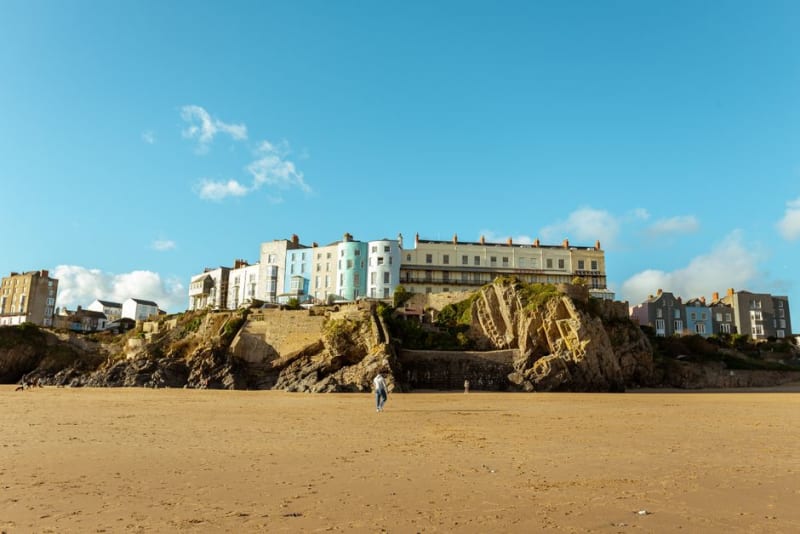
A pastel-painted harbor town wrapped in medieval walls on the Pembrokeshire coast, where the tide decides what your beach looks like twice a day.
Explore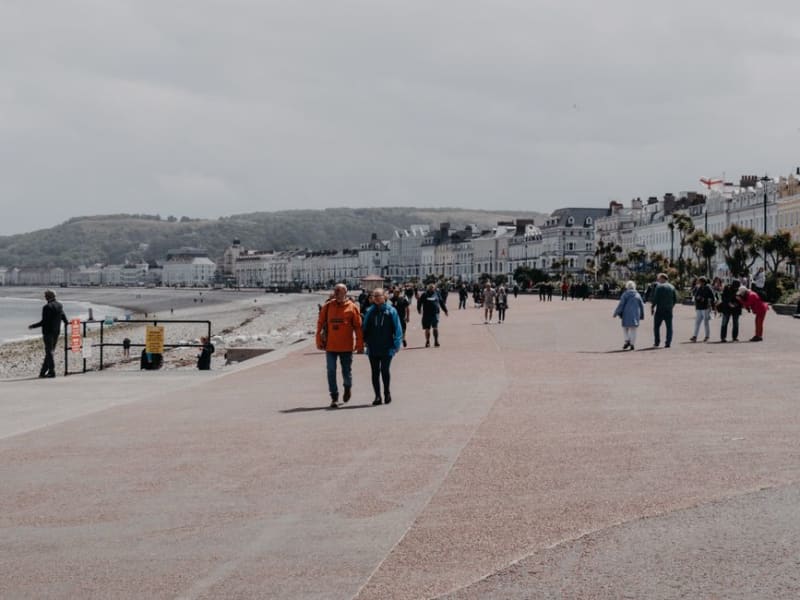 wales
Aberystwyth
A windswept Cardigan Bay university town where a Victorian cliff railway hauls you above the rooftops for views that make the drive worth it.
Explore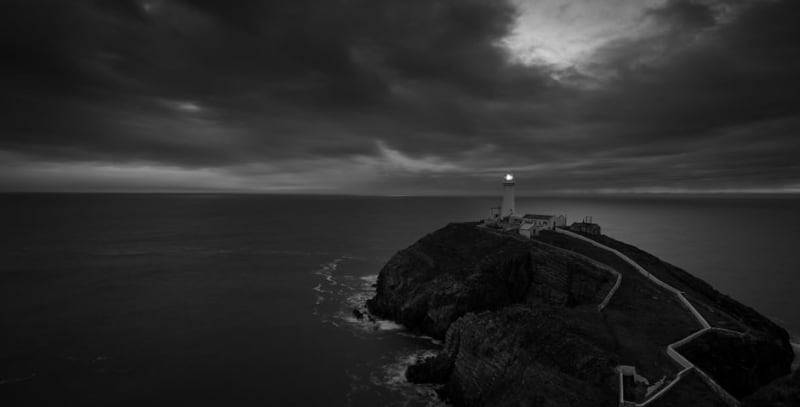 wales
Anglesey
A tidal island off north Wales with quiet beaches, ancient burial chambers, and the famously long-named village everyone stops to photograph.
Explore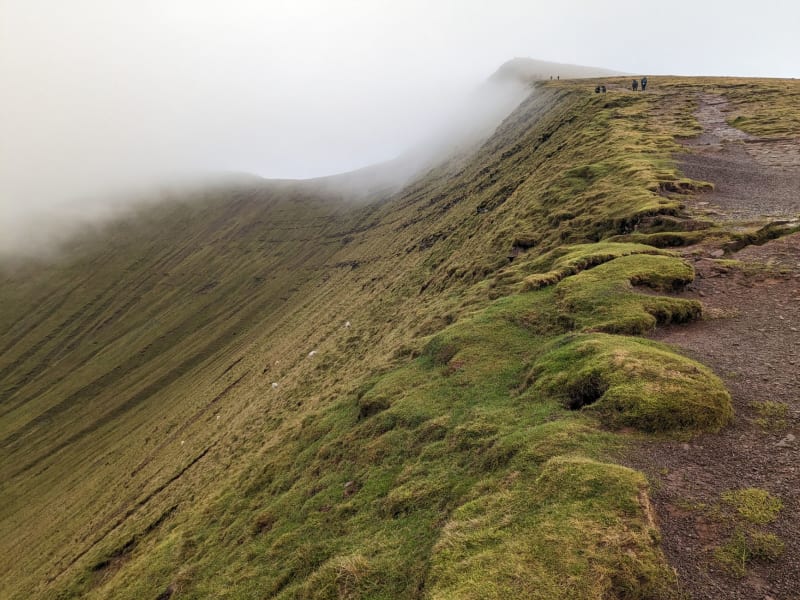 wales
Brecon Beacons
A wide upland plateau of sandstone and bog, dark sky above and waterfalls below, where Wales keeps its most unpeopled landscapes.
Explore wales
Caernarfon
A north Wales town dominated by a UNESCO-listed 13th-century castle where Princes of Wales have historically been formally invested.
Explore wales
Cardiff
A post-industrial capital that rebuilt itself around a Victorian covered market and a bay full of unlikely ambition.
Explore