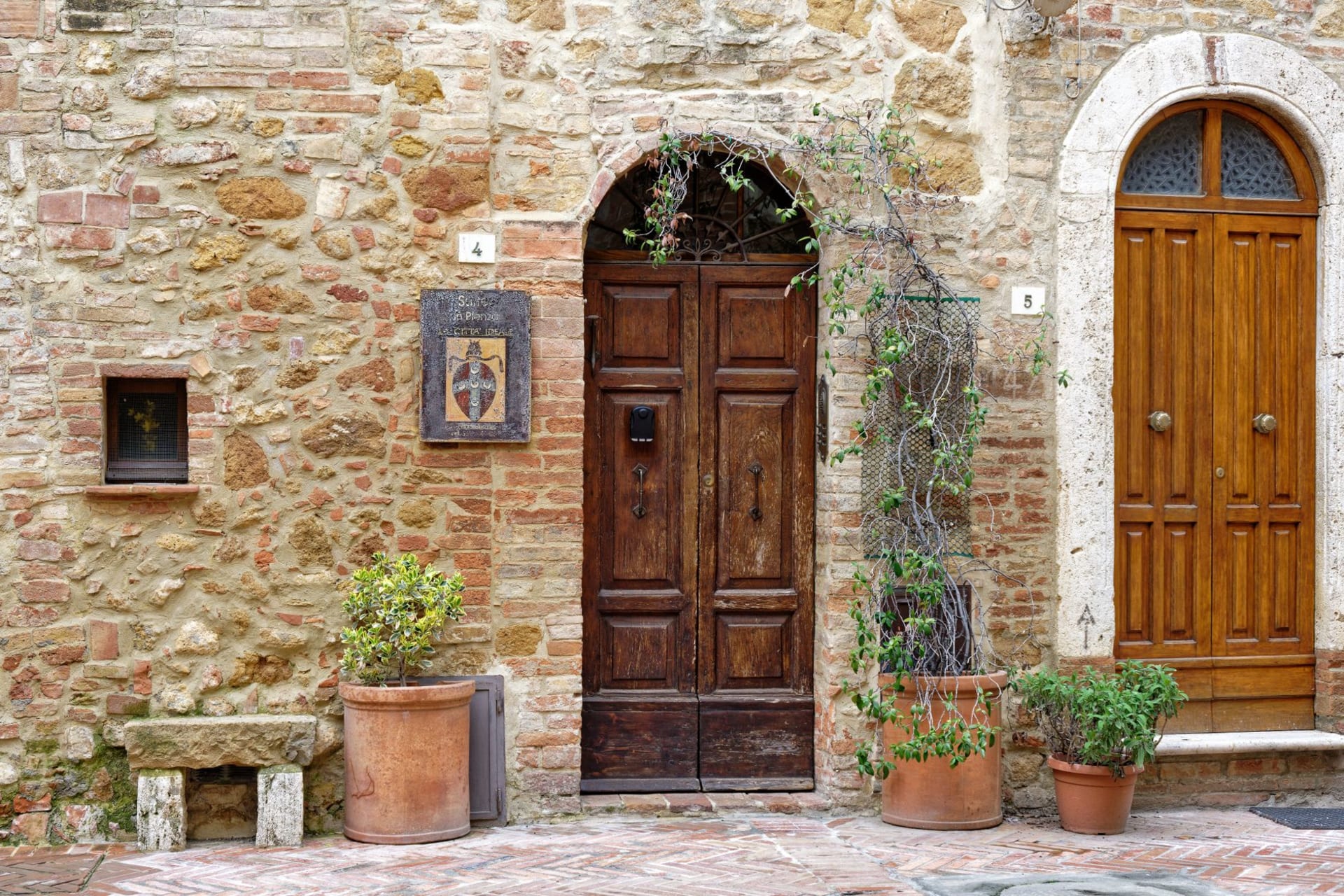
A Renaissance pope redesigned his home village into an ideal city in the 1460s, stopped when he died, and what remained is a perfectly proportioned town of about 2,000 people and one of the best views in all of Tuscany.

The Pope’s Unfinished Ideal
Aeneas Silvius Piccolomini was born in Corsignano, a small agricultural village in the Val d’Orcia, in 1405. He became Pope Pius II in 1458, and almost immediately commissioned the Florentine architect Bernardo Rossellino to redesign his birthplace as a model Renaissance city. The result — renamed Pienza, city of Pius — was completed in three years, which is why it feels so coherent: the cathedral, the papal palace, the bishop’s palace, and the town hall all face a single piazza designed as a unified composition. Then the pope died in 1464 and the project stopped exactly where it was.
The town has perhaps 2,000 residents. The main street — Corso il Rossellino — takes about four minutes to walk end to end. What it lacks in scale it makes up for in geometric calm: the proportions are right in a way that most places are not, and you feel it before you can explain it.
The View From the Garden
Behind the cathedral, the Piccolomini Palace has a garden that looks south over the Val d’Orcia. I walked in on a Tuesday morning in October and paid four euros and had the garden almost entirely to myself. The view from the terrace is the one you’ve seen in photographs: a valley of rolling pale-green hills striped with cypress trees, mist in the low points, a road curving through it toward some invisible destination. It’s the landscape that became the shorthand image for Tuscany, and it earns that status.
Standing there, I understood why the pope wanted to build something permanent here. There’s a feeling in that view of things being in the right proportion to each other — land, sky, distance — that’s rare enough to want to formalize.
Pecorino and the Reason to Stay for Lunch
Pienza is famous for one specific thing beyond the architecture: Pecorino di Pienza, a sheep’s milk cheese made in the Val d’Orcia that comes fresh, semi-aged, and aged to a crumbly intensity. The shops on Corso il Rossellino are full of it, alongside truffle products, local wine, and the particular aggressive charm of cheese vendors who will cut you a sample before you’ve finished your sentence.
Lia bought a wedge of the aged version — hard, pale, with a sharp clean finish — and we ate it on a bench in the piazza with bread from the bakery two doors down. This was technically lunch. It was correct.
The town has a handful of restaurants that improve significantly once the day-trip buses leave. I had a plate of hand-rolled pici with a ragù of cinghiale that had been cooking long enough to lose all its aggression, thick and dark in a way that required bread in quantity.
The Cathedral Floor Problem
The Duomo’s interior is serene and mostly early Renaissance — pale stone, clean proportions, good light through the windows. But the building has a structural problem that Rossellino knew about when he built it: the apse end is undermined by the hillside below, and the floor has been tilting and cracking for 550 years. The cracks have been repaired and re-cracked so many times that they’re part of the texture now, a reminder that even ideal cities have to contend with geology.
There’s something instructive in that, though I’m not sure it would have comforted the pope.
When to go: April through June for the green Val d’Orcia at its most vivid, or September and October for golden light and harvest atmosphere. Midday in July and August belongs to the tour buses — arrive before 10 AM or after 4 PM. The town is nearly deserted from November through March and strangely lovely for it.
Keep exploring
More from Tuscany
 tuscany
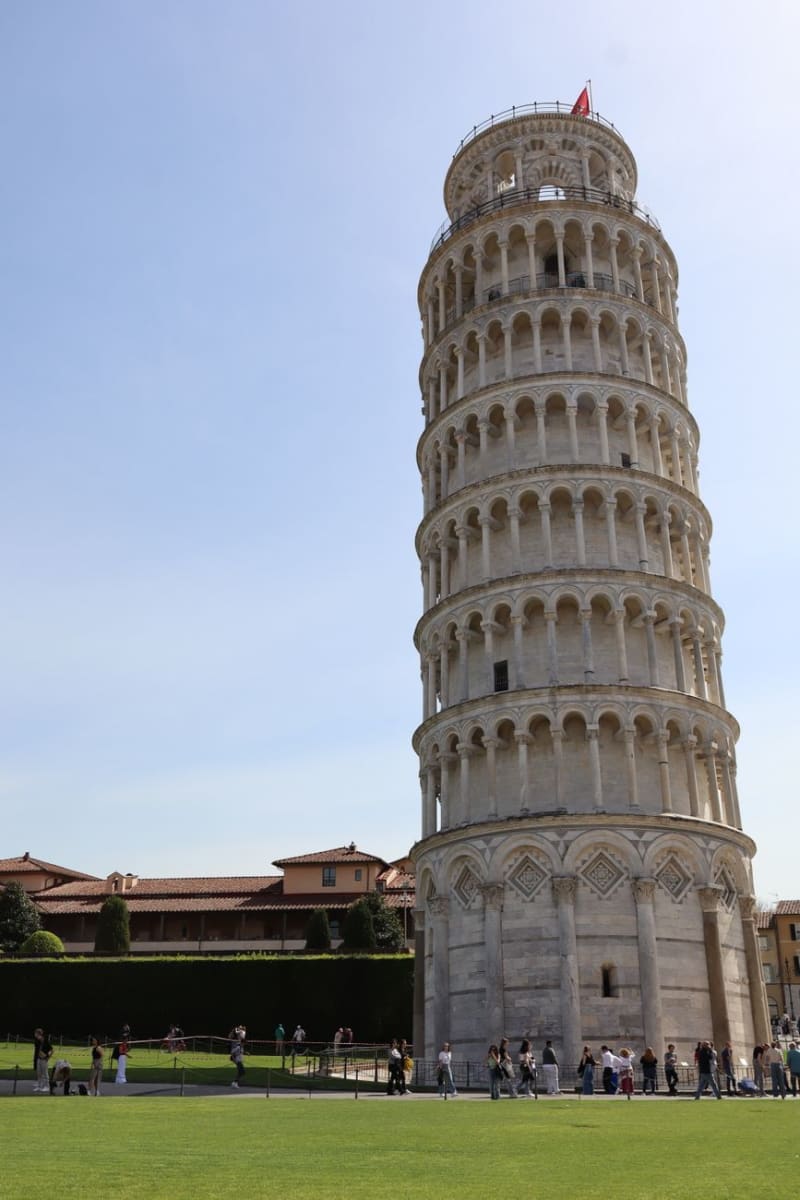
 Pisa
A Tuscan university city forever upstaged by its leaning tower, with a riverfront of faded palazzi, a fierce student energy, and a famous square that is far stranger than its postcards admit.
Explore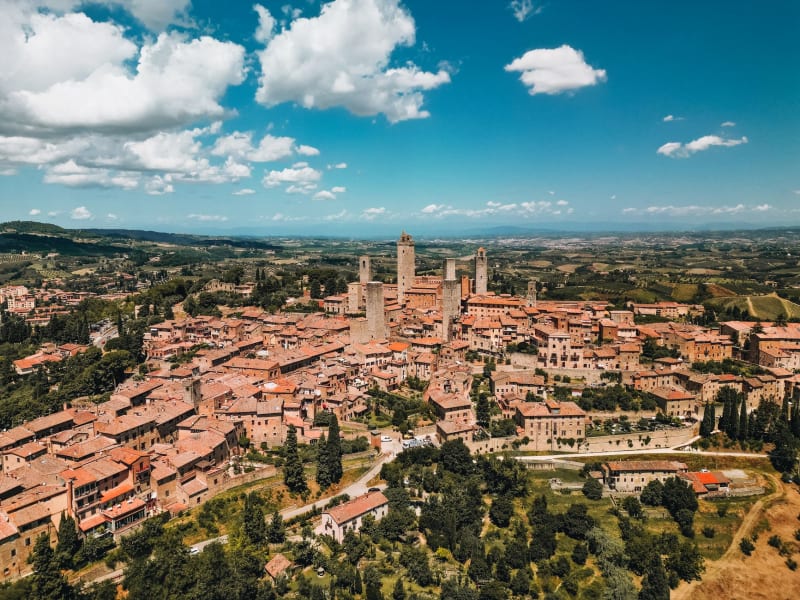 tuscany
 San Gimignano
A hilltop town whose medieval towers survive not because anyone planned it but because no one had enough money to tear them down, and the accidental result is one of the most distinctive skylines in Italy.
Explore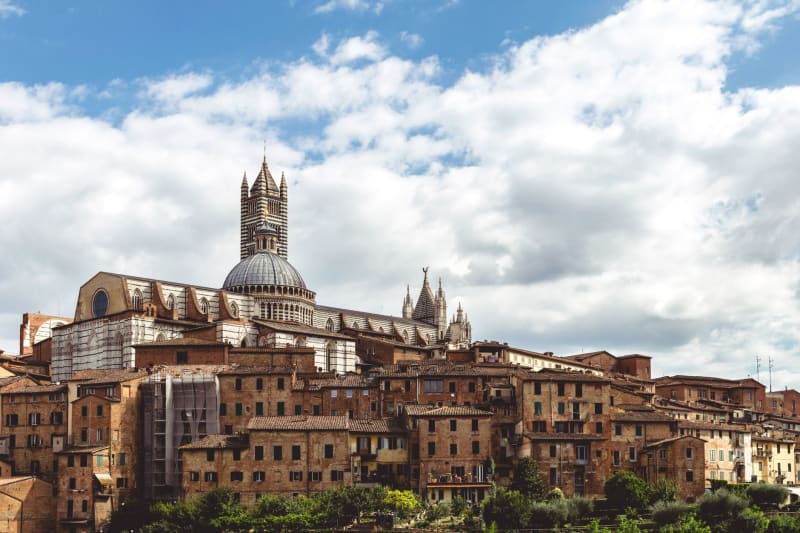 tuscany
 Siena
A medieval city so intact it feels like a film set, except the locals really do run horse races through the main square twice a year and mean it.
Explore tuscany
 Val d'Orcia
A UNESCO-listed valley south of Siena where the landscape of rolling clay hills, solitary cypresses, and pale dirt roads became the visual template for what people imagine when they imagine Tuscany.
Explore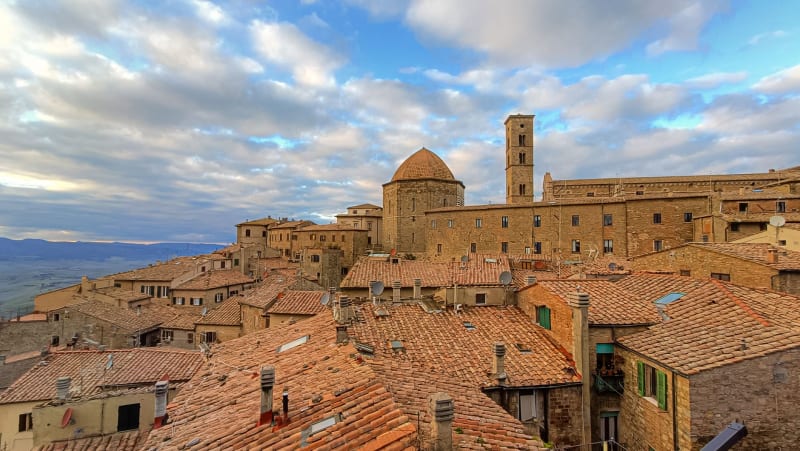 tuscany
 Volterra
An Etruscan city on a windswept plateau that has been continuously inhabited for 2,700 years and still feels faintly prehistoric, with an alabaster-carving tradition that outlasted every empire that passed through.
Explore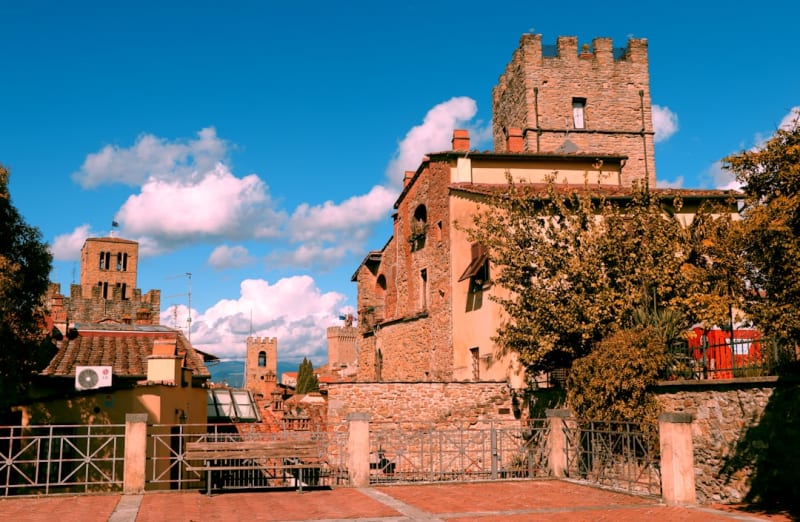 tuscany
 Arezzo
A working Tuscan city whose Basilica di San Francesco holds Piero della Francesca's fresco cycle, and whose antiques market spills across a medieval square once a month.
Explore