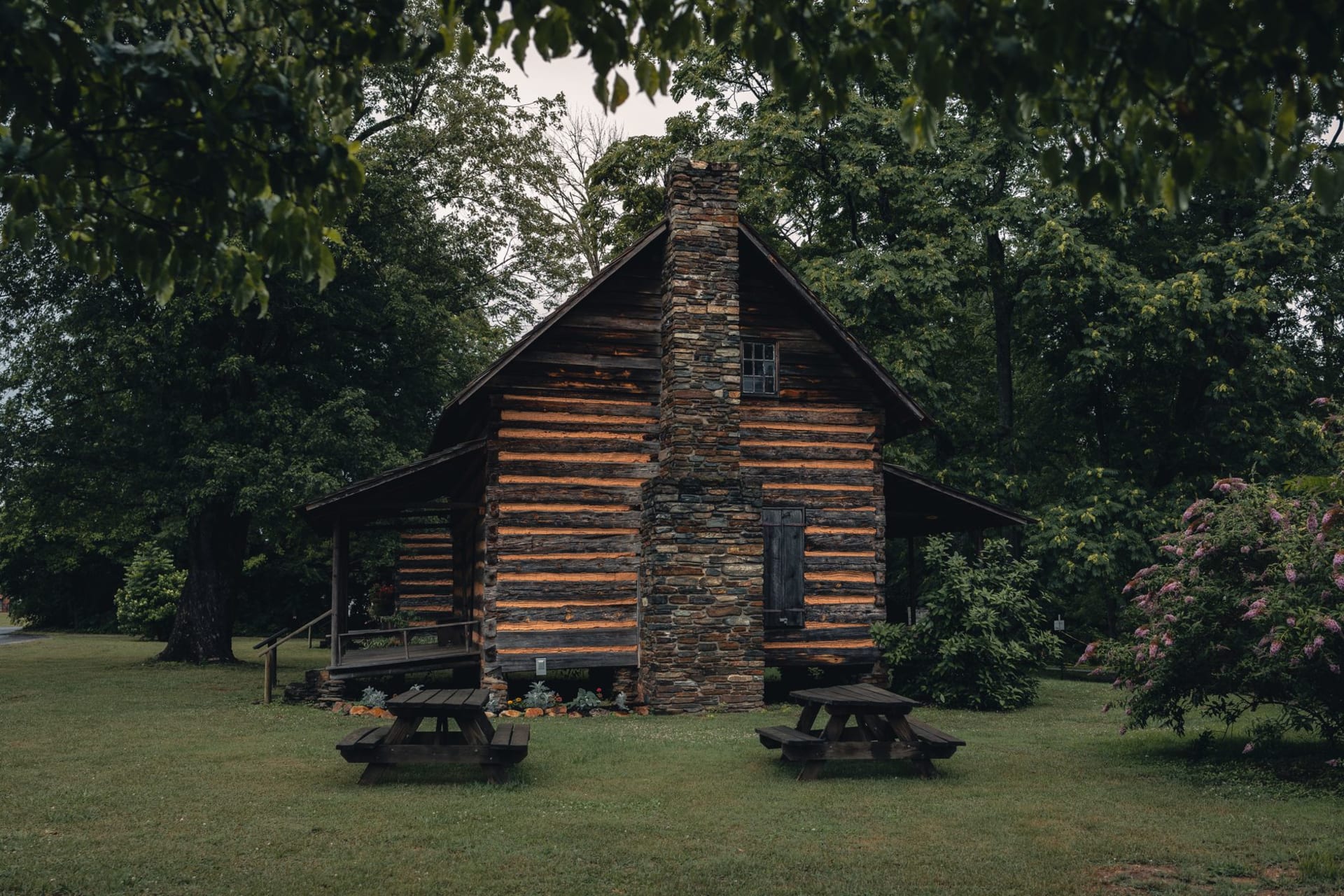
A national military park on the Tennessee River where 23,746 men were killed, wounded, or missing in two April days in 1862 — and where the land itself, quiet and green, still holds the shape of what happened.

Shiloh is in the southwest corner of Tennessee, near the Mississippi border, two hours from Nashville and two hours from Memphis. It’s not on the way to anywhere. You have to decide to go there. I decided to go there on a Tuesday in April, when the park was nearly empty and the peach trees in the Peach Orchard — where some of the worst fighting on the second day occurred — were in bloom. Pink blossoms over ground where thousands of men died. The combination was almost too much to look at directly.
What Happened Here
On April 6 and 7, 1862, the Union Army of the Tennessee under Ulysses S. Grant was surprised by a Confederate attack led by General Albert Sidney Johnston. The first day went badly for the Union; the second day, reinforced, they pushed the Confederates back. Total casualties over two days: 23,746, more Americans killed and wounded in 48 hours than in all previous American wars combined. The scale was incomprehensible to those who experienced it and difficult to absorb even now with the context of knowing what the rest of the war would bring.
The terrain is still recognizably the battlefield terrain. The ravines and ridgelines and the position of Shiloh Church on the Hamburg-Savannah Road are all as they were. The park service has maintained the landscape instead of developing it. This turns out to matter enormously for understanding what you’re looking at.
The Sunken Road and Bloody Pond
The Sunken Road is a natural depression that the Union line used as a fortified position on the first day. The Confederates attacked it thirteen times. The Union commander Benjamin Prentiss held it for six hours, buying enough time for Grant to form a new defensive line. Prentiss was eventually captured; his division had 2,320 casualties. The Confederates called the position the Hornets’ Nest because of the density of fire from it.
I walked the Sunken Road slowly, reading the markers. The road surface is a worn hollow through the trees now, perfectly quiet. It is easy to imagine the tree line. It is hard to imagine the fire.
Bloody Pond, nearby, is where both Union and Confederate wounded crawled to drink during the battle. The water reportedly ran red. The pond is still there, small and dark under overhanging trees. I stood at its edge for several minutes without doing anything useful.
The Cemetery
The Shiloh National Cemetery, established in 1866, holds 3,584 Union dead — 2,359 of them unknown. The Confederate dead are buried in five trenches elsewhere on the field; they are not in the national cemetery. The distinction is quiet but significant. The white stone markers of the Union graves are arranged in neat rows on a bluff above the Tennessee River, and the river below is wide and indifferent and exactly as it was in 1862.
The Driving Tour and the Quiet
The park offers a 9.5-mile self-guided driving tour with audio. I drove it once, then parked and walked sections. The park is genuinely undeveloped — no concession stands inside the park boundaries, no gift shop at the field itself. There is a visitor center with an excellent museum that gives context before you go out to the landscape. Use it.
The hardest thing about Shiloh is that it’s beautiful. The rolling farmland, the Tennessee River, the old-growth oaks along the Hamburg Road, the peach trees — the landscape is working against the understanding of what it means to stand here. This tension doesn’t resolve.
When to go: Late March through May when the peach orchard blooms and the park’s vegetation is at its most historically evocative — the undergrowth of April 1862 was early spring, much as it appears now. Weekdays are strongly preferred; the park can absorb weekend crowds but the contemplative quality suffers. October is also excellent. The park is open year-round and admission is free with a national parks pass.
Keep exploring
More from Tennessee
 tennessee
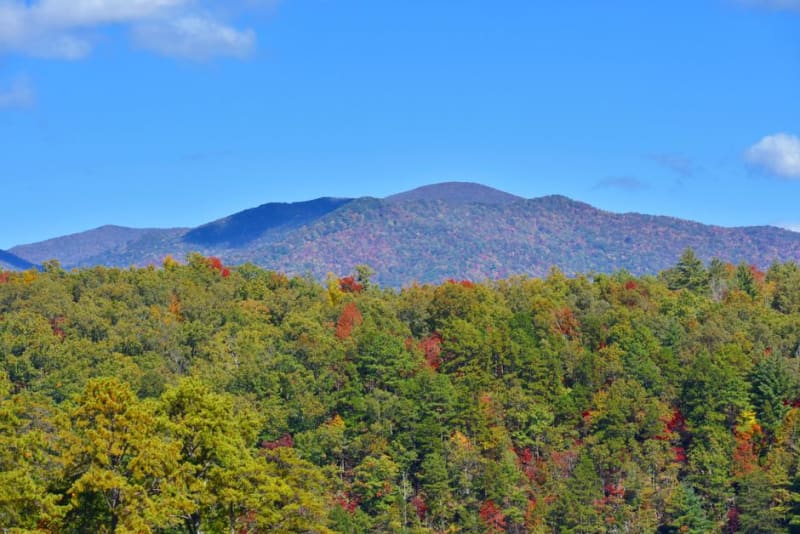
 Cades Cove
A hushed Smoky Mountains valley ringed by ridgelines, still holding 19th-century log cabins, churches, and grazing white-tail deer at dawn.
Explore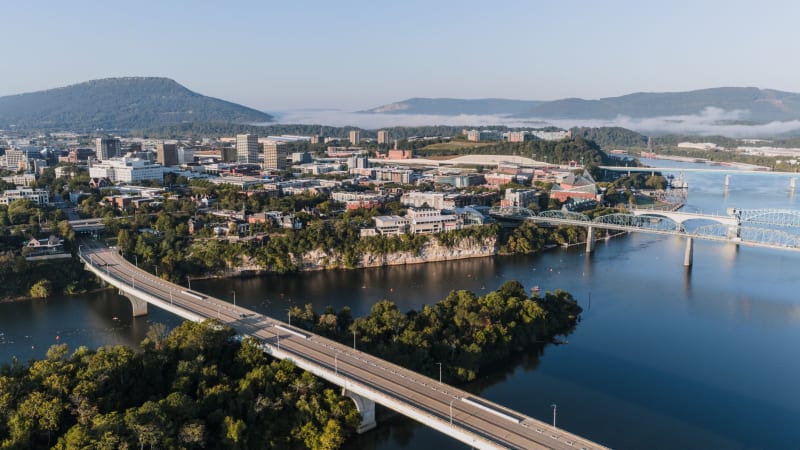 tennessee
 Chattanooga
A former industrial city that rebuilt itself around the Tennessee River and a surprisingly good arts scene, with Lookout Mountain rising above it all like a promise someone actually kept.
Explore tennessee
 Clarksville
A riverside city on the Cumberland River shaped by the rhythms of nearby Fort Campbell, with a walkable historic downtown and unexpected honesty.
Explore tennessee
 Cumberland Gap
A forested mountain pass where Daniel Boone's Wilderness Road once carried thousands of settlers west, still straddling three states in quiet wilderness.
Explore tennessee
 Franklin
A Civil War battlefield town with a Main Street pretty enough to distract you from the fact that some of the bloodiest five hours in American history happened in its front yards.
Explore tennessee
 Gatlinburg
The mountain resort town that is fully, unashamedly itself — pancake houses and moonshine tastings and a SkyBridge that deposits you 680 feet above a valley and dares you not to be impressed.
Explore