Cumberland Gap
"Standing at the Tri-State Peak marker, I put one boot in Tennessee, one in Virginia, and Lia laughed at me for taking the photo too seriously."
A forested mountain pass where Daniel Boone's Wilderness Road once carried thousands of settlers west, still straddling three states in quiet wilderness.

There’s a specific kind of quiet at Cumberland Gap that I wasn’t ready for, especially given how loud the history attached to it is. This is the low notch in the mountains where, starting in 1775, Daniel Boone and a crew of axmen hacked out the Wilderness Road, and where somewhere between 200,000 and 300,000 settlers eventually funneled through on their way into Kentucky and beyond. It’s arguably one of the most consequential few hundred meters of terrain in early American westward expansion, and today it’s a national historical park so uncrowded that Lia and I had entire overlooks to ourselves on a Saturday morning.
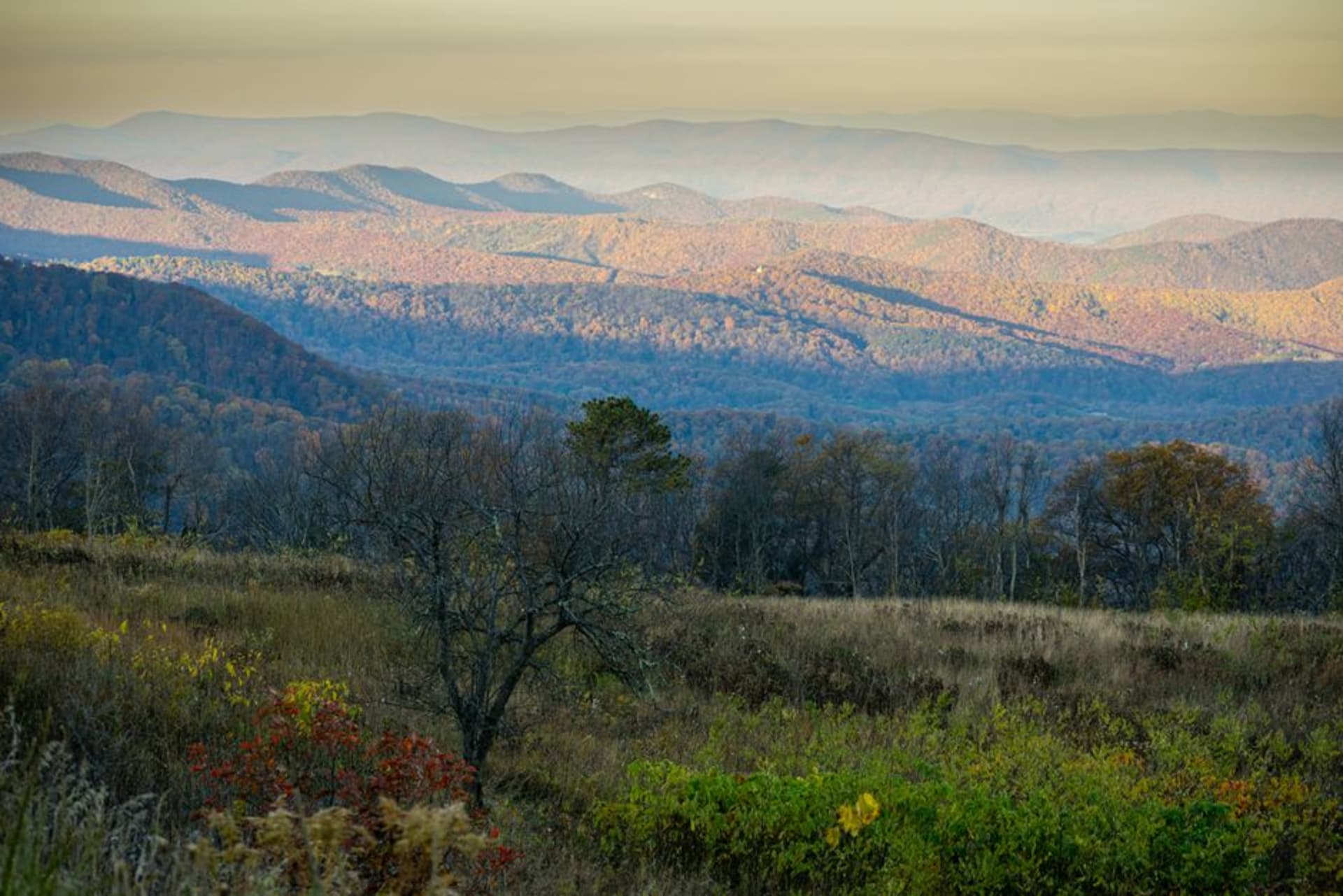
We hiked up to the Pinnacle Overlook, which isn’t a hard climb but does enough climbing to make you appreciate what settlers with wagons and livestock were dealing with, minus the wagons and livestock. From the top, you can see three states at once — Tennessee, Virginia, and Kentucky — folding into each other in green ridgelines that just keep going toward the horizon with no clear edge. I’ve stood at a fair number of scenic overlooks in my life and this one had a different quality to it, less about the view being pretty and more about understanding, physically, why this was the only sane way through for so long.

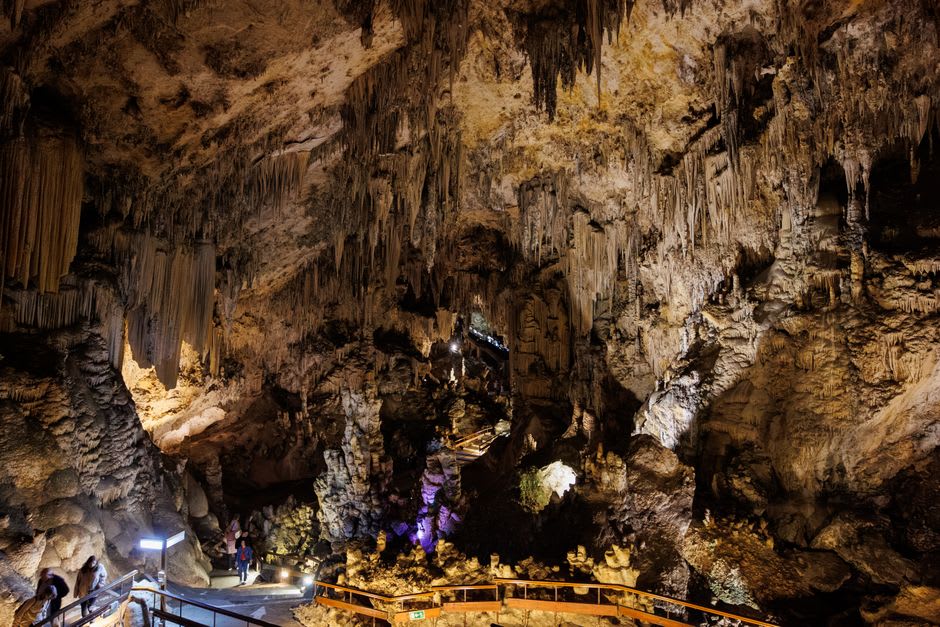
Down below, the small town of Cumberland Gap itself is barely more than a crossroads, a handful of blocks with a couple of cafes and an old train depot, but it has an unhurried charm that fit the whole trip. We found a small local museum with genuinely well-curated exhibits on the Wilderness Road and the Cherokee presence in the area long before Boone showed up, which the bigger battlefield sites elsewhere in the state sometimes gloss over. There’s also a genuinely striking cave system nearby, Gap Cave, that we toured with a ranger and a single other family — cool, dripping limestone passages that felt worlds away from the ridge above.
What stuck with me longest wasn’t the view or even the cave, honestly — it was standing on the Object Lesson Road, the actual restored wagon trace, and realizing how narrow and rough it still is even now. People walked this, pushed carts through this, buried family members along the way. Cumberland Gap doesn’t oversell any of that. It just lets the terrain do the talking.
When to go: Fall for the ridge color from Pinnacle Overlook, or late spring when the trails are green and the humidity of a Tennessee summer hasn’t arrived.
Keep exploring
More from Tennessee
 tennessee
 Franklin
A Civil War battlefield town with a Main Street pretty enough to distract you from the fact that some of the bloodiest five hours in American history happened in its front yards.
Explore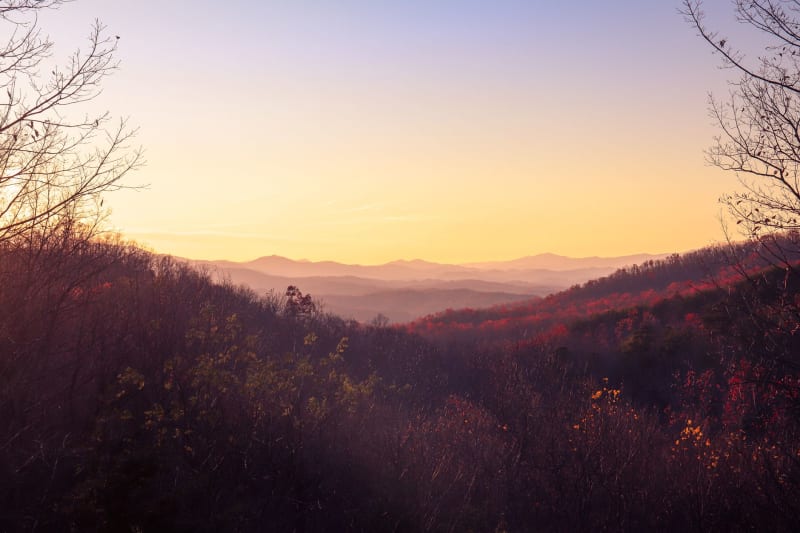 tennessee
 Gatlinburg
The mountain resort town that is fully, unashamedly itself — pancake houses and moonshine tastings and a SkyBridge that deposits you 680 feet above a valley and dares you not to be impressed.
Explore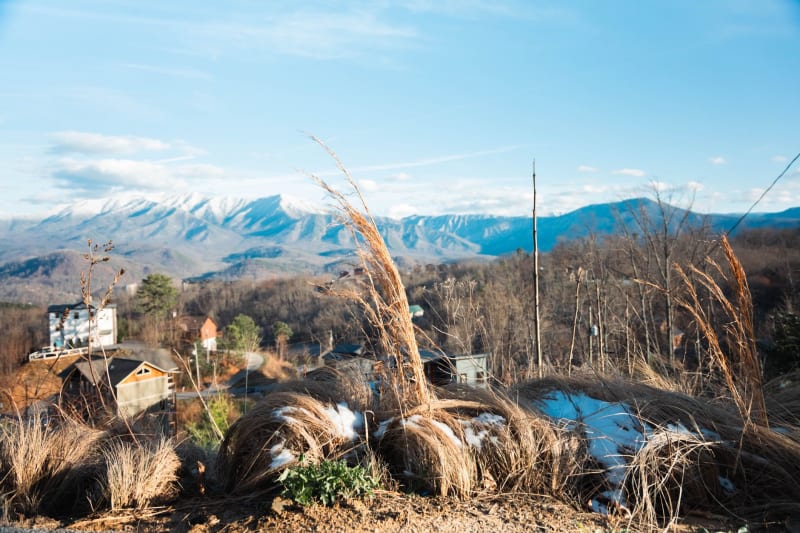 tennessee
 Great Smoky Mountains
The most visited national park in America earns its crowds with ancient ridgelines wrapped in blue haze, wildflower meadows that bloom in sequence all spring, and valleys that smell like wet earth and cedar.
Explore tennessee
 Jonesborough
Tennessee's oldest town, a perfectly preserved main street in the eastern hills that reinvented itself as the storytelling capital of the country.
Explore tennessee
 Knoxville
A college town that grew a real downtown while no one was watching, with a Market Square that hums on weekend mornings and a Tennessee River greenway that makes leaving feel unnecessary.
Explore tennessee
 Lynchburg
A town of 6,000 people in Moore County — the smallest county in Tennessee and technically dry — that produces the world's best-selling American whiskey and seems quietly delighted by the contradiction.
Explore