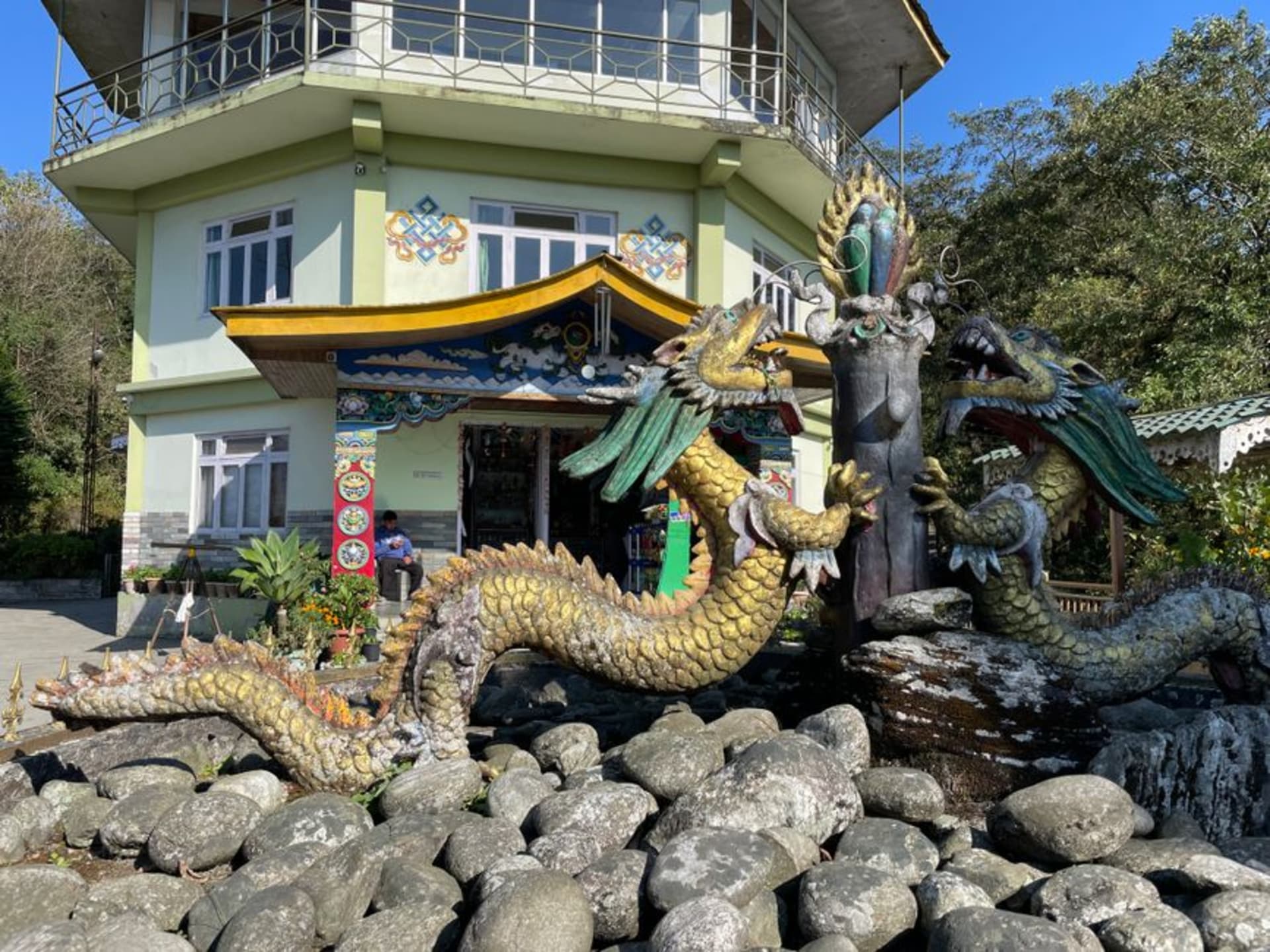
Rumtek Monastery
"Twenty-four kilometers from Gangtok, and I felt like I'd crossed into Tibet without a single checkpoint."
The largest monastery in Sikkim, rebuilt in exile and still humming with maroon-robed monks, butter lamps, and a golden stupa full of relics.

We took a shared jeep out of Gangtok early, before the clouds rolled in off the ridges, and the driver dropped us at the base of Rumtek’s approach road with a shrug that said you’ll know it when you see it. He was right. Even from a distance, the monastery’s golden roofline catches the light in a way nothing else on that hillside does. Lia had read that Rumtek was rebuilt here in the early 1960s by the 16th Karmapa after he fled Tibet, and standing in the courtyard, watching young monks in maroon robes hurry between buildings with stacks of texts under their arms, it didn’t feel like a replica of anything. It felt lived-in, urgent almost, like a lineage that had simply picked itself up and kept going.
Inside the main hall, the air was thick with juniper incense and the low murmur of chanting from a side room we weren’t meant to enter but could hear anyway. I’d read that Rumtek was built to mirror Tsurphu, the original Kagyu seat back in Tibet, and you could feel that intention in every proportion — the towering statues, the thangkas dense with color, the shelves of scripture wrapped in yellow cloth. What stopped me longest was the golden stupa holding relics of the 16th Karmapa. There’s no velvet rope theatrics around it, just monks walking past on their own errands, occasionally pausing to touch their forehead to the base. Lia lit a butter lamp near the entrance and didn’t say much for a while, which for her is rare.

A monk who spoke decent English, maybe nineteen or twenty, ended up walking with us for twenty minutes and telling us, carefully, about the dispute over the 17th Karmapa title — how Rumtek had become the center of a leadership fight in the 1990s and 2000s that pulled in international press and left the monastery, for a while, caught between competing claims. He talked about it plainly, no bitterness, just history he’d inherited along with the incense and the prayer wheels. It reframed the whole visit for me. This wasn’t a museum piece; it was a living institution that had weathered something real and kept functioning.

We ate momos at a tiny stall near the parking area afterward, watching the light shift on that golden roof, and I kept thinking about how quiet the whole place was despite everything it had been through. Gangtok felt like a different world entirely by the time we got back that evening.
When to go: If you can time it around Losar, the Tibetan New Year usually falling in February, you’ll catch the Chaam mask dances and the monastery at its most alive. We went in November instead, for the clear skies and cool air, and had the courtyard almost to ourselves — a trade-off worth considering depending on what kind of Rumtek you want to remember.
Keep exploring
More from Sikkim
 sikkim
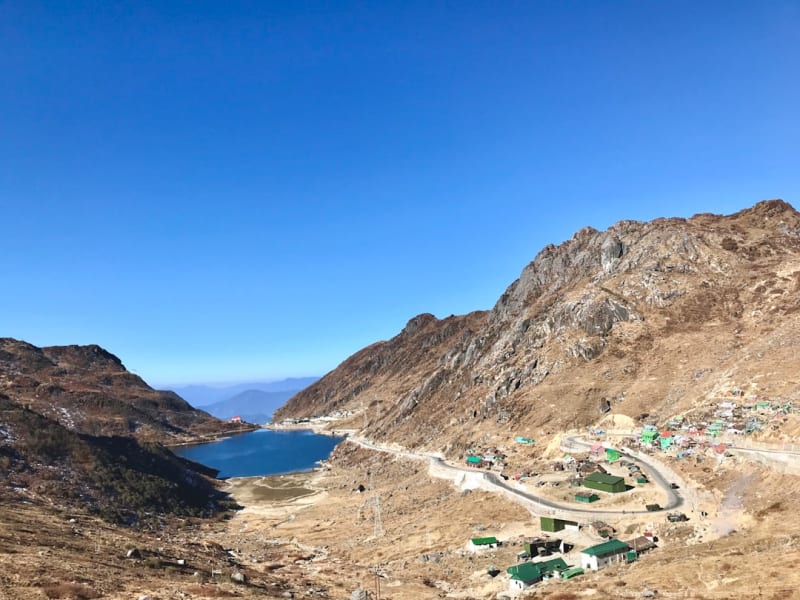
 Tsomgo Lake
A glacial lake at 3,753 meters, forty kilometers east of Gangtok, where the water changes color with the season and the altitude makes everything feel slightly more serious than you expected.
Explore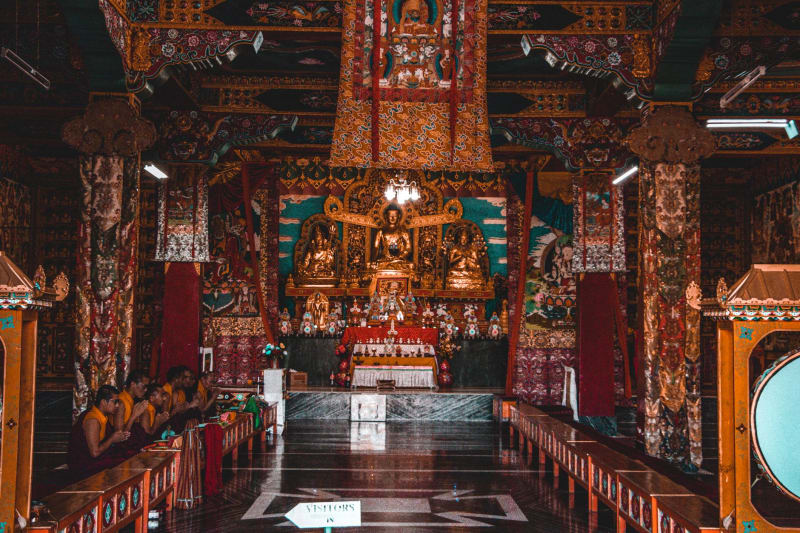 sikkim
 Yuksom
The first capital of Sikkim, a forest village at 1,780 meters where the trail to Kangchenjunga base camp begins and history sits quietly beside the trekking gear shops.
Explore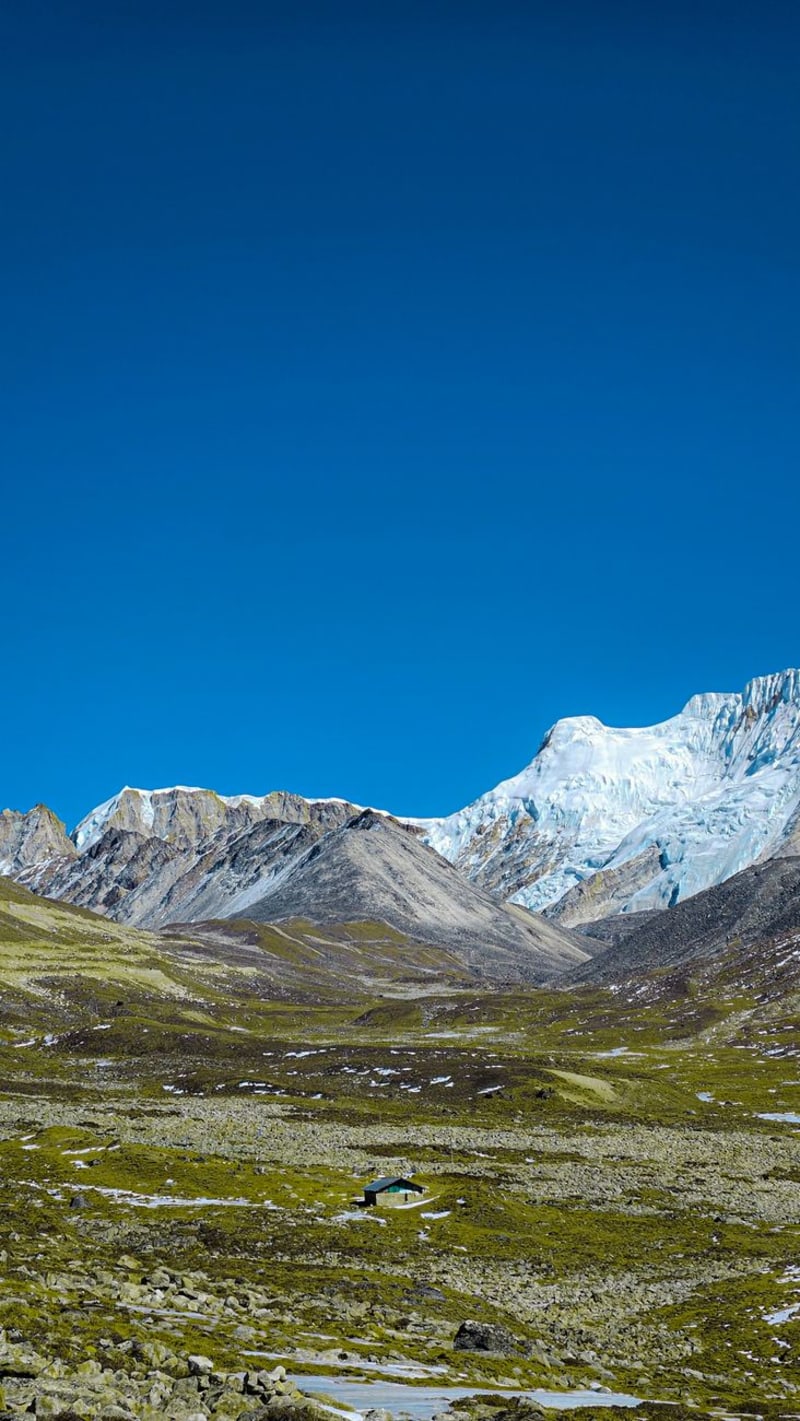 sikkim
 Yumthang Valley
A high alpine valley in North Sikkim where the rhododendrons bloom by the tens of thousands in spring, a sulphur spring steams beside a glacial river, and the road simply runs out at a place called Zero Point.
Explore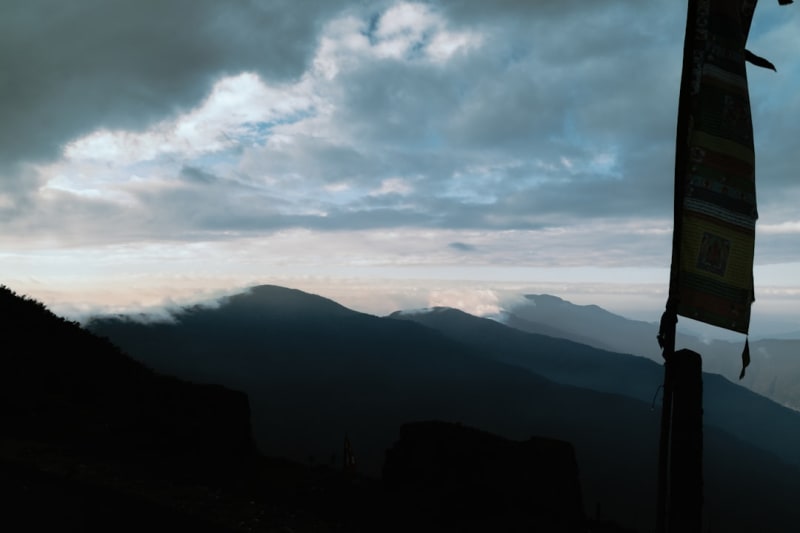 sikkim
 Zuluk
A remote village in East Sikkim accessible by a road that makes thirty-two switchbacks in a single mountain face — a place where the Old Silk Route becomes visible in the landscape and the sunrises happen at eye level with the clouds.
Explore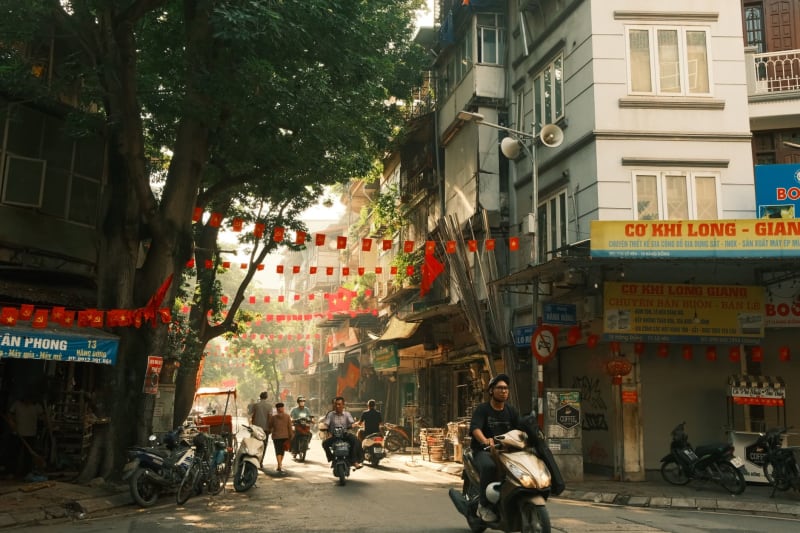 sikkim
 Gangtok
A hill city that stacks prayer flags, noodle steam, and Himalayan light into something that feels nothing like the rest of India.
Explore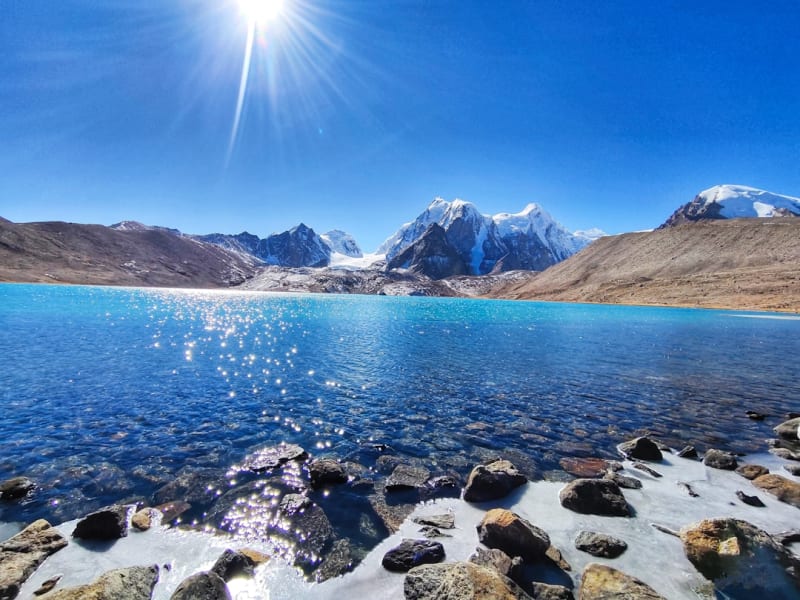 sikkim
 Gurudongmar Lake
One of the highest lakes in the world at 5,183 meters, sacred to Buddhists, Hindus, and Sikhs alike — a place where the sky is too close and the water stays frozen for most of the year.
Explore