Asia
Sikkim
"Sikkim is the India that few people picture and everyone who visits refuses to stop describing."
A Himalayan Buddhist kingdom wedged between Nepal and Bhutan, where cardamom forests perfume the air and Kangchenjunga fills the morning sky.

Nobody told me the air in Sikkim smells like cardamom. Not as a spice, not as a souvenir — as weather. Walking the road out of Yuksom toward the edge of a cardamom plantation, I kept thinking something was being cooked nearby, until Lia pointed out that the forest floor itself was the kitchen. The pods clustered in the undergrowth below waist-high banana-leaf canopies, and the whole hillside released this warm, faintly medicinal sweetness every time the mist shifted.
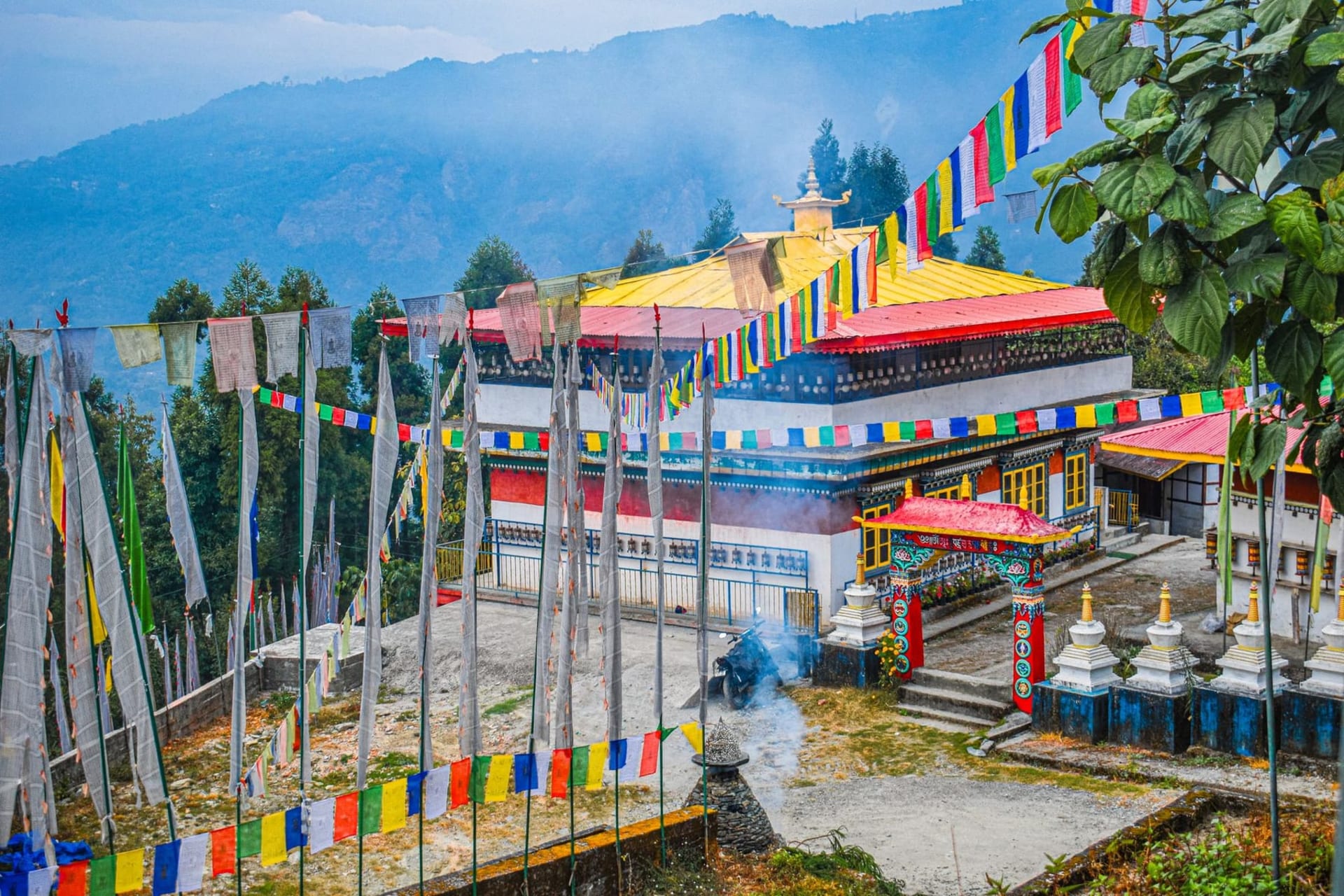
That’s how Sikkim works. It surprises you before you’ve asked it a question. The state is small — about the size of Luxembourg — but it contains multitudes: Buddhist monasteries older than most European nations, cardamom plantations that produce a third of the world’s supply, rhododendron forests that turn violent pink in March, and in the northeast corner, a view of Kangchenjunga that stops conversation dead. From the guesthouse above Enchey Monastery in Gangtok, I watched the clouds thin at first light and the mountain materialize: the third-highest summit on earth, fully visible, unrushed, filling the sky like a fact you keep forgetting. A monk was sweeping the courtyard below in long, patient strokes. Prayer flags older than anything nearby snapped in the cold. The butter-lamp smell drifted out through a heavy wooden door.
The road to Pelling winds through terraced fields and prayer-wheel pavilions where locals spin the cylinders as they pass, almost without breaking stride. At Pemayangtse Monastery — one of the oldest in Sikkim, founded in the early eighteenth century — I found a multi-story wooden model of Zangdog Palri, the celestial paradise of Guru Rinpoche, built entirely by one monk over years. No photograph I took of it captured anything useful. It’s the kind of object that only makes sense in person, in that particular dim light, surrounded by that particular silence. The drive back was interrupted by a landslide and a herd of yaks crossing from a higher pasture — the herder, a teenager in a Sikkim FC jersey, waved at us from the other side with the complete indifference of someone whose yaks have always had the right of way.
When to go: October through mid-December offers the clearest skies and the best chance of an unobstructed Kangchenjunga view. March and April bring rhododendron bloom across the hillsides, though morning clouds can linger into midday. Avoid the monsoon months of June through September — roads wash out, leeches appear in force, and the mountain disappears behind weeks of unbroken grey.
What most guides get wrong: They treat Sikkim as a day-trip from Darjeeling or a permit-stamping exercise. The Inner Line Permit is straightforward to obtain in Gangtok, and most of what makes Sikkim extraordinary — Yuksom, Pelling, the Goecha La trek approach, the border villages near Lachung — lies past the checkpoint. Give it at least five days. Less than that and you’ll spend most of your time in a jeep getting somewhere before you have to turn around.
Explore
Places in Sikkim
 sikkim
 Gangtok
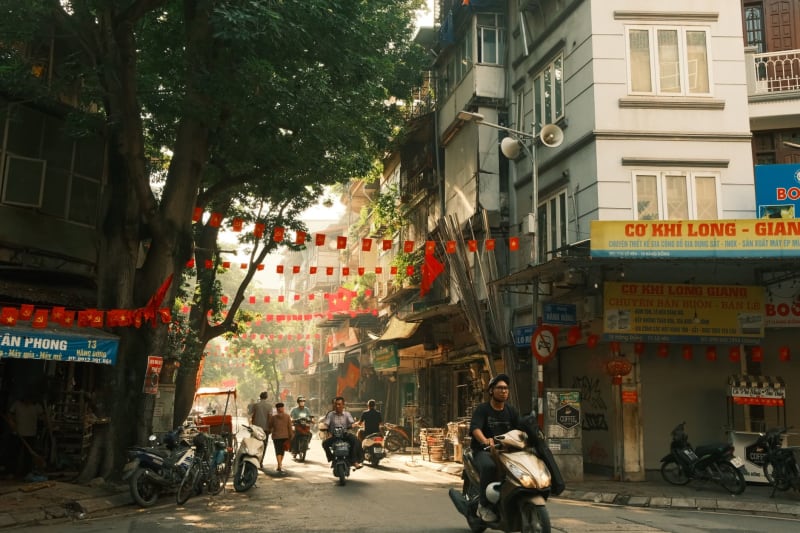
A hill city that stacks prayer flags, noodle steam, and Himalayan light into something that feels nothing like the rest of India.
Explore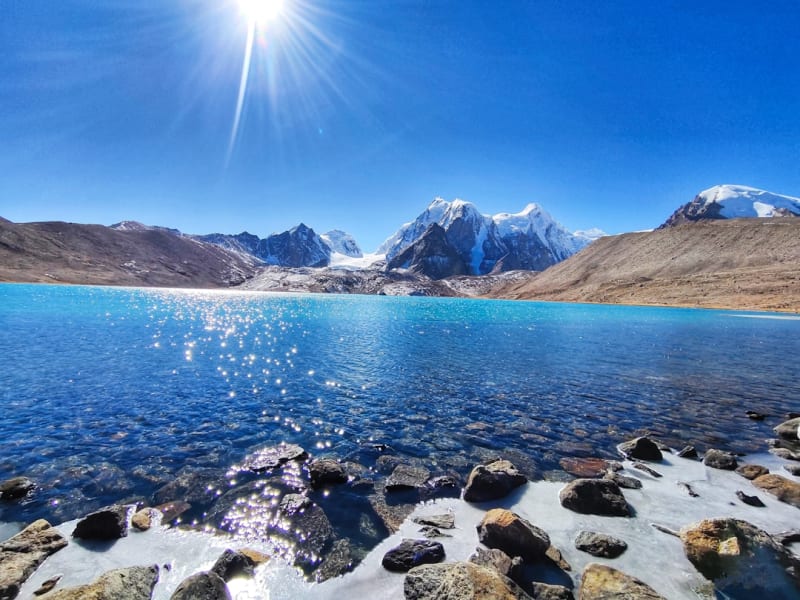 sikkim
 Gurudongmar Lake
One of the highest lakes in the world at 5,183 meters, sacred to Buddhists, Hindus, and Sikhs alike — a place where the sky is too close and the water stays frozen for most of the year.
Explore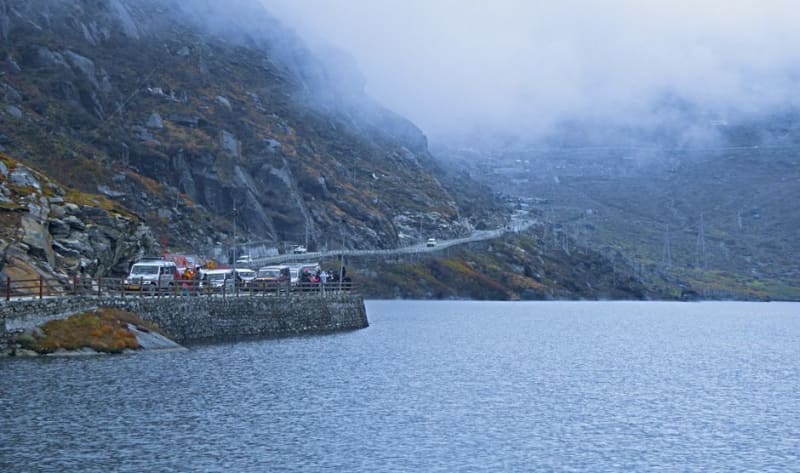 sikkim
 Khecheopalri Lake
A hushed forest lake in West Sikkim where locals say birds keep the water clear of every fallen leaf.
Explore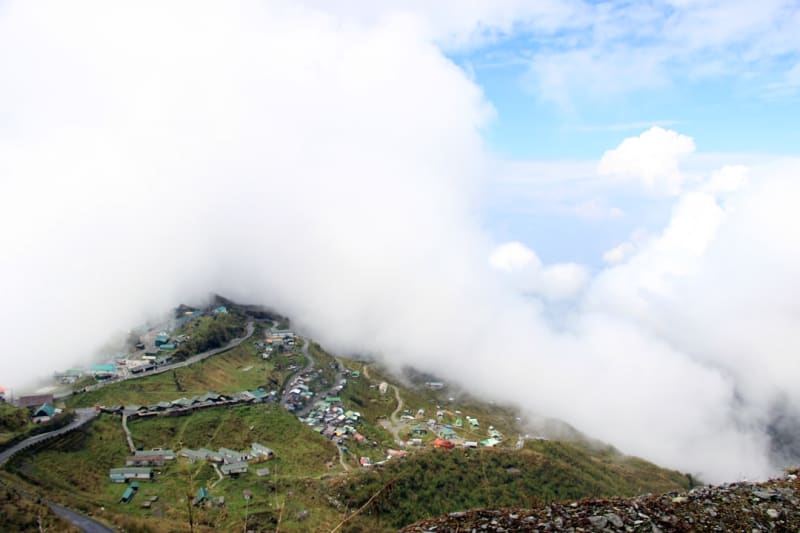 sikkim
 Lachung
A stone-and-timber village at 2,750 meters in North Sikkim where the Teesta and Lachung rivers converge and the road beyond leads to places that still require military permits to reach.
Explore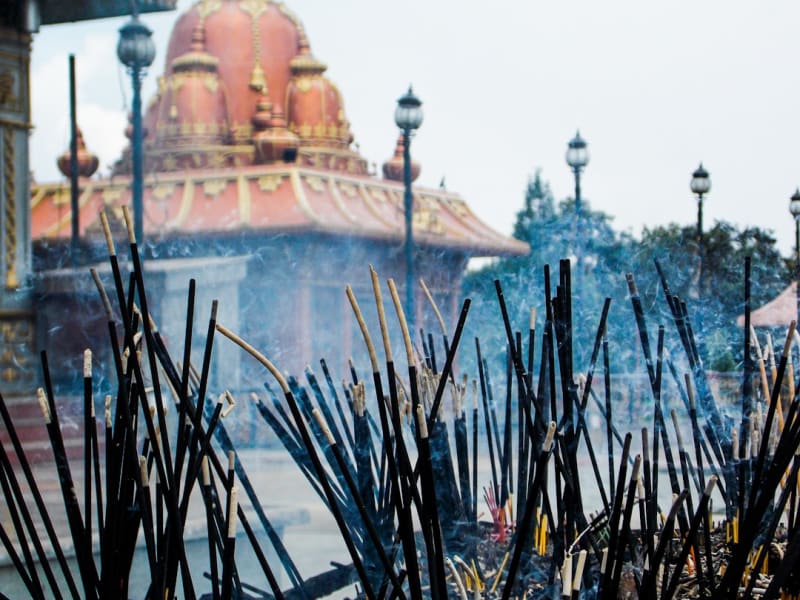 sikkim
 Namchi
South Sikkim's administrative capital where two hilltop complexes face each other across the valley — one dedicated to Shiva, one to the four founding Siddhas of Sikkim — and the whole town smells of marigold garlands on festival days.
Explore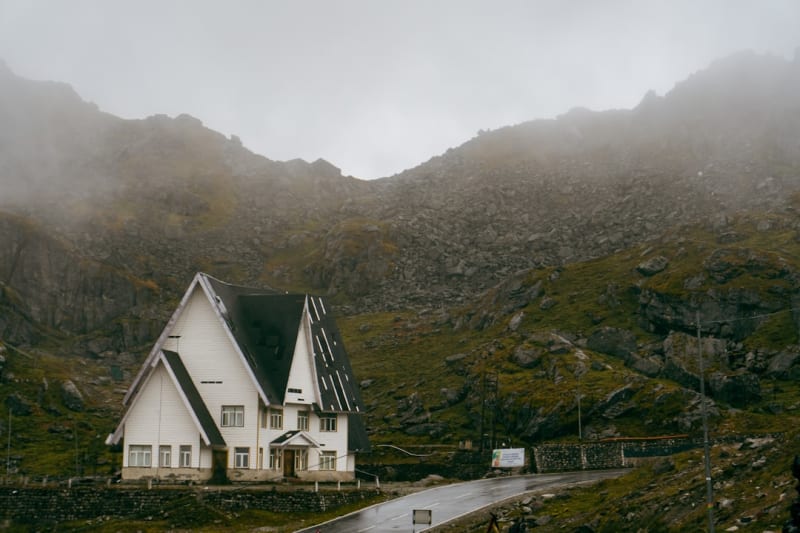 sikkim
 Nathula Pass
A 4,310-meter mountain pass on the India-China border where two armies stand fifty meters apart and the wind off the Tibetan plateau makes your eyes water before you can stop it.
Explore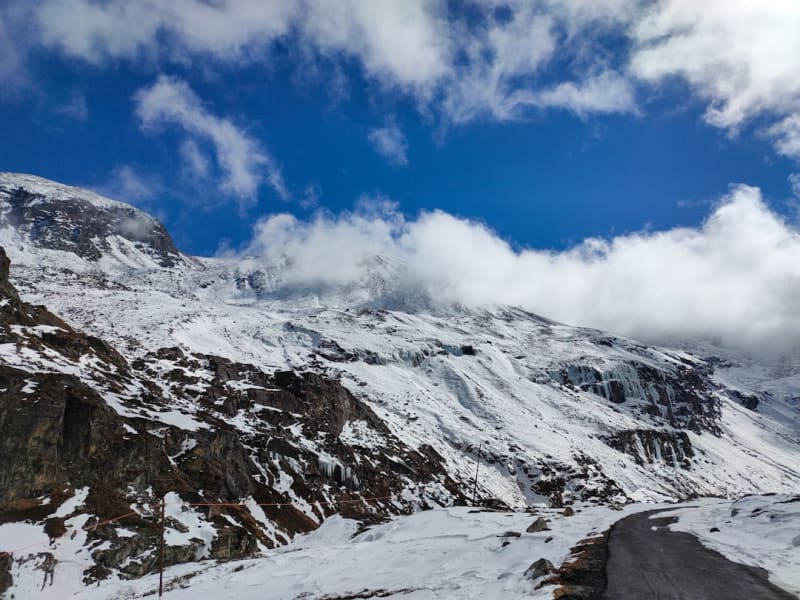 sikkim
 Pelling
A quiet ridge town in West Sikkim where Kangchenjunga fills the entire western sky and the morning light turns every white peak into something that doesn't seem real.
Explore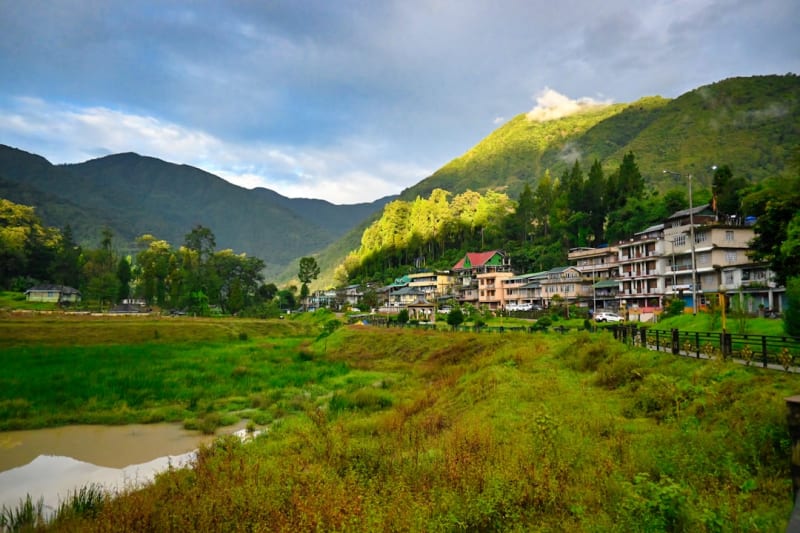 sikkim
 Ravangla
A ridge town in South Sikkim where a 130-foot Buddha watches over the valley below and the mornings come with views of the Kangchenjunga range that the tourist buses haven't quite discovered yet.
Explore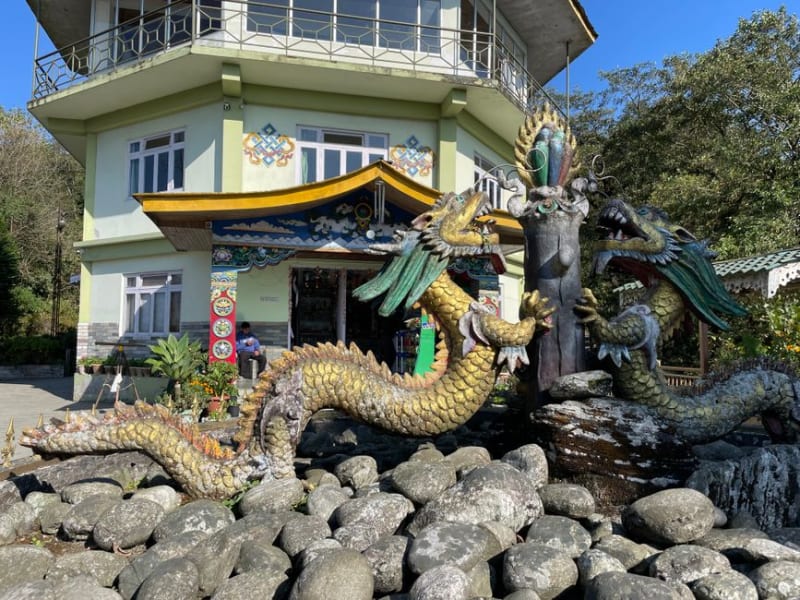 sikkim
 Rumtek Monastery
The largest monastery in Sikkim, rebuilt in exile and still humming with maroon-robed monks, butter lamps, and a golden stupa full of relics.
Explore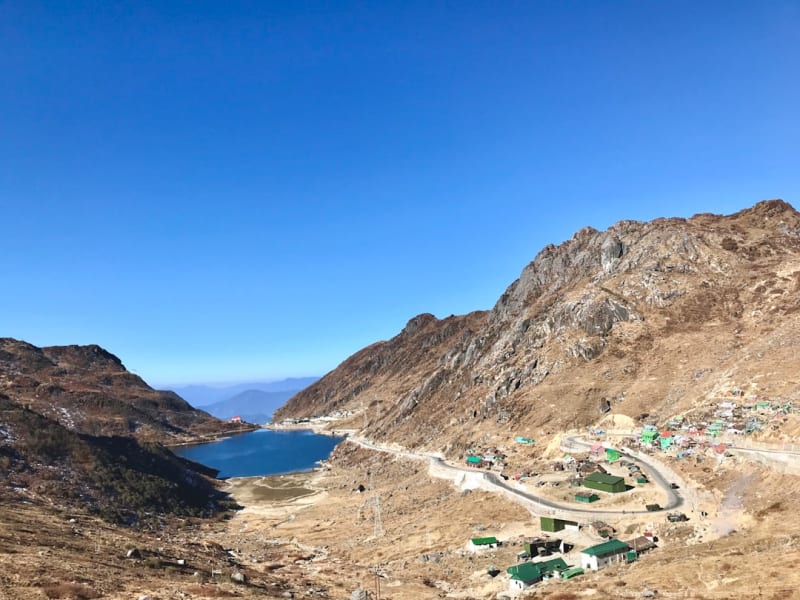 sikkim
 Tsomgo Lake
A glacial lake at 3,753 meters, forty kilometers east of Gangtok, where the water changes color with the season and the altitude makes everything feel slightly more serious than you expected.
Explore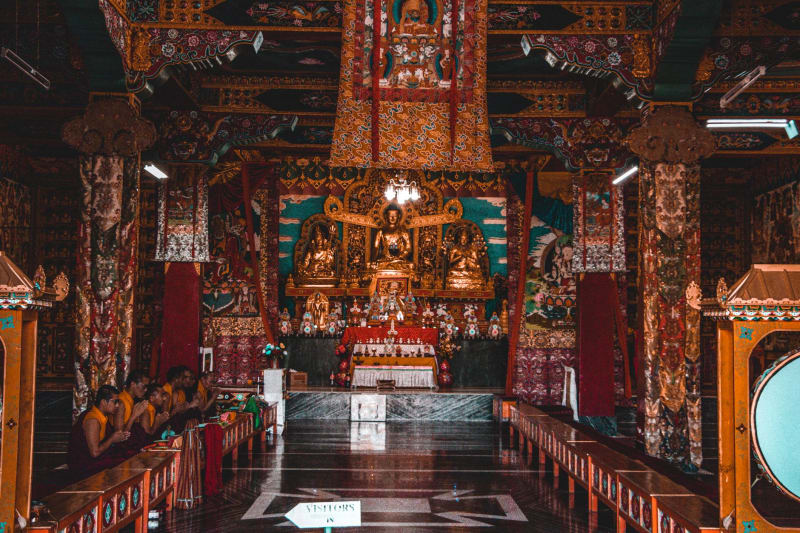 sikkim
 Yuksom
The first capital of Sikkim, a forest village at 1,780 meters where the trail to Kangchenjunga base camp begins and history sits quietly beside the trekking gear shops.
Explore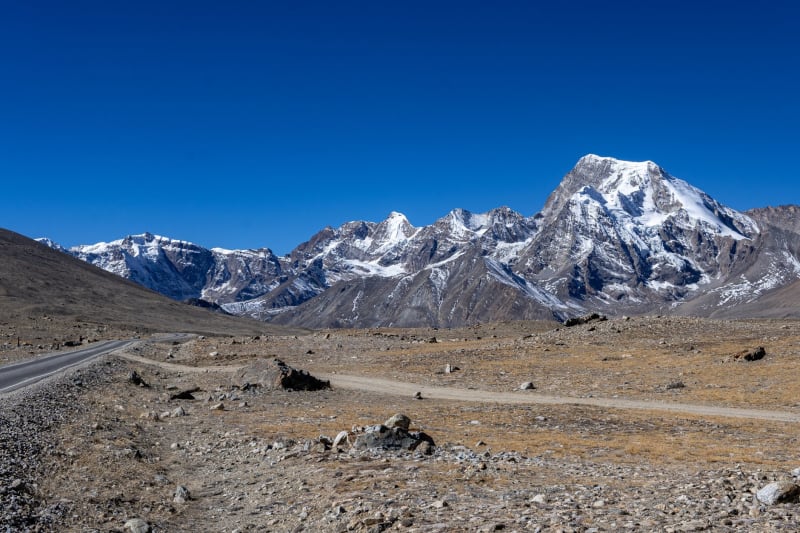 sikkim
 Yumthang Valley
A high alpine valley in North Sikkim where the rhododendrons bloom by the tens of thousands in spring, a sulphur spring steams beside a glacial river, and the road simply runs out at a place called Zero Point.
Explore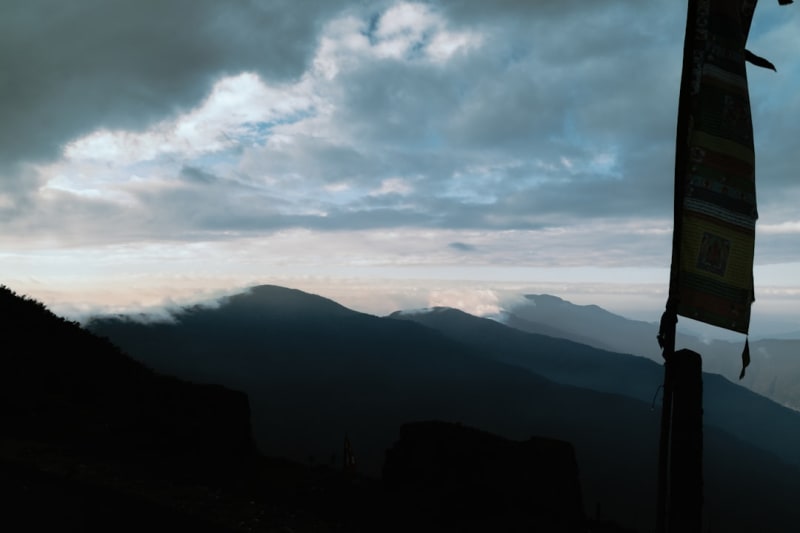 sikkim
 Zuluk
A remote village in East Sikkim accessible by a road that makes thirty-two switchbacks in a single mountain face — a place where the Old Silk Route becomes visible in the landscape and the sunrises happen at eye level with the clouds.
Explore