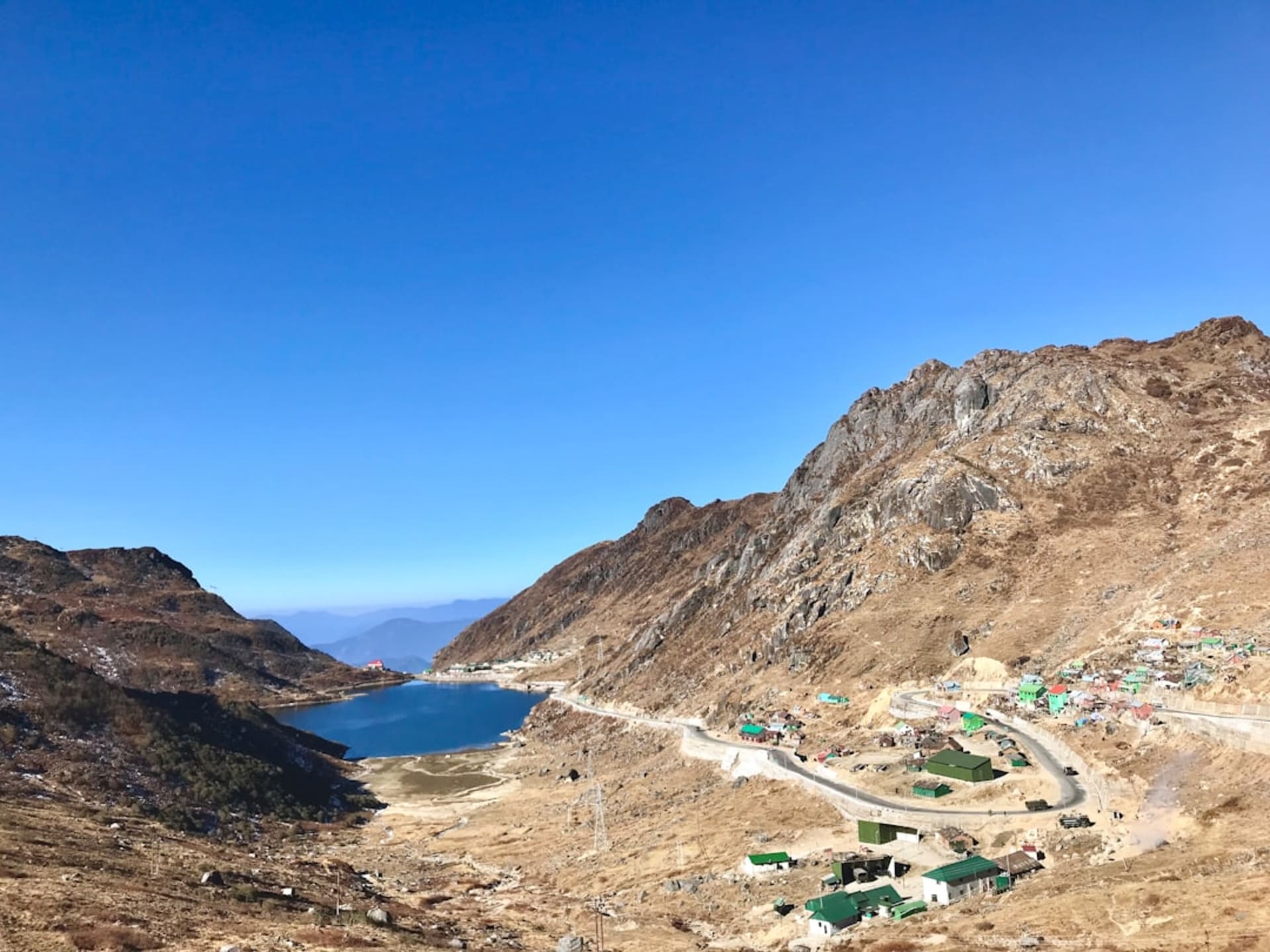
Tsomgo Lake
"At 3,753 meters, breathing is a task. The lake surface was the exact color of mercury and completely still."
A glacial lake at 3,753 meters, forty kilometers east of Gangtok, where the water changes color with the season and the altitude makes everything feel slightly more serious than you expected.

The road from Gangtok to Tsomgo Lake climbs through sixteen kilometers of switchbacks so steep that the driver of our shared jeep shifted down to first gear for long stretches and the engine made a sound I decided not to interpret. We passed through the tree line, then through the zone where the trees were replaced by low shrubs, then through the zone where the shrubs gave up entirely and the landscape became rock and sparse yellow grass and patches of snow even in late October.
At the lake, the cold was immediate. I’d brought a fleece and it wasn’t enough. The altitude — 3,753 meters — doesn’t announce itself the way it does at higher elevations, but you feel it in how a short walk to the lakeside becomes a deliberate effort.
The Lake Itself
Tsomgo means “source of the lake” in Sikkimese. The water is a specific color that changes depending on season and light — a deep green in summer when the surrounding ridges reflect through the surface, a pale gray-blue in autumn, partially frozen and milky at the edges in winter. I visited in late October, when a skim of ice had already formed along the northern shore and the reflections of the surrounding peaks were almost perfect.
The lake is considered sacred by both Sikkimese Buddhists and Hindus. A small Shiva shrine sits at the far end of the trail along the eastern bank. During the festival of Guru Purnima, locals make a full circuit of the lake as a form of worship. The mani walls and prayer flags along the path add to a sense that this is a place that has been attended to for a very long time.
The Yak Situation
There are yaks. Many yaks. Heavily decorated with bells and red and orange pompoms on their horns, they are hired out to tourists for photographs by men who have been doing this long enough to make the transaction feel practiced and relentless. I declined the yak photo and was briefly but efficiently pressured before being released.
What the yaks don’t take away from: the high ridge above the lake’s southern end, where a short and steep climb rewards you with a view back down onto the full oval of the lake with Nathula Pass somewhere in the white peaks beyond. Two Sikkimese teenagers passed me at pace while I stopped to breathe, which felt appropriate.
What Doesn’t Work
Tsomgo is a day trip from Gangtok and it shows. The lakeside has a cluster of tin-roofed stalls selling Maggi noodles, hot chai, and souvenirs of varying awfulness. Between 10am and 2pm the parking area fills with vehicles and the trail becomes crowded. Arrive early — the shared jeeps leave Gangtok around 7am — and you’ll have the first hour in near-solitude, the light on the water, the cold making everything precise.
By the time the tour coaches arrive around midmorning, you’ll have already done what needed doing.
Getting There
Tsomgo Lake requires a Restricted Area Permit for foreign nationals, which can be obtained in Gangtok through any registered travel agency — the process is straightforward and takes a day. The road is open year-round, though heavy snowfall can close it in deep winter. Check conditions in December through February before booking.
When to go: October and November for clear skies and partial ice effects without full winter closure. April and May for snow melt and rhododendrons on the approach ridges. Mid-January through February if you want full winter with frozen lake surface — but confirm the road is open first, and dress for serious cold.
Keep exploring
More from Sikkim
 sikkim
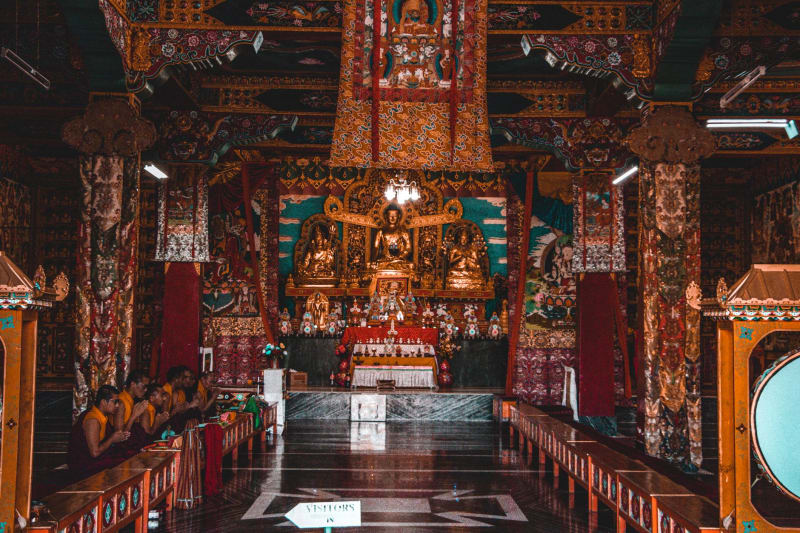
 Yuksom
The first capital of Sikkim, a forest village at 1,780 meters where the trail to Kangchenjunga base camp begins and history sits quietly beside the trekking gear shops.
Explore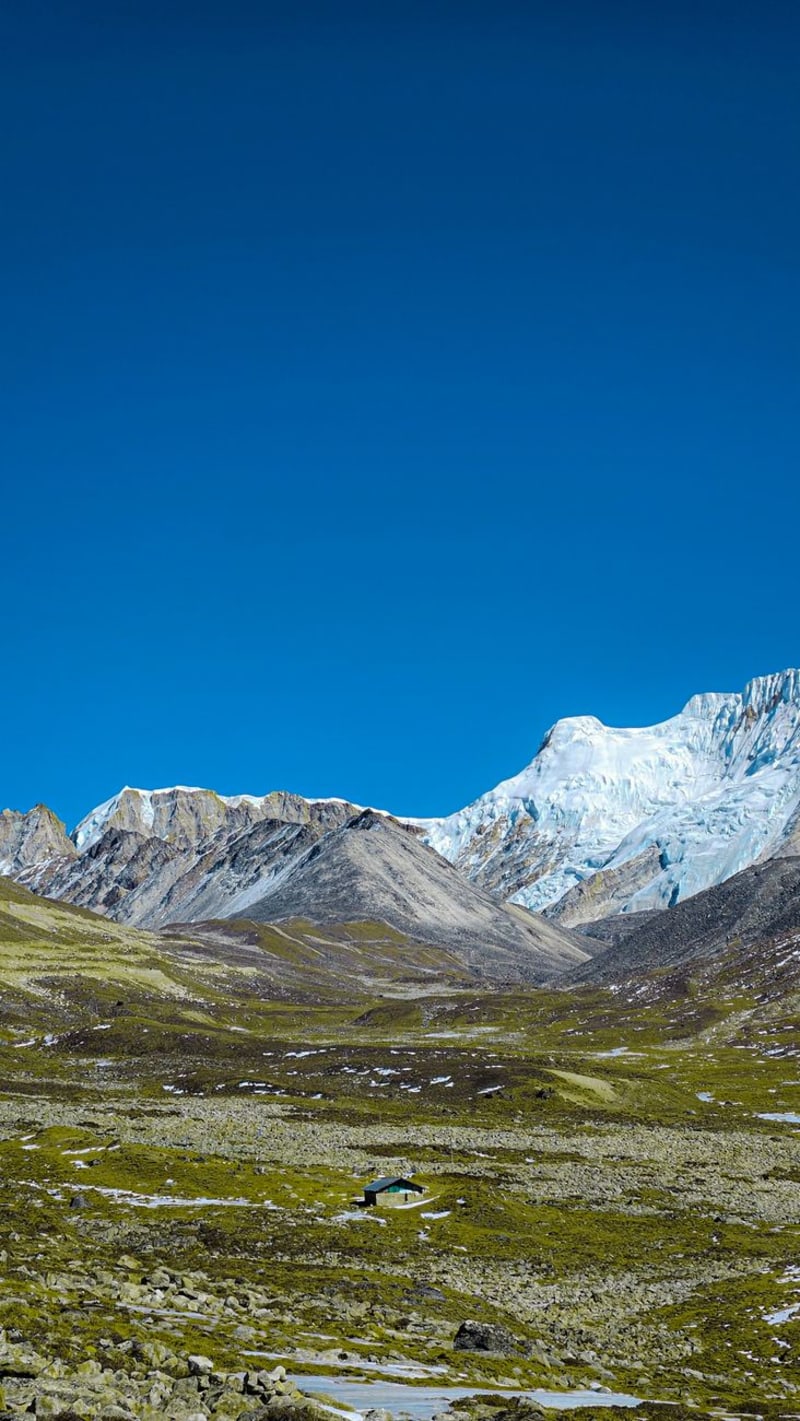 sikkim
 Yumthang Valley
A high alpine valley in North Sikkim where the rhododendrons bloom by the tens of thousands in spring, a sulphur spring steams beside a glacial river, and the road simply runs out at a place called Zero Point.
Explore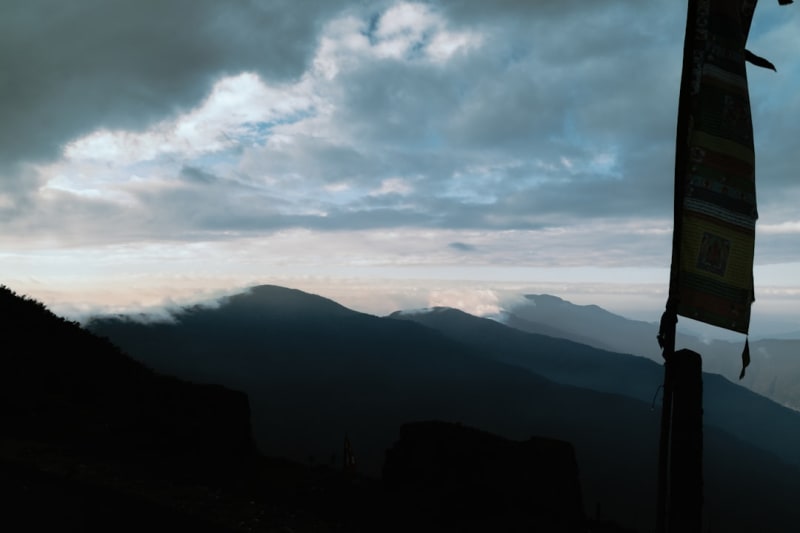 sikkim
 Zuluk
A remote village in East Sikkim accessible by a road that makes thirty-two switchbacks in a single mountain face — a place where the Old Silk Route becomes visible in the landscape and the sunrises happen at eye level with the clouds.
Explore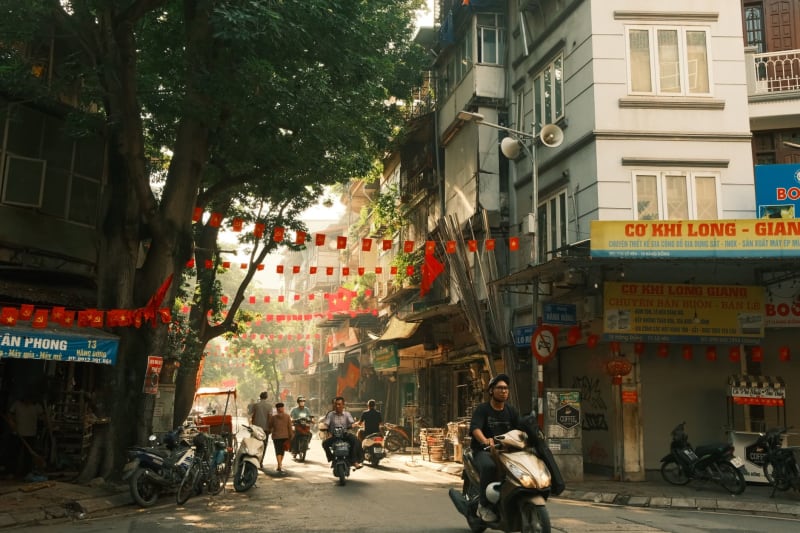 sikkim
 Gangtok
A hill city that stacks prayer flags, noodle steam, and Himalayan light into something that feels nothing like the rest of India.
Explore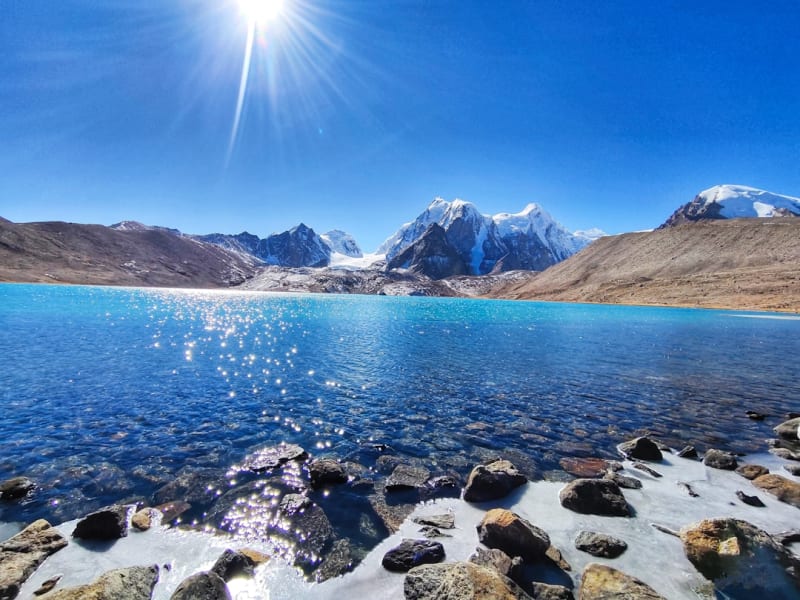 sikkim
 Gurudongmar Lake
One of the highest lakes in the world at 5,183 meters, sacred to Buddhists, Hindus, and Sikhs alike — a place where the sky is too close and the water stays frozen for most of the year.
Explore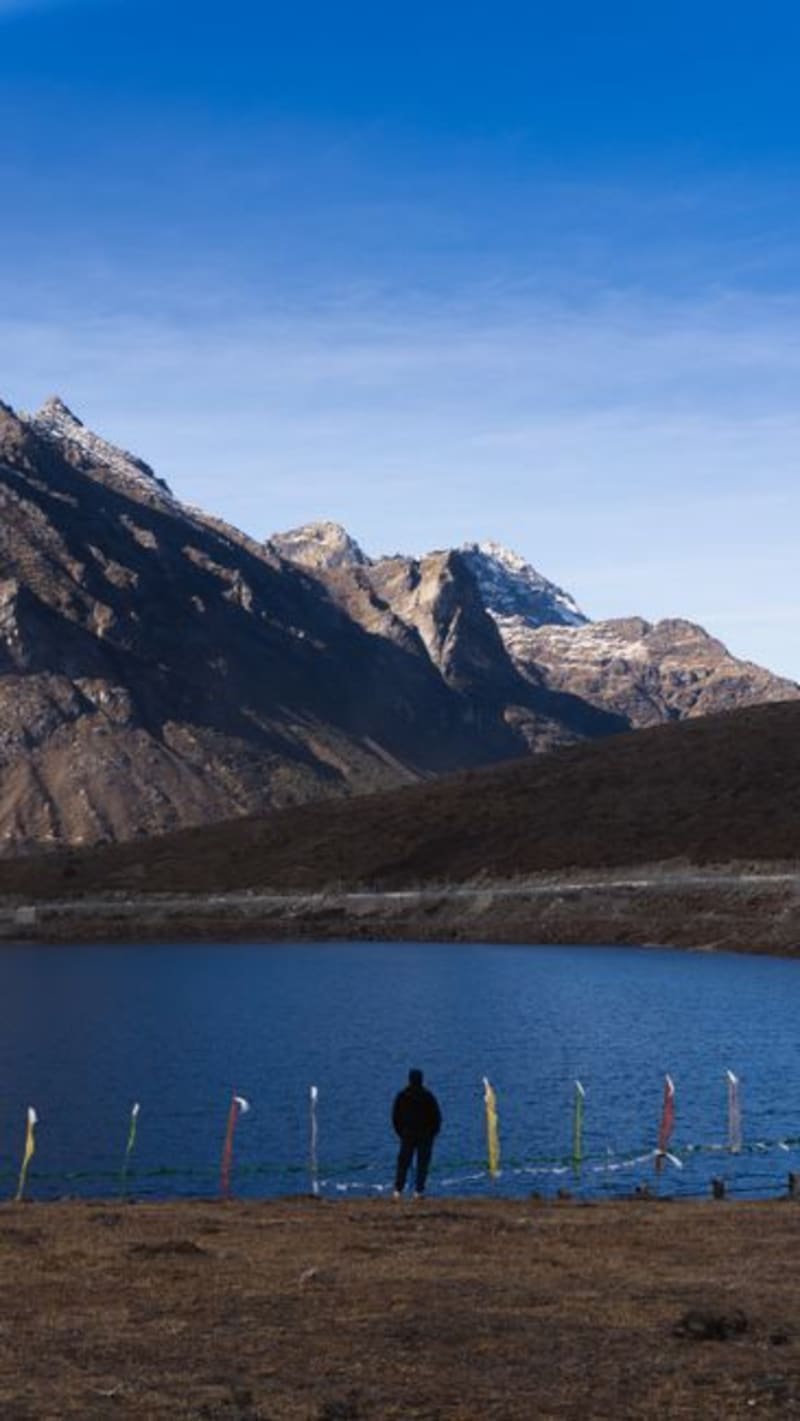 sikkim
 Khecheopalri Lake
A hushed forest lake in West Sikkim where locals say birds keep the water clear of every fallen leaf.
Explore