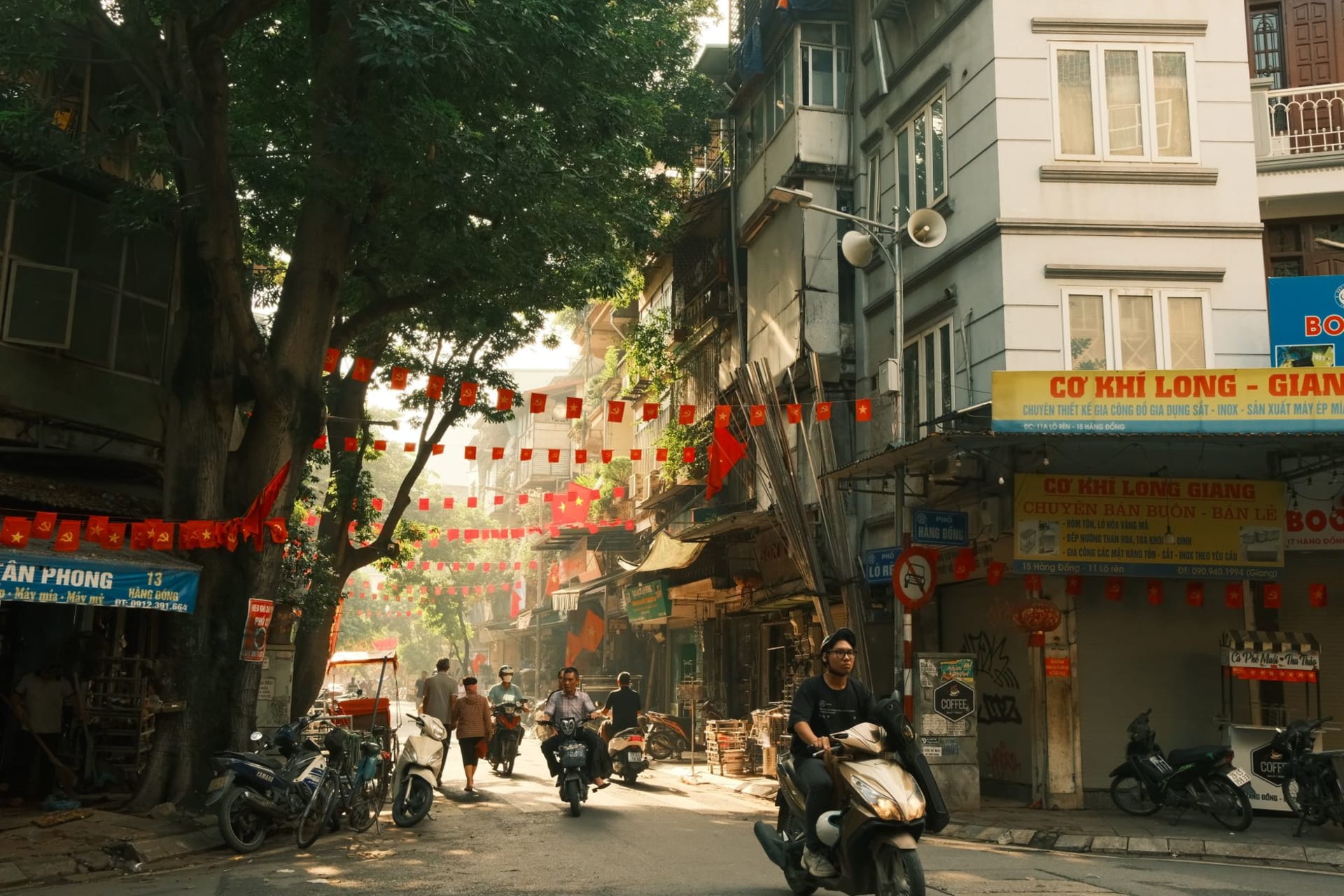
Gangtok
"At 1,600 meters, even the air tastes different — colder, quieter, like someone turned the volume down on the subcontinent."
A hill city that stacks prayer flags, noodle steam, and Himalayan light into something that feels nothing like the rest of India.

I arrived from the Siliguri plains on a shared jeep that took four hours to climb what a map makes look like thirty minutes. By the time Gangtok materialized through the fog, I’d been elbowed by a sack of onions for most of the journey and I didn’t care at all. The city appeared in pieces — a monastery wall here, a tin roof there — until suddenly the whole ridge opened up and I understood why people come back.
MG Marg and the Rhythm of the Evening
The main pedestrian strip, MG Marg, is Sikkim’s peculiar gift: a clean, traffic-free boulevard at altitude where schoolkids in uniforms walk beside monks in burgundy robes and tourists photograph everything. I sat at a plastic table outside a tea stall and ordered thukpa, the broth arriving in a bowl so hot I had to hold it with both hands. The noodles were thick, the broth deeply peppery, and for twenty minutes I watched the whole town pass by in the last hour of daylight.
What strikes you about Gangtok is how orderly it feels — bins actually used, roads actually swept. The state enforces strict anti-litter laws and it shows. After weeks of chaotic Indian plains travel, the effect is almost surreal.
Rumtek Monastery
Twenty-four kilometers outside the city center, Rumtek is one of the most important Kagyu Buddhist monasteries outside Tibet. I hired a shared taxi and got there before the tour groups. In the early morning the monks were in the main hall for puja — the sound of the long horn drones coming through the walls before you ever open the door, a frequency that vibrates somewhere below your ribs.
The golden stupa inside holds relics of the 16th Karmapa. I sat on a wooden bench at the back and watched novice monks practice mudras, their movements somewhere between ritual precision and the fidgeting of twelve-year-olds everywhere. Both things seemed true at once.
The Himalayan Light Problem
On clear days — and they are not guaranteed, Gangtok sits in a cloud belt that can close in for days at a stretch — Kangchenjunga appears to the northwest like something painted rather than real. I saw it twice in five days. The first time I was eating breakfast at the hotel and looked up and there it was, catching the first pink light while the city below was still blue-gray with morning. The second time I was walking back from a bakery with a bag of cardamom cookies and nearly walked into a wall.
The problem with the light in Gangtok is that it makes you stay longer than you planned. I extended my booking twice.
What to Eat
Beyond thukpa, Gangtok runs on momos — the local versions are steamed and served with a thin tomato-chili sauce that has more heat than you expect. The market near the old taxi stand has stalls selling churpee, the dried yak cheese you chew like gum for hours. I bought some out of curiosity and gnawed on it for the better part of an afternoon. Acquired taste is an understatement.
When to go: October and November offer the clearest skies and Kangchenjunga views, with cool, dry days and sharp morning light. March through May brings rhododendrons in bloom but increasing cloud. Avoid June through September — the monsoon turns the roads unpredictable and the views disappear entirely.
Keep exploring
More from Sikkim
 sikkim
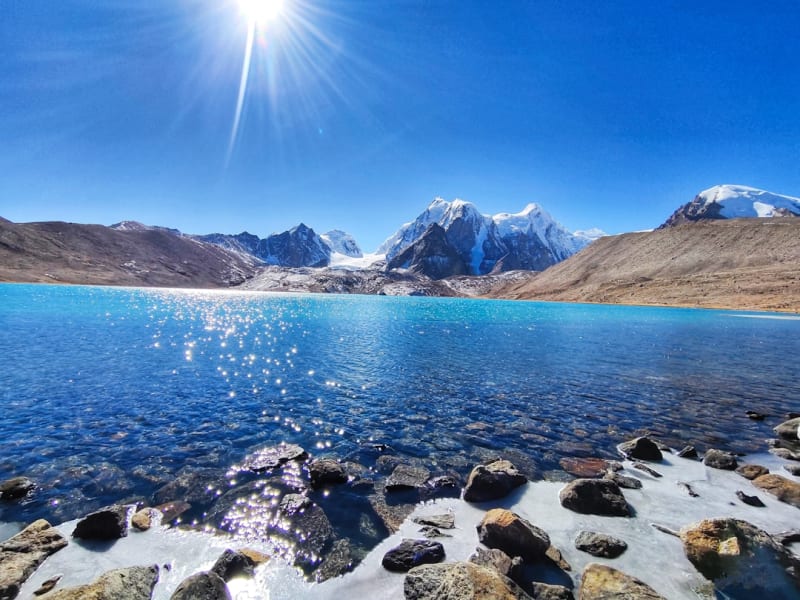
Gurudongmar Lake
One of the highest lakes in the world at 5,183 meters, sacred to Buddhists, Hindus, and Sikhs alike — a place where the sky is too close and the water stays frozen for most of the year.
Explore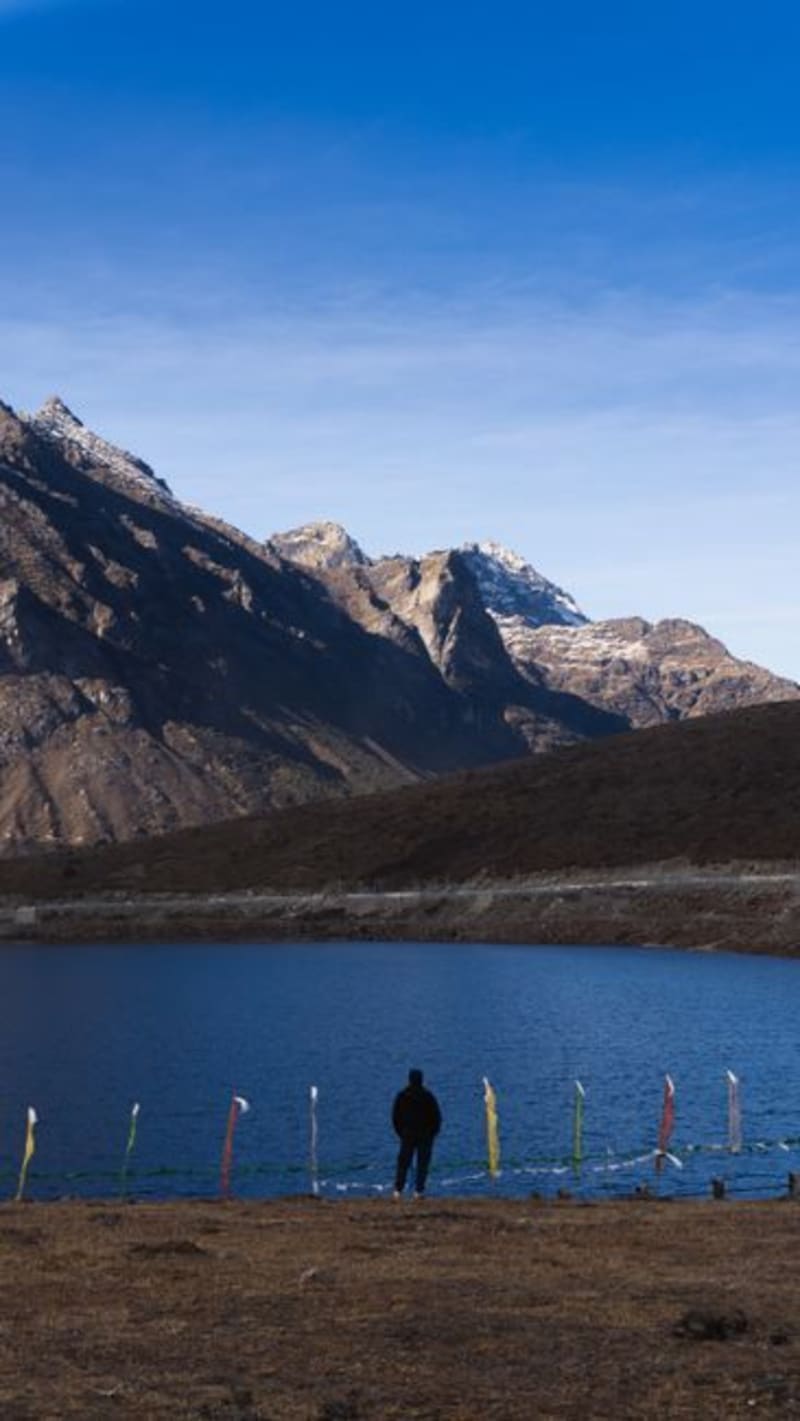 sikkim
Khecheopalri Lake
A hushed forest lake in West Sikkim where locals say birds keep the water clear of every fallen leaf.
Explore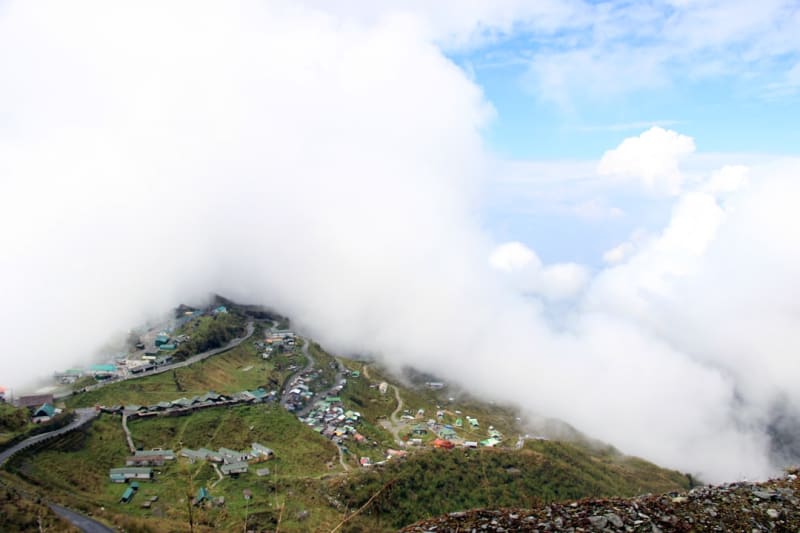 sikkim
Lachung
A stone-and-timber village at 2,750 meters in North Sikkim where the Teesta and Lachung rivers converge and the road beyond leads to places that still require military permits to reach.
Explore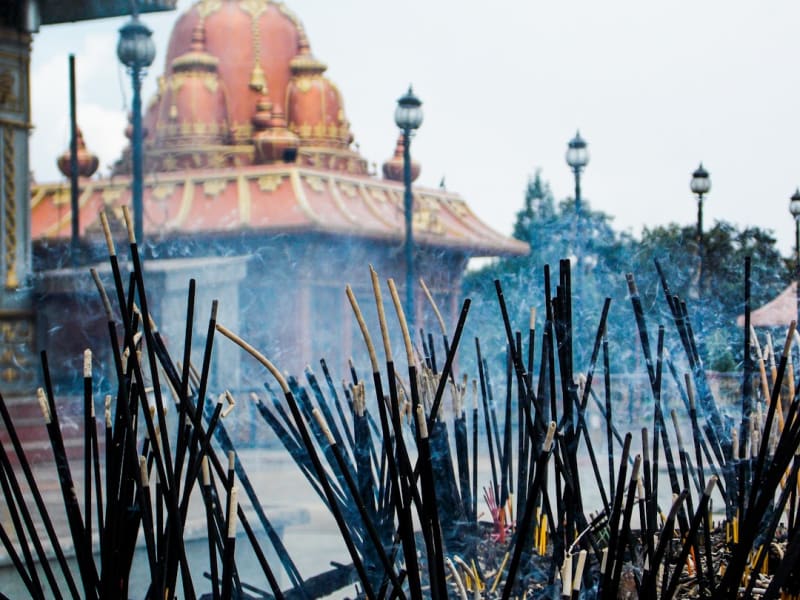 sikkim
Namchi
South Sikkim's administrative capital where two hilltop complexes face each other across the valley — one dedicated to Shiva, one to the four founding Siddhas of Sikkim — and the whole town smells of marigold garlands on festival days.
Explore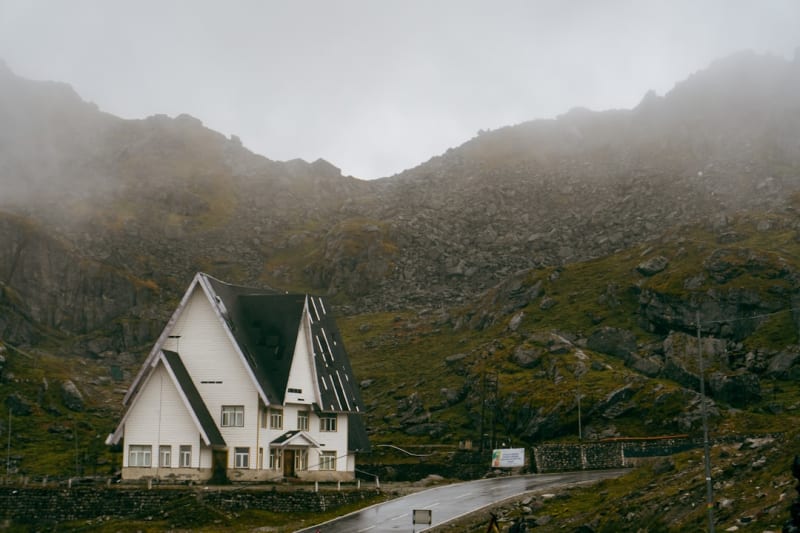 sikkim
Nathula Pass
A 4,310-meter mountain pass on the India-China border where two armies stand fifty meters apart and the wind off the Tibetan plateau makes your eyes water before you can stop it.
Explore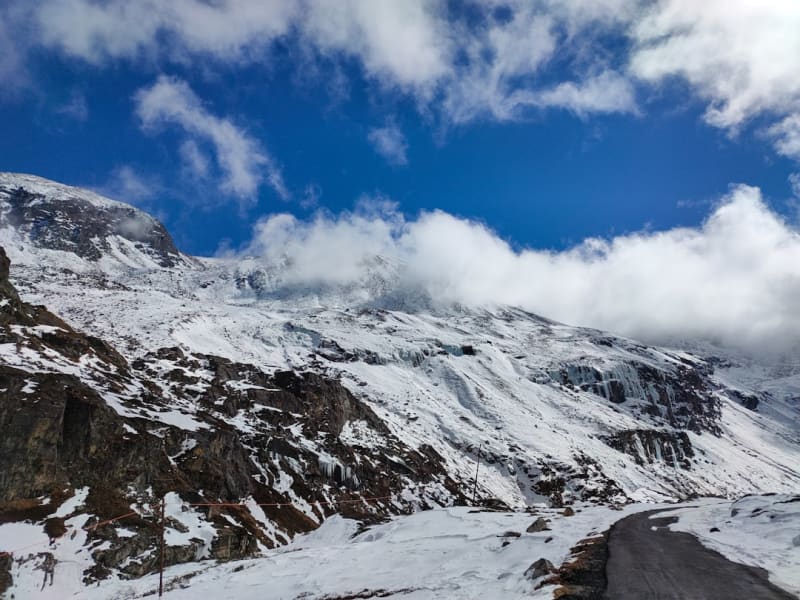 sikkim
Pelling
A quiet ridge town in West Sikkim where Kangchenjunga fills the entire western sky and the morning light turns every white peak into something that doesn't seem real.
Explore