
Locorotondo
"Locorotondo is the Valle d'Itria in a single frame — stand at the belvedere at dusk and the whole region lays itself out for you."
A perfectly circular hilltop village in the Valle d'Itria where every lane curves back into itself and the trulli dotting the valley below look like toys.

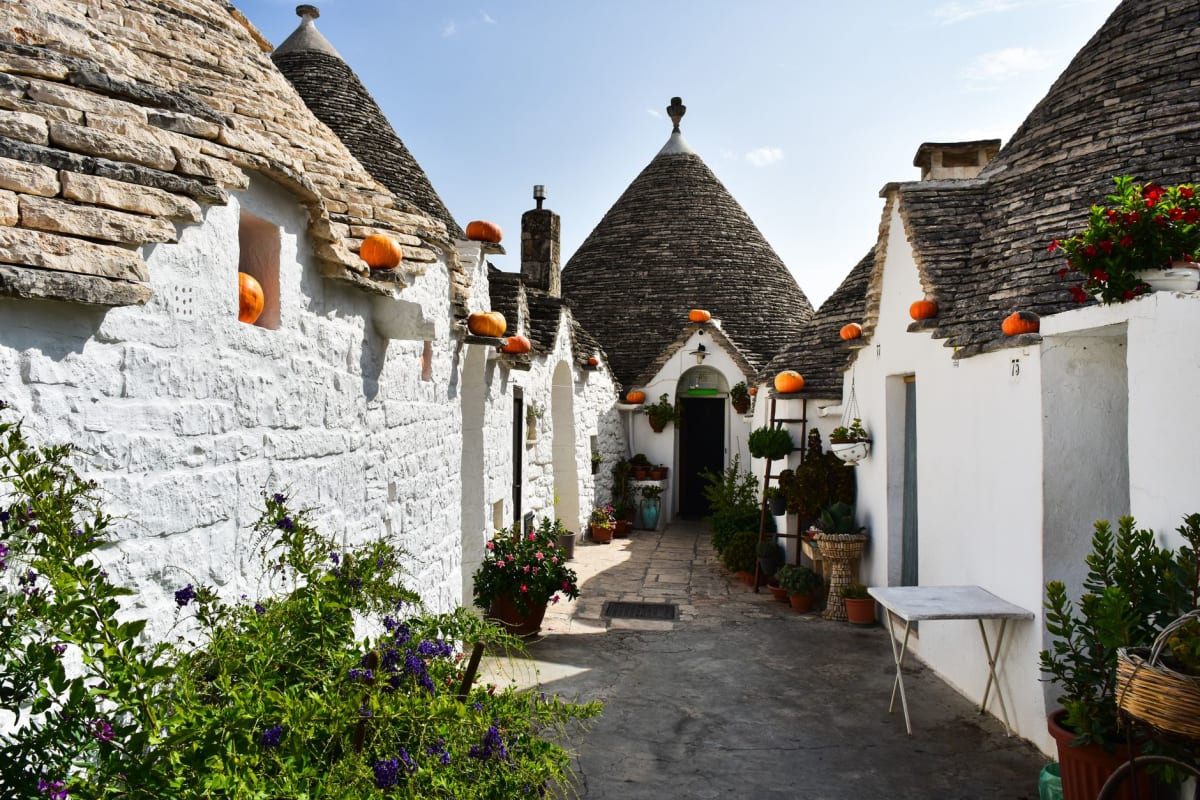
The name means “round place,” and the village lives up to it with unusual exactness. Locorotondo’s streets circle the hilltop in concentric rings, each lane curving always slightly left or right but never quite to a right angle, so that walking the old town becomes a kind of spiral meditation. You eventually find your way to the belvedere at the outer edge and the view opens suddenly: the Valle d’Itria below, the floor of it scattered with trulli — those conical stone houses looking, from this height, like something a child pressed into clay — the olive groves between them, the pink and white blossoms of the valley’s almond trees in February, or the deep green of the vines in summer. I stood there for a long time without wanting to photograph it, which is usually a sign that something has gotten through.
I had arrived in the late afternoon after driving up from Alberobello through the valley, stopping twice because the light on the trulli from the road was doing something I could not pass without witnessing. Locorotondo sits on a high point between Alberobello and Cisternino and is, I think, the most classically beautiful of the Valle d’Itria hilltop towns — more compact than Ostuni, less visited than Alberobello, with a whiteness to its lanes that feels maintained rather than performed. The window boxes overflowing with geraniums in summer are not a tourist amenity; they have been there long enough to feel structural.
The church of San Giorgio Martire anchors the circular piazza at the top of the village — a Baroque church with a rose window and an interior that smells of old timber and incense and candle wax in the particular combination that only very old churches achieve. A woman was arranging flowers when I went in, working with the focused efficiency of someone who has been arranging flowers in this church since she was a child. I sat in a pew for a while and listened to the sound of the valley wind outside the thick walls and something — call it the accumulation of quiet — restored something in me that the week’s driving and eating and seeing had been gradually depleting.
The local wine, Locorotondo DOC, is made from Verdeca and Bianco d’Alessano grapes and is the white wine of the Valle d’Itria — pale, mineral, dry, good with anything from the sea or from the vegetable gardens that cover the valley floor. A cantina on the edge of town sold it by the carafe at a table on a terrace facing the valley and the trulli, and I sat there for a dinner that stretched into the dark: local ricotta on bruschetta, a plate of grilled vegetables from the kitchen garden, then pasta with broad beans and chicory and a pour of that local olive oil so green and grassy it almost tasted of the tree. The wine held up to all of it. These are simple pleasures but they are not small ones.
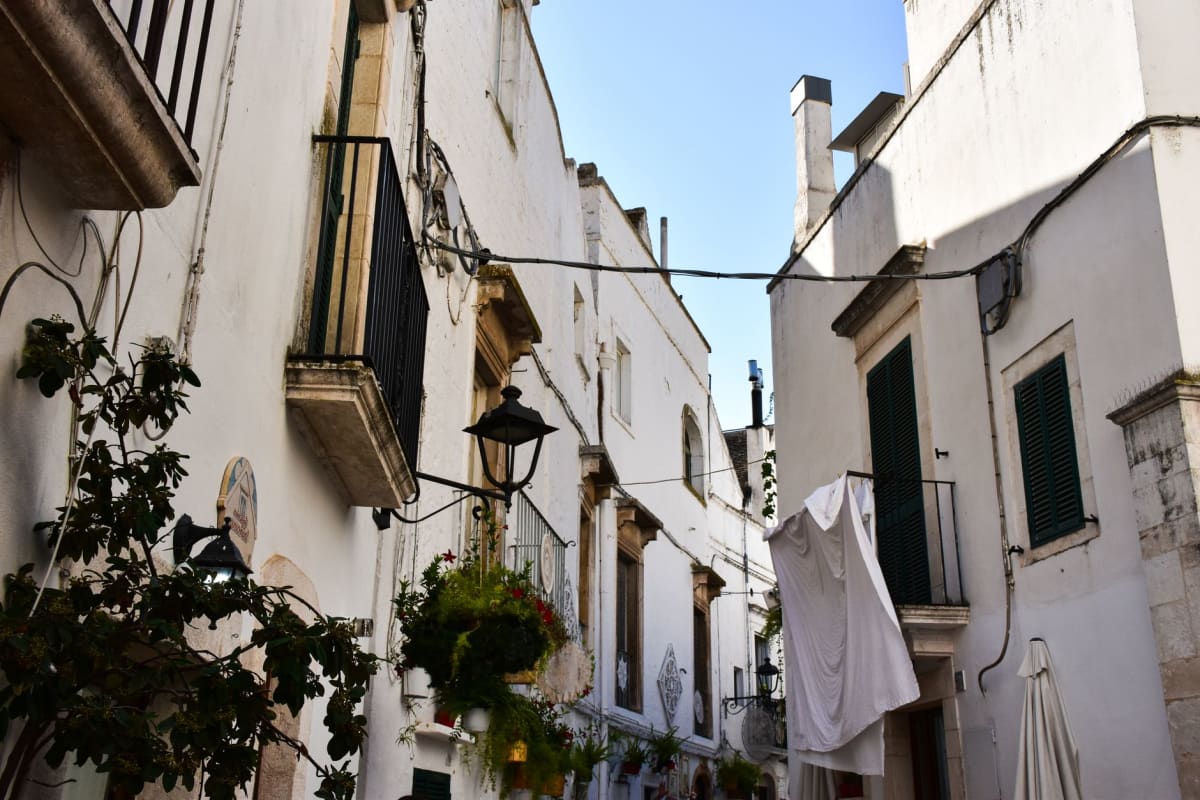
In the morning I walked the outer ring of the village as it curved along the ridge, the valley on one side falling away to trulli and vineyards, the descent to the modern town on the other. A cat followed me for two hundred metres and then abruptly stopped, as if it had remembered something important. The lane bent back into itself and I was, as the name promised, going round.
When to go: Spring — April through June — is the finest time for the surrounding valley, when the almond blossom has given way to green vines and the valley floor fills with colour. September and October are excellent for the wine harvest atmosphere, and the surrounding cantinas often open for tastings during that period. The summer months are warm and manageable — Locorotondo is small enough that it never feels overwhelmed.
Keep exploring
More from Puglia
 puglia
Lucera
A hill town with a Roman amphitheater buried under a football pitch and a Swabian fortress the size of a small kingdom — the strangest, most layered history lesson in the Tavoliere.
Explore puglia
Manduria
Home of Primitivo di Manduria, where centuries-old alberello vines grow low and gnarled in red earth, and a ring of Messapian walls hints at a much older city underneath.
Explore puglia
Manfredonia
The Gargano's gateway city on the flat plain south of the massif — a Swabian castle, a long working seafront, and the least touristed base on the whole peninsula.
Explore puglia
Marina di Ostuni
The pine-backed Adriatic coastline below the white hill town of Ostuni — a string of beach clubs, quiet coves, and dune trails through the Regionale Dune Costiere park.
Explore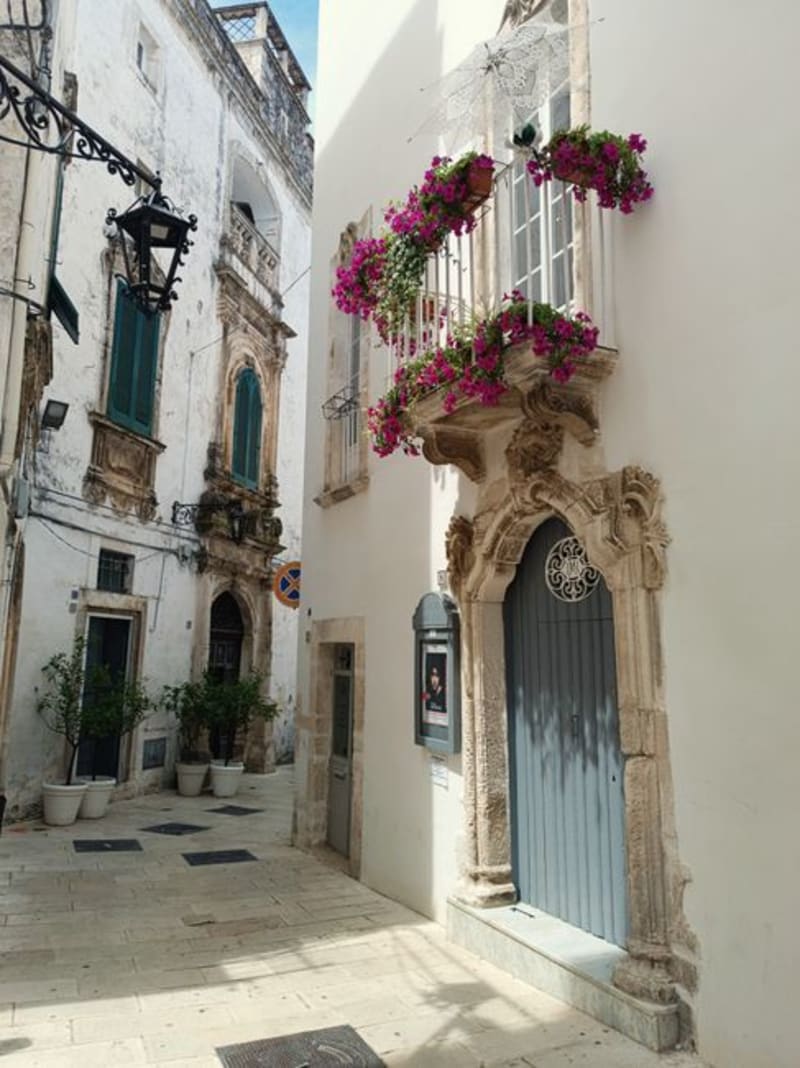 puglia
Martina Franca
A Baroque hill town at the edge of the Valle d'Itria where the old centro is all curling stone facades, and the capocollo is the best cured meat I have eaten in Italy.
Explore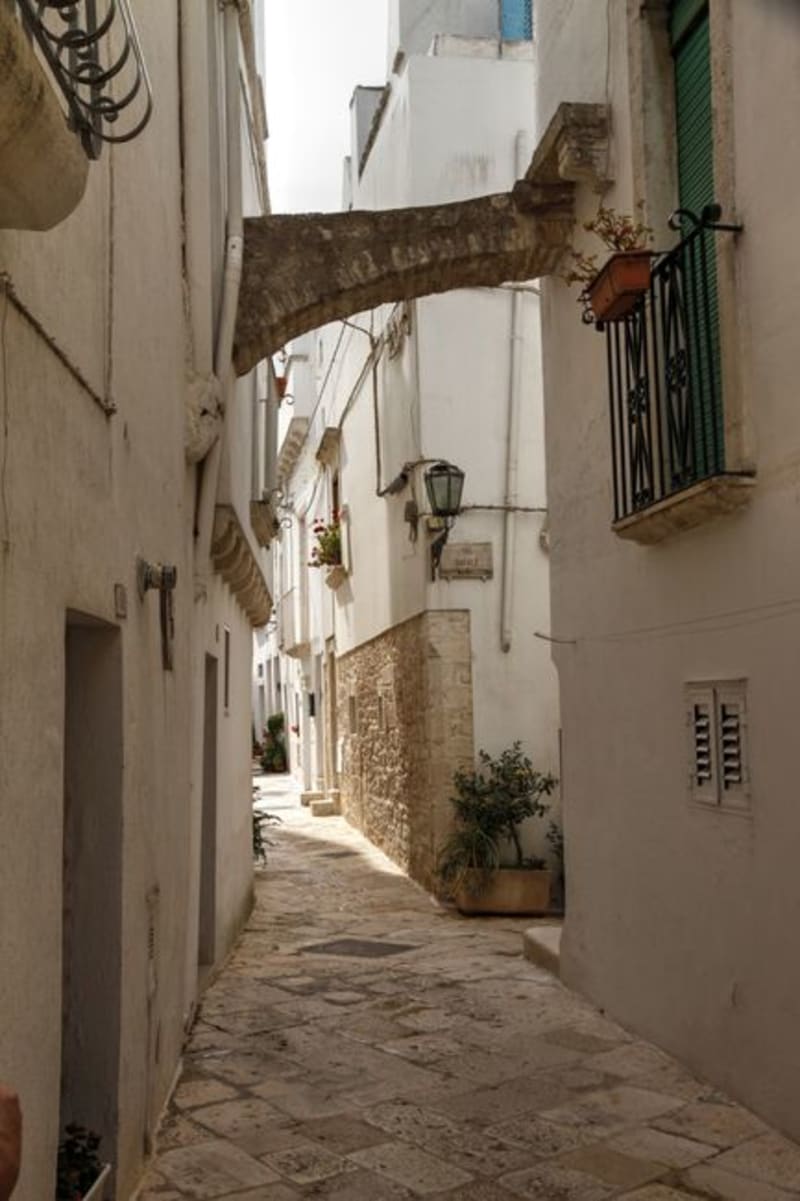 puglia
Maruggio
An inland Ionian town whose seaside frazione, San Pietro in Bevagna, holds a working tonnara history and some of the least crowded beaches on this coast.
Explore