
Caminha
"Caminha is where a whole river runs out of road, and somehow that feels like the calmest place in Portugal."
The fishing town where the Minho river finally surrenders to the Atlantic, its medieval square and pine-backed beach making it feel like Portugal's quiet last word before Spain begins.

I got to Caminha in the late afternoon and walked straight down to the estuary, where the Minho river — after marking the entire northern border with Spain — finally widens out and gives itself to the Atlantic in one last unhurried stretch of sandbanks and gulls. Across the water, close enough to make out individual houses, sits A Guarda in Galicia, and there’s a small ferry that shuttles between the two in about ten minutes, which felt like the most understated border crossing I’d ever made. Caminha’s old town centers on the Praça Conselheiro Silva Torres, a square lined with 15th and 16th-century buildings including a clock tower and a stone loggia, all of it low-key and lived-in rather than restored into a museum piece — kids were kicking a ball against the base of the tower when I arrived, and nobody seemed to mind.
Pines, Dunes, and a Beach That Keeps Its Distance
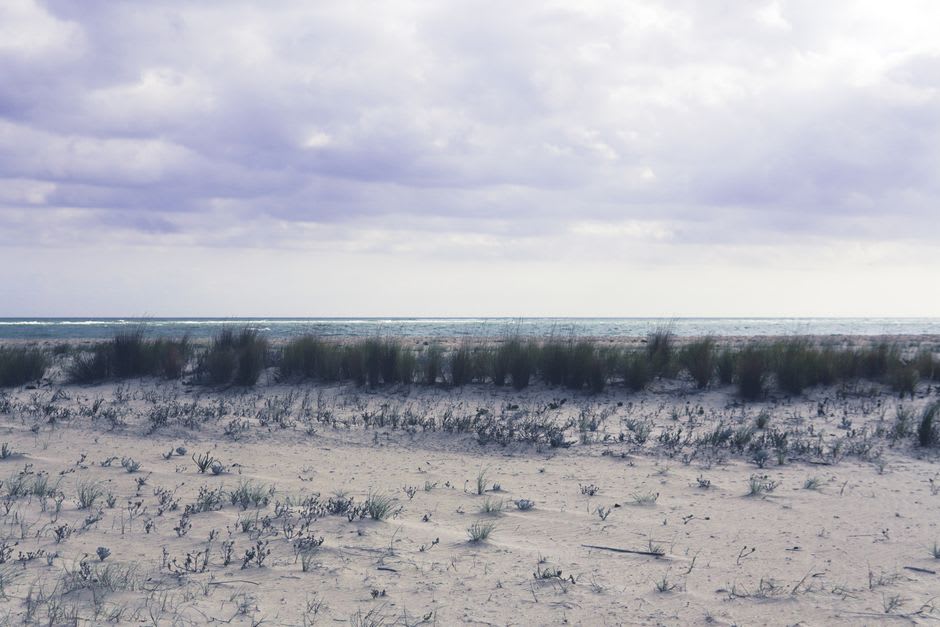
A short walk or bike ride from the old town gets you to Praia do Camarido, part of a long stretch of coast backed by a genuinely enormous pine forest planted generations ago to stop the dunes from swallowing farmland further inland. I spent an afternoon there and it was one of the emptiest beaches I’d found on the entire Portuguese coast, the Atlantic here colder and rougher than the Algarve’s, with a wind that made the pines behind the dunes roar the whole time. A local surfer I got talking to, waxing his board in the parking area, told me this stretch gets serious swell in autumn and that most Portuguese tourists never bother coming this far north, leaving it mostly to Galicians and a handful of people who actually live nearby.
I ate dinner that night at a small restaurant near the fort, lamprey rice being the dish everyone insisted I try given the season, and washed it down with a green wine that the waiter poured without asking twice — the same Minho hospitality I’d found upriver in Monção, just with more salt in the air.

When to go: Summer for the beach and the ferry crossing to Galicia, though late autumn brings dramatic Atlantic swell if you don’t mind the cold wind off the estuary.
Keep exploring
More from Portugal
 portugal
 Carvoeiro
A cliffside cove town where honeycombed sandstone formations and hidden sea caves rival its more famous neighbor Benagil, without quite the same crowds.
Explore portugal
 Cascais
A former royal summer retreat on the Atlantic coast where pastel villas, seafood restaurants, and crashing waves coexist in elegant harmony.
Explore portugal
 Castelo de Vide
A hillside spa town of white houses and marble fountains, where the best-preserved Jewish quarter in Portugal still remembers the families who fled here in 1492.
Explore portugal
 Castelo Rodrigo
A clifftop fortress village surrounded by olive groves and almond trees, remembered locally for a single night in 1640 when it was briefly, furiously, Portugal's capital.
Explore portugal
 Chaves
A frontier town near the Spanish border built on a Roman bridge and a hot spring, where the water runs naturally warm out of the ground and the smoked meats are taken as seriously as the thermal baths.
Explore portugal
 Coimbra
Portugal's ancient university city, where students still wear black capes, fado has its own distinct tradition, and the library makes every bibliophile weep.
Explore