
Alijó
"Alijó doesn't dress up for visitors, and that's exactly why the wine there tastes so honest."
A hilltop Douro wine town built more for growers than for tourists, where the port houses are family names on cellar doors rather than brands, and the plateau views stretch over vines in every direction.

Alijó sits up on the plateau above the Douro’s river gorges, and after days of driving the steep switchbacks down by the water, arriving here felt like coming up for air — wide open vineyard country rolling in every direction instead of the vertiginous terraces closer to Pinhão. The town itself is modest, built around a market square and a handful of solid stone houses, without much pretense toward tourism, which I actually liked; the restaurants serve grilled meat and beans to actual local families rather than tasting menus to visitors. What Alijó has instead of postcard views is some of the most respected port-producing land in the entire Douro Demarcated Region — Quinta da Romaneira and Quinta do Vale Meão sit in this municipality, along with dozens of smaller family quintas that supply grapes to the big Porto-based houses without ever putting their own name on a label people outside Portugal would recognize.
A Feira That Smells Like the Whole Region
I happened to be passing through during the Feira dos Santos in early November, a centuries-old agricultural fair that takes over the town for several days with livestock pens, chestnut roasters, wine stalls, and stands selling everything from cured hams to hand-tools, drawing farmers from villages across Trás-os-Montes who still come mainly to trade rather than to perform tradition for cameras. I ate roasted chestnuts out of a paper cone while an older farmer explained to me, patiently and at length, the difference between this year’s Touriga Franca and Touriga Nacional harvests, a distinction that clearly mattered enormously to him and that I only half followed but appreciated all the same.

Later I drove a few minutes out of town to a viewpoint over the vineyard plateau, less dramatic than the river-canyon views elsewhere in the Douro but somehow more peaceful — vines rolling to the horizon under a huge sky, a single quinta’s chimney smoking in the distance, and no one else around.

When to go: Early November for the Feira dos Santos, or the September harvest if you want to see the plateau quintas at their most active.
Keep exploring
More from Portugal
 portugal
 Almada
The unglamorous side of the Tejo, where a giant Christ statue watches over Lisbon and a rickety panoramic lift drops you straight onto a working riverfront.
Explore portugal
 Almeida
A twelve-pointed star fortress on the Spanish border, its bastions cut so precisely into the earth that from above the whole town looks like a piece of military origami.
Explore portugal
 Alvor
A quiet fishing village on a tidal estuary, where wooden boardwalks thread through salt marsh and the loudest sound is still boat rigging clinking in the wind.
Explore portugal
 Amarante
A riverside town built around a saint famous for matchmaking, where a graceful stone bridge and a monastery of carved granite saints preside over pastries shaped, unmistakably, like something else entirely.
Explore portugal
 Angra do Heroísmo
Terceira's UNESCO-listed colonial capital, once the Atlantic's most important port between Europe and the Americas, where the streets fill each summer with garlanded arches for the Holy Spirit festivals.
Explore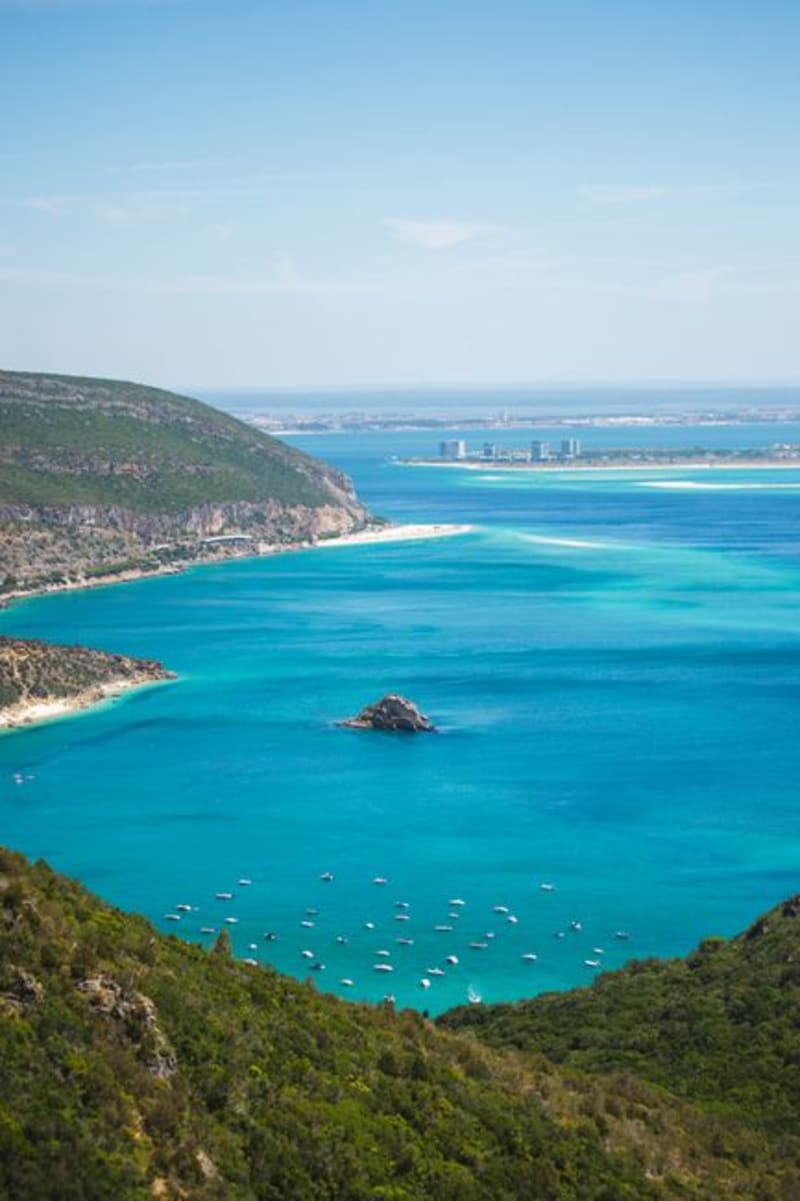 portugal
 Arrábida
A limestone mountain range that drops straight into Caribbean-turquoise water, hiding a whitewashed convent, wild goats, and some of the clearest sea in mainland Portugal.
Explore