
A 4-million-year-old lake, 365 Byzantine churches, and water so clear it makes the word 'transparency' feel like an understatement.

I arrived in Ohrid on an evening bus from Skopje, and the lake appeared before the town did — a sudden flash of copper through the bus window, the sun already low, the water catching it in a way that seemed almost theatrical. The church of Saint John Kaneo was silhouetted against the light on its cliff above the water, and I understood immediately why people who come here for a weekend end up staying for a week. There are places that assert themselves the moment you arrive. Ohrid is one of them.

The old town climbs the hill behind the waterfront in tight Ottoman-era lanes that smell of grilled meat and wild oregano. Wooden houses with carved balconies lean over the cobblestones, their upper floors jutting out in the old Ottoman fashion, creating a canopy effect at street level that keeps the alleys cool even in July. I wandered up through the bazaar district past a copper workshop where an old man was hammering a tray, not looking up, and emerged at the Roman amphitheatre — still used for summer concerts — with the lake spread out impossibly blue below. Ohrid has been inhabited continuously since the Neolithic, and standing on that hillside you believe it: every stone here seems to be sitting on top of another, older stone.
The lake itself is the fact that resists comprehension. Four million years old. Visibility down to fifteen metres. An entirely isolated ecosystem that has evolved species of snails, sponges, and trout found nowhere else on earth. I rented a mask and fins from a wooden hut near the old town pier and spent a morning floating over rocks that looked ancient in a way that had nothing to do with human time. The water temperature in early June was cold enough to sting and then — after the first minute — perfect. Below me, the boulders were furred with algae in deep greens and browns, and small fish moved in schools through the cold clarity like animated calligraphy. When I surfaced and looked back at the shore, the Byzantine churches on their cliff faces seemed to be observing the whole thing with patient approval.

Eating in Ohrid is one of the quieter pleasures of the Balkans. The grilled Ohrid trout, pleshkavica stuffed with cheese, and the local tavče gravče — a baked bean dish that arrives still bubbling in its clay pot — are all things I ordered more than once. The restaurants along the waterfront look like tourist traps but mostly aren’t, and the bills are startling in their modesty. I sat one afternoon at a place called nothing in particular, at a plastic table right at the water’s edge, eating a whole grilled fish and drinking local white wine while a group of older women at the next table played cards and argued in Macedonian with an intensity that seemed entirely affectionate.
When to go: Late May through early June is close to perfect — the wildflowers are still out on the hillsides above town, the lake has warmed enough for swimming by mid-afternoon, and the streets are not yet overwhelmed. September recovers some of that quietness after the August crush. Avoid the first two weeks of August unless you like sharing the waterfront with most of the Balkans.
Keep exploring
More from North Macedonia
 north-macedonia
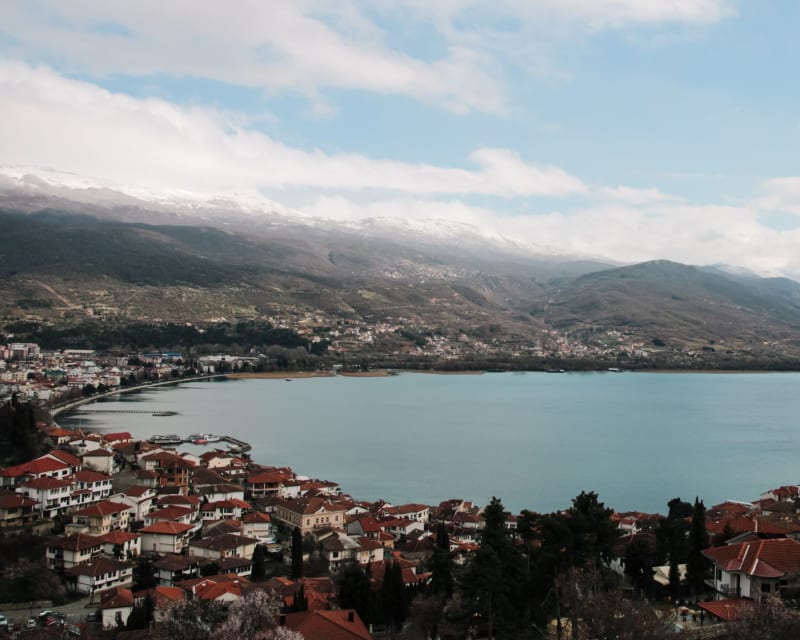
 Prespa Lakes
Two ancient lakes at the meeting point of three countries, where pelicans fish in shallow reeds and border crossings dissolve into migratory bird routes.
Explore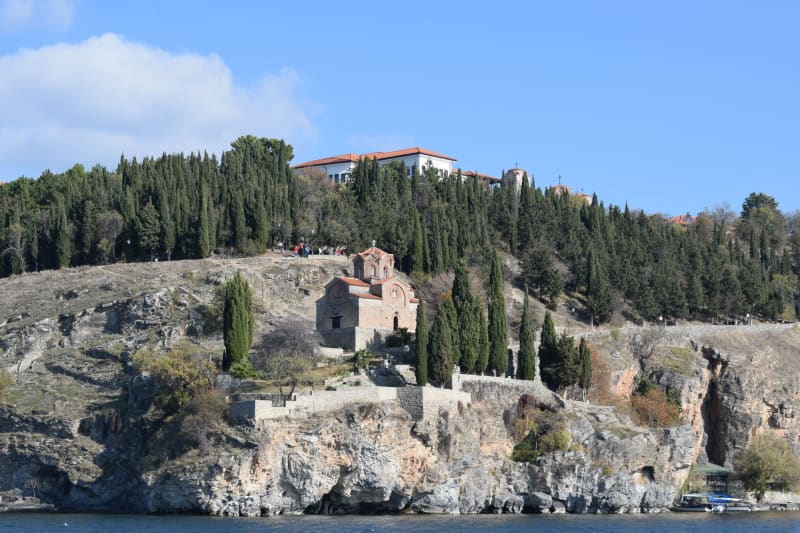 north-macedonia
 Saint Naum Monastery
A medieval monastery at the Albanian border where springs bubble up through the lake bed and peacocks wander the monastery gardens like they own them.
Explore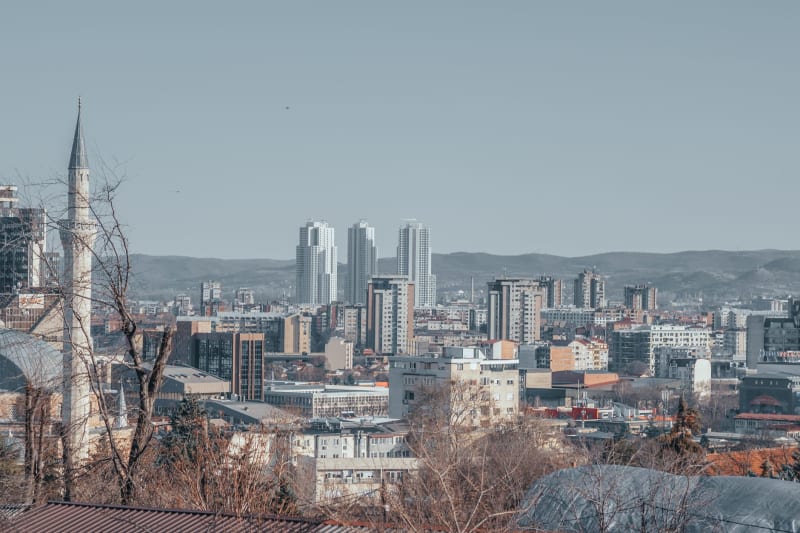 north-macedonia
 Skopje
A capital city split between a fake marble past and a genuine Ottoman present, both of them more interesting than they should be.
Explore north-macedonia
 Stobi
A whole Roman city laid open beside the Vardar highway, where you can walk into a fourth-century theatre and stand on mosaics most countries would build a museum around.
Explore north-macedonia
 Tetovo
An Albanian-majority city beneath the Šar Mountains, home to a mosque so elaborately painted it looks less like a building and more like a fever dream in tile.
Explore north-macedonia
 Bitola
The city of consuls — grand boulevards, faded Ottoman grandeur, and a café culture so serious it feels like a civic obligation.
Explore