Makalu Base Camp
"Makalu doesn't get a nickname the way Everest and Annapurna do. It doesn't need one — the mountain does the talking."
A demanding trek into the Barun Valley beneath the world's fifth-highest peak, through one of Nepal's most pristine and least developed conservation areas.
I flew into Tumlingtar, a dusty airstrip town in the Arun Valley, with a vague plan and a guide named Pemba who’d grown up in a village near Khandbari and had done the Makalu Base Camp trek more times than he could count. Over the next sixteen days I understood why he never tired of it: this is a trek through the Makalu-Barun National Park, one of the most biodiverse and least-visited conservation areas in Nepal, ending beneath a mountain whose sheer granite faces make it look less like a peak and more like a fortress.
Khandbari and the Approach
The trailhead town of Khandbari, a short jeep ride from the Tumlingtar airstrip, is a hill bazaar that serves as the last real supply point before the trek proper begins — a scatter of shops selling gas canisters, biscuits, and trekking gear to porters loading up for the days ahead. From there the trail drops into the Arun Valley and climbs the far side through terraced fields and Rai villages, the kind of lush, inhabited landscape that gradually gives way, over several days, to genuine wilderness as the route enters the national park boundary.
The Barun Valley’s Strange Botany
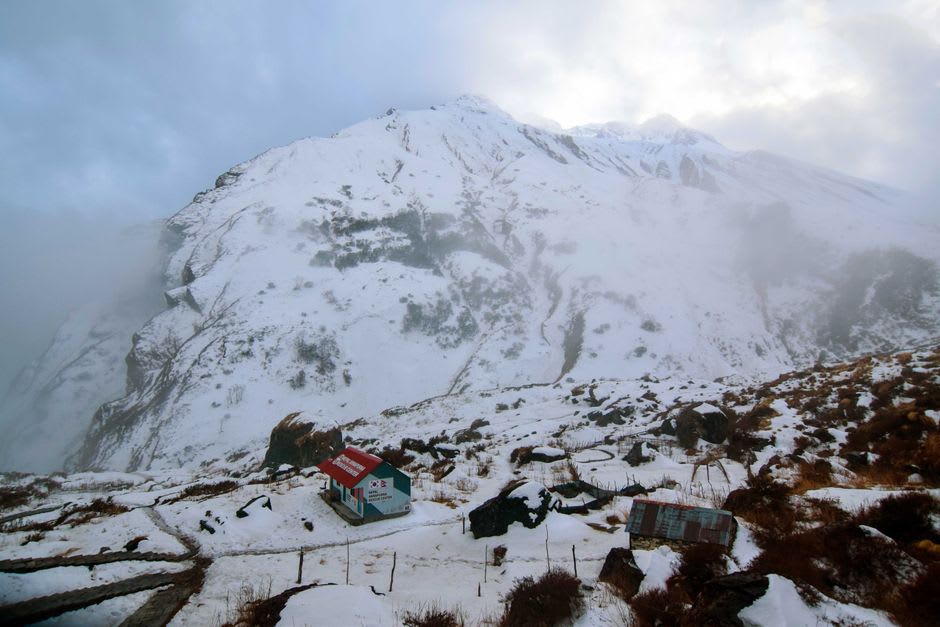
What separates this trek from others in Nepal is the Barun Valley itself — a steep, glacially carved gorge that the park protects as one of the most botanically diverse regions in the Himalayas, home to over 3,000 species of flowering plants and dozens of rhododendron varieties found nowhere else. I walked for two full days through forest so dense with moss and orchid and unfamiliar undergrowth that it felt more like a cloud forest than anything I associated with a trek toward an 8,000-meter peak. Pemba pointed out red panda droppings on the trail at one point, though we never saw the animal itself — this valley is one of the last strongholds for them in eastern Nepal.
Base Camp and the Granite Wall
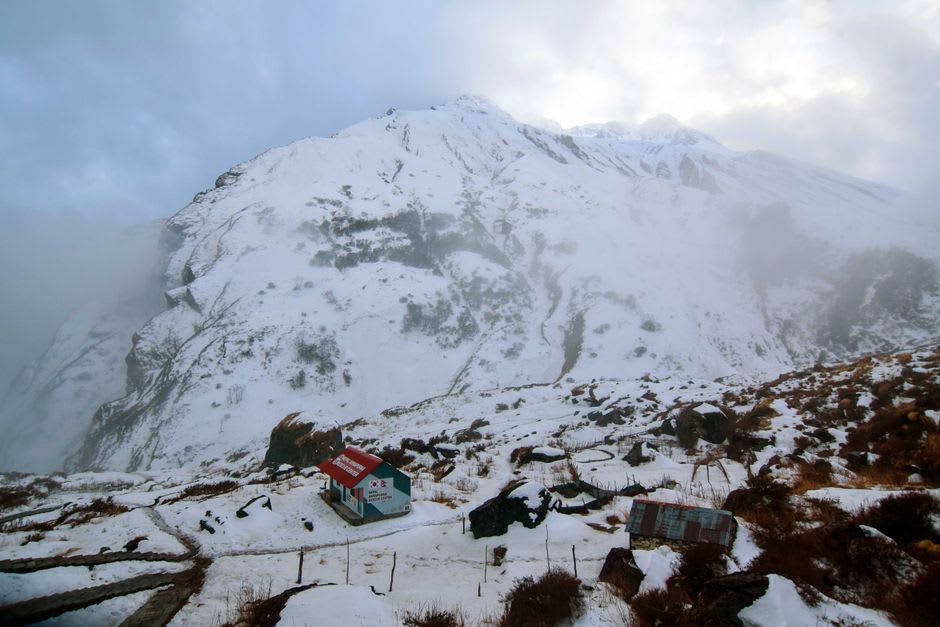
Makalu Base Camp sits at nearly 4,900 meters on a boulder field beneath the mountain’s southeast face, a stark contrast after days of forest — just rock, ice, and the fifth-highest mountain on earth rising in a single uninterrupted sweep above the camp. There were four other trekking groups there the week I arrived, a number that would be unthinkable at Everest Base Camp during the same season. I sat on a flat boulder in the cold for close to an hour, waiting for the light to shift on the face, and didn’t see another foreigner the entire time.
When to go: Late September through November for the most stable weather and clear views of the peak. April through May brings the valley’s famous rhododendron bloom, though afternoon cloud builds more often. This is a serious high-altitude trek requiring proper acclimatization days; avoid the monsoon (June–September) entirely, when leeches and landslide risk make the lower trail dangerous.
Keep exploring
More from Nepal
 nepal
nepal Manakamana
A wish-granting Hindu temple reached by a cable car strung high over a river gorge, where pilgrims and sacrifice goats share the same gondola line.
Explore nepal
nepal Marpha
A whitewashed Thakali village in the Mustang rain shadow, famous for apple orchards, local brandy, and some of the best-preserved traditional architecture on the Annapurna Circuit.
Explore nepal
nepal Melamchi
The river town where the Helambu trek spills back down to the road, a working Tamang and Newari market center rebuilding after catastrophic flooding, and a reminder that not every valley in Nepal survives on tourism.
Explore nepal
nepal Muktinath
A sacred pilgrimage site holy to both Hindus and Buddhists, where 108 stone spouts pour glacial water over anyone brave enough to stand under all of them.
Explore nepal
nepal Mustang
The forbidden walled kingdom of Lo Manthang, a Tibetan enclave of white-walled towns and ochre cliffs.
Explore nepal
nepal Nagarkot
A ridge-top village above the Kathmandu Valley where a single sunrise over the Himalayas justifies the entire detour.
Explore