Africa
Namibia
"I came for the dunes. The silence is what stayed with me."
Namibia is a country that operates at geological scale — ancient dunes, fossilized riverbeds, skies with no ceiling — and the silence it hands you is the loudest thing you'll encounter in years.
I touched down in Windhoek at noon and the heat on the tarmac had that particular quality I associate with places that have always been dry — not just hot but ancient-dry, like the air itself remembers a time before rain. The terminal is small, orderly, almost unexpectedly calm for a capital city. I had a rental car booked and an itinerary I was already mentally dismantling, because Namibia is the kind of place that refuses to be rushed and will teach you that lesson through sheer scale if nothing else.
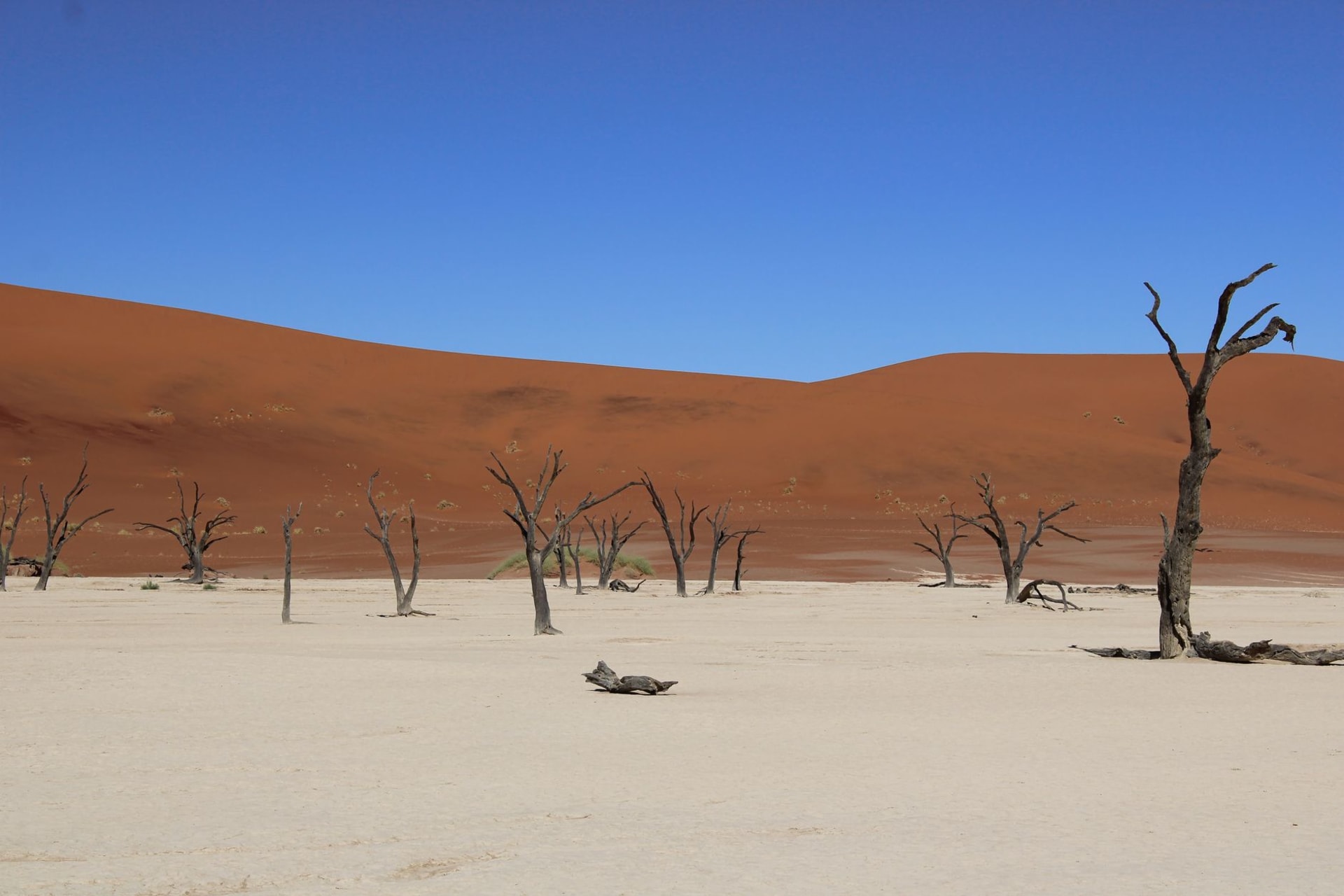
The drive south toward Sossusvlei took most of an afternoon, and for long stretches the road is so straight and empty that you start to lose your sense of speed. The Namib Desert doesn’t announce itself — it seeps in, the scrub thinning, the soil going from brown to terracotta to the deep burnt orange that looks photoshopped until you’re standing inside it. I arrived at the dunes at first light the next morning, the cold still sharp at 5 a.m., and climbed Dune 45 as the shadows pulled back across the valley below. Dead Vlei was thirty minutes on foot from the car park — a cracked white clay pan ringed by skeletons of camel thorn trees, dead for centuries but too dry to rot. I sat there for forty minutes and didn’t speak. Neither did anyone else who arrived. The place earns its silence.
Etosha, in the north, is a different kind of revelation. It doesn’t perform the way East African game parks perform — no endless convoys of safari vehicles pursuing the same lion. You park beside a waterhole and you wait, and the animals come on their own schedule: giraffe at dusk, rhino at midnight, elephant that walk through camp like they’re indifferent to the concept of fencing. I ate dinner at a communal table in a government rest camp that felt built for function rather than atmosphere, drank cold Windhoek lager, and watched a black-backed jackal work the perimeter fence with extraordinary patience. It was one of the best evenings I’ve had in Africa.
When to go: May through October is the window — dry season, cooler nights, and the waterholes concentrate wildlife as water sources shrink. July and August are peak but worth it. Avoid December through March: the rainy season floods some roads and Sossusvlei becomes inaccessible. If you want the dunes to yourself, go in May or September, shoulder months when the light is still extraordinary.
What most guides get wrong: They frame Namibia as a destination for big-budget luxury safaris — fly-in camps, private guides, all-inclusive price tags that add another zero. But Namibia’s national park infrastructure is genuinely functional and well-maintained, and the government rest camps at Etosha cost a fraction of the lodge prices. The self-drive experience here is actually more rewarding than being driven, because the country demands your own attention and your own pace. Rent a car, cook your own braai, stop wherever the light looks good. The country was built for exactly that.
Explore
Places in Namibia
 namibia
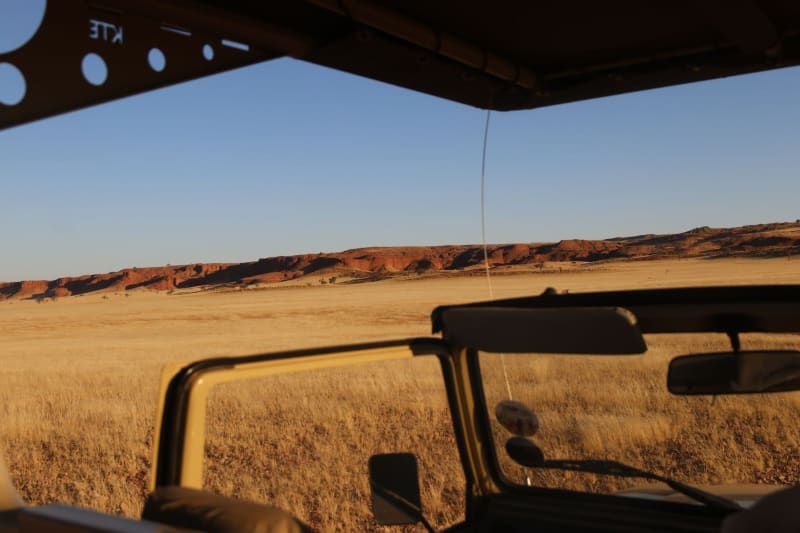
 Damaraland
Ancient Bushman rock art at Twyfelfontein, desert-adapted elephants, and the volcanic drama of Brandberg.
Explore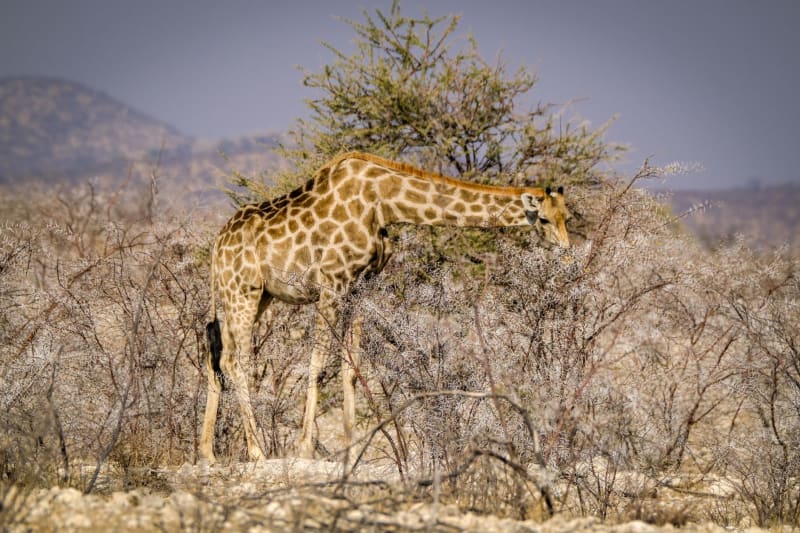 namibia
 Epupa Falls
The Kunene River tumbles 37 meters into a basalt gorge on Namibia's remote Angolan border, surrounded by makalani palms and Himba villages that have been here longer than any road.
Explore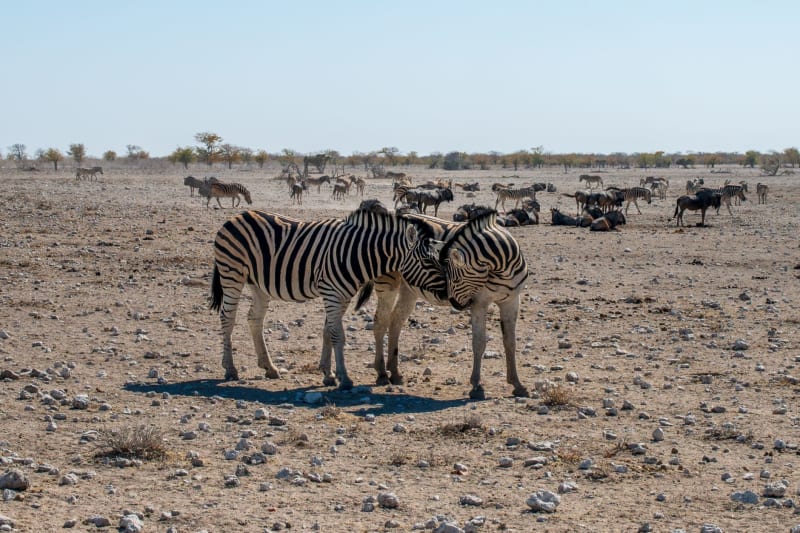 namibia
 Etosha Pan
A colossal salt pan visible from space, ringed by waterholes where predators and prey drink side by side.
Explore namibia
 Fish River Canyon
The second-largest canyon on earth sits in Namibia's far south, a five-day hiking route through 550 million years of exposed geology that most people only view from the rim.
Explore namibia
 Lüderitz
A Victorian diamond-rush port marooned on Namibia's southern coast, where Art Nouveau buildings face the Atlantic gales and a ghost town of collapsing houses slowly disappears into the dunes five kilometers away.
Explore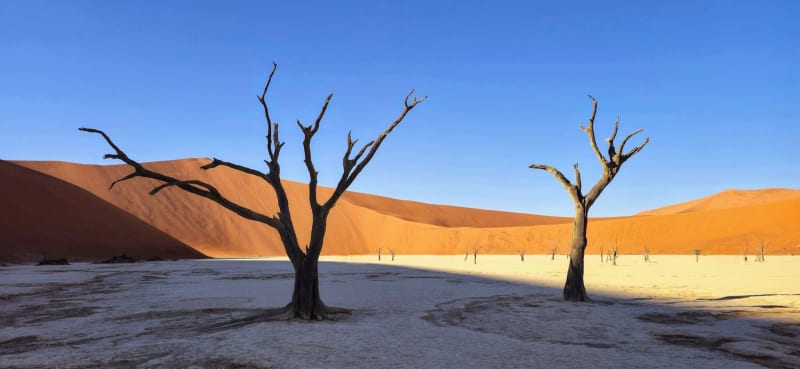 namibia
 Naukluft Mountains
A remote highland massif in central Namibia with multi-day canyon hikes, natural pools and no cell signal for a week.
Explore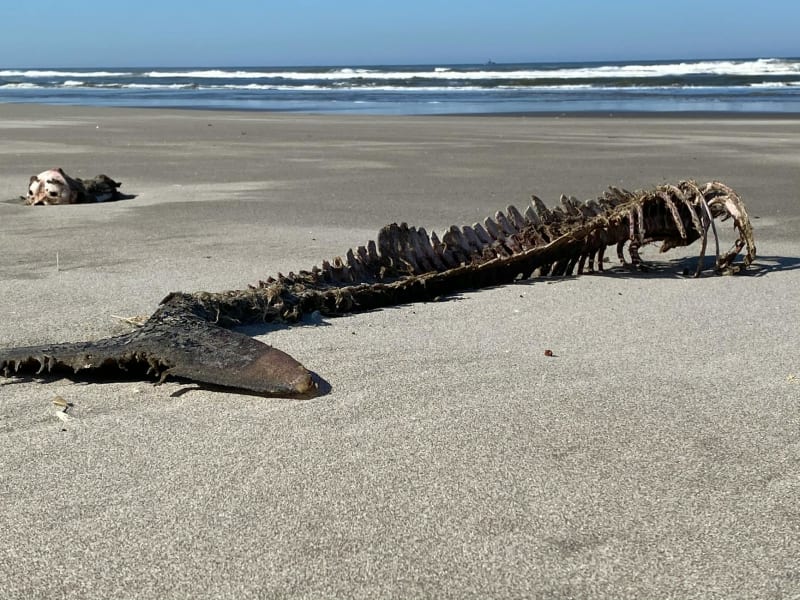 namibia
 Skeleton Coast
A shipwreck-strewn coast where fog rolls in from the Benguela Current, and seal colonies bark into the mist.
Explore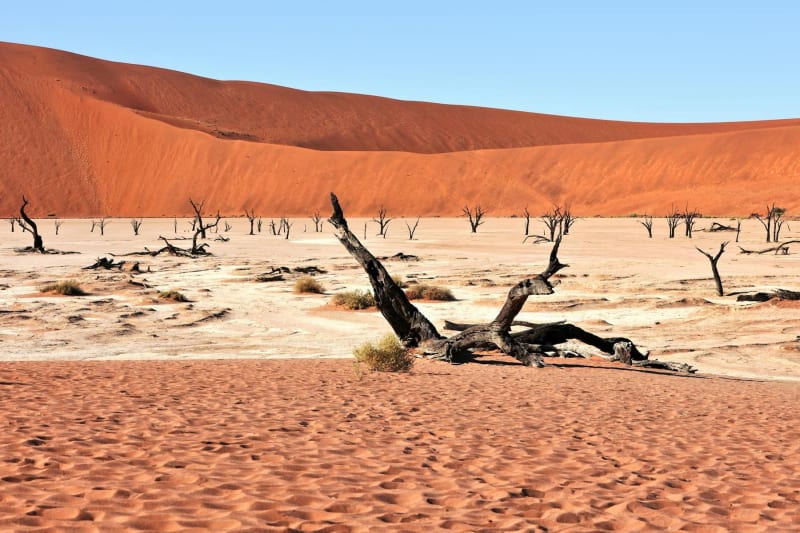 namibia
 Sossusvlei
Deadvlei's bleached white clay pan with ancient dead camel thorn trees — the most photographed place in Africa.
Explore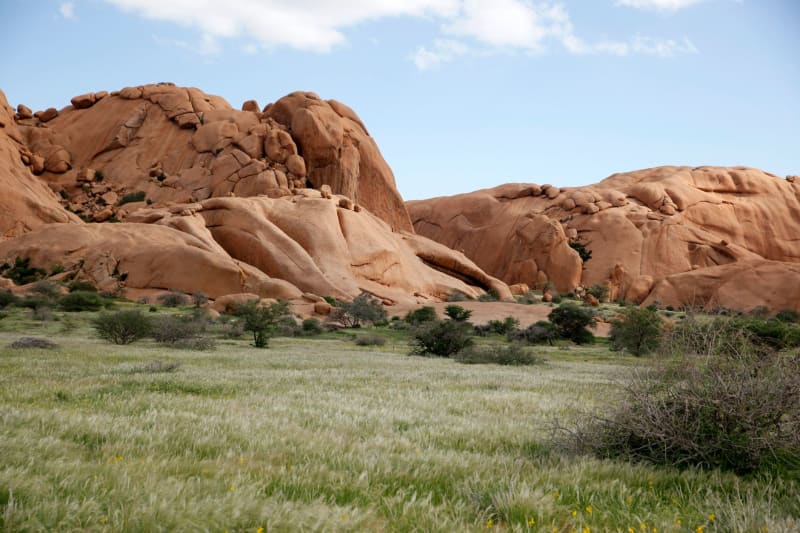 namibia
 Spitzkoppe
A cluster of bald granite peaks erupting from the desert flatness, glowing orange at dusk over rock arches and ancient San paintings.
Explore namibia
 Swakopmund
A German colonial town pressed between the Namib and the Atlantic, where fog horns sound at dawn and people eat schnitzel within sight of sand dunes.
Explore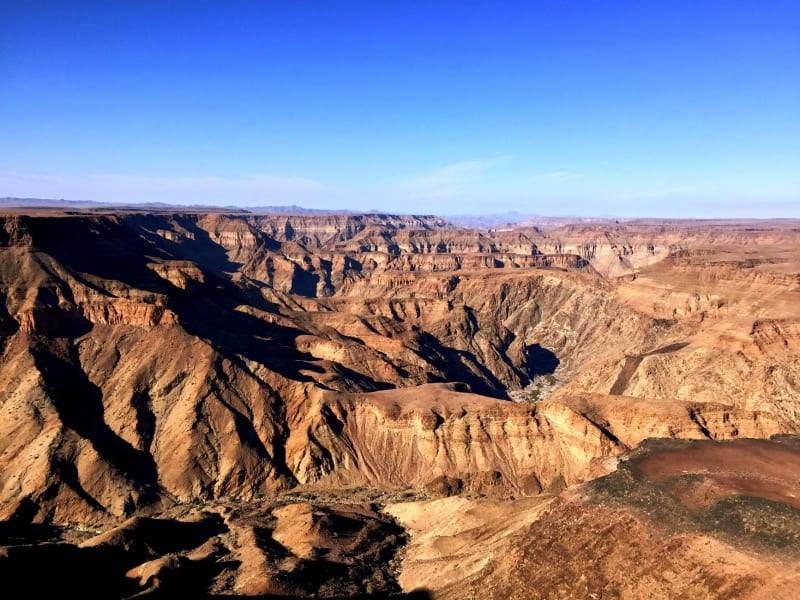 namibia
 Zambezi Region
A thin panhandle of subtropical Africa grafted onto the northeast corner of Namibia, where the Chobe and Zambezi rivers meet and the landscape bears no resemblance to the country it belongs to.
Explore