Ancient Bushman rock art at Twyfelfontein, desert-adapted elephants, and the volcanic drama of Brandberg.
There is a silence in Damaraland that feels prehistoric. Not the absence of sound exactly — the wind still moves through the euphorbia forest, a rock hyrax still screams from somewhere above the boulders — but something about the quality of the air suggests that nothing essential has changed here in ten thousand years.
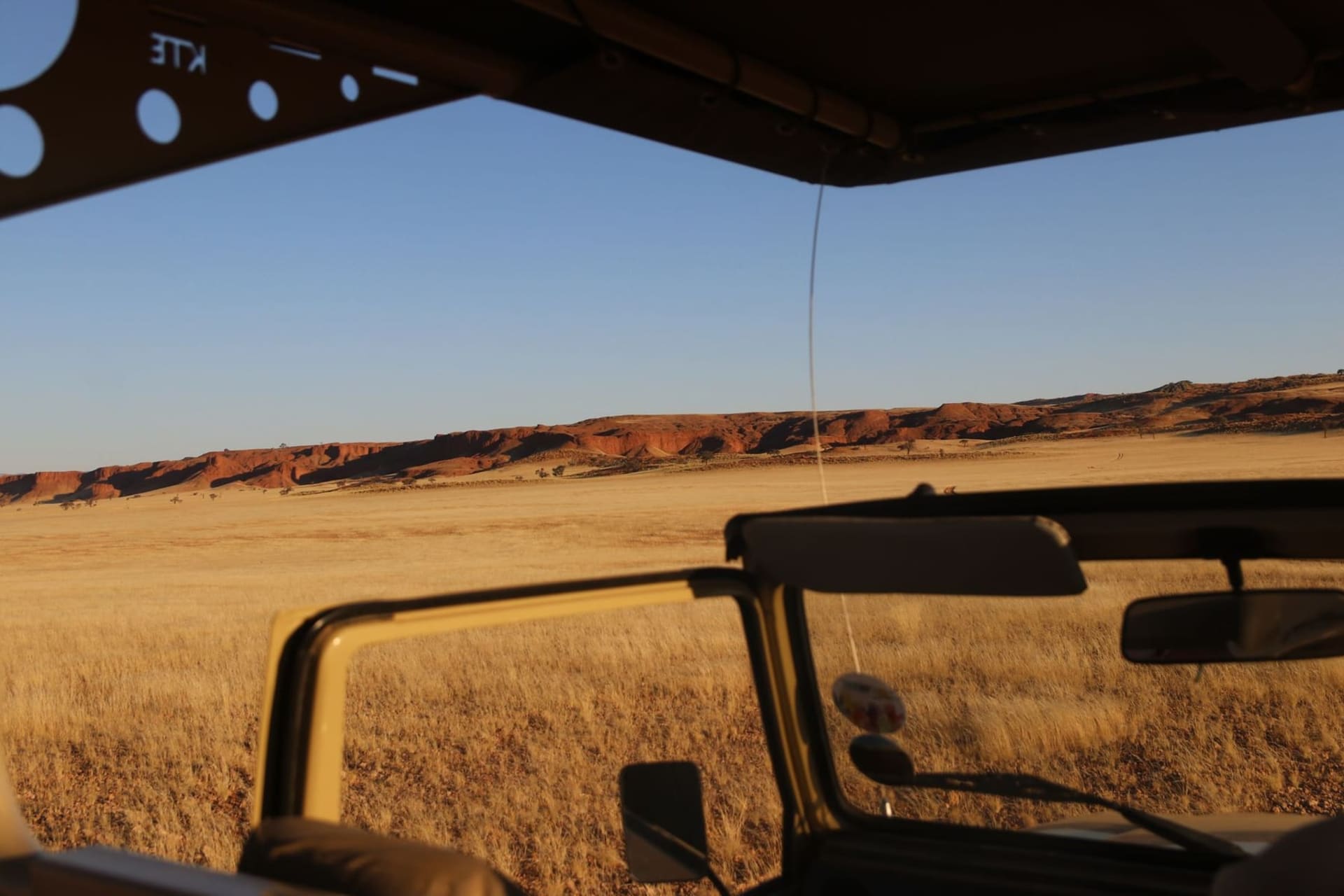
We drove north from Outjo on the C35, the tar dissolving into gravel somewhere past Khorixas, and kept driving until the land turned the color of dried blood and the mountains looked like they had been forced up through the crust by something impatient and enormous.
Twyfelfontein and the First Painters
The guide’s name was Simon, and he walked us to the engravings without preamble. There are roughly two thousand petroglyphs scattered across the sandstone slabs at Twyfelfontein — rhinos, giraffes, ostriches, a lion with a paw print instead of a paw, which no one fully understands — and Simon stopped at a particular panel and said the thing that stayed with me.
The first artists chose this wall because the light is always right here.
He meant it practically: the afternoon sun hits this face at a low angle and makes every carved line throw a shadow, makes the figures leap. Someone, eight thousand years ago, understood light the way a photographer understands light. Lia stood very still beside me and said nothing for a long time, which is the most serious compliment she gives anything.
The engravings are not paintings — they are cut into the rock — and they are not decorative. They are a record of something witnessed, something known. Standing among them I felt not the romantic vertigo of deep time but something quieter: the recognition that whoever made these was paying attention.
Desert Elephants in the Huab Valley
The unexpected thing was this: I had expected the desert elephants to look diminished, adapted-down versions of the real thing. They are the opposite. They are larger than savanna elephants because lean seasons favor size, their feet wider from walking sand, their legs longer from covering thirty kilometers a day to reach water. We found a family of seven in the dry Huab riverbed at dusk, digging with their trunks into the sand until dark water welled up. Nobody rushed. The light went orange, then pink, then the color of rust, and they kept digging.
Brandberg, the Burning Mountain
From a distance, the Brandberg massif looks like a single igneous thought — 2,573 meters of granite that glows orange at sunrise as if something inside is still cooling. The White Lady painting in the Tsisab Gorge rewarded the forty-minute walk not with a lady (the figure is likely male, and the white pigment is kaolin) but with a panel of extraordinary complexity: hunters, dancers, a figure mid-transformation between human and animal. A shaman, probably, traveling between worlds.
When to go: May through October is the dry season — cooler nights, reliable wildlife sightings, and the light that Simon described sitting flat and golden on everything. Avoid January and February when flash floods can close the gravel roads entirely.