Kabah
"The Palace of Masks at Kabah covers every centimetre of its facade in carved stone faces — and when you are the only one standing there, all 250 of those eyes feel aimed at you."
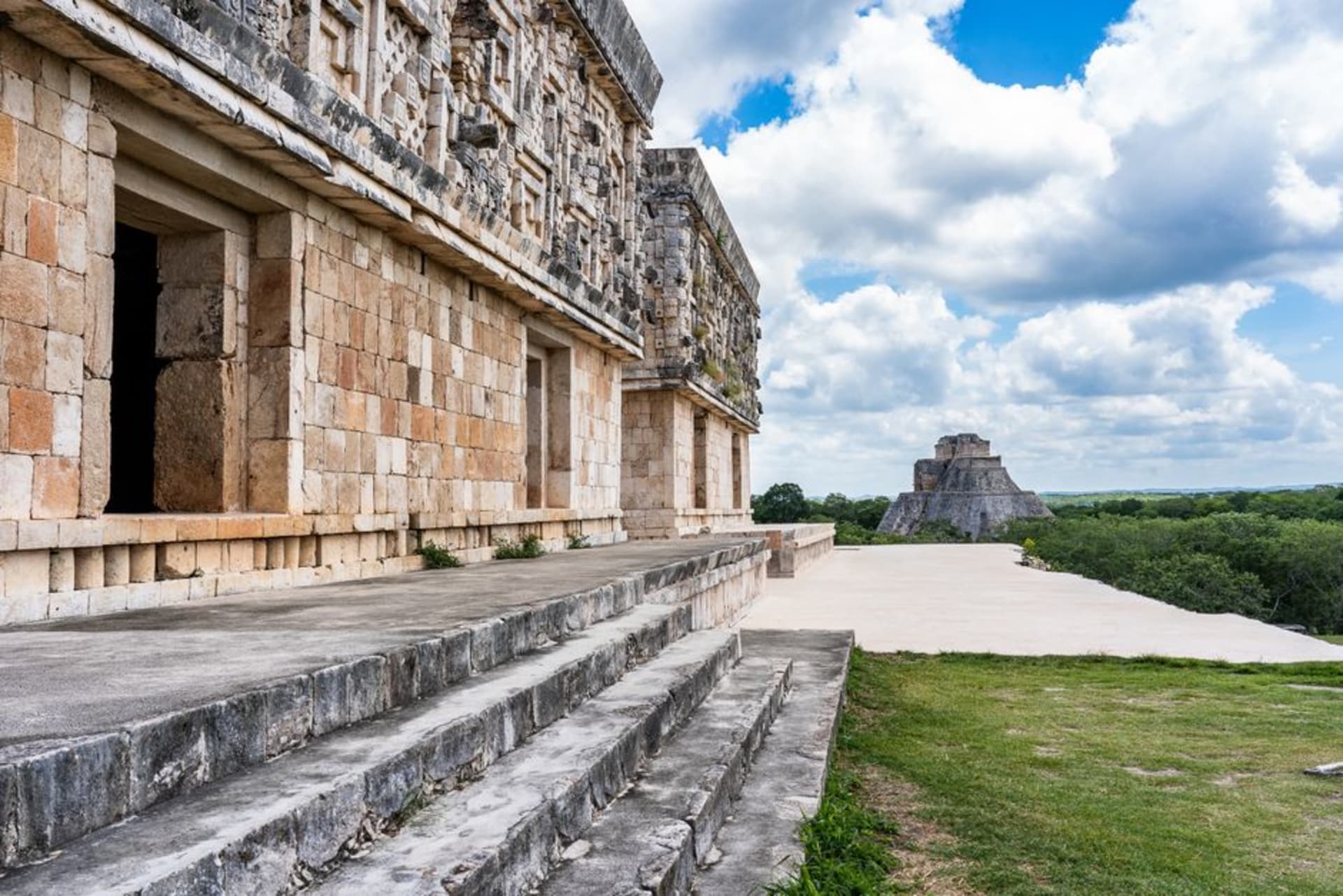
Twenty kilometres south of Uxmal on the Puuc Route, Kabah holds one of the most unsettling facades in Mesoamerica: the Codz Poop, a palace whose every surface is covered in carved Chaac rain god masks, each limestone face staring outward with a hooked, scrolling nose. The site sees a fraction of the traffic Uxmal does, which means that on most mornings you can stand in front of 250 stone faces with no one else in the frame.

I drove south from Uxmal at half past nine on a Tuesday in March, windows down because the AC on the rental was already losing its argument with the heat building over the Puuc hills. Kabah arrives without ceremony — a painted roadside sign, a car park with two other vehicles, a site entrance that looks like it has been staffed by the same man since the eighties. I paid, walked through the turnstile, and turned left toward the thing I had come to see. Twenty steps later I understood why no one had warned me to prepare myself.
The Palace of Masks
The Codz Poop — the name translates roughly as “rolled mat” in Maya, though everyone calls it the Palace of Masks — is one of the stranger objects I have stood in front of in Mexico. The entire facade, from ground to roofline, is a continuous repetition of Chaac, the rain god: 250 or more carved limestone faces, each one roughly the size of a dinner plate, each with that distinctive scrolling nose that protrudes like a handle waiting to be turned. The effect is not beautiful in any conventional sense. It is relentless. You look at one face and your eye keeps moving sideways to the next, and the next, until you realize you have been standing there for ten minutes and no tour bus has arrived. Some noses are broken, some faces partially restored — which makes it feel less like a museum piece and more like something that simply survived. The stone is the colour of old teeth in the morning light, and the shadows the noses throw at ten o’clock are deeper than you expect.

The Rest of the Site
The rest of Kabah is worth the time you have already spent driving here. Behind the Palace of Masks, a raised causeway called the sacbe runs west toward Uxmal — the original road that connected the two cities is still partially visible under the grass, and walking it while the site is quiet feels like a different kind of archaeology than the velvet-rope variety. There is also the Arch of Kabah, a corbelled Maya arch that once marked the ceremonial entrance to the city, standing alone in a field with no barrier around it. You can walk through it. I did, twice, because I could not remember the last time I had stepped through something that old without a fence keeping me at a respectful distance. The other structures on site show the Puuc style at its quieter registers — fine stone mosaic, geometric friezes, stacked columns — and deserve the extra hour if you have it.

Timing and Logistics
The hour matters at Kabah more than at most ruins on this route. By the time I got back to the car park, just before noon, three buses from Mérida had arrived and the Palace of Masks was busy in a way that would have changed everything. Come early, make it your first stop on the Puuc Route rather than your last. There is no food at the site beyond what the small vendor by the entrance sells — cold water, a bag of chips, Gatorade if the cooler is stocked. The site has almost no shade outside the ruins themselves, and in March the sun is already serious by ten in the morning. Bring water. Bring more water than you think you need.

Getting There
Kabah sits on Highway 261, roughly 22 kilometres south of Uxmal and about 100 kilometres south of Mérida. The drive from Mérida takes around an hour and a half. Colectivos connect Mérida to the broader Puuc region but not directly to the site entrance; a rental car or hired taxi makes the logistics considerably less complicated. The dry season — November through April — is the practical window; May through September brings heat and humidity that make an open-air site this exposed a harder proposition.
Keep exploring
More of Yucatán
Keep exploring
More from Yucatán
 mexico
 Celestún
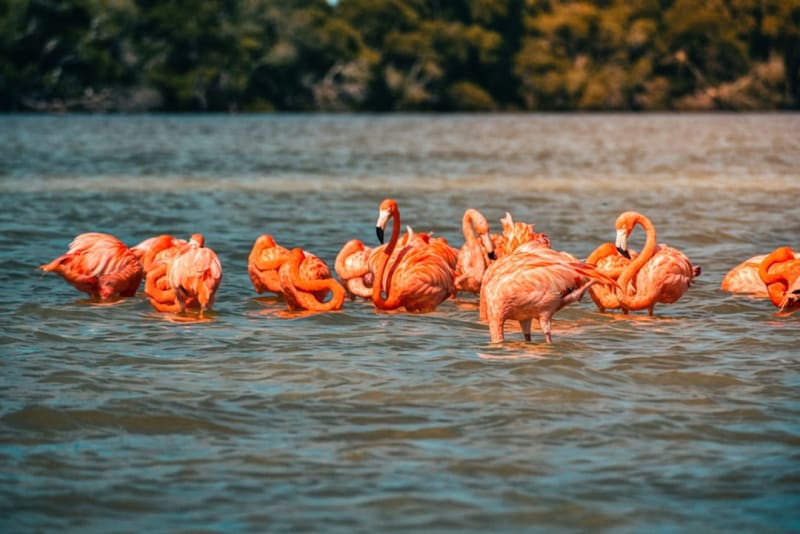
A remote Yucatán fishing village at the edge of a biosphere reserve where thousands of flamingos wade in a shallow estuary the color of old rose — the largest flamingo colony in North America.
Explore mexico
 Sisal
A forgotten Yucatán port where the henequen trade built a customs house and an 18th-century fort, the flamingos fly in from the Celestún lagoon at dusk, and the fishing boats unload octopus on a beach that hasn't changed since the henequen ships stopped coming.
Explore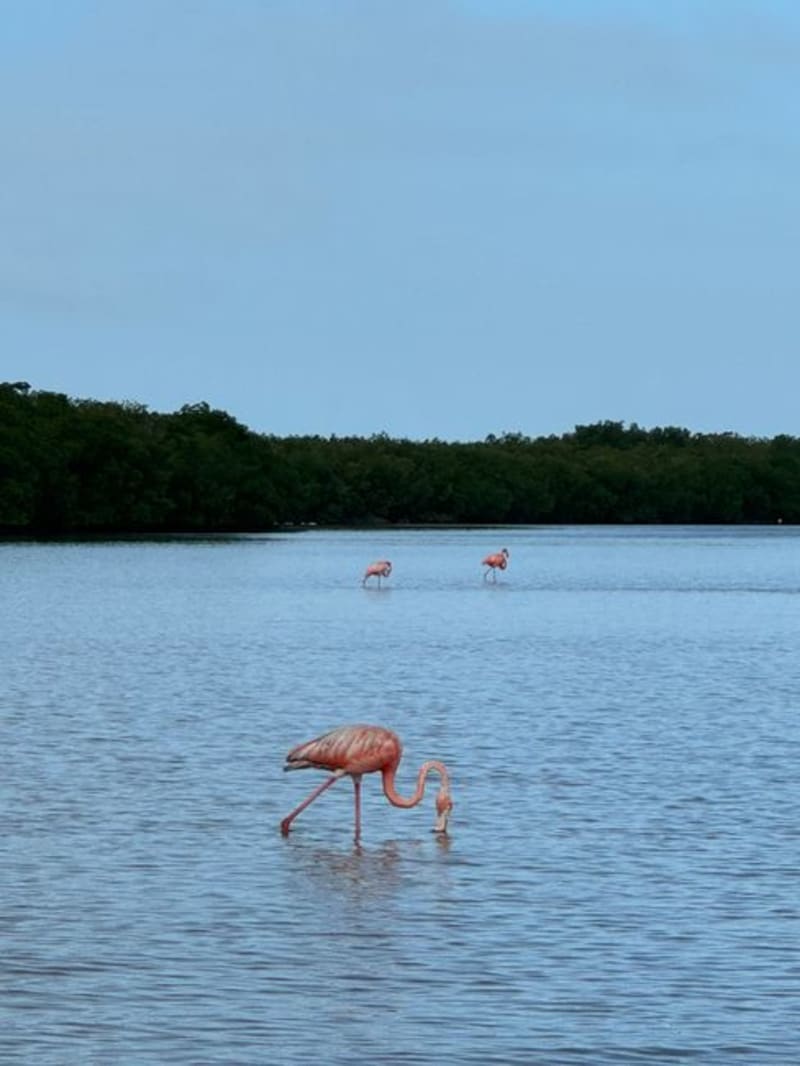 mexico
 Sisal
A forgotten colonial port on the Yucatán coast where henequen once shipped to the world and time has graciously stood still since. A crumbling 19th-century fort, flamingos wading in the estuary at dusk, and almost nobody else around to notice any of it.
Explore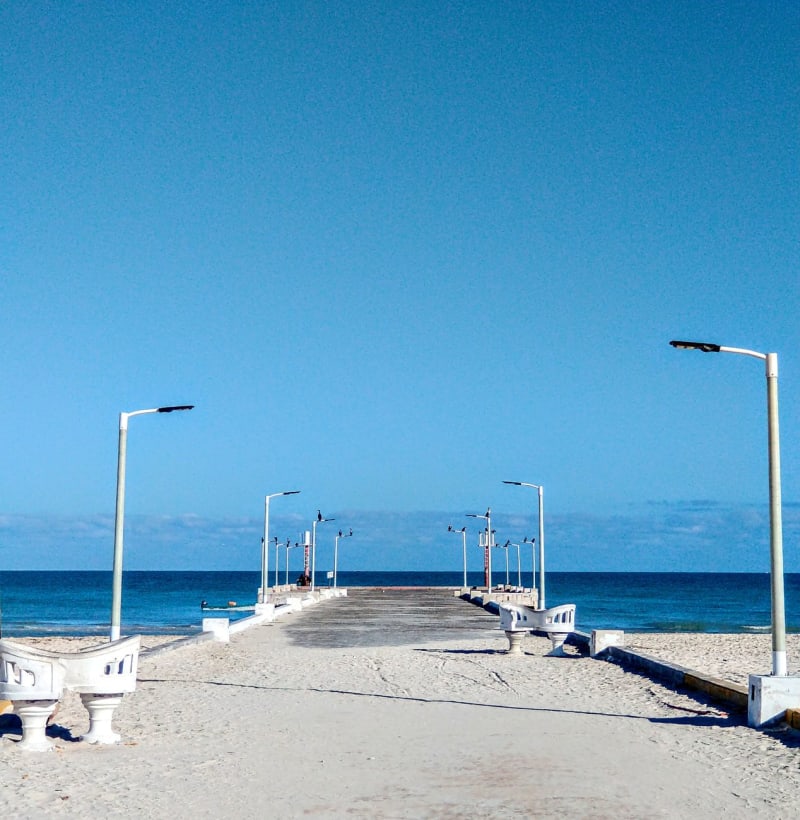 mexico
 Progreso
Mérida's seaside escape sits at the end of a long, flat causeway jutting into the Gulf of Mexico, where the water turns an improbable shade of jade-green and the pier stretches so far into the shallows it feels like a walking dare. The town runs on fish, salt air, and the seasonal rhythm of Meridanos fleeing the inland heat. I came for one afternoon and stayed two days.
Explore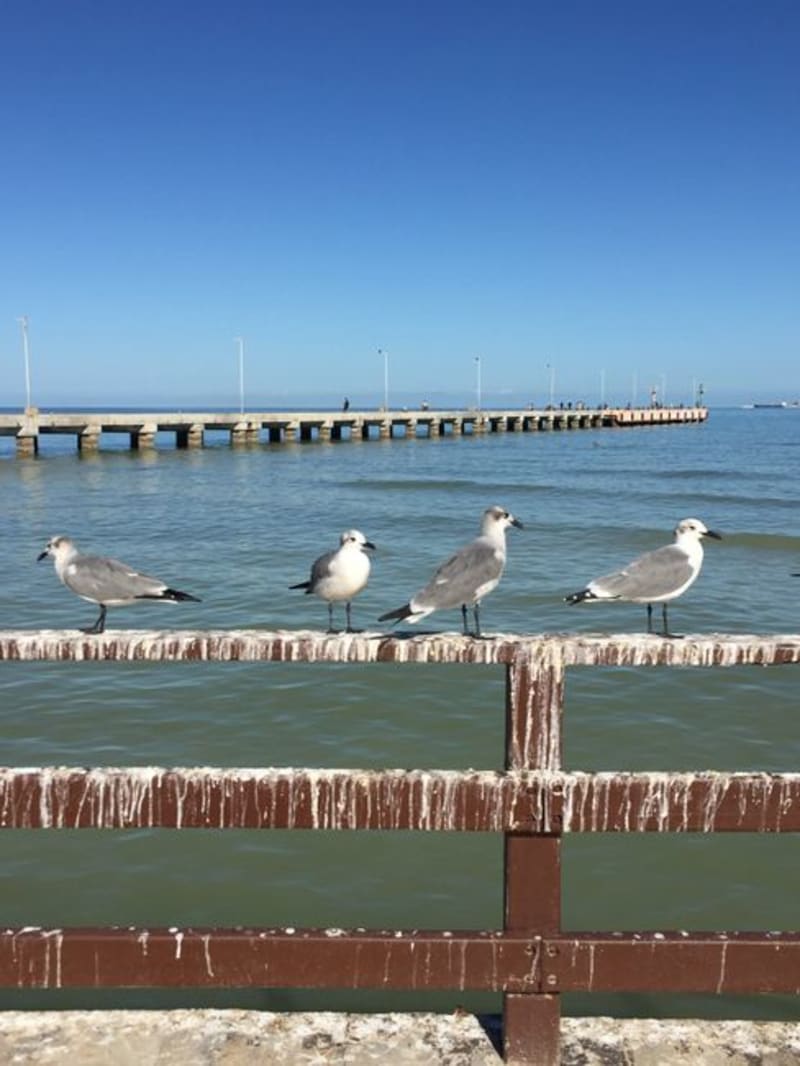 mexico
 Progreso
Mérida's beach escape sits on a flat, windswept stretch of Gulf coast where the water stays shallow and warm and the pier stretches six kilometers into the horizon. Meridanos have been coming here for generations to eat ceviche, wade in the sea, and do absolutely nothing at a pace the rest of the peninsula can't quite match.
Explore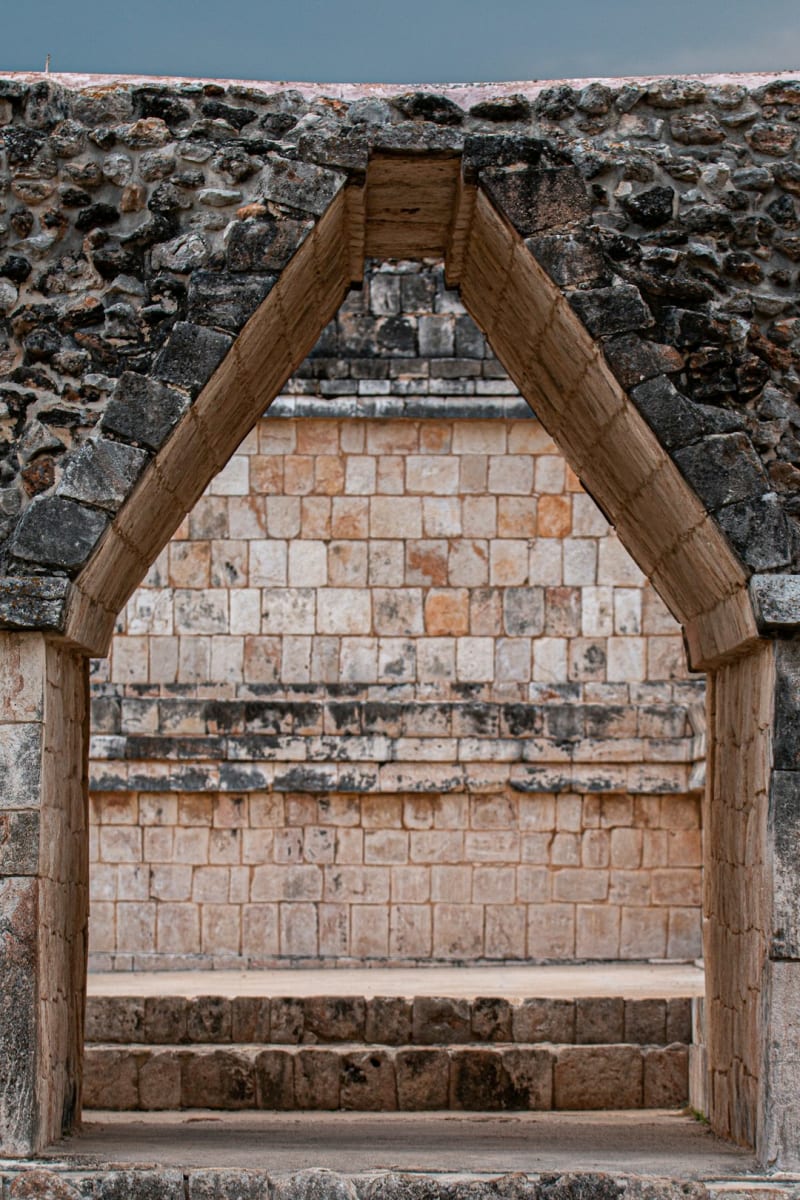 mexico
 Dzibilchaltún
Fifteen minutes north of Mérida, Dzibilchaltún is a Maya site occupied continuously for three thousand years, with a temple precisely aligned to the equinox dawn and a cenote you can actually swim in. Most days the parking lot is half empty.
Explore