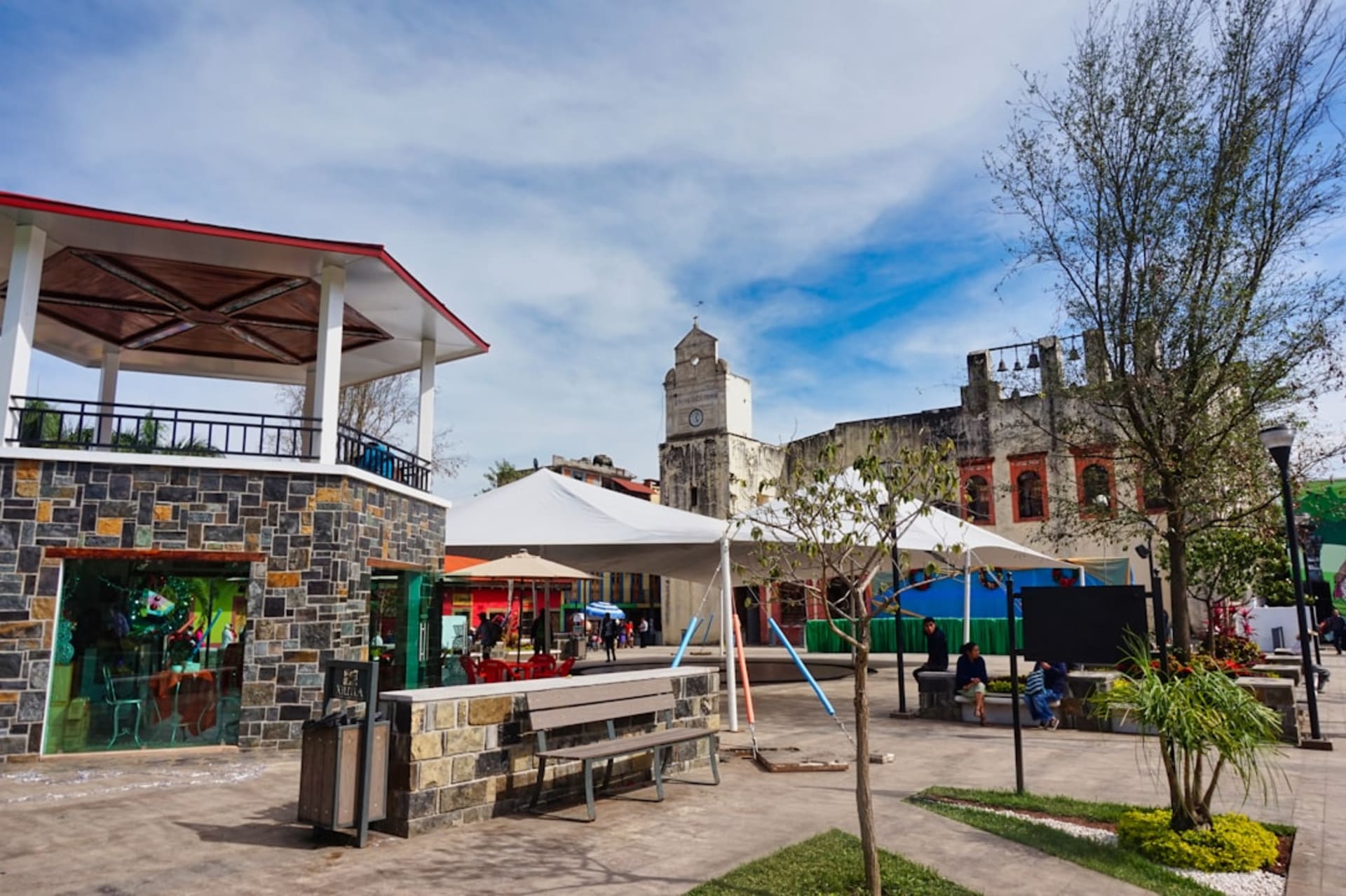
Tamuín
"Tamtoc was a major trading and ritual hub for centuries and I had the whole site to myself for most of a morning — that should not be possible for a place this important, and yet here we are."
Tamuín sits in the flat, river-threaded lowlands of the Huasteca potosina, and just outside it lies Tamtoc — one of the most significant and least-visited Huastec archaeological sites in Mexico, with monumental stone carvings and a ceremonial landscape that looks nothing like anything on the central plateau.

Tamtoc was not on my original itinerary. I had come down from Ciudad Valles on a collective heading east, and the man in the seat beside me mentioned the ruins the way you mention a neighbor’s property — briefly, without drama, as if it were simply obvious that I would go. The town of Tamuín sits in the lowland heat of the Huasteca potosina, where the Sierra Madre has flattened into broad floodplains and the rivers move slowly through riparian green. It has a market, a plaza, a rhythm that belongs entirely to itself. I stayed two nights. I should have stayed four.
The Disk at Tamtoc
The first thing you encounter at the site entrance is the disk. It is a carved stone circle, roughly two meters across, sheltered under a small palapa roof, and it stops you before you have taken ten steps into the grounds. The carving depicts a figure — serpent-associated, celestial, the scholarly interpretations vary — rendered at a depth and precision that feels almost impossible until you recalibrate your sense of what was possible here.
Tamtoc was a major Huastec ceremonial and trading center, occupied from around 900 BCE through the Postclassic period. It was already ancient when the Aztec empire was consolidating to the west. The site covers roughly sixty hectares of platforms, plazas, and earthen mounds spread across a landscape that looks nothing like the highland sites most people associate with pre-Columbian Mexico — it is flat, wide, threaded by the logic of the Rio Tamuín nearby. I spent two hours there on a Tuesday morning in March and encountered, in that entire time, four other visitors and one guard who worked mostly from the shade of a large ceiba. For a place of this historical magnitude, that is either a cultural failure or a great private luck. On that particular morning, I chose not to interrogate it too hard.

What the Huasteca Cooks
The food in Tamuín tells you where you are more precisely than any map. The Huasteca potosina operates on its own culinary logic, and the central example is zacahuil — the enormous pit-cooked or wood-oven tamale that takes most of a day to prepare. At the weekend market near the plaza, it arrives wrapped in banana leaves, sold by the portion, and it is masa and chile and pork at a density that makes a meal of itself. Bocoles, thick masa cakes sometimes filled with bean paste or fresh cheese, appear at breakfast at the fondas near the bus terminal. The pozole rojo I had at a comedor on the square one evening was properly, unapologetically red, with a heat that assembled itself slowly over the course of the bowl.
The market runs several mornings a week, and the produce reflects the lowland abundance: plantains, chayote, fresh chiles I could not name with confidence, loose bundles of hierba santa. It operates on a timescale of its own, and it exists to serve the people who live here. That combination makes it worth sitting with for longer than you think you have time for.

How to Use the Time
Stay two nights if you can arrange it — one day is not enough for the place to shift from unfamiliar to readable. Taxis from the town center know the road to Tamtoc; the fare both ways is modest, and it is worth asking the driver to wait rather than negotiating a pickup time. Go in the morning before the heat consolidates. Bring water, a hat, and whatever patience you have for silence, because the site offers a great deal of it and that is not a complaint.
Tamtoc is open Tuesday through Sunday. The entry fee was negligible when I visited, though I would verify hours locally before making the drive. An on-site guide service exists — if someone is available when you arrive, take them up on it. The signage is sparse, and the context makes the carvings considerably more legible than they are on their own.

Getting There
Tamuín is accessible by second-class bus from Ciudad Valles, roughly forty minutes east on the lowland highway. From San Luis Potosí city, plan for four to five hours total, usually with a transfer at Valles. Tampico is the other logical approach, coming from the north. There is no direct public transport to Tamtoc — take a taxi from the town center, negotiate a round-trip price, and ask the driver to wait.
Keep exploring
More of San Luis Potosí
Keep exploring
More from San Luis Potosí
 mexico
 Ciudad Valles
Ciudad Valles is not the destination — it is the architecture around one. The city itself is a flat, busy commercial hub in the lowland Huasteca, and that is fine, because within two hours in any direction lie some of the most extraordinary natural landscapes in Mexico: towering waterfalls, vertical cave shafts, jungle pozas, and Nahua villages that most visitors never locate on a map.
Explore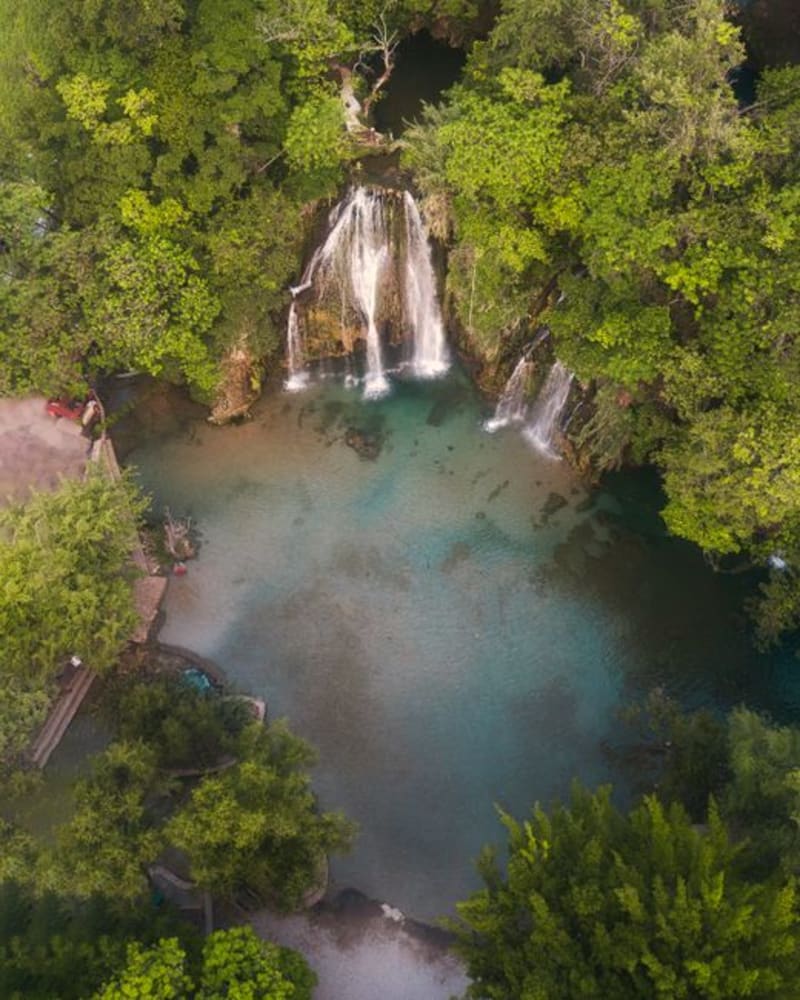 mexico
 Aquismón
Aquismón is the low-key anchor of the Huasteca Potosina, a town of painted concrete and tamarind trees where the surrounding sierra drops without warning into one of the deepest pits on earth. The Sótano de las Golondrinas alone is worth the detour — but the town has its own rhythms worth staying for.
Explore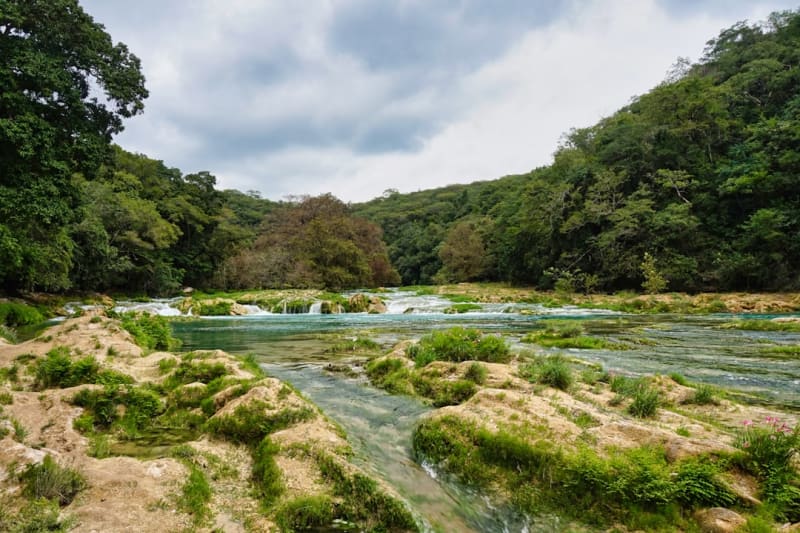 mexico
 Huasteca Potosina
A region of San Luis Potosí state where the rivers run turquoise through tropical limestone canyons, the Tamul waterfall drops 105 meters into a river you can reach by canoe, and the Huastec communities maintain a textile and ceremonial tradition distinct from any other indigenous culture in Mexico.
Explore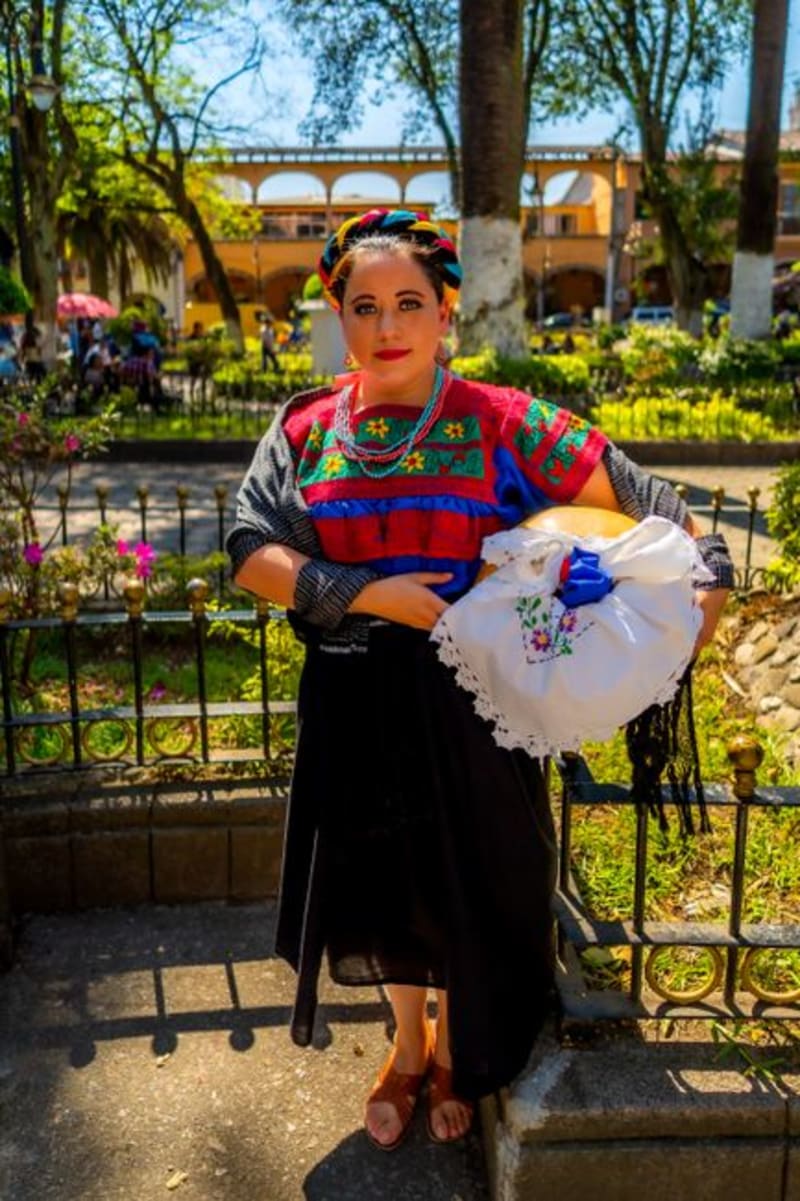 mexico
 Tancanhuitz
A small town folded into the green hills of the Huasteca Potosina, deep in Teenek and Nahua country. Coffee on the slopes, a weekly market that fills the narrow streets, rivers and waterfalls within reach, and a Day of the Dead tradition — Xantolo — that turns the whole place into something older and stranger than any calendar.
Explore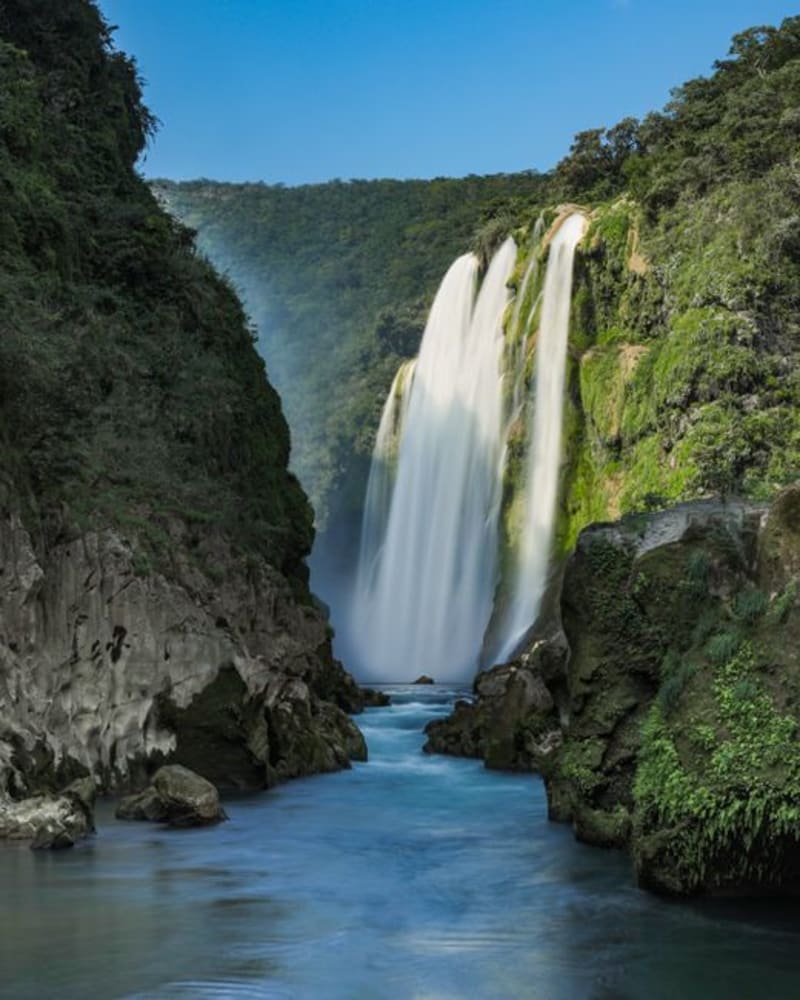 mexico
 Axtla de Terrazas
A Nahua market town tucked into the Huasteca river valley of San Luis Potosí, where the hills drop into cascades and the smell of zacahuil tamales drifts from nearly every porch on a Sunday morning.
Explore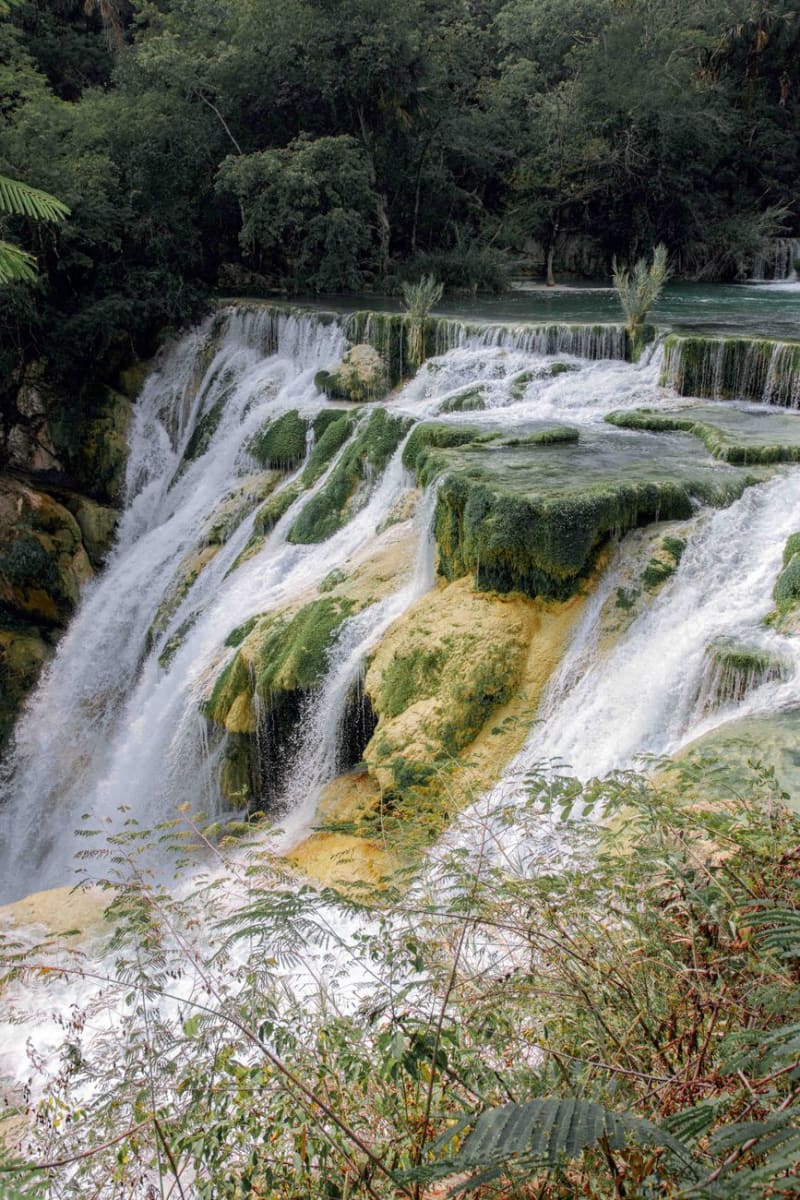 mexico
 Tamasopo
Tamasopo is a small town in the Huasteca Potosina where the Tamasopo River drops through a limestone canyon in a series of cascades, and the water is the specific Caribbean-turquoise color that calcium carbonate in spring water produces over white limestone — not a photograph filter, not a seasonal condition, just what the water looks like here all year. I swam for an hour and ate enchiladas huastecas in the afternoon and considered this a good day.
Explore