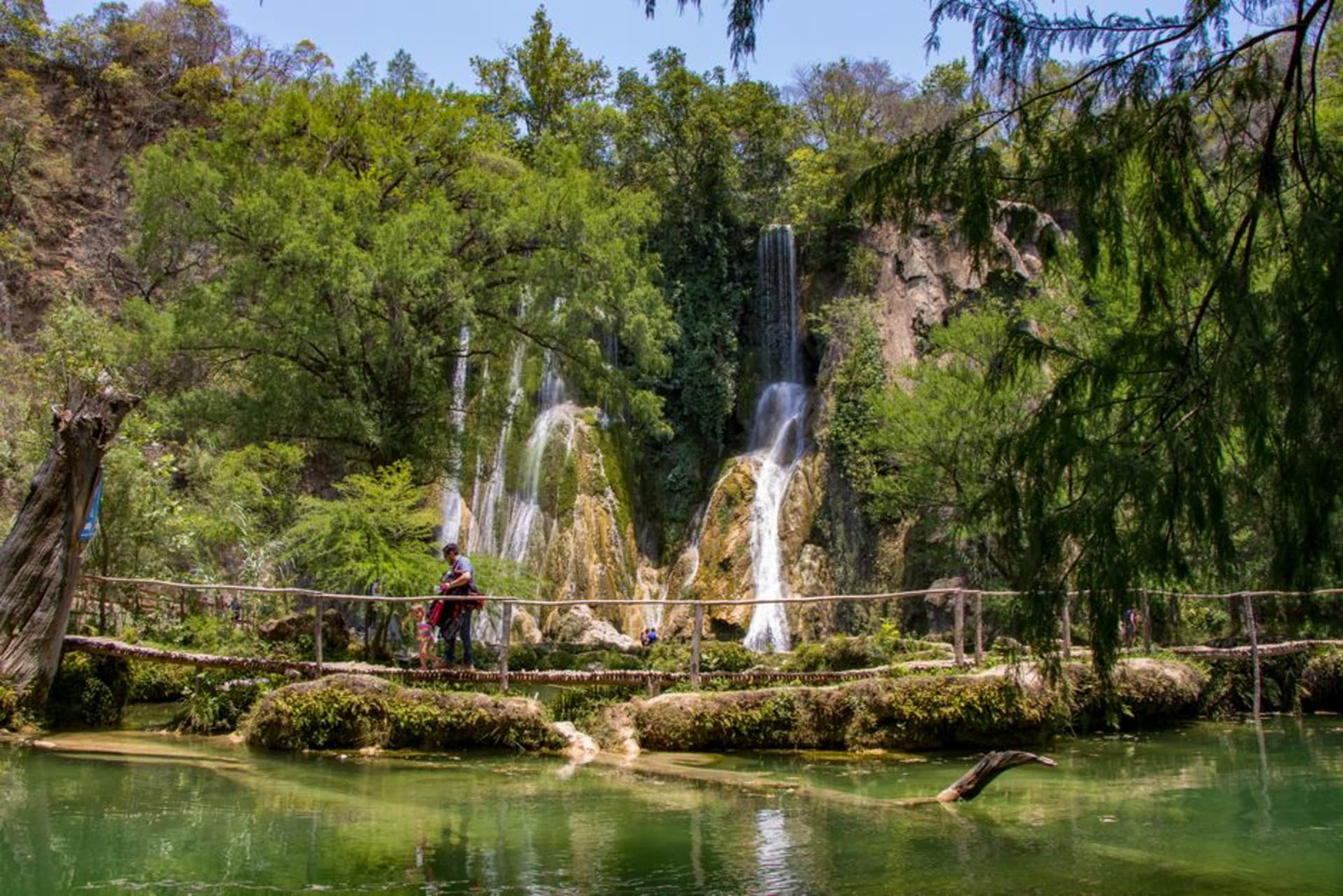
A small sierra village in San Luis Potosí where a series of stepped travertine pools and river beaches draw almost no one. The hike in is short, the water is cold and clear, and the whole valley carries the quiet of a place you stumbled onto rather than booked.

I had been told, loosely, that there were some pools near the village. That was it — no coordinates, no Instagram tag, no YouTube walkthrough. A man at the fondita on the square confirmed the direction with a tilt of his chin and said something about thirty minutes on foot. He was more or less right. By nine in the morning I was standing in a valley that felt genuinely private, the travertine ledges stepping down into the river like something designed rather than eroded, and the only sound was water.
The Pools
The cascade here is not Tamul. It is not trying to be. What San Ciro offers instead is a series of smaller drops — maybe four or five distinct shelves of pale stone, each one collecting a pool of water the color of weak tea over turquoise tile. The travertine is warm underfoot where the sun hits it, slippery where it stays wet. I swam in three of them. The deepest comes up to your chest and has a current mild enough to brace against without effort. The whole formation takes maybe fifteen minutes to walk from the bottom ledge to the top, and on the Saturday I visited I shared it with one family from Rioverde and a couple who left before noon. By midday I had the lower pool entirely to myself. The thing nobody tells you about waterfalls in Mexico is that most of the crowds are concentrated in a handful of famous spots, and anything an hour off that circuit is essentially empty.

The Village
San Ciro de Acosta is the kind of place where the market is three women with folding tables and the restaurant options narrow to one by two in the afternoon. I ate a plate of enchiladas potosinas — the red ones, stuffed with requesón and folded flat — at a kitchen that opened off someone’s living room on the street behind the church. The cook brought out a bowl of salsa verde without being asked and seemed faintly surprised I finished everything. There is a central square with laurel trees trimmed into blocks, a municipal building painted the particular shade of terracotta that every municipal building in this part of Mexico shares, and a general calm that feels less like tourism infrastructure and more like an ordinary Thursday even when it is a Saturday.

When to Go
Dry season — November through April — gives you the best conditions: the river runs clear, the paths stay dry, and the air in the sierra at this elevation hovers around twenty degrees most of the day. I went in February and wore a shirt in the sun and a fleece on the walk back. The rainy months turn the river murky and the travertine pools lose their color. Weekday mornings are when you will have the place to yourself.

Getting There
San Ciro de Acosta sits roughly two hours southeast of Ciudad Valles by car along the MEX-70. There is occasional bus service from Rioverde, about an hour away, but schedules are erratic — a rented car or a negotiated taxi from Rioverde gives you more flexibility. The walk to the pools begins at the edge of the village; ask anyone for las cascadas.
Keep exploring
More of San Luis Potosí
Keep exploring
More from San Luis Potosí
 mexico
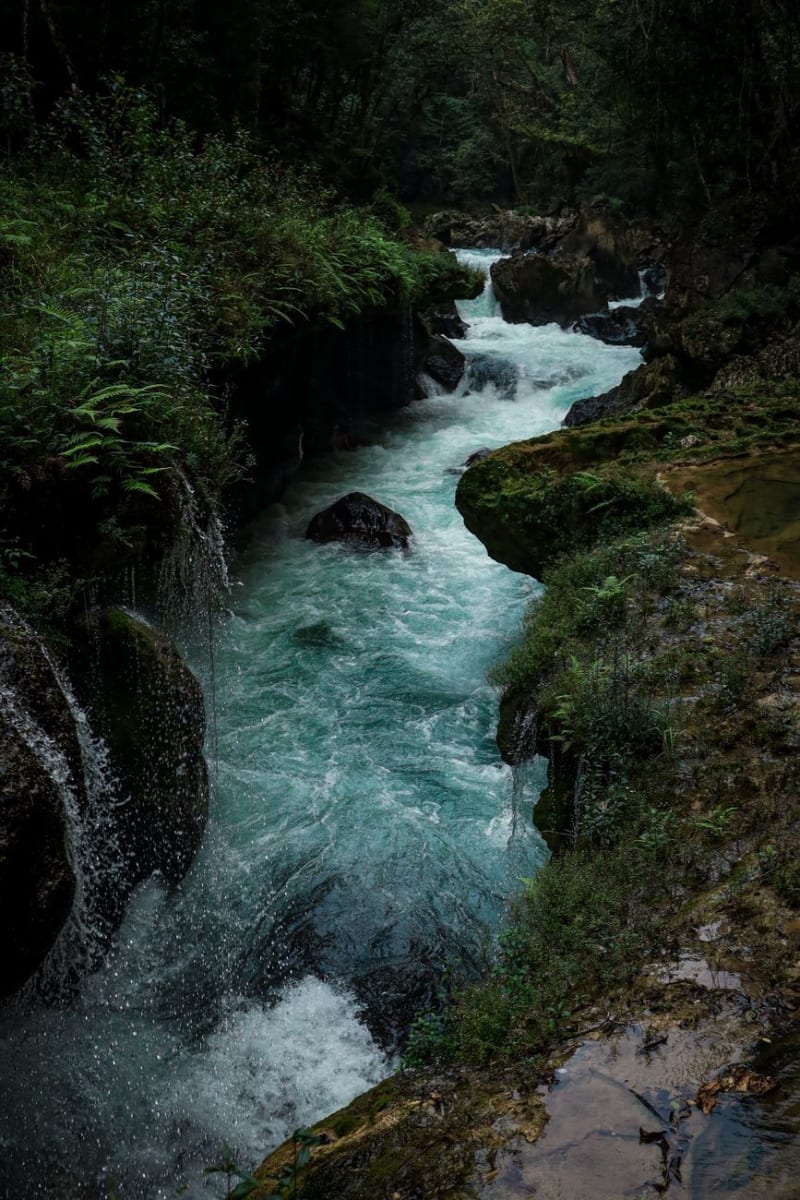
Rioverde / Media Luna
Rioverde is a small city in the arid media luna region of San Luis Potosí, gateway to a natural spring lagoon of extraordinary clarity: the Laguna Media Luna, fed by thermal springs at a constant 28 degrees year-round, visibility up to 20 meters. I arrived expecting a swimming hole and found something that took my breath away. I stayed until the light failed.
Explore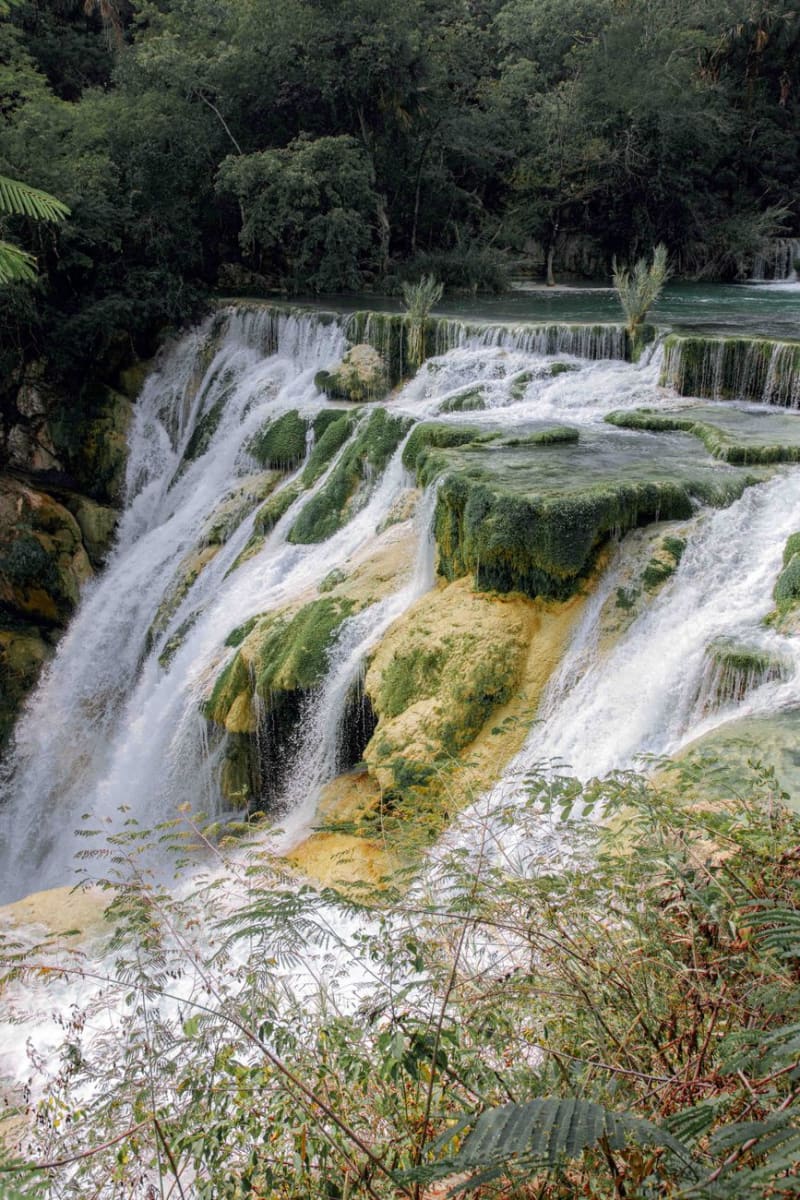 mexico
Tamasopo
Tamasopo is a small town in the Huasteca Potosina where the Tamasopo River drops through a limestone canyon in a series of cascades, and the water is the specific Caribbean-turquoise color that calcium carbonate in spring water produces over white limestone — not a photograph filter, not a seasonal condition, just what the water looks like here all year. I swam for an hour and ate enchiladas huastecas in the afternoon and considered this a good day.
Explore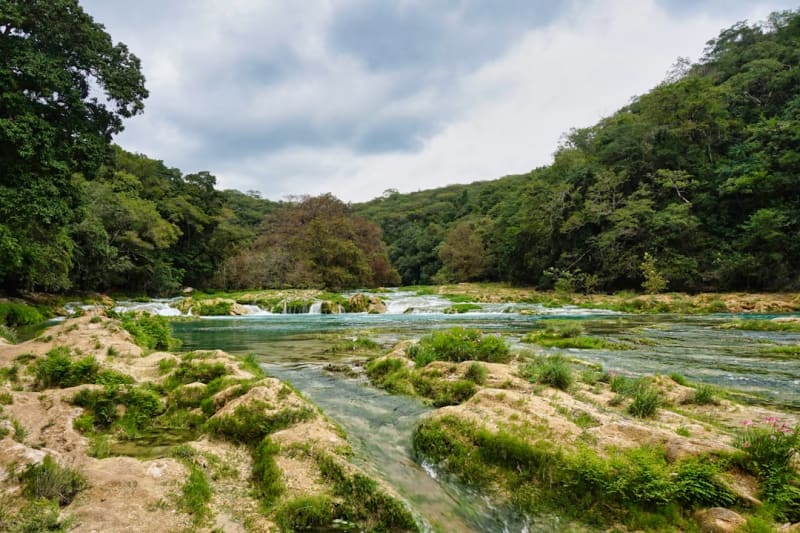 mexico
Huasteca Potosina
A region of San Luis Potosí state where the rivers run turquoise through tropical limestone canyons, the Tamul waterfall drops 105 meters into a river you can reach by canoe, and the Huastec communities maintain a textile and ceremonial tradition distinct from any other indigenous culture in Mexico.
Explore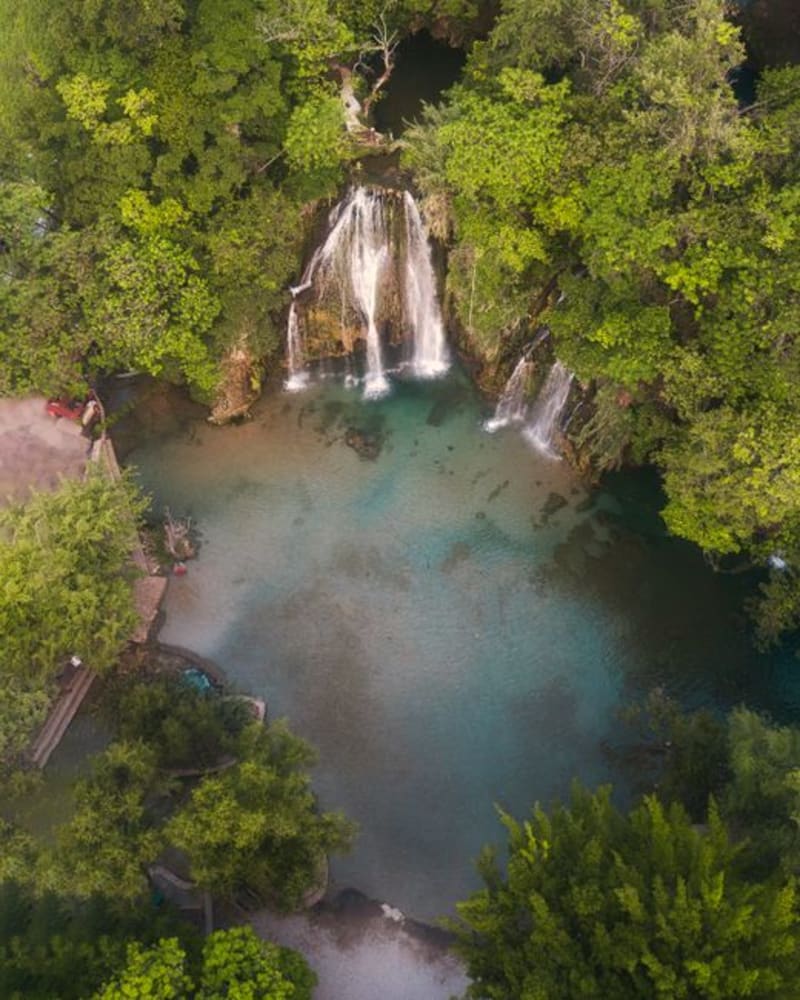 mexico
Aquismón
Aquismón is the low-key anchor of the Huasteca Potosina, a town of painted concrete and tamarind trees where the surrounding sierra drops without warning into one of the deepest pits on earth. The Sótano de las Golondrinas alone is worth the detour — but the town has its own rhythms worth staying for.
Explore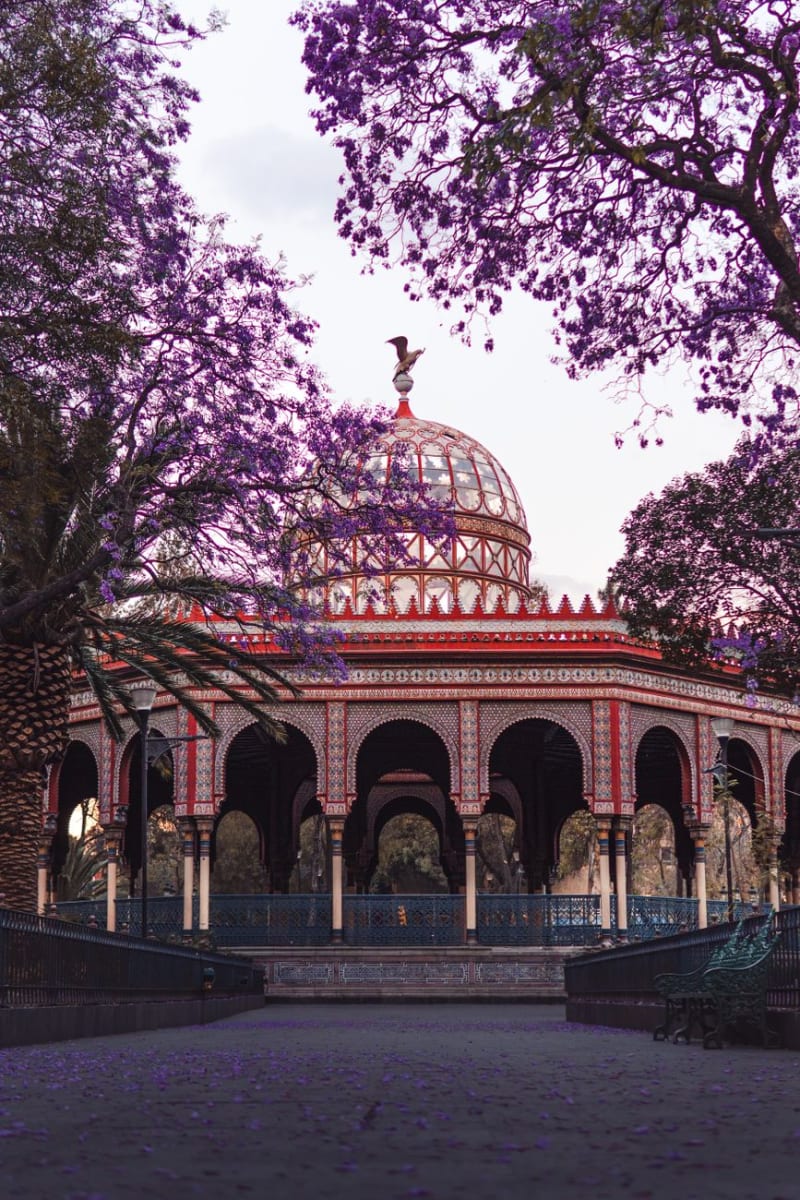 mexico
Santa María del Río
Santa María del Río is a colonial town an hour south of San Luis Potosí City famous for a specific thing: the finest rebozos in Mexico. The silk and cotton shawls made here use a weave technique and fringe-knotting method that specialists can identify at a glance. Family workshops operate on the main streets. I bought a silk rebozo for Lia from an 1880s loom, and she wore it the same day.
Explore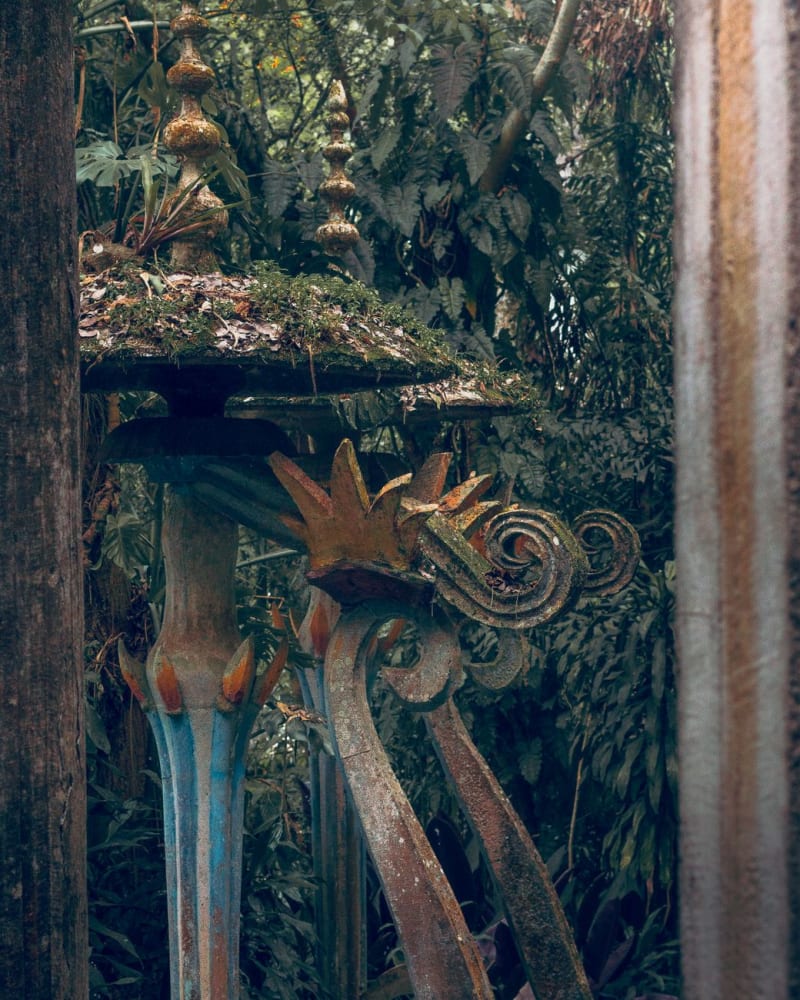 mexico
Xilitla
A cloud forest town in the Sierra Gorda where British surrealist Edward James spent three decades building Las Pozas — a labyrinth of concrete towers, open staircases, and doorways that frame nothing but jungle. The structure defies easy categorization, and so does the town around it.
Explore